
The Evidence for 'Exercise in a Pill': How AMPK Activators Are Rewiring Longevity Science
A new class of drugs known as 'exercise mimetics' aims to replicate the metabolic benefits of physical activity without the sweat. As Cambrian Biopharma's ATX-304 advances through clinical trials, we examine the evidence behind pharmacological fitness.
By Factlen Editorial Team
- Longevity Biotech Developers
- View AMPK activation as a foundational mechanism to treat the root causes of aging and metabolic decline.
- Clinical Gerontologists
- Focus on the practical application of mimetics for frail, elderly patients who physically cannot tolerate traditional exercise.
- Exercise Physiologists
- Maintain that while mimetics offer metabolic benefits, they cannot replicate the mechanical, cardiovascular, and neural adaptations of actual movement.
What's not represented
- · Health Insurance Providers
- · Sports Anti-Doping Agencies
Why this matters
For millions of older adults, frailty, injury, or severe cardiometabolic disease makes rigorous exercise impossible, accelerating their physical decline. If a daily pill can safely trigger the cellular benefits of a workout—preserving muscle mass and burning visceral fat—it could fundamentally alter how we treat aging, obesity, and mobility loss.
Key points
- Cambrian Biopharma's ATX-304 has shown positive Phase 1b results, improving metabolic rates and reducing liver fat.
- The drug works by activating AMPK, the body's 'master metabolic switch' that normally turns on during exercise.
- Exercise mimetics could help prevent the severe muscle loss currently associated with GLP-1 weight loss drugs.
- The primary target demographic is frail, elderly, or injured patients who physically cannot engage in aerobic exercise.
- While mimetics offer metabolic benefits, they cannot replicate the bone density or cardiovascular sheer-stress benefits of actual movement.
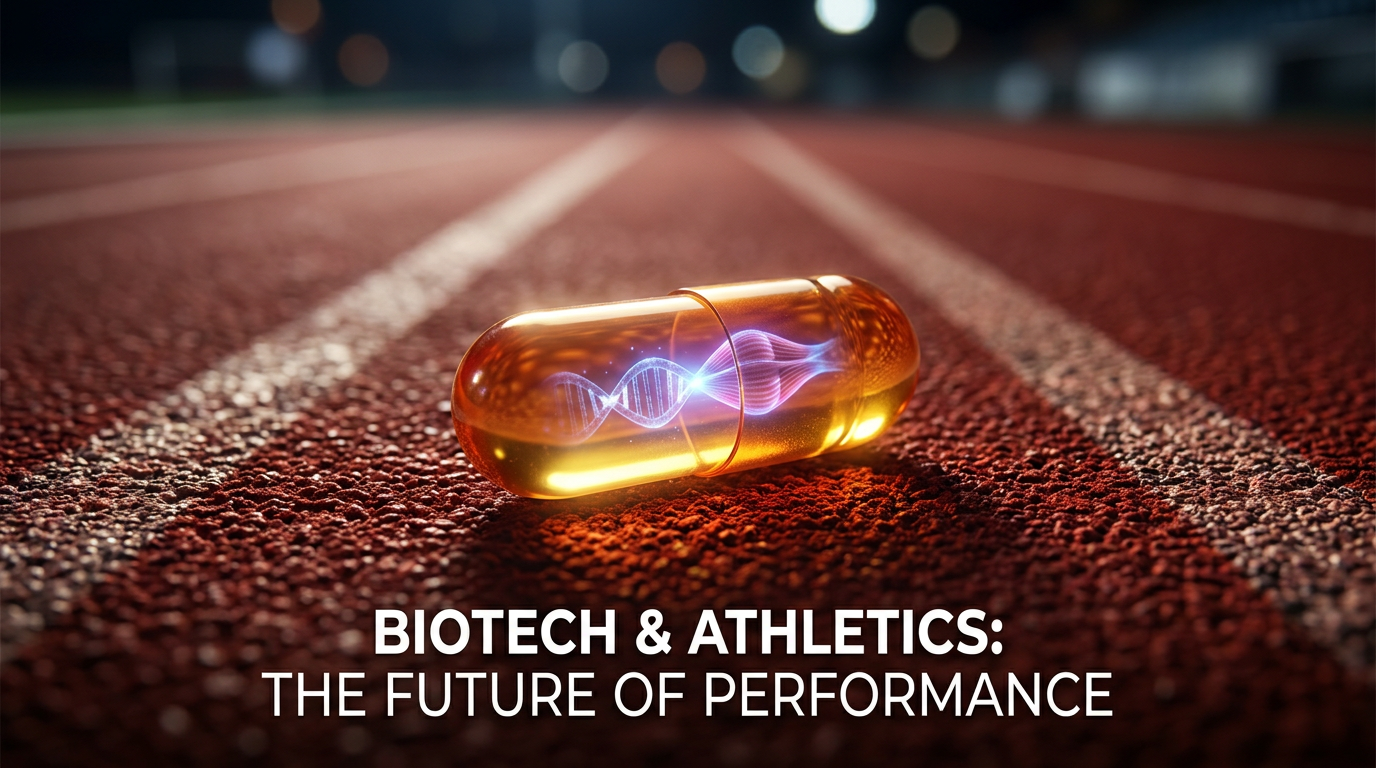
For decades, the concept of "exercise in a pill" was dismissed as science fiction—a holy grail chased by pharmaceutical companies but fundamentally incompatible with human biology. Physical exertion is a complex, multisystem stressor that forces the heart, lungs, muscles, and brain to adapt simultaneously. However, a rapidly maturing branch of longevity science is proving that the metabolic pathways triggered by a five-mile run can, in fact, be isolated and activated pharmacologically.[1][4]
This week, the theoretical became tangible. Cambrian Biopharma, a clinical-stage longevity company, presented highly anticipated Phase 1b human trial data for ATX-304, an experimental drug designed to mimic the cellular effects of aerobic exercise. The results, showcased at the American Diabetes Association's 86th Scientific Sessions, offer the first definitive clinical evidence that a targeted molecule can safely trick the human body into believing it is working out.[2][3]
The mechanism behind this deception relies on an enzyme called AMP-activated protein kinase (AMPK). Often described by biologists as the body's "master metabolic switch," AMPK acts as a cellular fuel gauge. When you exercise or fast, your cells burn through their primary energy currency (ATP), causing AMPK to activate. This activation signals the body to stop storing fat, start burning it for fuel, and pull excess sugar out of the bloodstream.[1][5]

Claim 1: Pharmacological activation of AMPK mimics the metabolic stress of aerobic exercise. The evidence for this claim is currently strong, supported by both robust preclinical models and emerging human data. ATX-304 is a "pan-AMPK activator," meaning it binds directly to the enzyme and turns it on, regardless of whether the patient has actually expended any energy.[3][4]
In the Phase 1b trial, adults with obesity and prediabetes who took ATX-304 demonstrated statistically significant improvements across a suite of metabolic biomarkers. Patients saw reductions in liver fat, visceral adipose tissue (the dangerous fat stored around internal organs), and triglycerides. Crucially, the drug elevated the patients' resting metabolic rate—meaning their bodies burned more calories while sitting completely still, closely resembling the afterburn effect of a strenuous cardiovascular workout.[2][3]

The urgency surrounding exercise mimetics has been supercharged by the recent explosion of GLP-1 weight loss drugs like Ozempic and Wegovy. While highly effective at reducing overall body weight, GLP-1 agonists have a well-documented side effect: they cause patients to lose significant amounts of skeletal muscle alongside fat. For older adults, this drug-induced sarcopenia (muscle loss) can lead to frailty and a loss of independence.[1][6]
Claim 2: Exercise mimetics can drive fat loss while preserving skeletal muscle. The evidence here is moderate but highly promising. In preclinical animal studies, ATX-304 demonstrated "muscle-sparing weight loss" in obese models, alongside major improvements in exercise endurance. The hypothesis is that combining a GLP-1 drug (to reduce appetite) with an AMPK activator (to increase muscle metabolism and energy expenditure) could offer a "best of both worlds" obesity treatment.[3][6]
Claim 2: Exercise mimetics can drive fat loss while preserving skeletal muscle.
The implications extend far beyond weight management. As humans age, our natural ability to activate AMPK spontaneously declines. This blunted metabolic response is a primary driver of age-related cellular dysfunction. When AMPK fails to activate efficiently, cells become sluggish at clearing out damaged proteins and mitochondria—a cellular recycling process known as autophagy.[4][5]

Claim 3: Mimetics can restore mitochondrial function in aging populations. The evidence supporting this is currently grounded in peer-reviewed literature and animal models, with human translation pending. Studies published in *Frontiers in Physiology* note that exercise mimetics enhance mitochondrial renewal efficiency. By artificially triggering AMPK, these drugs force aging cells to clear out defective mitochondria and generate fresh, highly efficient ones, effectively reversing a key hallmark of aging.[4][7]
Despite the enthusiasm, clinical gerontologists and exercise physiologists urge caution regarding the "exercise in a pill" moniker. While AMPK activators can replicate the *metabolic* adaptations of physical activity, they cannot replicate the *mechanical* and *structural* benefits. A pill cannot subject bones to the impact forces required to build density and prevent osteoporosis.[1][4]
Furthermore, true exercise subjects the cardiovascular system to sheer stress—the physical force of blood rushing through arteries—which is vital for maintaining the elasticity of blood vessels and endothelial health. Exercise also triggers complex neural adaptations, improving balance, coordination, and mood through the release of endorphins and brain-derived neurotrophic factor (BDNF). An AMPK activator will not improve your golf swing, nor will it provide a "runner's high."[1][4]
Because of these limitations, developers are not positioning exercise mimetics as a replacement for the gym for healthy individuals. Instead, the target demographic consists of patients for whom exercise is physically impossible. This includes older adults suffering from severe sarcopenia, individuals recovering from traumatic injuries or surgeries, and patients with advanced cardiometabolic diseases whose hearts cannot tolerate the strain of aerobic training.[1][7]

For these vulnerable populations, an exercise mimetic serves as a vital bridge. By pharmacologically improving their baseline metabolic health, increasing their resting energy expenditure, and preserving their existing muscle mass, these drugs could eventually give frail patients the physical capacity required to begin traditional physical therapy.[4][6]
The regulatory path forward is accelerating. Based on the successful Phase 1b data, Cambrian Biopharma is advancing ATX-304 into two distinct Phase 2 clinical studies. The first, dubbed REWIRE-1, will evaluate the drug's effect on muscle function and lipid metabolism at higher exposures. The second, REWIRE-2, will test the drug's efficacy as a standalone weight-loss intervention for people with obesity.[3]
If these Phase 2 trials succeed, it will mark a paradigm shift in how modern medicine approaches aging and chronic disease. Rather than waiting for metabolic dysfunction to manifest as diabetes or heart disease and treating the symptoms, clinicians could deploy exercise mimetics prophylactically. By keeping the body's master metabolic switch engaged, we may soon have a pharmacological tool to keep our cells "fit" long after our joints begin to fail.[1][5][6]
How we got here
2021
Preclinical studies demonstrate that AMPK activators can improve cardiac function and exercise capacity in aged mice.
March 2023
Cambrian Biopharma launches Amplifier Therapeutics to specifically develop ATX-304, a novel pan-AMPK activator.
June 2026
Phase 1b clinical data is presented at the American Diabetes Association, showing significant metabolic improvements in humans.
Late 2026 (Planned)
Cambrian plans to initiate Phase 2 REWIRE trials to test ATX-304 for muscle function and obesity.
Viewpoints in depth
Longevity Biotech Developers
Viewing AMPK activation as a foundational mechanism to treat the root causes of aging.
For biotech companies and longevity researchers, the goal is not merely to treat isolated diseases, but to target the underlying biological drivers of aging. They view the age-related decline in AMPK activity as a critical failure point in human metabolism. By developing drugs that artificially keep this 'master switch' turned on, developers believe they can simultaneously prevent a cascade of age-related conditions, from type 2 diabetes to cardiovascular disease, effectively extending human healthspan.
Clinical Gerontologists
Focusing on the practical application of mimetics for frail patients.
Physicians who treat the elderly see exercise mimetics as a pragmatic solution to a devastating cycle. When older adults lose muscle mass (sarcopenia), they become too frail to exercise, which in turn accelerates their muscle loss and metabolic decline. Gerontologists argue that a safe AMPK activator could break this cycle, providing the metabolic baseline necessary to keep patients out of nursing homes and preserve their independence, even if they are confined to a chair or bed.
Exercise Physiologists
Maintaining that a pill cannot replicate the full systemic benefits of actual movement.
While acknowledging the metabolic breakthroughs, exercise scientists emphasize the holistic nature of physical training. They point out that mechanical loading is required to stimulate bone growth and prevent osteoporosis, while the sheer stress of elevated heart rates is necessary to keep blood vessels elastic. Furthermore, the psychological benefits of exercise—including stress reduction and neurogenesis—rely on complex brain-body interactions that an isolated enzyme activator cannot replicate.
What we don't know
- Whether the metabolic improvements seen in Phase 1b trials will translate to sustained, long-term weight loss in Phase 2.
- If long-term, artificial activation of AMPK carries unforeseen side effects, given its central role in cellular energy regulation.
- How effectively ATX-304 will synergize with existing GLP-1 drugs to prevent muscle loss in real-world clinical settings.
Key terms
- AMPK (AMP-activated protein kinase)
- An enzyme that serves as the body's master metabolic switch, sensing low energy levels and triggering cells to burn fat and clear glucose.
- Exercise Mimetic
- A class of therapeutics that artificially induce the physiological and metabolic adaptations normally caused by physical training.
- Sarcopenia
- The progressive, age-related loss of skeletal muscle mass and strength, which often leads to frailty and loss of independence.
- Autophagy
- The body's cellular recycling system, where cells clean out damaged proteins and defective mitochondria to maintain optimal function.
- Visceral Adipose Tissue
- The dangerous, active fat stored deep inside the belly, wrapped around the internal organs, which is strongly linked to metabolic disease.
Frequently asked
What exactly is an exercise mimetic?
An exercise mimetic is a pharmacological drug designed to activate the specific cellular pathways—such as AMPK—that are normally triggered by physical exertion, providing metabolic benefits without actual movement.
Will this pill replace going to the gym?
No. While mimetics can replicate metabolic fat-burning and cellular recycling, they cannot replicate the mechanical benefits of exercise, such as increased bone density, cardiovascular sheer stress, and neural coordination.
Why are these drugs being developed?
They are primarily aimed at populations who cannot exercise due to severe obesity, advanced age, frailty, or injury, as well as to counteract the muscle loss caused by GLP-1 weight loss drugs.
When will ATX-304 be available to the public?
ATX-304 has only completed Phase 1b trials to prove basic safety and human translation. It is currently entering Phase 2 trials, meaning commercial availability is still several years away.
Sources
Source coverage
7 outlets
3 viewpoints surfaced







[1]Factlen Editorial TeamClinical Gerontologists
Synthesis by Factlen editorial team
Read on Factlen Editorial Team →[2]STAT NewsLongevity Biotech Developers
STAT+: Cambrian’s experimental longevity drug mimics exercise
Read on STAT News →[3]BioSpaceLongevity Biotech Developers
Cambrian Bio Presents Positive Human Translational Data for ATX-304, the First AMPK Network Activator
Read on BioSpace →[4]Frontiers in PhysiologyExercise Physiologists
Exercise mimetics: molecular mechanisms, biological and therapeutic effects
Read on Frontiers in Physiology →[5]PR NewswireLongevity Biotech Developers
Cambrian Bio reveals new pipeline company with focus on AMPK activation
Read on PR Newswire →[6]Contrary ResearchLongevity Biotech Developers
Cambrian Biopharma: Targeting the Mechanistic Drivers of Aging
Read on Contrary Research →[7]Fight Aging!Clinical Gerontologists
Celastrol as an Exercise Mimetic to Modestly Slow Aging
Read on Fight Aging! →

More in health
See all 6 stories →Nutritional Psychiatry
The Emerging Evidence for Nutritional Psychiatry: How Diet is Becoming a Mainstream Mental Health Tool
7 sources

Longevity Tech
The 'Exercise Mimetic' Pill: First Human Data Shows AMPK Activator Boosts Metabolism and Cuts Liver Fat
6 sources
Biomimetic Dentistry
The End of 'Drill and Fill': How Biomimetic Peptides and Nanoparticles Are Regrowing Tooth Enamel
7 sources

Cognitive Health
Shingles Vaccine Linked to 24% Lower Dementia Risk in Major New Study
8 sources

Every angle. Every day.
Get health stories with full source coverage and perspective breakdowns delivered to your inbox.