
The End of 'Drill and Fill': How Biomimetic Peptides and Nanoparticles Are Regrowing Tooth Enamel
Advancements in biomimetic dentistry, including nano-hydroxyapatite and engineered peptides, are allowing teeth to naturally regenerate lost enamel, potentially rendering the dental drill obsolete for early-stage decay.
By Factlen Editorial Team
- Biomimetic Researchers
- Advocate for using engineered peptides and nano-hydroxyapatite to biologically regenerate tooth structure and eliminate the need for drilling.
- Traditional Dentistry
- Views fluoride and mechanical fillings as the proven, cost-effective standard of care, though increasingly open to biomimetics as a preventive adjunct.
- Holistic Microbiome Advocates
- Prefer natural microbiome support and raise biocompatibility concerns regarding the cellular penetration of engineered nanoparticles.
What's not represented
- · Dental Insurance Providers
- · Low-Income Patients
Why this matters
For over a century, treating tooth decay has meant enduring the pain and cost of the dental drill. The emergence of biomimetic remineralization means millions of people could soon heal early cavities and reverse sensitivity at home, fundamentally changing how we maintain our oral health.
Key points
- Biomimetic dentistry shifts oral care from mechanically drilling and filling cavities to biologically regenerating lost tooth structure.
- Nano-hydroxyapatite (nHAp) particles can penetrate microscopic enamel cracks, bonding directly to the tooth to rebuild it from the inside out.
- Researchers have engineered a peptide derived from amelogenin that grabs calcium from saliva to deposit new microlayers of enamel.
- While highly effective for early-stage decay and sensitivity, biomimetic treatments cannot yet replace traditional fillings for deep, advanced cavities.
For more than a century, the standard response to tooth decay has been mechanical and invasive: detect the cavity, drill away the damaged tissue, and plug the hole with metal, amalgam, or composite resin.[7]
This "drill and fill" model treats the human tooth like a piece of masonry. Because enamel—the hardest substance in the human body—contains no living cells, it has long been considered incapable of healing itself once fractured or severely decayed.[7]
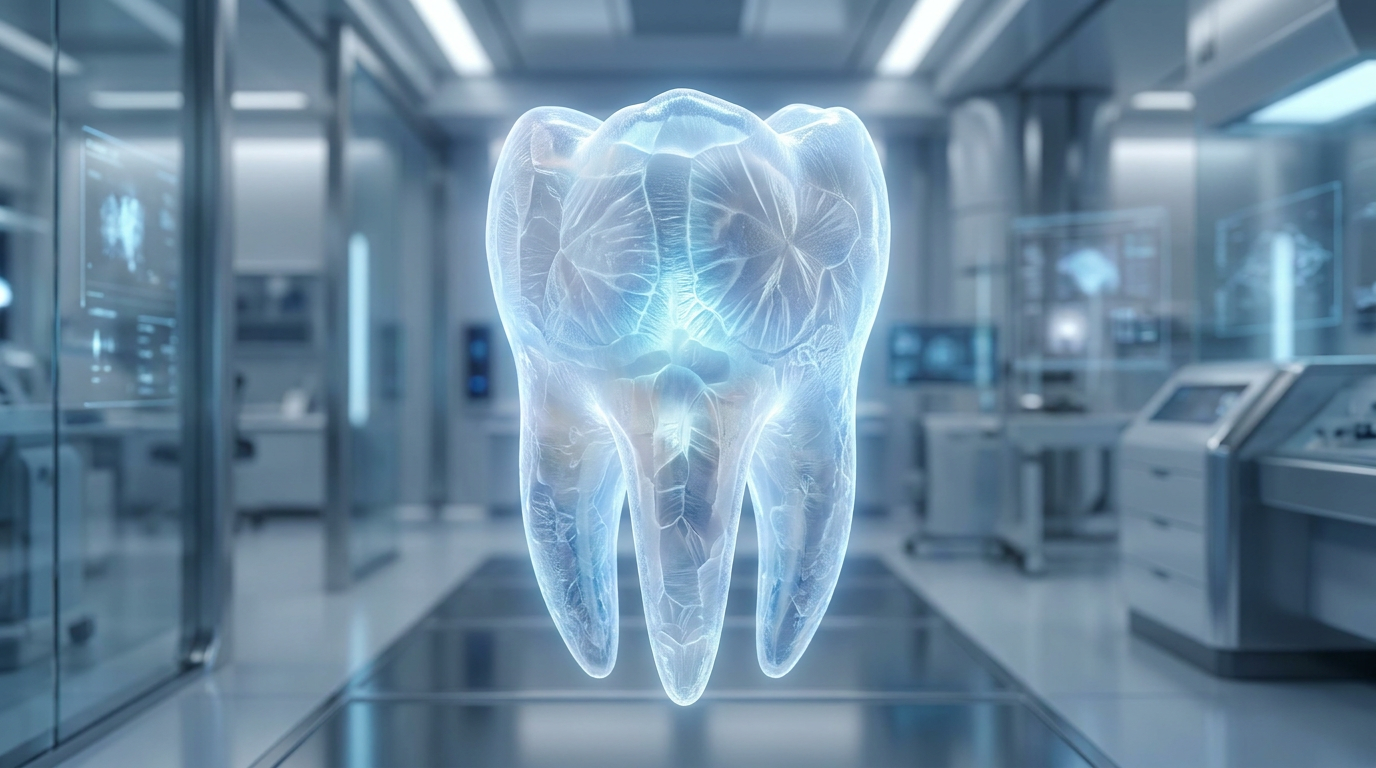
But a quiet revolution in oral health is shifting the paradigm from mechanical repair to biological regeneration. Known as biomimetic dentistry, this emerging field uses advanced materials to mimic the natural properties of teeth, actively rebuilding lost enamel and potentially rendering the dental drill obsolete for early-stage decay.[7]
The foundation of this shift lies in understanding what teeth are actually made of. Approximately 97 percent of tooth enamel and 70 percent of the underlying dentin consists of a calcium phosphate mineral called hydroxyapatite.[3]
Every day, teeth undergo a microscopic tug-of-war. Acidic foods and bacterial byproducts strip minerals away from the enamel in a process called demineralization. Saliva, which is naturally rich in calcium and phosphate, attempts to deposit those minerals back. When the acid wins, a cavity forms.[3]

For decades, the primary weapon against this decay has been fluoride. Fluoride does not replace the lost tooth structure; instead, it reacts with the remaining minerals to form fluorapatite, a compound that is slightly more resistant to acid attacks.[3]
Now, researchers are bypassing fluoride entirely by supplying the exact mineral the tooth is missing. Enter nano-hydroxyapatite (nHAp). Originally developed by NASA in the 1970s to help astronauts combat bone and tooth loss in zero gravity, nHAp consists of hydroxyapatite particles shrunk down to between 1 and 100 nanometers.[3][5]
Because these particles are so infinitesimally small, they can penetrate the microscopic fissures and pores of demineralized enamel. Once inside, they act as a scaffold, bonding directly to the tooth and filling in the gaps with the exact same material the body originally produced.[2][3]
The clinical evidence supporting nHAp is increasingly robust. Recent peer-reviewed studies, including in vitro research published in the Journal of Dentistry and supported by the National Institutes of Health, demonstrate that high-quality nHAp formulations can match or even exceed the remineralization rates of prescription-strength fluoride.[2][6]

The clinical evidence supporting nHAp is increasingly robust.
Beyond cavity prevention, nHAp has proven highly effective at treating dentin hypersensitivity. When enamel wears thin, microscopic channels called dentinal tubules are exposed, allowing hot and cold sensations to strike the tooth's nerve. While traditional sensitivity toothpastes use potassium nitrate to temporarily numb the nerve, nHAp physically plugs the tubules with solid mineral, permanently blocking the pain pathway.[1][3]
While nHAp provides the raw building blocks for enamel repair, the next frontier of biomimetic dentistry involves actively directing those blocks using proteins. At the University of Washington, researchers have developed a peptide-based biogenic agent that effectively regrows tooth structure from scratch.[1]
The UW team isolated the active sequence of amelogenin, the crucial protein responsible for forming the hard crown enamel while a tooth develops in the womb. By engineering a specific peptide derived from this protein—dubbed sADP5—they created a molecular architect that grabs calcium and phosphate ions from saliva and forces them to crystallize into new enamel.[1]
The results are striking. According to the researchers, applying the peptide formulation can deposit between 10 and 50 micrometers of new, structurally sound enamel onto the tooth surface with each use. The newly formed mineral microlayers integrate seamlessly with the living tissue underneath.[1]
To make this technology accessible, the UW team has developed a dental lozenge—similar to a breath mint—coated in the peptide. Clinical trials are underway to test the lozenge's ability to rebuild enamel and whiten teeth daily without the need for harsh bleaching agents like hydrogen peroxide, which can weaken teeth over time.[1]

Commercial applications of peptide technology are already reaching dental clinics. Swiss oral-health company vVARDIS has introduced a platform called CURODONT, which uses proprietary biomimetic peptides to arrest and reverse early-stage, non-cavitated lesions. Applied as a liquid by a dentist, the treatment diffuses into the porous, decaying enamel and triggers deep remineralization, effectively healing the cavity before a drill is ever needed.[4]
Despite the enthusiasm, the biomimetic movement faces some skepticism, particularly from holistic oral care advocates. Some critics raise biocompatibility concerns regarding the nanoparticle size of nHAp, arguing that particles under 100 nanometers could potentially penetrate cell membranes and cause unintended cellular damage.[5]
These skeptics argue that instead of introducing engineered nanoparticles, dentistry should focus entirely on supporting the oral microbiome—using prebiotics to foster beneficial bacteria that naturally maintain the mouth's pH and facilitate organic remineralization without synthetic intervention.[5]

However, mainstream dental researchers and regulatory bodies largely dismiss these toxicity concerns, noting that hydroxyapatite is highly biocompatible because the body recognizes it as its own material. Unlike fluoride, which carries strict warnings about ingestion and fluorosis, nHAp is generally considered safe enough to swallow, making it particularly appealing for pediatric dentistry.[3][5]
The transition away from mechanical dentistry will not happen overnight. Biomimetic treatments like nHAp and peptide lozenges are highly effective for early decay and micro-cracks, but they cannot magically regrow a tooth that has already suffered massive structural collapse. Deep, advanced cavities will still require traditional intervention.[4][7]
Yet, the trajectory is clear. By leveraging the body's own biological blueprints, science is transforming the dental chair from a place of mechanical excavation to a site of natural regeneration. The era of "drill and fill" is slowly giving way to a future where teeth are empowered to heal themselves.[7]
How we got here
1970s
NASA develops synthetic hydroxyapatite to help astronauts recover bone and enamel loss after zero-gravity missions.
1980s
Japanese company Sangi Co. acquires the NASA patent and introduces the world's first hydroxyapatite toothpaste.
2018
University of Washington researchers successfully isolate the amelogenin peptide capable of regrowing human enamel in vitro.
2023
Clinical trials begin for UW's peptide-based dental lozenge designed to rebuild enamel daily.
2025
Peer-reviewed studies in the Journal of Dentistry confirm nHAp formulations match or exceed prescription fluoride efficacy.
Viewpoints in depth
Biomimetic Researchers
Advocate for using engineered peptides and nano-hydroxyapatite to biologically regenerate tooth structure.
Researchers in the biomimetic space view the traditional 'drill and fill' model as an outdated mechanical approach to a biological problem. By utilizing materials like nano-hydroxyapatite and amelogenin-derived peptides, they argue that dentistry can shift from merely managing decay to actively reversing it. They point to robust clinical trials showing that these materials not only match the efficacy of fluoride but do so by actually rebuilding the tooth's original crystalline structure, offering a permanent solution to issues like dentin hypersensitivity.
Traditional Dentistry
Views fluoride and mechanical fillings as the proven, cost-effective standard of care.
Mainstream dental practitioners acknowledge the exciting potential of biomimetic remineralization, but many caution against abandoning decades of proven public health protocols. Fluoride remains cheap, universally accessible, and backed by over a half-century of epidemiological data proving its efficacy in reducing population-wide cavity rates. While traditional dentists are increasingly adopting nHAp and peptide treatments as preventive adjuncts for early decay, they emphasize that mechanical fillings will remain necessary for patients who present with advanced, structural cavities.
Holistic Microbiome Advocates
Prefer natural microbiome support and raise biocompatibility concerns regarding engineered nanoparticles.
A subset of holistic and biological dentists argue that the focus on synthetic remineralization misses the root cause of tooth decay: an imbalanced oral microbiome. They express skepticism about the long-term safety of introducing engineered nanoparticles into the body, citing concerns that particles under 100 nanometers could penetrate cell membranes and cause unintended cytotoxicity. Instead of using nHAp or isolated peptides, this camp advocates for dietary interventions and prebiotic oral care products designed to foster beneficial bacteria, allowing the body to naturally remineralize teeth without synthetic intervention.
What we don't know
- How long the newly regenerated enamel layers from peptide lozenges hold up against highly acidic modern diets over a span of decades.
- Whether insurance companies will universally cover biomimetic peptide treatments or classify them as elective preventive care.
- The exact timeline for when over-the-counter peptide lozenges will clear final FDA regulatory hurdles for mass-market retail.
Key terms
- Biomimetic Dentistry
- A branch of dentistry focused on preserving intact tooth structure and restoring teeth using materials that mimic natural biological properties.
- Nano-Hydroxyapatite (nHAp)
- A synthetic, microscopic version of the calcium phosphate mineral that makes up 97 percent of human tooth enamel.
- Amelogenin
- A crucial protein responsible for directing the formation of hard crown enamel while a tooth develops in the womb.
- Dentinal Tubules
- Microscopic channels in the tooth's dentin layer that, when exposed by worn enamel, allow hot and cold sensations to reach the nerve.
- Remineralization
- The natural or assisted process of restoring lost calcium and phosphate minerals to the tooth structure to reverse early decay.
Frequently asked
Can biomimetic dentistry fix a large, painful cavity?
No. Biomimetic treatments like peptide lozenges and nano-hydroxyapatite are highly effective for early-stage decay and micro-cracks. Deep, advanced cavities where the tooth structure has collapsed still require traditional mechanical fillings.
Is nano-hydroxyapatite safe if accidentally swallowed?
Yes. Unlike fluoride, which carries strict warnings about ingestion and toxicity, hydroxyapatite is the exact mineral your body already produces. It is highly biocompatible and generally considered safe to swallow, making it popular for children's toothpaste.
Are peptide lozenges available to buy right now?
While some peptide-based treatments (like CURODONT) are currently available as in-office applications by dentists, the daily over-the-counter peptide lozenges developed by the University of Washington are still undergoing clinical trials.
Sources
Source coverage
7 outlets
3 viewpoints surfaced






[1]University of WashingtonBiomimetic Researchers
UW-developed dental lozenge could provide permanent treatment for tooth sensitivity
Read on University of Washington →[2]National Institutes of HealthBiomimetic Researchers
Enamel Remineralization Capability of Nano-Hydroxyapatite Gel
Read on National Institutes of Health →[3]GoodRxTraditional Dentistry
What Is Hydroxyapatite Toothpaste and Does It Work?
Read on GoodRx →[4]The Futurism TodayBiomimetic Researchers
How vVARDIS Is Reimagining Cavity Treatment Through Regenerative Dentistry
Read on The Futurism Today →[5]RevitinHolistic Microbiome Advocates
The Truth About Nano Hydroxyapatite: Dangers & Alternatives
Read on Revitin →[6]Journal of DentistryTraditional Dentistry
In vitro evaluation of enamel remineralization by nano-hydroxyapatite
Read on Journal of Dentistry →[7]Factlen Editorial TeamBiomimetic Researchers
Synthesis by Factlen editorial team
Read on Factlen Editorial Team →
More in health
See all 6 stories →mRNA Innovation
FDA Advisory Panel Unanimously Recommends First mRNA Flu Vaccine
8 sources
Exercise Therapy
Exercise Rivals Medication for Depression and Anxiety, Massive Clinical Review Finds
7 sources

Brain Health
How the Brain Washes Itself: The Science of Deep Sleep and Pink Noise
5 sources
Nutritional Psychiatry
The Emerging Evidence for Nutritional Psychiatry: How Diet is Becoming a Mainstream Mental Health Tool
7 sources

Every angle. Every day.
Get health stories with full source coverage and perspective breakdowns delivered to your inbox.