
Why Harness Engineering Is the New Backbone of Reliable AI Agents
The AI industry is shifting its focus from building smarter models to engineering the complex software scaffolding that surrounds them. Harness engineering provides the memory, tool access, and guardrails necessary to turn unpredictable language models into reliable enterprise agents.
By Factlen Editorial Team
- Infrastructure Builders
- Believe the harness is the primary driver of agent reliability and the key to unlocking enterprise adoption.
- Frontier Model Optimists
- Argue that foundation models will eventually absorb scaffolding natively, making complex custom harnesses obsolete.
- Enterprise Adopters
- Focus on the harness as a necessary, permanent exoskeleton for auditability, access control, and safety guardrails.
What's not represented
- · Independent open-source developers building lightweight, non-enterprise scaffolding
Why this matters
As businesses move AI from experimental chatbots to autonomous agents that write code and manage data, reliability is the biggest hurdle. Harness engineering is the critical infrastructure layer that prevents AI from hallucinating or breaking in production, directly determining whether an enterprise's AI investment yields actual returns.
Key points
- Harness engineering focuses on the software infrastructure surrounding an AI model, rather than the model itself.
- A robust harness manages memory, tool integration, routing, and error recovery for autonomous agents.
- The discipline is considered the third phase of AI engineering, following prompt and context engineering.
- Major tech companies like Google and Databricks are building unified harnesses to power their AI ecosystems.
- Experts debate whether future models will absorb harness capabilities or if external guardrails will remain permanently necessary.
For the past three years, the artificial intelligence industry has been locked in a relentless race to build bigger, smarter foundation models. Companies debated parameter counts, benchmark scores, and the nuances of reasoning engines. But as these models moved from laboratory demonstrations to enterprise deployments, a quiet realization swept through the engineering community: the bottleneck was no longer the model's brain. It was its hands. Developers discovered that a powerful language model, left to its own devices, is often an unpredictable and fragile tool. To make AI genuinely useful, it requires a robust environment to operate within. This realization has birthed the most critical technical discipline of 2026: harness engineering.[1][7]
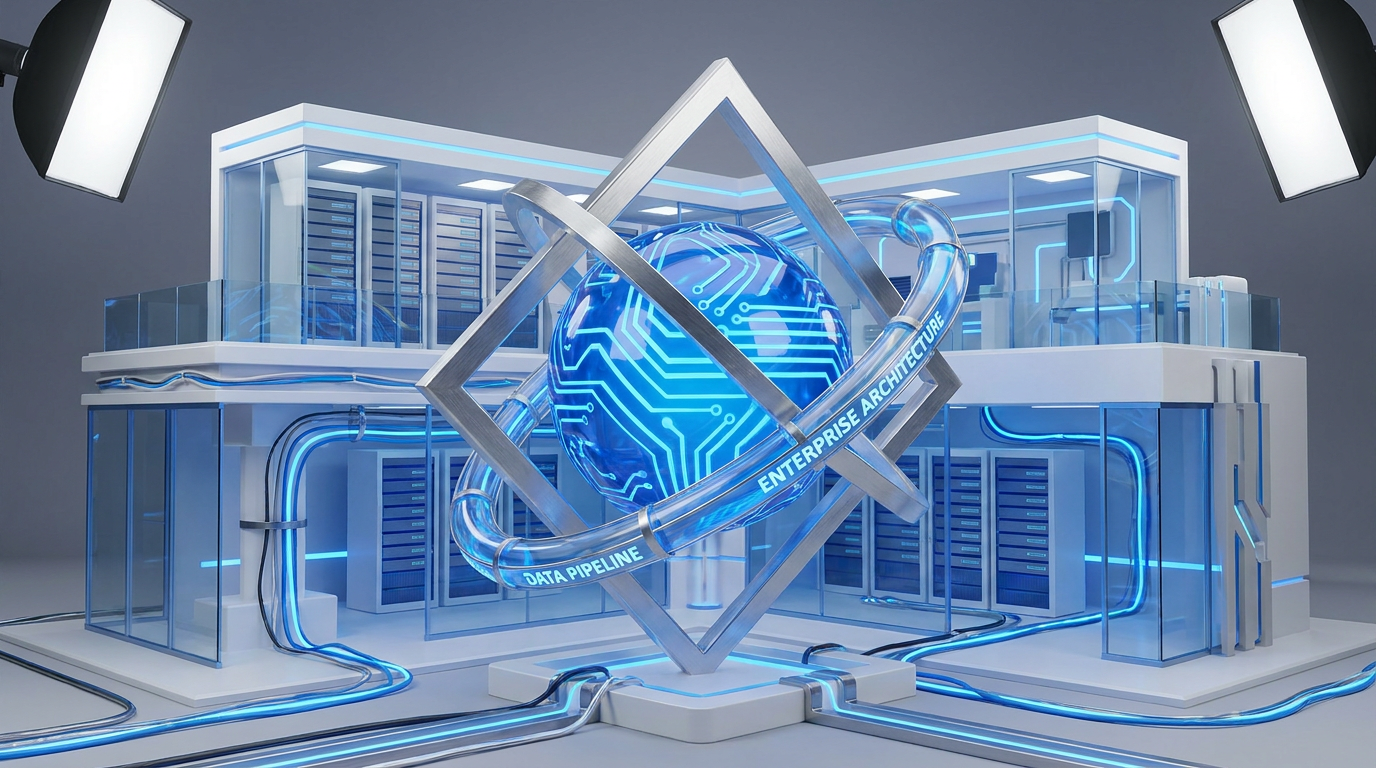
Harness engineering is the practice of deliberately designing the software infrastructure that surrounds an AI model, transforming it from a passive text generator into a reliable, autonomous agent. If the language model is the central processing unit, the harness is the motherboard, the operating system, and the safety guardrails all rolled into one. It encompasses the prompt wrappers, memory modules, tool registries, execution loops, and error-handling systems that dictate how an AI interacts with the outside world. As industry analysts note, this new field is rapidly becoming the vital backbone for AI makers, ensuring that enterprise deployments actually deliver on their promises.[1][5]
The emergence of harness engineering represents the third major phase of AI engineering maturity. In 2023, the industry was obsessed with prompt engineering—the art of phrasing questions perfectly to coax the right answer from a model in a single exchange. By 2024, the focus shifted to context engineering, which involved managing the data retrieved and fed into the model's context window. But both approaches ultimately hit a ceiling. Prompting shapes a single conversation turn, but it cannot sustain an agent operating reliably for hours across hundreds of decisions without human supervision. Harness engineering builds the world the agent operates in, providing the sustained architecture necessary for long-running tasks.[5]

To understand how a harness functions, it helps to break it down into its core layers. Every production-grade agent harness contains an inner harness and an outer harness. The inner harness is the immediate wrapper around the model calls. It handles the direct formatting of inputs, the parsing of outputs, and the immediate context delivery. It is the translator that sits between the raw neural network and the rest of the software system, ensuring that the model's outputs are structured in a way that traditional code can understand and execute.[5]
The outer harness, meanwhile, is the broader orchestration layer. This is where the true complexity of modern AI engineering lies. The outer harness manages routing, deciding which specialized agent should handle a specific sub-task. It maintains persistent memory across sessions, ensuring the AI does not forget a user's instructions from an hour ago. It governs tool integration, dictating exactly when and how the model is allowed to query a database, search the web, or execute code. Crucially, the outer harness is responsible for error handling and verification—catching hallucinations or mistakes before they cascade into production failures.[5]
Industry frameworks increasingly categorize this architecture into four distinct rings: computer, context, orchestration, and learning. The computer ring provides the raw execution environment, such as a secure filesystem or a sandboxed terminal. The context ring manages the flow of information, deciding what historical data is relevant to the current task. The orchestration ring acts as the traffic controller, sequencing multi-step plans and routing outputs to the correct downstream systems. Finally, the learning ring captures execution traces and user feedback, allowing the harness to permanently adjust its own rules when the agent makes a recurring mistake.[6]

Industry frameworks increasingly categorize this architecture into four distinct rings: computer, context, orchestration, and learning.
Verification is often the most challenging aspect of harness design, particularly in high-stakes environments like autonomous software development. When an AI coding agent generates a patch, the model itself cannot reliably verify its own work in isolation. The harness must provide a sandbox environment, run automated tests, invoke linters, and cross-reference the changes against the broader codebase. If a test fails, the harness catches the error, feeds the failure logs back to the model, and prompts it to try again. This automated loop—plan, execute, verify, retry—is what separates a fragile prototype from a resilient enterprise tool.[6]
Major frontier AI labs have fully embraced this paradigm, driving the term into standard industry nomenclature. Anthropic, for instance, has extensively documented its internal use of agent harnesses to enable long-running coding tasks. By carefully designing the harness—specifically focusing on how context is carried across different sessions and how tasks are decomposed—their engineers were able to push the performance of their models well beyond baseline capabilities. They discovered that while upgrading to a newer model provides marginal gains, building a better harness around an existing model can yield order-of-magnitude improvements in reliability.[2]
Google has taken a similarly structural approach, developing a unified agent harness internally known as Antigravity. Rather than building bespoke infrastructure for every new feature, this single harness serves as the connective tissue across Google Search, the Gemini application, Cloud services, and AI Studio. By standardizing the execution environment, Google can deploy agentic capabilities at massive scale, ensuring consistent memory management and tool execution regardless of which specific product the user is interacting with. This unified approach highlights how harness engineering is shifting from a niche developer practice to core enterprise infrastructure.[4]

As the ecosystem matures, the challenges of harness engineering are evolving. Developers are increasingly finding themselves managing multiple different agents simultaneously—a coding agent, a search agent, a data analysis agent—each operating within its own isolated harness. To solve this fragmentation, companies like Databricks have introduced the concept of a meta-harness. Systems like their open-source Omnigent act as an overarching orchestration layer that sits above individual agents, allowing them to share memory, hand off tasks, and collaborate seamlessly. The meta-harness treats individual agents as interchangeable components within a larger, unified workflow.[3]
Despite the rapid formalization of harness engineering, a significant debate is brewing over its long-term future. One camp, heavily represented by frontier model developers, argues that the current scramble to build complex scaffolding has a limited shelf life. Leaders at Google DeepMind have suggested that as foundation models become natively agentic—better at long-horizon planning, self-correction, and tool use—they will naturally absorb many of the functions currently handled by external harnesses. In this view, the massive infrastructure stacks being built today are a temporary bridge, destined to collapse as the underlying models grow smarter.[4][7]

However, enterprise pragmatists and infrastructure builders strongly disagree. They argue that businesses will never willingly surrender complete control to a black-box neural network, regardless of how capable it becomes. In corporate environments, audit trails, access controls, and deterministic guardrails are non-negotiable. An external harness acts as an architectural exoskeleton, explicitly mediating every interaction between the AI and the company's databases. Even if a model is capable of executing a database migration natively, compliance requires that an external, auditable software layer explicitly grants permission and logs the action.[1][7]
Ultimately, the rise of harness engineering signals a maturation of the artificial intelligence industry. The focus has shifted from the theoretical capabilities of neural networks to the practical realities of software engineering. For businesses adopting AI in 2026, the competitive advantage no longer lies in having access to the smartest model—those are widely available via APIs. The true differentiator is the quality of the infrastructure built around it. By investing in robust harness engineering, organizations are ensuring their AI systems are not just intelligent, but safe, predictable, and genuinely useful.[1][7]
How we got here
2023
Prompt engineering dominates as developers focus on single-turn text optimization.
2024
Context engineering emerges to manage data retrieval and context window limits.
Early 2026
Major AI labs formalize 'harness engineering' to build reliable autonomous agents.
June 2026
Open-source meta-harnesses like Omnigent launch to orchestrate multiple agents.
Viewpoints in depth
Infrastructure Builders
This camp believes the harness is the primary driver of agent reliability and enterprise adoption.
Infrastructure engineers argue that the foundation model is merely a reasoning engine, akin to a computer's CPU. Without a robust operating system—the harness—the CPU is practically useless. They point out that most agent failures in production are not due to a lack of model intelligence, but rather harness failures: bad output validation, missing memory systems, or poor routing. For this group, investing in the scaffolding is the only way to achieve predictable, enterprise-grade reliability.
Frontier Model Optimists
This perspective argues that models will eventually absorb scaffolding natively, making complex custom harnesses obsolete.
Researchers at frontier labs suggest that the current explosion of complex agent harnesses is a temporary symptom of immature models. As foundation models become inherently better at long-horizon planning, self-correction, and native tool use, they will naturally internalize the functions currently handled by external code. Proponents of this view believe that over-investing in bespoke scaffolding today is a mistake, as the next generation of models will render those complex architectures redundant.
Enterprise Adopters
This group focuses on the harness as a necessary, permanent exoskeleton for auditability and safety.
For corporate IT leaders and compliance officers, the intelligence of the model is secondary to its predictability. They argue that businesses will never allow a black-box neural network to autonomously execute database migrations or send customer emails without explicit, external guardrails. In this view, the harness acts as an auditable exoskeleton that enforces access controls and logs every action. Even if a model becomes capable of managing its own execution loops, enterprise pragmatists insist that an external harness will always be required for regulatory compliance and risk management.
What we don't know
- Whether future foundation models will natively absorb orchestration capabilities, making external harnesses obsolete.
- How standardization will evolve across competing meta-harness frameworks like Omnigent and Antigravity.
Key terms
- Agent Harness
- The software infrastructure surrounding a language model that manages its memory, tool access, and execution loops.
- Context Engineering
- The practice of managing what information goes into a model's context window, acting as a precursor to full harness engineering.
- Meta-Harness
- An overarching orchestration layer that manages multiple different AI agents and their respective harnesses, allowing them to collaborate.
- Inner Harness
- The immediate code wrapper around model calls, handling direct inputs, outputs, and formatting.
Frequently asked
Is harness engineering just a new name for prompt engineering?
No. Prompt engineering optimizes the text sent to a model in a single exchange. Harness engineering builds the software environment—like memory, tool access, and error recovery—that allows the model to act autonomously over long periods.
Do I need to build a custom harness for my business?
It depends on your needs. Many enterprises build custom harnesses to enforce strict security and audit trails, though major tech companies are beginning to offer managed harness platforms and open-source frameworks.
Will AI models eventually make harnesses obsolete?
There is debate in the industry. Some experts believe models will natively absorb these capabilities, while others argue enterprises will always need explicit, external guardrails for compliance and safety.
Sources
Source coverage
7 outlets
3 viewpoints surfaced







[1]ForbesInfrastructure Builders
Harness Engineering Becomes Vital Backbone For AI Makers And Happy Users
Read on Forbes →[2]AnthropicFrontier Model Optimists
Harness design for long-running application development
Read on Anthropic →[3]DatabricksEnterprise Adopters
Introducing Omnigent: A Meta-Harness to Combine, Control and Share Your Agents
Read on Databricks →[4]Sequoia CapitalFrontier Model Optimists
Google DeepMind's Logan Kilpatrick: Why the Model Eats the Harness
Read on Sequoia Capital →[5]MindStudioInfrastructure Builders
What Is Harness Engineering? Why Your Agent Wrapper Drives More Performance Than the Model
Read on MindStudio →[6]CodeRabbitInfrastructure Builders
What is harness engineering for AI code review & oversight
Read on CodeRabbit →[7]Factlen Editorial TeamEnterprise Adopters
Synthesis by Factlen editorial team
Read on Factlen Editorial Team →

Every angle. Every day.
Get business stories with full source coverage and perspective breakdowns delivered to your inbox.