
How Content Credentials Are Cryptographically Proving Photos Are Real
As AI-generated images become indistinguishable from reality, the photography industry is adopting a new cryptographic standard to prove authenticity at the point of capture.
By Factlen Editorial Team
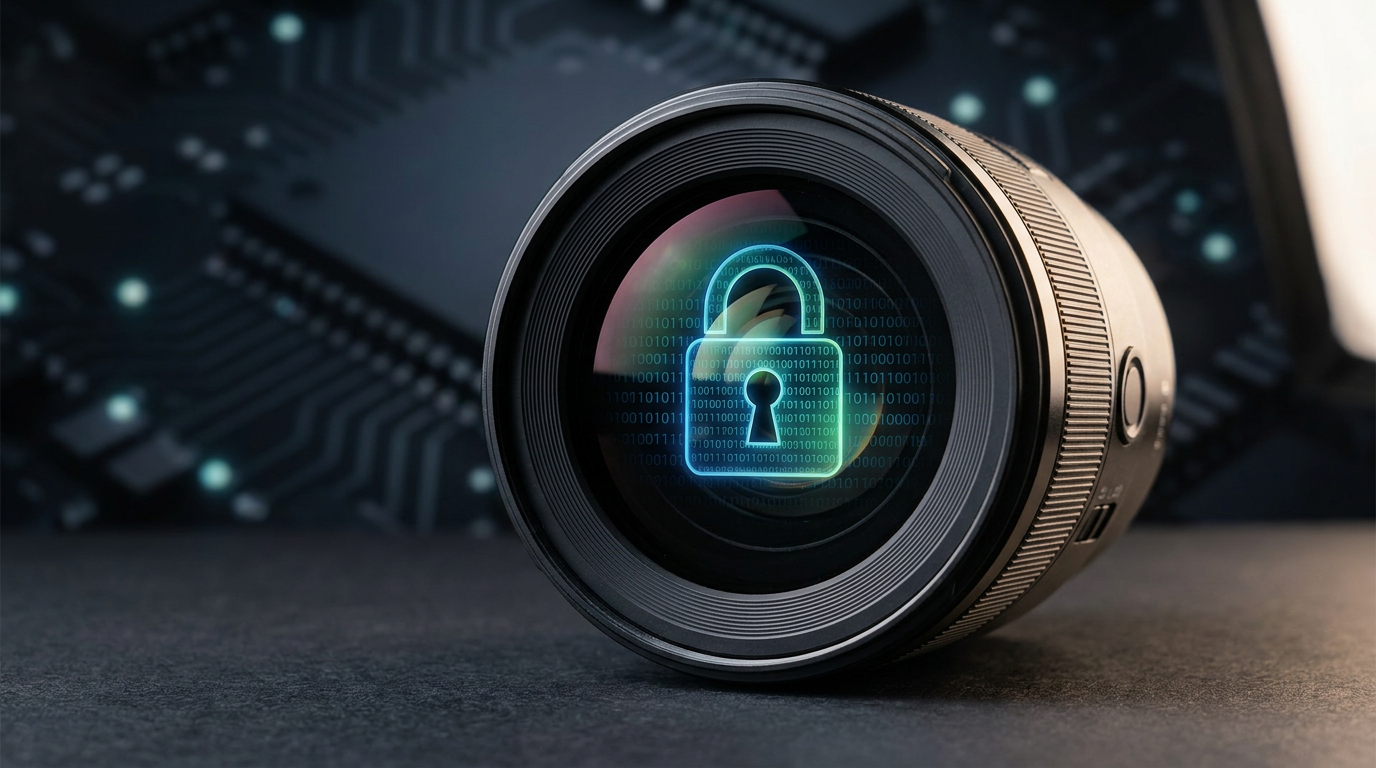
- Provenance Advocates
- Argue that cryptographic signing at the point of capture is the only viable defense against the exponential rise of AI-generated misinformation.
- Hardware Integrators
- Focus on embedding secure signing capabilities directly into camera processors and smartphone chips without disrupting user workflows.
- Security Skeptics
- Warn that metadata stripping, infrastructure vulnerabilities, and the 'analog hole' mean C2PA cannot guarantee absolute truth.
What's not represented
- · Independent creators who rely on heavy digital manipulation for artistic expression.
- · Social media platform engineers managing the server costs of retaining massive cryptographic manifests.
Why this matters
As AI-generated imagery becomes indistinguishable from reality, trusting what you see online is increasingly difficult. Content Credentials provide a verifiable 'nutrition label' for digital media, allowing you to independently confirm whether a photo is real, who took it, and if AI was used to alter it.
Key points
- Deepfake incidents surged by 900% between 2023 and 2025, prompting the photography industry to shift from detecting fakes to proving authenticity.
- The C2PA standard embeds a cryptographically signed manifest, or Content Credential, into media files at the point of capture.
- Major camera manufacturers, including Leica, Sony, Canon, and Nikon, have integrated secure hardware signing into their professional bodies.
- The Google Pixel 10 brought C2PA to the mainstream in 2025 by cryptographically signing every photo by default.
- While C2PA creates a verifiable chain of custody, vulnerabilities like metadata stripping and the 'analog hole' remain challenges.
Between 2023 and 2025, the visual line between reality and synthetic media effectively vanished. Generative AI models evolved from producing easily identifiable, multi-fingered oddities to generating photorealistic scenes indistinguishable from actual photography. As a result, global deepfake incidents surged from approximately 500,000 to over 8 million in just two years—a staggering 900% increase.[3]
For photojournalists, news organizations, and democratic institutions, this explosion of synthetic media presented an existential crisis. The initial response was to build AI detection algorithms—software designed to spot the invisible artifacts left behind by image generators. But detection proved to be a losing arms race; every time a classifier learned to spot a fake, the generative models were updated to bypass it.[3][8]
The photography and technology industries realized they needed to invert the model. Instead of trying to detect fakes after the fact, they needed a way to cryptographically prove authenticity at the point of creation. This paradigm shift is being driven by the Coalition for Content Provenance and Authenticity (C2PA), an alliance founded by Adobe, Microsoft, Intel, and the BBC, which has now grown to over 6,000 members.[2][3][6][8]

The C2PA standard introduces what is essentially a digital "nutrition label" for media, known as a Content Credential. Rather than relying on easily manipulated EXIF data, C2PA embeds a cryptographically signed manifest directly inside the media file. This manifest records a tamper-evident history: who created the content, what device was used, when and where it was captured, and whether any AI tools were involved in its creation or editing.[1][2][3]
The process begins the moment the shutter is pressed. In a C2PA-compliant camera, a secure hardware chip generates a digital signature using a public key infrastructure (PKI) certificate. This binds the sensor data to the cryptographic manifest before the file is even saved to the memory card. Because the signature is generated by dedicated hardware, it is virtually impossible to spoof the origin of the file.[1][4][6]
Crucially, this manifest is designed to travel with the image through the entire editorial workflow. When a photographer opens a signed RAW file in a C2PA-aware application like Adobe Lightroom or Photoshop, the software reads the original credential. If the photographer adjusts the exposure, crops the image, or uses a generative AI tool to remove an object, the software appends those specific actions to the manifest and signs it again.[1][8]
When the final image is exported and published, viewers can click a small "CR" (Content Credentials) icon to inspect the file's entire chain of custody. If a bad actor intercepts the image and alters it using non-compliant software, the cryptographic signature breaks, immediately flagging the file as tampered with or unverified.[3][6]
When the final image is exported and published, viewers can click a small "CR" (Content Credentials) icon to inspect the file's entire chain of custody.
The hardware rollout began in the professional tier. In late 2023, Leica introduced the M11-P, the world's first camera to feature a built-in secure chipset for C2PA signing, developed in partnership with the German Federal Printing Office. Throughout 2024 and 2025, industry giants Sony, Canon, and Nikon followed suit, pushing firmware updates to their flagship mirrorless bodies—such as the Sony Alpha 9 III and Canon EOS R1—to support news agencies demanding verifiable workflows.[4][7]

However, the true tipping point occurred in August 2025 with the release of the Google Pixel 10. While professional cameras brought provenance to photojournalism, Google brought it to the masses. Utilizing its Tensor G5 and Titan M2 security chips, the Pixel 10 became the first mainstream smartphone to cryptographically sign every captured photo by default, achieving the highest defined level of C2PA assurance.[4][5]
Software and platform integration has accelerated alongside the hardware. In May 2026, YouTube began reading C2PA metadata to automatically apply non-removable disclosure labels to fully AI-generated videos. Meanwhile, AI developers like OpenAI and Google have integrated C2PA into ChatGPT and Gemini, ensuring that their image generators automatically attach synthetic provenance manifests to their outputs.[3][6]
Despite this momentum, the C2PA standard is not a silver bullet, and security researchers are quick to point out its limitations. The most glaring vulnerability is the "analog hole." A bad actor can simply display a highly realistic AI-generated image on a high-resolution 4K monitor and take a photograph of that screen using a C2PA-compliant camera. The resulting file will carry a perfectly valid cryptographic signature proving it is a "real" photograph—even though the subject is synthetic.[5][8]
Furthermore, the chain of custody is fragile. Many social media platforms and content management systems still strip all metadata from uploaded files to save server space and protect user privacy. The moment a C2PA-signed image is uploaded to a non-compliant platform, its cryptographic manifest is destroyed, rendering it indistinguishable from unverified media.[5][8]

Managing the vast public key infrastructure required for millions of devices also presents massive cybersecurity challenges. In late 2025, Nikon was forced to suspend its C2PA certificate program after a vulnerability was discovered in its signing infrastructure, highlighting the immense difficulty of maintaining a secure, global registry of hardware keys.[5]
Privacy advocates have also raised concerns about the implications of hardware-level tracking. For journalists operating under authoritarian regimes, a cryptographic signature that permanently ties a photograph to a specific camera and location could be life-threatening. Consequently, the C2PA standard emphasizes user control, ensuring that provenance tracking remains an opt-in feature that can be disabled or anonymized at the user's discretion.[2][8]
Ultimately, Content Credentials will not eradicate misinformation or prevent people from believing what they want to believe. However, by establishing a verifiable chain of custody, C2PA is creating a "trusted tier" of digital media. As the technology becomes ubiquitous across smartphones and software, the absence of a Content Credential may soon become just as telling as its presence.[1][6][8]
How we got here
Feb 2021
Adobe, Arm, BBC, Intel, and Microsoft found the Coalition for Content Provenance and Authenticity (C2PA).
Oct 2023
Leica releases the M11-P, the world's first camera with built-in hardware for C2PA Content Credentials.
Mar 2024
Sony pushes firmware updates to its flagship Alpha cameras, bringing C2PA compliance to professional photojournalists.
Aug 2025
Google launches the Pixel 10, becoming the first mainstream smartphone to sign all photos with C2PA by default.
May 2026
YouTube begins reading C2PA metadata to automatically apply non-removable AI disclosure labels to videos.
Viewpoints in depth
Provenance Advocates
Argue that cryptographic signing is the only viable defense against synthetic media.
Organizations like Adobe, the BBC, and the Content Authenticity Initiative argue that the era of trusting digital media by default is over. Because AI generation has outpaced AI detection, they believe the only sustainable solution is to establish a cryptographic chain of custody at the point of creation. By embedding tamper-evident manifests into files, they aim to create a 'trusted tier' of media where consumers can independently verify the who, what, and how of an image's history, shifting the burden of proof from detecting fakes to proving reality.
Hardware Integrators
Focus on embedding secure signing capabilities without disrupting user workflows.
Camera manufacturers like Sony, Canon, and Leica, alongside smartphone makers like Google, view C2PA as a necessary evolution of imaging hardware. Their primary challenge is implementing public key infrastructure (PKI) and secure chipsets that can cryptographically sign massive RAW files in milliseconds without slowing down burst-shooting speeds or draining battery life. For these integrators, success means making provenance tracking completely invisible to the user until the moment the credential needs to be verified.
Security Skeptics
Warn that metadata stripping and the 'analog hole' limit the standard's effectiveness.
Cybersecurity researchers and forensic analysts caution against treating C2PA as a panacea. They point out that the standard cannot verify the physical reality of what was in front of the lens—only that the sensor captured it. A C2PA-compliant camera photographing a deepfake on a high-resolution screen will produce a cryptographically 'authentic' photo of a fake subject (the 'analog hole'). Furthermore, because many social media platforms still strip metadata upon upload, skeptics warn that the chain of custody is easily broken, leaving the vast majority of online media unverified.
What we don't know
- It remains unclear how quickly major social media platforms like Instagram and X will fully integrate C2PA verification, as metadata stripping remains standard practice.
- The industry has yet to solve the 'analog hole' problem, where secure cameras are used to photograph synthetic media displayed on high-resolution screens.
- It is unknown how the suspension of Nikon's certificate program in late 2025 will affect long-term trust in hardware-level public key infrastructure.
Key terms
- C2PA
- The Coalition for Content Provenance and Authenticity, an open technical standard for embedding verifiable provenance metadata into digital files.
- Content Credential
- A tamper-evident digital 'nutrition label' attached to a media file that records its origin, creator, and editing history.
- Cryptographic Hash
- A complex mathematical algorithm that generates a unique digital fingerprint for a file, ensuring that any alteration breaks the signature.
- Analog Hole
- A vulnerability where a person uses a secure camera to take a photograph of a screen displaying a fake image, resulting in an 'authentic' photo of a fake subject.
- Public Key Infrastructure (PKI)
- A system for issuing and managing digital certificates, used by camera manufacturers to securely identify the specific device that captured an image.
Frequently asked
Does C2PA detect deepfakes?
No. C2PA does not scan images to determine if they are fake. Instead, it proves authenticity by cryptographically recording the origin and editing history of a file from the moment it is created.
Can Content Credentials be faked?
Because the credentials rely on hardware-backed cryptographic signatures and public key infrastructure, they are extremely difficult to spoof. Tampering with the file using non-compliant software breaks the signature.
What happens if I post a signed photo to social media?
Currently, many social media platforms strip metadata to save space, which destroys the C2PA manifest. However, platforms like LinkedIn and YouTube are beginning to support and display Content Credentials.
Does this track my location and identity?
C2PA is designed with privacy in mind. The inclusion of personal data, such as the photographer's name or GPS location, is strictly opt-in and can be disabled or redacted by the user.
Sources
Source coverage
8 outlets
3 viewpoints surfaced








[1]C2PA.orgProvenance Advocates
C2PA Explainer
Read on C2PA.org →[2]TechTargetProvenance Advocates
Coalition for Content Provenance and Authenticity (C2PA)
Read on TechTarget →[3]C2PA ViewerSecurity Skeptics
What is C2PA in 60 seconds
Read on C2PA Viewer →[4]LumethicHardware Integrators
Which Leica, Nikon, Sony, Canon, and Google Pixel models sign photos with C2PA
Read on Lumethic →[5]SoftwareSeniSecurity Skeptics
Does my camera support Content Credentials in 2026?
Read on SoftwareSeni →[6]TrueScreenProvenance Advocates
What is C2PA and why was it created
Read on TrueScreen →[7]Sony EuropeHardware Integrators
Sony delivers highly anticipated firmware updates including C2PA compliancy
Read on Sony Europe →[8]Factlen Editorial TeamProvenance Advocates
Synthesis by Factlen editorial team
Read on Factlen Editorial Team →

Every angle. Every day.
Get culture stories with full source coverage and perspective breakdowns delivered to your inbox.