
House Passes Sweeping Labor Bill Mandating Strict Timelines for First Union Contracts
A bipartisan House majority has passed the Faster Labor Contracts Act, a landmark bill that would force employers and newly formed unions into binding arbitration if they cannot reach a first contract within 120 days.
By Factlen Editorial Team
- Labor Advocates
- Argue that employers currently exploit the lack of deadlines to stall negotiations and bust newly formed unions by attrition.
- Business & Employer Groups
- Warn that binding arbitration strips companies of operational control and forces one-size-fits-all contracts onto complex industries.
- Legislative Analysts
- Focus on the shifting political dynamics and the bipartisan coalition attempting to pass the bill through a divided Congress.
What's not represented
- · Non-unionized workers who might be impacted by industry-wide wage shifts
- · Federal arbitrators who would be tasked with enforcing the new rules
Why this matters
If enacted, this legislation would fundamentally shift the balance of power in the American workplace, ensuring that newly formed unions secure binding contracts within months rather than years. For businesses, it introduces the unprecedented risk of federal arbitrators dictating operational costs and wages if negotiations stall.
Key points
- The House passed the Faster Labor Contracts Act to mandate strict timelines for newly unionized workplaces.
- Employers and unions would have 120 days to reach a deal before facing binding federal arbitration.
- Currently, first-contract negotiations take an average of 465 days, which unions argue is a corporate stalling tactic.
- The bill passed 230-193, with 20 Republicans joining Democrats via a discharge petition.
- Business groups strongly oppose the measure, warning that unelected arbitrators will impose financially ruinous contracts.
- The legislation now heads to the Senate, where it has bipartisan co-sponsors but faces a likely filibuster.
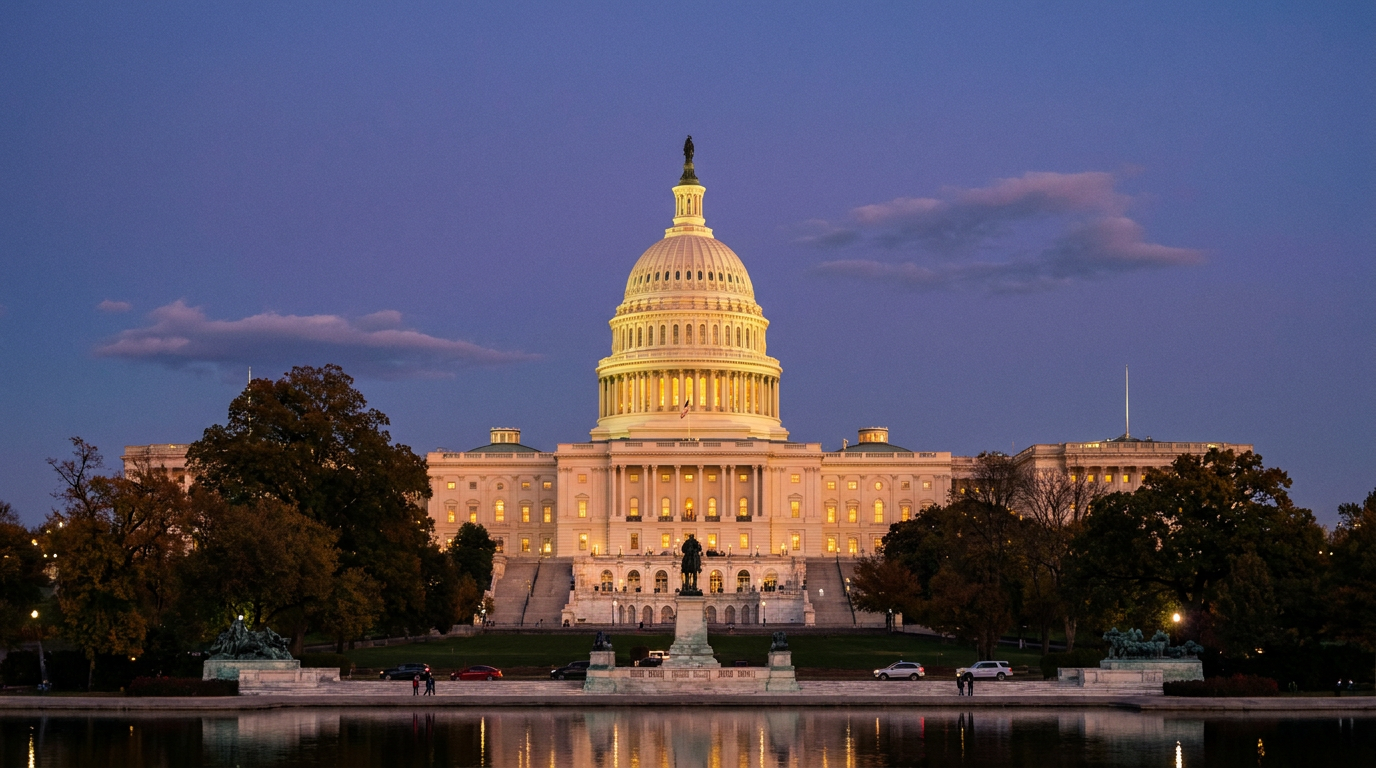
The US House of Representatives has passed a landmark labor bill designed to end the notorious "stalling" tactic in union negotiations, mandating strict timelines and binding arbitration for newly unionized workplaces.[1][3][4]
The Faster Labor Contracts Act passed the chamber on Tuesday in a 230-193 vote. In a rare display of cross-aisle labor alignment, 210 Democrats were joined by 20 Republicans to force the legislation to the floor via a discharge petition, bypassing committee roadblocks that had previously stalled the measure.[1][4]
If enacted into law, the bill would fundamentally rewrite the rules of collective bargaining in the United States. Under current labor law, employers are required to bargain in "good faith" but face no hard deadlines to actually sign a contract, creating a loophole that labor advocates say is routinely exploited.[1][6]
Data from Bloomberg Law shows that it currently takes an average of 465 days for workers and employers to reach a first contract after a successful union election. Many newly formed unions dissolve, lose momentum, or face high worker turnover during this protracted period, effectively nullifying the election results.[2]

The new legislation imposes a rigid, inescapable clock on the process. Employers would be legally required to begin negotiations within 10 days of a certified union election, preventing the initial delays that often plague new bargaining units.[1]
From that starting point, the two sides have exactly 90 days to reach a tentative agreement. If no deal is reached within that three-month window, federal mediators from the Federal Mediation and Conciliation Service are brought in for a mandatory 30-day intervention period.[1][3]
From that starting point, the two sides have exactly 90 days to reach a tentative agreement.
If the deadlock persists after 120 days, the dispute is handed over to a federal arbitration panel. This panel would have the unilateral authority to draft and impose a binding two-year contract on both the employer and the union, removing the company's ability to hold out indefinitely.[1][3]

Labor leaders have hailed the passage as a historic victory that closes a fatal flaw in the National Labor Relations Act. The General President of the International Brotherhood of Teamsters called the legislation "one of the most consequential labor bills to come before Congress in generations," arguing it will finally give teeth to workers' right to organize.[1][6]
However, the bill has triggered fierce opposition from corporate lobbying groups and industry associations, who view the arbitration mandate as an existential threat to free enterprise. The Chief Human Resource Officer Association condemned the measure as "draconian," warning that binding arbitration strips companies of their ability to control their own operational costs and business models.[1][5]
Business advocates argue that complex supply chains, specialized manufacturing, and modern service industries cannot be governed by one-size-fits-all contracts. They warn that unelected federal arbitrators, who lack industry-specific expertise, could impose wage scales or work rules that render a company uncompetitive or financially insolvent.[5]

The legislation now heads to the Senate, where its fate remains uncertain despite a shifting political landscape. A companion version of the bill has already been introduced by an unusual bipartisan coalition that notably includes progressive Senator Cory Booker and populist conservative Senator Josh Hawley.[1][4]
The Booker-Hawley alliance underscores a growing realignment in American politics, where a vocal faction of the Republican party is increasingly willing to break with traditional corporate chambers of commerce to court working-class union voters.[4][6]
Whether that populist wing can muster the 60 votes required to overcome a guaranteed Senate filibuster will be the ultimate test of the bill's viability. Regardless of the immediate outcome, the House vote signals that aggressive labor reform has moved from the progressive fringe to the center of the congressional agenda.[3][4]
How we got here
2023–2024
A surge in high-profile union victories at major corporations highlights the difficulty of securing first contracts, with many negotiations stalling for over a year.
Early 2026
The Faster Labor Contracts Act is introduced in the House, replicating a key provision of the stalled PRO Act.
May 2026
A bipartisan coalition successfully uses a discharge petition to bypass committee leadership and force the bill to the House floor.
June 9, 2026
The House passes the bill in a 230-193 vote, sending it to the Senate.
Viewpoints in depth
Labor's view
Unions argue the current system incentivizes endless corporate stalling.
Labor advocates point out that winning a union election is currently only half the battle. Because the National Labor Relations Act requires employers to bargain in 'good faith' but sets no deadlines, companies routinely hire specialized law firms to drag out negotiations for years. This tactic, known as 'busting by attrition,' is designed to frustrate workers, increase turnover, and eventually lead to a decertification vote before a first contract is ever signed. Proponents argue the new strict timelines simply force employers to the table with real intent.
Corporate view
Employers warn that binding arbitration is a disastrous overreach.
Business groups and human resource associations argue that the bill fundamentally violates the premise of free-market negotiation. They warn that handing contract authority to a federal arbitration panel means unelected bureaucrats—who lack specific knowledge of a company's margins, supply chain vulnerabilities, or operational needs—will dictate wages and work rules. Industry leaders caution that this could force companies into financially ruinous two-year contracts, ultimately leading to layoffs, facility closures, or accelerated automation to offset the imposed costs.
The Populist Right's view
A faction of Republicans is breaking with corporate orthodoxy to court the working class.
The 20 Republican votes in the House, combined with Senator Josh Hawley's co-sponsorship in the Senate, highlight a significant fracture within the conservative movement. This populist wing argues that the GOP must become the party of the working class, which requires supporting private-sector unions against multinational corporate interests. By backing the Faster Labor Contracts Act, these lawmakers are signaling a willingness to abandon the Chamber of Commerce's traditional free-market absolutism in favor of policies that directly increase blue-collar wages and job security.
What we don't know
- Whether the Senate will bring the companion bill to a floor vote before the end of the legislative session.
- How federal arbitration panels would be staffed and selected to handle the sudden influx of contract disputes.
- If the Supreme Court would uphold the constitutionality of forcing private companies into binding arbitration.
Key terms
- Binding Arbitration
- A process where a neutral third party hears both sides of a dispute and makes a legally enforceable decision that both parties must accept.
- Discharge Petition
- A parliamentary procedure in the House of Representatives that allows a majority of members to force a bill out of committee and directly to the floor for a vote.
- First Contract
- The initial collective bargaining agreement negotiated between an employer and a newly certified labor union.
- Good Faith Bargaining
- The current legal requirement that employers and unions must meet and confer with a genuine intent to reach an agreement, though it does not mandate that a deal actually be reached.
Frequently asked
What does the Faster Labor Contracts Act do?
It imposes strict deadlines on first-contract negotiations between newly formed unions and employers, capping the process at 120 days before binding arbitration is triggered.
How long do contract negotiations currently take?
According to Bloomberg Law, it currently takes an average of 465 days for workers and employers to reach a first contract after a successful union election.
What happens if the two sides can't agree?
Under the bill, if no agreement is reached after 90 days of negotiation and 30 days of federal mediation, a federal arbitration panel will draft and impose a binding two-year contract.
Will this bill become law?
It has passed the House with bipartisan support, but it faces a difficult path in the Senate, where it will likely need 60 votes to overcome a filibuster.
Sources
Source coverage
6 outlets
3 viewpoints surfaced






[1]OnLaborLabor Advocates
House passes strict timeline bill for first union contracts
Read on OnLabor →[2]Bloomberg LawBusiness & Employer Groups
House Passes Faster Labor Contracts Act Amid Business Pushback
Read on Bloomberg Law →[3]ReutersLegislative Analysts
US House passes bill to speed up union contract negotiations
Read on Reuters →[4]The HillLegislative Analysts
House passes major union contract bill with bipartisan support
Read on The Hill →[5]Fox BusinessBusiness & Employer Groups
Business groups slam 'draconian' labor bill passed by House
Read on Fox Business →[6]JacobinLabor Advocates
The House Just Passed a Bill That Could End Union Busting by Attrition
Read on Jacobin →

More in news politics
See all 6 stories →School Nutrition
Fact-Checking Universal Free School Meals: What the Evidence Actually Shows
7 sources

Georgia Midterms
Georgia Republican Primary Runoffs Deliver Mixed Results for Trump Endorsements
6 sources

Middle East Diplomacy
US-Iran Diplomatic Agreement Nears Collapse as Israeli Strikes in Lebanon Trigger Retaliation Threats
8 sources

US-Iran Relations
US and Iran Reach Tentative Peace Deal to Reopen Strait of Hormuz
7 sources

Every angle. Every day.
Get news politics stories with full source coverage and perspective breakdowns delivered to your inbox.