
EU Delays High-Risk AI Compliance to 2027 in Sweeping 'Omnibus' Amendment
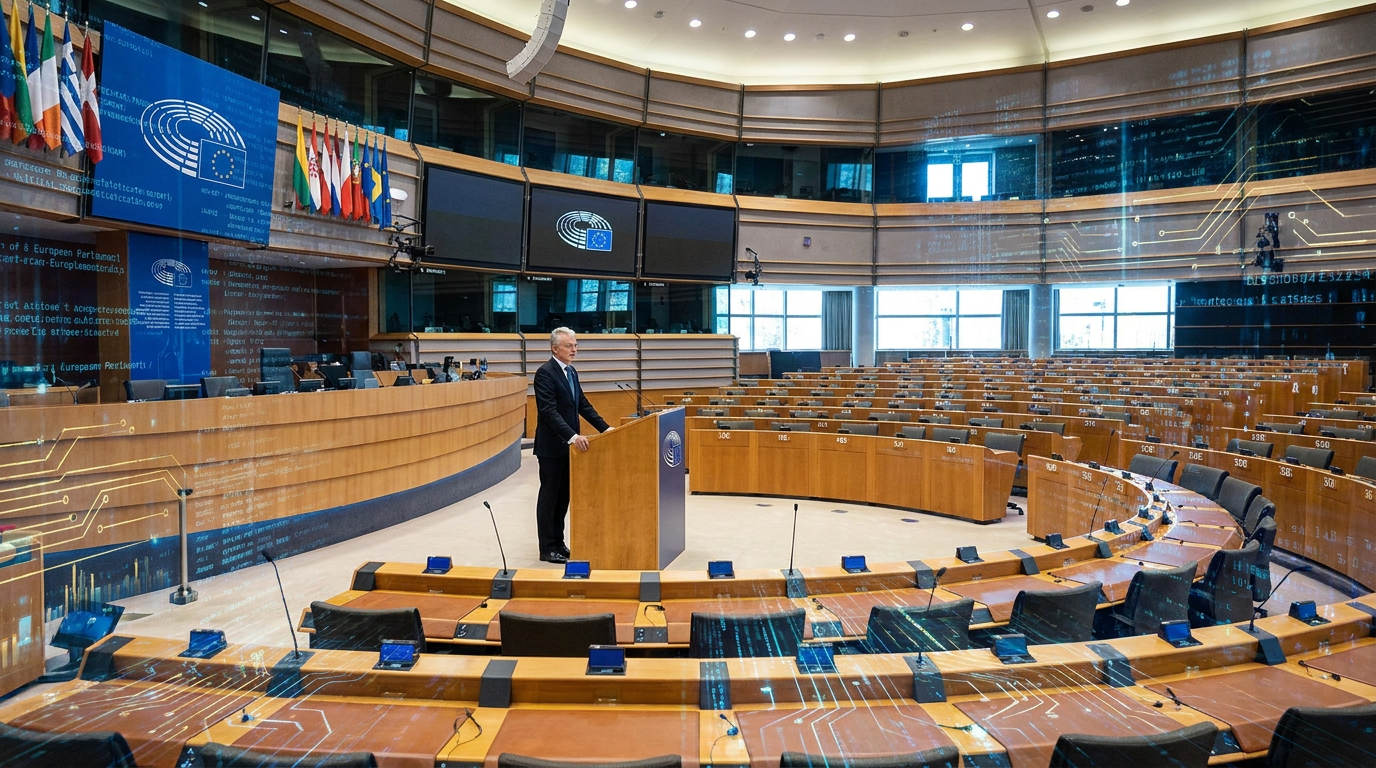
The European Parliament has approved the 'AI Omnibus' package, delaying the most stringent high-risk AI compliance deadlines to late 2027 while introducing an immediate ban on AI-generated non-consensual intimate imagery.
By Factlen Editorial Team
- Enterprise AI Developers
- Relieved by the compliance delay, focusing on building documentation and governance architectures.
- European Regulators
- Prioritizing centralized enforcement and reducing red tape to foster domestic AI innovation.
- Digital Rights Advocates
- Praising the deepfake ban but warning that delayed high-risk rules leave citizens vulnerable to algorithmic bias.
- Legal & Compliance Advisors
- Warning clients that transparency rules still apply in 2026 and complex systems cannot bypass classification.
What's not represented
- · Open-Source AI Maintainers
- · Victims of AI-Generated Deepfakes
Why this matters
The delay provides a massive 16-month reprieve for global enterprises scrambling to meet the original August 2026 deadline for high-risk systems, but the immediate ban on deepfake 'nudifiers' signals that the EU will still aggressively police consumer-facing AI harms.
Key points
- The EU AI Act's high-risk compliance deadlines have been delayed to late 2027 and 2028.
- A strict new ban on AI-generated non-consensual intimate imagery takes effect December 2, 2026.
- Basic transparency rules for AI systems still become enforceable on August 2, 2026.
- Complex multi-agent AI systems will be assessed as a single high-risk entity to prevent loopholes.
On June 16, 2026, the European Parliament voted to approve the "Digital Omnibus on AI," fundamentally altering the enforcement timeline of the world's most comprehensive artificial intelligence law.[1][3]
The legislative package presses the pause button on the EU AI Act's most stringent requirements, delaying the compliance deadline for "high-risk" AI systems by over a year.[2][8]
However, the Omnibus is not purely a deregulatory measure; it simultaneously introduces an immediate, severe ban on AI systems designed to generate non-consensual intimate imagery, commonly known as "nudifiers."[1][3]

The primary driver behind the delay is widespread industry unreadiness and a severe bottleneck in regulatory standards. Under the original statutory timeline, the bulk of the AI Act—including the rigorous Article 8-15 obligations for high-risk systems—was set to become enforceable on August 2, 2026.[5][8]
By late 2025, evidence mounted that neither the European Commission nor private enterprises were prepared for the transition. Harmonized technical standards remained incomplete, and companies struggled to map their sprawling AI deployments against the Act's broad definitions.[2][7]
In response, the Omnibus agreement defers the high-risk obligations for standalone systems (Annex III) to December 2, 2027. For AI embedded in regulated physical products (Annex I), the deadline is pushed even further to August 2, 2028.[2][8]
Despite the relief for high-risk systems, legal advisors warn that the August 2026 deadline remains a critical compliance milestone for transparency and general-purpose AI. The Omnibus is a deferral, not a dismantling of the regulatory architecture.[2][5]
The August 2, 2026 date remains active for Article 50 transparency obligations, which require providers to ensure that humans are aware they are interacting with an AI and that AI-generated content is identifiable.[2][8]
The new legislation does grant a brief four-month grace period for machine-readable watermarking obligations, pushing that specific technical requirement to December 2, 2026, for systems that are already on the market.[1][2]
Alongside the delays, the Omnibus introduces a strict new prohibition on deepfake "nudifiers," reflecting intense political pressure to address consumer harms. Article 5 of the AI Act has been amended to explicitly ban AI systems that generate child sexual abuse material or create sexually explicit images of identifiable individuals without consent.[1][3]

Alongside the delays, the Omnibus introduces a strict new prohibition on deepfake "nudifiers," reflecting intense political pressure to address consumer harms.
Providers are strictly prohibited from placing these systems on the EU market, and the ban takes effect on December 2, 2026. Breaching these prohibitions carries the Act's maximum penalties: fines of up to €35 million or 7% of a company's global annual turnover.[3][5]
However, there is transparent uncertainty regarding how these new prohibitions will be enforced at the national level. While lawmakers have championed the nudifier ban, national regulatory authorities report that they lack the legal powers and practical arrangements to police it effectively.[3]
Regulators in member states like Lithuania have publicly stated that the division of responsibilities between national market surveillance authorities and the centralized European AI Office remains entirely undefined ahead of the December 2026 enforcement date.[3][6]
For engineering teams, the delay does not mean they can pause compliance efforts, as draft guidelines clarify that complex and multi-agent AI systems will be regulated stringently to prevent loophole exploitation.[4][5]
Guidelines issued by the European Commission in June 2026 state that if multiple AI models form a complex pipeline that influences a high-risk decision, the entire interconnected architecture is classified as a single high-risk system.[4]

This interpretation prevents developers from bypassing Annex III requirements by splitting a high-risk task across several minimal-risk agents. Furthermore, the guidelines note that human oversight does not remove a system's high-risk status; it is merely a prerequisite for compliance.[4][5]
The Omnibus package also accelerates the centralization of regulatory power within the European AI Office. If adopted in its current form, the Office will directly supervise the compliance of AI systems integrated into very large online platforms (VLOPs) and very large search engines.[6][8]
This centralization aims to prevent uneven enforcement across the EU's 27 member states, a persistent challenge observed in the rollout of the General Data Protection Regulation (GDPR).[6]
How we got here
August 2024
The original EU AI Act officially entered into force.
November 2025
The European Commission proposed the 'AI Omnibus' to simplify rules and delay high-risk deadlines.
June 16, 2026
The European Parliament voted to approve the Omnibus package, including the ban on nudifiers.
August 2, 2026
Original high-risk deadline; now serves as the enforcement date for transparency and governance rules.
December 2, 2026
Enforcement begins for the ban on non-consensual intimate imagery and watermarking rules.
December 2, 2027
New compliance deadline for standalone high-risk AI systems (Annex III).
Viewpoints in depth
Enterprise AI Developers
Relieved by the delay, this group is using the extra time to map complex AI deployments.
For engineering and compliance teams, the 16-month delay is a critical lifeline. Mapping sprawling enterprise AI usage—where a single customer support workflow might call multiple third-party models and internal databases—proved nearly impossible under the original timeline. However, legal advisors warn these teams not to pause their efforts, as building the required data governance, automatic logging, and technical documentation architectures will consume the entire extension period.
European Regulators
Focused on reducing red tape to foster domestic AI innovation while centralizing enforcement.
Lawmakers framed the Omnibus as a necessary 'pause button' to prevent the AI Act from strangling the European tech sector before it could mature. By delaying the heaviest burdens and shifting more enforcement power to the centralized European AI Office, regulators hope to avoid a fragmented landscape where 27 different national authorities apply the rules inconsistently. The goal is to make Europe an 'AI continent' that can compete globally.
Digital Rights Advocates
Supportive of the deepfake bans but deeply concerned about enforcement gaps.
While civil society groups celebrated the explicit ban on 'nudifiers' and non-consensual intimate imagery, they remain skeptical about the practical reality of enforcement. Advocates point out that national market surveillance authorities are underfunded and lack the legal frameworks to immediately police generative AI platforms. They fear the delay of high-risk oversight leaves vulnerable populations exposed to algorithmic bias in employment and law enforcement for another year and a half.
What we don't know
- How responsibilities will be divided between the centralized European AI Office and national market surveillance authorities.
- Whether the four-month grace period for watermarking will be sufficient for legacy AI systems already deployed on the market.
- How strictly regulators will interpret the 'complex and multi-agent systems' guidelines when auditing enterprise architectures.
Key terms
- Digital Omnibus on AI
- A legislative package passed in mid-2026 that amends the EU AI Act to delay certain high-risk compliance deadlines and introduce new prohibitions.
- Annex III High-Risk Systems
- Standalone AI systems used in sensitive areas like employment, education, law enforcement, and critical infrastructure, subject to strict documentation and oversight rules.
- Annex I Embedded AI
- AI systems that serve as safety components in physically regulated products, such as medical devices, aviation, or automotive machinery.
- Article 50 Transparency
- A provision requiring that humans are informed when interacting with an AI and that AI-generated content is clearly identifiable and watermarked.
- European AI Office
- The centralized regulatory body within the European Commission responsible for enforcing rules on general-purpose AI and coordinating with national authorities.
Frequently asked
Does the AI Omnibus cancel the EU AI Act?
No. It delays the compliance deadlines for high-risk systems by 16 to 24 months, but the core risk-based architecture and transparency rules remain intact.
When do the transparency and watermarking rules take effect?
Most transparency rules take effect on August 2, 2026, with a brief grace period for machine-readable watermarking extending to December 2, 2026.
What is the new rule on AI 'nudifiers'?
The Omnibus explicitly bans AI systems designed to generate non-consensual sexually explicit imagery or child sexual abuse material, effective December 2, 2026.
How does the law treat multi-agent AI systems?
If multiple AI agents coordinate to perform a high-risk task, the entire interconnected architecture is classified and regulated as a single high-risk system.
Sources
Source coverage
8 outlets
4 viewpoints surfaced







[1]European ParliamentEuropean Regulators
Parliament votes on AI Omnibus, delaying high-risk rules and banning nudifiers
Read on European Parliament →[2]Gibson DunnEnterprise AI Developers
EU AI Act Omnibus Agreement — Postponed High-Risk Deadlines and Other Key Changes
Read on Gibson Dunn →[3]Tech Policy PressDigital Rights Advocates
What the EU AI Omnibus Deal Changes for the AI Act and What Lies Ahead
Read on Tech Policy Press →[4]Arthur CoxLegal & Compliance Advisors
European Commission issues draft guidelines clarifying high-risk AI classification
Read on Arthur Cox →[5]Augment CodeEnterprise AI Developers
EU AI Act Timeline: What Enforces on August 2, 2026
Read on Augment Code →[6]European Parliamentary Research ServiceEuropean Regulators
Digital omnibus on AI proposal – further centralisation
Read on European Parliamentary Research Service →[7]SnowflakeEnterprise AI Developers
EU AI Act Readiness: What Enterprises Should Do Now
Read on Snowflake →Timeline for the Implementation of the EU AI Act
Read on European AI Office →
More in ai
See all 6 stories →AI Reasoning
The End of Instant AI: How 'Test-Time Compute' is Teaching Models to Think Before They Speak
6 sources

Neuroprosthetics
How AI and Neural Interfaces Are Rewiring Human Mobility
8 sources

Local AI
How On-Device AI Chatbots Work (And Why They Matter)
6 sources

AI Filmmaking
How Indie Filmmakers Are Using AI Video Generators to Slash VFX Budgets and Rival Studio Productions
6 sources

Every angle. Every day.
Get ai stories with full source coverage and perspective breakdowns delivered to your inbox.