
Complex Life on Earth May Survive 500 Million Years Longer Than Previously Expected
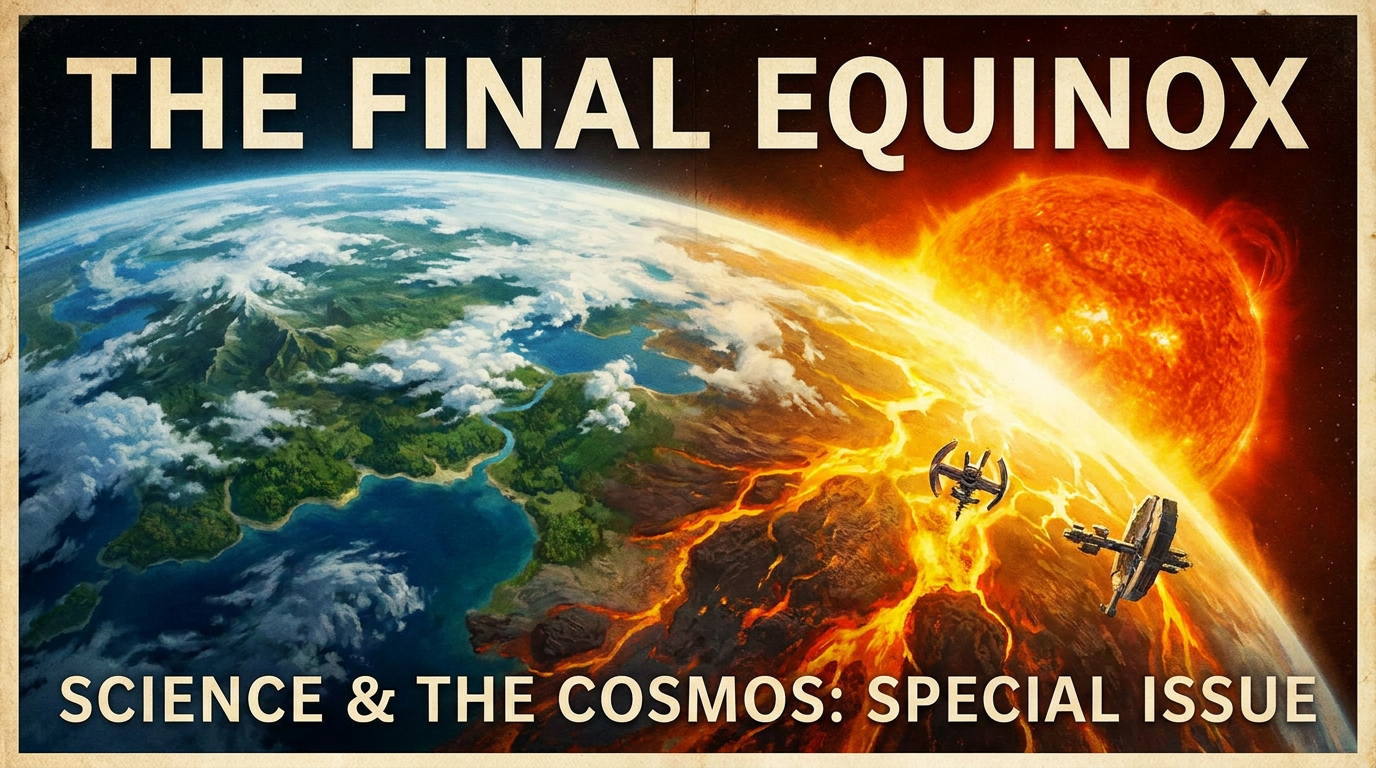
New climate modeling reveals that Earth's carbon cycle is more resilient to an aging Sun than previously thought, extending the projected lifespan of the terrestrial biosphere to 1.86 billion years.
By Factlen Editorial Team
- Planetary Climate Modellers
- Focus on the chemical feedback loops of the carbonate-silicate cycle and how weathering regulates deep-time climate.
- Astrobiologists
- Emphasize the implications of an extended biosphere lifespan for the probability of intelligent life evolving on exoplanets.
- Science Communicators
- Focus on translating the existential timeline of Earth and the history of the 1-billion-year consensus for the public.
What's not represented
- · Extraterrestrial Search Programs (SETI)
- · Paleoclimatologists
Why this matters
For decades, the scientific consensus held that Earth's complex biosphere had roughly one billion years left before an aging Sun rendered the planet uninhabitable. By extending that timeline by up to 860 million years, this research not only rewrites the ultimate fate of our world, but significantly increases the mathematical probability that intelligent life has had the time to evolve on other planets across the universe.
Key points
- The Sun's luminosity increases by roughly 10 percent every billion years, which will eventually disrupt Earth's climate and carbon cycle.
- Previous models predicted this brightening would cause a rapid drop in carbon dioxide, starving all plant life within one billion years.
- New modeling from the University of Chicago shows that the geological weathering cycle is less sensitive to temperature than previously thought.
- This resilience slows the decline of carbon dioxide, delaying the extinction of the biosphere by 500 million to 860 million years.
- The ultimate cause of the biosphere's end will likely be extreme thermal overheating, rather than carbon starvation.
- An extended timeline for complex life on Earth suggests that the evolution of intelligent life may be more common in the universe than pessimistic models imply.
The existential clock ticking down on Earth's habitability has long been set to a seemingly fixed alarm: one billion years. For decades, planetary scientists have warned that as our Sun ages and brightens, it will trigger a catastrophic disruption of the carbon cycle, starving the planet's plant life and collapsing the food web.[6]
But a comprehensive new modeling study has significantly revised that timeline, offering a stay of execution for the terrestrial biosphere. According to research published in The Planetary Science Journal, complex life on Earth could persist for up to 1.86 billion years—nearly doubling the previous consensus.[4][5]
The findings, led by geophysicist R.J. Graham at the University of Chicago alongside researchers from the Weizmann Institute of Science, fundamentally alter our understanding of how planetary death occurs. By recalculating the chemical feedback loops that govern Earth's atmosphere, the team discovered that the planet's self-regulating mechanisms are far more resilient than previously modeled.[1][4][5][7]
To understand the threat to Earth's future, one must look to the core of the Sun. As the Sun fuses hydrogen into helium, its core becomes denser and hotter, causing its overall luminosity to increase by roughly 10 percent every billion years. This relentless brightening is the ultimate engine of Earth's eventual demise.[2][6]
Counterintuitively, the primary threat to life from a brighter Sun is not initially the heat itself, but a phenomenon known as carbon dioxide starvation. The mechanism lies in the carbonate-silicate cycle, the geological thermostat that has regulated Earth's climate for billions of years.[3][4]

As the Sun warms the Earth, evaporation and rainfall increase. This accelerates the weathering of silicate rocks on the continents. Rainwater, which contains dissolved carbon dioxide, reacts with these rocks, chemically pulling carbon out of the atmosphere and washing it into the oceans, where it is eventually subducted into the Earth's mantle.[1][2][3][4]
Under the previous scientific consensus, established in the early 1990s, this weathering process was thought to be highly sensitive to temperature. Models predicted that as the Sun brightened, runaway weathering would aggressively strip carbon dioxide from the air. Within a billion years, CO2 levels would plummet below the minimum threshold required for photosynthesis, suffocating the plant kingdom.[2][4][6]
The new study upends this assumption by incorporating recent geological data on how weathering actually operates. Graham and his colleagues found that silicate weathering is only weakly dependent on temperature, but strongly dependent on the concentration of carbon dioxide itself.[4][5][7]
The new study upends this assumption by incorporating recent geological data on how weathering actually operates.
This creates a powerful negative feedback loop. As CO2 levels drop, the rate of weathering slows down proportionally, acting as a brake on the carbon depletion. "The interplay between climate, productivity, and weathering causes the future luminosity-driven CO2 decrease to slow and temporarily reverse, averting plant CO2 starvation," the authors note in their findings.[1][4][7]
Because the carbon crash is delayed, the ultimate "kill mechanism" for the biosphere shifts entirely. Plants will not suffocate from a lack of carbon dioxide; instead, they will survive until the sheer thermal output of the Sun pushes surface temperatures beyond their biological limits.[2][4][5]
This thermal threshold pushes the extinction date for complex life out to between 1.6 and 1.86 billion years from now. However, the twilight of the biosphere will not be a sudden event, but a staggered decline dictated by plant biology.[1][3][4]

The models indicate that C3 plants—a category that includes most trees, shrubs, and the majority of current terrestrial vegetation—will succumb first. Their photosynthetic pathways lose efficiency in hotter, brighter environments, leading to their eventual extinction.[1][3][7]
This will leave the Earth to the C4 plants. Species utilizing the C4 photosynthetic pathway, such as maize, sugarcane, and certain grasses, are highly adapted to low-CO2 and high-temperature environments. For the final 500 million years of the biosphere's existence, these resilient plants will be the last macroscopic life forms standing on the continents.[1][2][3][4]
Eventually, even the C4 plants will reach their thermal limits—estimated at around 122 degrees Fahrenheit (50 degrees Celsius) globally—halting photosynthesis entirely. Without plants to sustain the oxygen supply and the food web, animal life will quickly follow them into extinction, leaving only extremophile microbes to inherit a boiling world.[2][3][4][7]
Beyond rewriting the obituary for our own planet, the study carries profound implications for astrobiology and the search for extraterrestrial intelligence. The timeline of Earth's habitability is the only data point scientists have for how long a planet can sustain a complex biosphere.[1][2][3]
Evolutionary biologists often rely on the "hard steps" model, which posits that the emergence of intelligent life requires a sequence of highly improbable evolutionary transitions. The longer a planet remains habitable, the more time there is for these rare rolls of the evolutionary dice to occur.[2][4][5][7]

"An increased future lifespan for the complex biosphere may imply that Earth life had to achieve a smaller number of 'hard steps' to produce intelligent life than previously estimated," the research team explains. If the window for complex life is twice as wide as we thought, the universe might be far more populated with advanced biospheres than pessimistic models suggest.[1][3][7]
While the models provide a robust new framework, the researchers acknowledge inherent uncertainties in deep-time forecasting. Future iterations of the model will need to incorporate dynamic cloud feedbacks, the complexities of the water cycle, and the interactive shifting of global vegetation patterns to refine the exact timeline.[3][4][7]
How we got here
4.5 Billion Years Ago
The Sun and Earth form, initiating the long-term main-sequence phase of our star.
Present Day
The Sun is roughly 30 percent brighter than it was at formation, sustaining a stable carbonate-silicate cycle.
1 Billion Years From Now
The previous scientific consensus for when carbon dioxide levels would drop too low to support plant life.
1.6 Billion Years From Now
The newly estimated point at which C3 plants (most trees and shrubs) will succumb to extreme heat.
1.86 Billion Years From Now
The absolute thermal limit for C4 plants, marking the likely end of Earth's macroscopic biosphere.
Viewpoints in depth
Planetary Climate Modellers
Focusing on the chemical mechanics of the Earth's deep-time thermostat.
For geophysicists and climate modellers, the significance of this study lies in the mechanics of the carbonate-silicate cycle. By demonstrating that silicate weathering is only weakly dependent on temperature, the researchers have fundamentally altered the math of planetary habitability. This perspective emphasizes that Earth's internal chemistry possesses a self-regulating 'brake'—as carbon dioxide drops, weathering slows, preventing the rapid atmospheric crash that earlier models predicted.
Astrobiologists
Looking outward to the implications for life in the wider universe.
Astrobiologists view Earth's timeline as the ultimate baseline for the Drake Equation and the search for extraterrestrial intelligence. The 'hard steps' model of evolution suggests that intelligent life requires a series of highly improbable biological leaps. If a planet's biosphere can remain stable for nearly two billion years longer than expected, the window for those leaps widens dramatically. From this viewpoint, the study is a highly optimistic signal that complex, intelligent life may be more abundant on exoplanets than previously assumed.
What we don't know
- How dynamic cloud feedbacks and the complexities of the global water cycle might further alter this deep-time timeline.
- Whether the shifting of global vegetation patterns as the planet warms will create localized refuges that extend survival even further.
- If anaerobic microbes or extremophiles might survive deep underground or in the oceans long after macroscopic plant and animal life goes extinct.
Key terms
- Carbonate-silicate cycle
- The geological process where weathering of rocks removes carbon dioxide from the atmosphere, which is eventually returned via volcanic activity.
- C3 and C4 plants
- Different evolutionary pathways for photosynthesis; C4 plants (like corn) are more efficient in hot, low-CO2 environments than C3 plants (like most trees).
- Luminosity
- The total amount of energy emitted by a star, which steadily increases as our Sun ages.
- Hard steps model
- An evolutionary theory suggesting that intelligent life requires a sequence of highly improbable evolutionary leaps, making the total time available a critical factor.
Frequently asked
Will the expanding Sun swallow the Earth?
Yes, but not for about 5 billion years when the Sun becomes a red giant. The biosphere will end much earlier due to increasing heat and changes in the carbon cycle.
Why does a hotter Sun mean less carbon dioxide?
Higher temperatures increase rainfall and the weathering of silicate rocks, a process that chemically pulls carbon dioxide out of the atmosphere and traps it in the Earth's crust.
What will the last life on Earth look like?
According to the models, the final macroscopic life forms will likely be C4 plants, similar to modern sugarcane and maize, which can tolerate extreme heat and low carbon dioxide.
Sources
Source coverage
7 outlets
3 viewpoints surfaced







[1]New ScientistScience Communicators
Complex life on Earth may last 500 million years longer than expected
Read on New Scientist →[2]Universe TodayAstrobiologists
Earth Might be Habitable for Longer Than We Thought
Read on Universe Today →[3]ScienceAlertAstrobiologists
Earth's Life Could Survive 500 Million Years Longer Than We Thought
Read on ScienceAlert →[4]The Planetary Science JournalPlanetary Climate Modellers
Substantial Extension of the Lifetime of the Terrestrial Biosphere
Read on The Planetary Science Journal →[5]University of ChicagoPlanetary Climate Modellers
Earth might be habitable for longer than we thought
Read on University of Chicago →[6]ForbesScience Communicators
Life On Earth To Hit Brick Wall In Another 500 Million Years
Read on Forbes →[7]arXivPlanetary Climate Modellers
Substantial extension of the lifetime of the terrestrial biosphere
Read on arXiv →
Every angle. Every day.
Get science stories with full source coverage and perspective breakdowns delivered to your inbox.