
The 2026 European Sleeper Train Renaissance: How Night Rail is Replacing Short-Haul Flights
A wave of new routes and next-generation trains is transforming overnight travel across Europe in 2026, driven by climate concerns and passenger demand for hotel-level comfort on the rails.
By Factlen Editorial Team
- Sustainable Travel Advocates
- Environmentalists and slow-travel proponents who view night trains as a crucial weapon against aviation emissions.
- Rail Modernization Proponents
- Focus on the hardware upgrades, luxury amenities, and technical improvements driving the renaissance.
- Market Expansion Analysts
- Industry observers focused on the economic viability and competitive dynamics of cross-border rail.
What's not represented
- · Budget Airline Operators
- · Freight Rail Companies
Why this matters
For travelers, the 2026 sleeper train boom offers a practical, hotel-saving alternative to the exhaustion of airport security and short-haul flights. On a macro level, shifting passengers from planes to trains is one of Europe's most effective mechanisms for hitting its aggressive carbon reduction targets.
Key points
- A wave of new routes and next-generation trains is transforming European overnight travel in 2026.
- Sleeper trains emit up to 97% less carbon than equivalent short-haul flights, driving eco-conscious demand.
- ÖBB is rolling out 33 new Nightjet trains featuring solo 'Mini Cabins' and en-suite showers.
- Citizen-backed European Sleeper revived the Paris-Berlin route in March 2026 after state operators abandoned it.
- High track access charges and complex cross-border logistics remain significant hurdles for operators.
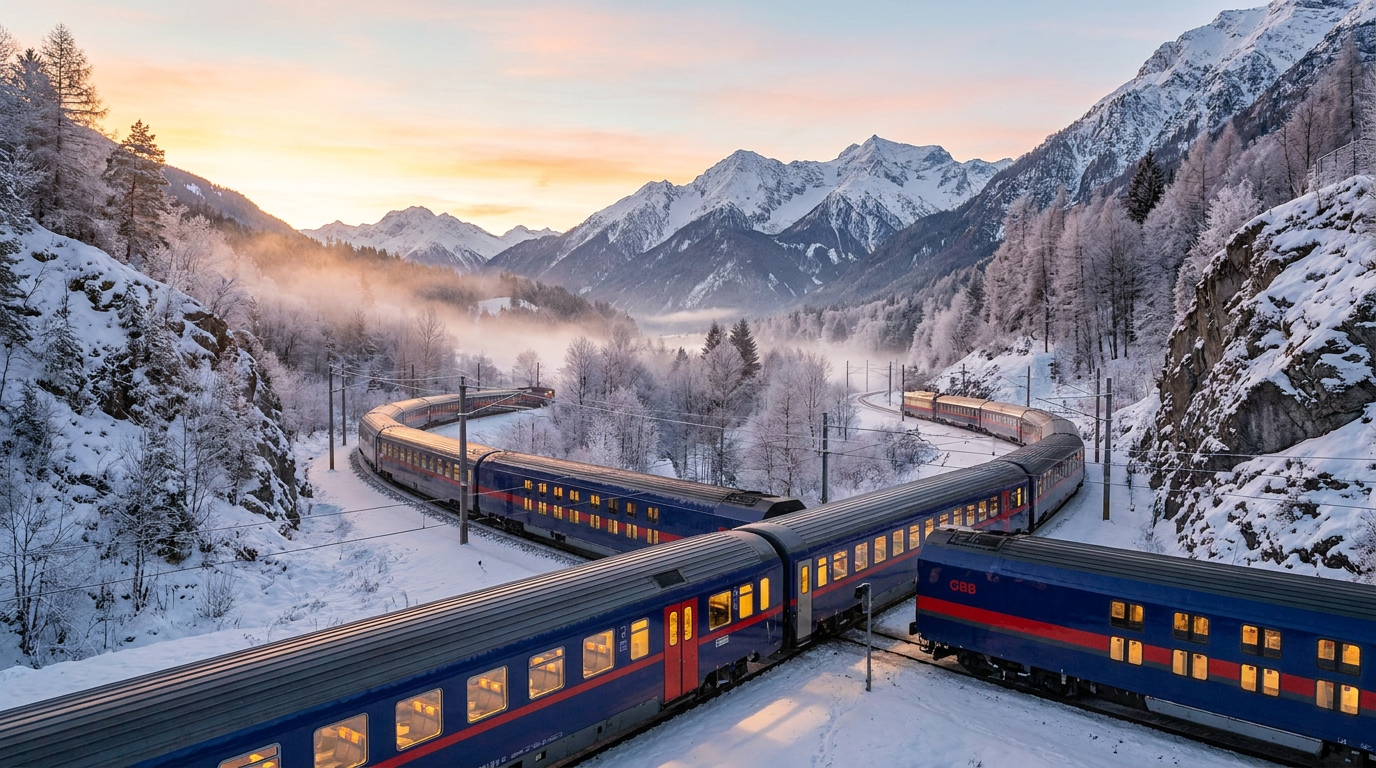
For decades, the European night train was written off as a romantic relic. As low-cost airlines proliferated in the early 2000s, offering cross-continent flights for the price of a restaurant dinner, state railway operators quietly retired their sleeping cars. But the pendulum has swung back with remarkable speed. Driven by a surge in climate consciousness and a growing weariness with airport logistics, overnight rail travel is experiencing a massive renaissance. In 2026, this revival is moving from a niche trend to a mainstream transportation pillar, marked by the launch of highly anticipated routes and the deployment of next-generation rolling stock that finally brings hotel-level comfort to the rails.[1][3]
The mathematics of the sleeper train appeal to both environmental and practical sensibilities. From a climate perspective, the benefits are staggering: a sustainability analysis of major European corridors found that carbon emissions for trips between capitals can be up to 97 percent lower by train than by plane. But the pragmatic argument is equally compelling. A one-and-a-half-hour flight from Paris to Berlin often consumes five to six hours door-to-door when factoring in airport transit, security lines, and baggage claim. A sleeper train takes 14 hours, but because the journey happens while the passenger is unconscious, it effectively saves a full day of travel while simultaneously eliminating the cost of a hotel night.[2][4]

The hardware facilitating this shift is undergoing its most significant upgrade in forty years. Historically, overnight trains meant cramped, shared couchettes with aging upholstery, rattling carriages, and communal bathrooms down the hall. Today, the Austrian federal railway, ÖBB, is rolling out a fleet of 33 next-generation Nightjet trains built by Siemens. These seven-car trainsets, which are being heavily deployed across Germany, Austria, and Italy throughout 2026, represent a half-billion-euro investment designed to attract a demographic that demands modern amenities alongside sustainability. The new trains are capable of traveling at 230 kilometers per hour, drastically smoothing out the ride quality.[5][6]
The most celebrated innovation within these new Nightjets is the introduction of the Mini Cabin. Designed specifically for the growing demographic of solo travelers, these capsule-style sleeping pods offer complete privacy, secure luggage storage, and modern charging ports without the premium price tag of a full private cabin. For those willing to spend more, the upgraded sleeper cars now feature en-suite bathrooms with private showers, effectively transforming the train into a rolling boutique hotel. This hardware revolution is crucial for convincing business travelers and comfort-conscious tourists to abandon short-haul aviation.[5][6]

While state-backed giants like ÖBB are upgrading their fleets, the most disruptive force in the 2026 sleeper renaissance is a citizen-backed cooperative called European Sleeper. Founded in 2021 by two Dutch rail enthusiasts and funded by thousands of small-scale citizen investors, the startup has proven that international rail does not have to be a state monopoly. Operating without permanent government subsidies, European Sleeper has aggressively expanded its network across the continent. They have made a name for themselves by stepping in to save vital connections that national operators have abandoned due to funding disputes, proving that a lean, community-driven model can compete on the main stage.[3][7]
Operating without permanent government subsidies, European Sleeper has aggressively expanded its network across the continent.
The cooperative's flagship move for 2026 is the rescue of the iconic Paris-Berlin route. When the national railways of France and Austria announced they would discontinue the service in late 2025 due to a lack of funding, rail advocates feared a major setback for the night train movement. Instead, European Sleeper took over the corridor, launching a thrice-weekly service in March 2026 that accommodates up to 700 passengers per journey. By routing the train through Brussels, the service also enables seamless Eurostar connections for travelers originating in London, creating a vital artery across Western Europe.[1][7]
European Sleeper's ambitions extend far beyond the French and German capitals. In late 2026, the cooperative is launching an unprecedented north-south corridor connecting Brussels and Amsterdam directly to Milan. Routing through the scenic Simplon Pass in the Swiss Alps, the service aims to link the political and financial hubs of the Benelux region with the industrial heart of Northern Italy. This route exemplifies the modern night train strategy: connecting secondary and primary cities across multiple borders in a single, uninterrupted journey that airlines simply cannot replicate efficiently.[1][4][7]

The expansion is not limited to Western Europe. The 2026 timetable features a flurry of new connections bridging the continent's northern and eastern reaches. In April 2026, the Swiss Federal Railways, in partnership with a private German operator, is launching a 16-hour overnight service from Basel to Malmö, Sweden, via Copenhagen. Simultaneously, operators in Central Europe are expanding their reach. The Czech company RegioJet is aggressively scaling its low-cost sleeper services into Poland, while Poland's PKP Intercity is launching the Adriatic Express, a summer route connecting Warsaw to the Croatian coast across five different countries.[1][4][7]
Despite the undeniable momentum, the sleeper train renaissance faces severe structural and economic headwinds. Operating an international night train is a logistical labyrinth that requires immense bureaucratic patience. Operators must negotiate track access with multiple national infrastructure managers, each with their own pricing structures, signaling systems, and nighttime maintenance schedules. Because passenger trains share the rails with freight services—which predominantly operate at night to keep daytime commuter lines clear—securing viable timetable slots across three or four borders requires years of diplomatic maneuvering. A single delay in one country can cascade through the entire network.[2][7]
The financial margins remain razor-thin. Unlike airlines, which benefit from tax-exempt aviation fuel, train operators pay high track access charges and energy taxes. The cancellation of the ÖBB-run Paris-Vienna route in 2026, following the withdrawal of French government subsidies, served as a stark reminder that the economic model is fragile. Without standardized European subsidies or a reduction in cross-border track tolls, private operators carry immense financial risk, relying heavily on consistently high load factors to break even.[3][7]

To secure the future of overnight rail, policymakers and operators are pushing for deeper digital integration. The current ticketing landscape is heavily fragmented; travelers often have to navigate multiple national railway websites, each with different interfaces and pricing structures, to string together a cross-continent itinerary. The ultimate goal for rail advocates in 2026 is the development of a unified, pan-European booking platform that rivals the simplicity of airline aggregators like Skyscanner or Google Flights. Making it effortless for a consumer to compare and book a sleeper journey from Madrid to Munich is considered the final hurdle to mass adoption.[7]
Ultimately, the 2026 sleeper train boom represents a fundamental shift in how Europeans value their travel time. The era of prioritizing absolute speed at the expense of comfort and climate is giving way to a philosophy of slow travel that is both pragmatic and experiential. By turning the journey itself into a seamless, sustainable hotel stay, the new generation of night trains is proving that the most efficient way to cross a continent might just be to sleep through it. As the network continues to densify, the romantic relic of the past is rapidly becoming the essential transit mode of the future.[1][3][7]
How we got here
May 2023
European Sleeper launches its inaugural route between Brussels and Berlin.
Dec 2023
ÖBB introduces the first of its next-generation Nightjet trains on the Hamburg-Vienna corridor.
Dec 2025
State operators discontinue the Paris-Berlin night train due to a lack of government funding.
Mar 2026
European Sleeper officially revives the Paris-Berlin overnight route, extending it to Hamburg by summer.
Late 2026
A new north-south sleeper corridor opens, connecting Brussels and Amsterdam directly to Milan.
Viewpoints in depth
Sustainable Travel Advocates
Environmentalists and slow-travel proponents who view night trains as a crucial weapon against aviation emissions.
This camp points to the stark mathematics of carbon output, noting that a sleeper train emits up to 97% less CO2 than an equivalent short-haul flight. For these advocates, the renaissance is not about nostalgia, but about fundamentally rewiring European transit habits. They argue that governments should aggressively subsidize sleeper routes and heavily tax aviation fuel to level the playing field, insisting that the minor sacrifice in absolute travel time is a necessary trade-off for climate targets.
Market Expansion Analysts
Industry observers focused on the economic viability and competitive dynamics of cross-border rail.
Analysts in this camp are cautiously optimistic but hyper-aware of the razor-thin margins involved in overnight rail. They highlight the success of citizen-backed cooperatives like European Sleeper as proof that demand exists outside state monopolies. However, they warn that without standardized European track access charges and a unified booking platform, private operators face immense financial risk. They view the 2026 route expansions as a critical stress test for the long-term profitability of the sector.
State Railway Operators
National infrastructure giants balancing public utility mandates with the heavy costs of rolling stock.
For state-backed entities like ÖBB, the night train revival is a massive capital expenditure requiring decades of commitment. They emphasize the logistical labyrinth of cross-border coordination, from differing national signaling systems to nighttime track maintenance schedules. This camp argues that while passenger demand is surging, the sheer cost of manufacturing next-generation trains and paying international track tolls means that state subsidies remain an absolute necessity for the survival of most routes.
What we don't know
- Whether the European Union will intervene to standardize and lower cross-border track access charges to help private operators.
- If a unified, pan-European booking platform will successfully launch to rival the convenience of airline aggregators.
- How budget airlines will adjust their pricing and marketing strategies in response to the growing popularity of slow travel.
Key terms
- Couchette
- A basic sleeping compartment on a train, typically featuring four to six bunk beds and shared bathroom facilities.
- Mini Cabin
- A new capsule-style sleeping pod designed for solo travelers, offering privacy and secure luggage storage without the cost of a full cabin.
- Track Access Charges
- Fees paid by train operators to national infrastructure managers for the right to run trains on their rail networks.
- Rolling Stock
- The physical vehicles used on a railway, including locomotives, passenger carriages, and sleeper cars.
Frequently asked
Are sleeper trains more expensive than flying?
Tickets can sometimes cost more than budget airline fares, but they save travelers the cost of a night in a hotel and expensive airport transfers.
Do modern sleeper trains have showers?
Yes, the newest generation of trains, such as ÖBB's 2026 Nightjets, feature en-suite showers in premium sleeper cabins, though standard couchettes still use shared facilities.
Can I use an Interrail pass on night trains?
Yes, but pass holders must pay a mandatory reservation fee for a bed or seat, which varies based on the level of comfort chosen.
Why was the Paris-Berlin night train cancelled and revived?
State operators SNCF and ÖBB dropped the route in late 2025 due to funding disputes, but the citizen-backed cooperative European Sleeper took it over and revived it in March 2026.
Sources
Source coverage
7 outlets
3 viewpoints surfaced







[1]ForbesMarket Expansion Analysts
These 4 European Night Trains Are Debuting In 2026
Read on Forbes →[2]AfarSustainable Travel Advocates
Sleeper Trains in Europe Are Back on Track With New Routes
Read on Afar →[3]Yahoo NewsSustainable Travel Advocates
New European sleeper train routes are offering tourists an alternative to flights
Read on Yahoo News →[4]Time OutSustainable Travel Advocates
The best European sleeper trains to ride in 2026
Read on Time Out →[5]ÖBB NightjetRail Modernization Proponents
Nightjet of the new generation
Read on ÖBB Nightjet →[6]The Man in Seat 61Rail Modernization Proponents
Nightjet, the New Generation
Read on The Man in Seat 61 →[7]Factlen Editorial TeamMarket Expansion Analysts
Synthesis by Factlen editorial team
Read on Factlen Editorial Team →
Every angle. Every day.
Get world stories with full source coverage and perspective breakdowns delivered to your inbox.