
The Dual-Chemistry Era: How Solid-State and Sodium-Ion Batteries Are Reshaping EVs in 2026
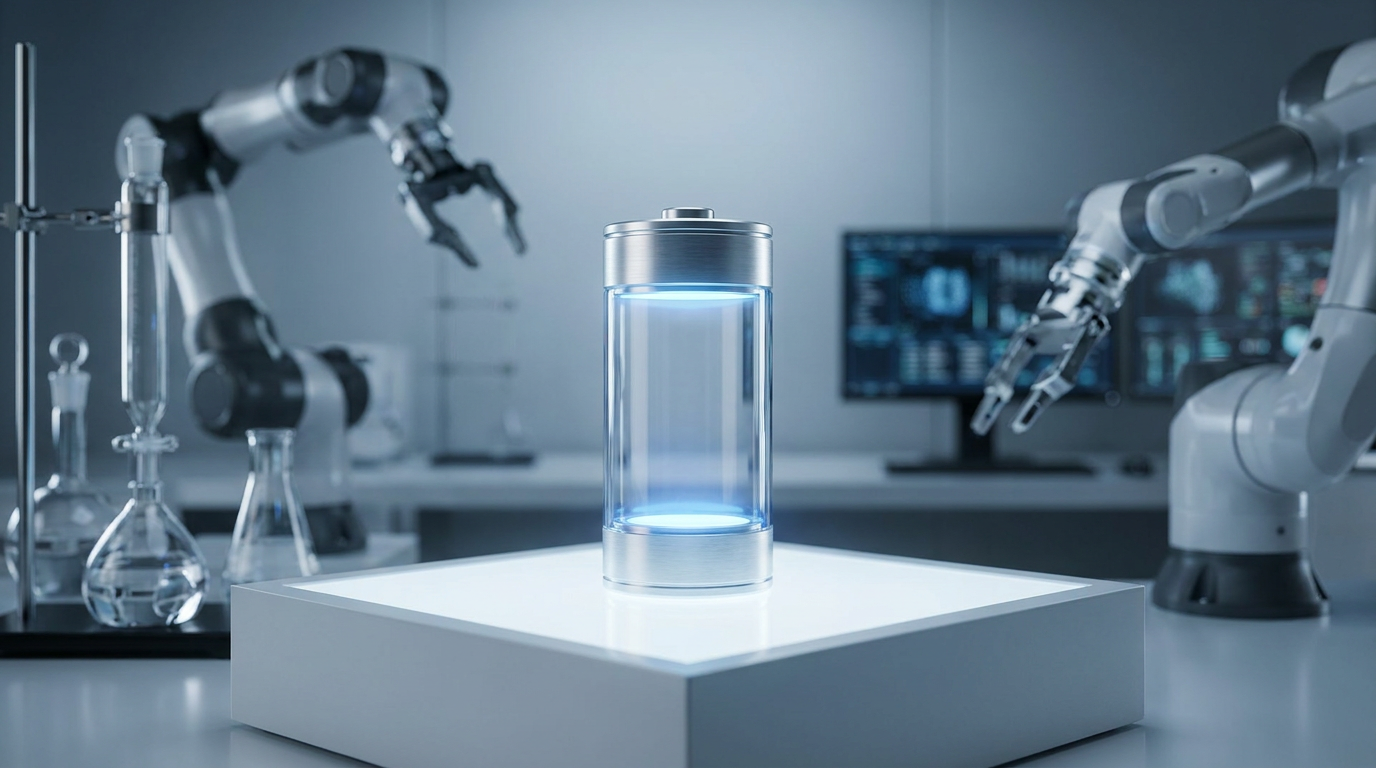
After years of laboratory development, two revolutionary battery chemistries are simultaneously entering mass production, promising to solve EV range anxiety and cold-weather degradation.
By Factlen Editorial Team
- Battery Manufacturers
- View 2026 as the start of a dual-chemistry era, investing heavily in both solid-state and sodium-ion to capture all market segments.
- Supply Chain Analysts
- Emphasize sodium-ion technology as a geopolitical hedge that reduces reliance on concentrated lithium and cobalt mining.
- Consumer Advocates
- Focus on how these technologies solve practical daily hurdles like winter range loss and slow road-trip charging.
- Energy Policymakers
- Monitor the scale-up of alternative chemistries to ensure grid storage and electrification goals are met sustainably.
What's not represented
- · Lithium Mining Industry
- · Independent EV Repair Shops
Why this matters
By eliminating the final major hurdles to electric vehicle adoption—winter range loss, slow charging, and high material costs—these new battery technologies will make EVs cheaper, safer, and more practical for millions of drivers.
Key points
- Solid-state batteries are entering mass production in 2026, offering up to 1,000 km of range and 5-minute charging.
- Sodium-ion batteries are also launching, providing a cheaper, lithium-free alternative that performs exceptionally well in extreme cold.
- Automakers are adopting a 'dual-chemistry' strategy, using solid-state for premium vehicles and sodium-ion for mass-market commuters.
- Traditional lithium-ion (LFP) batteries will remain dominant in the short term due to massive existing manufacturing scale.
For the better part of a decade, the electric vehicle industry has been locked in a high-stakes race to solve three stubborn consumer hurdles: range anxiety, winter battery degradation, and the volatile cost of raw materials.[1]
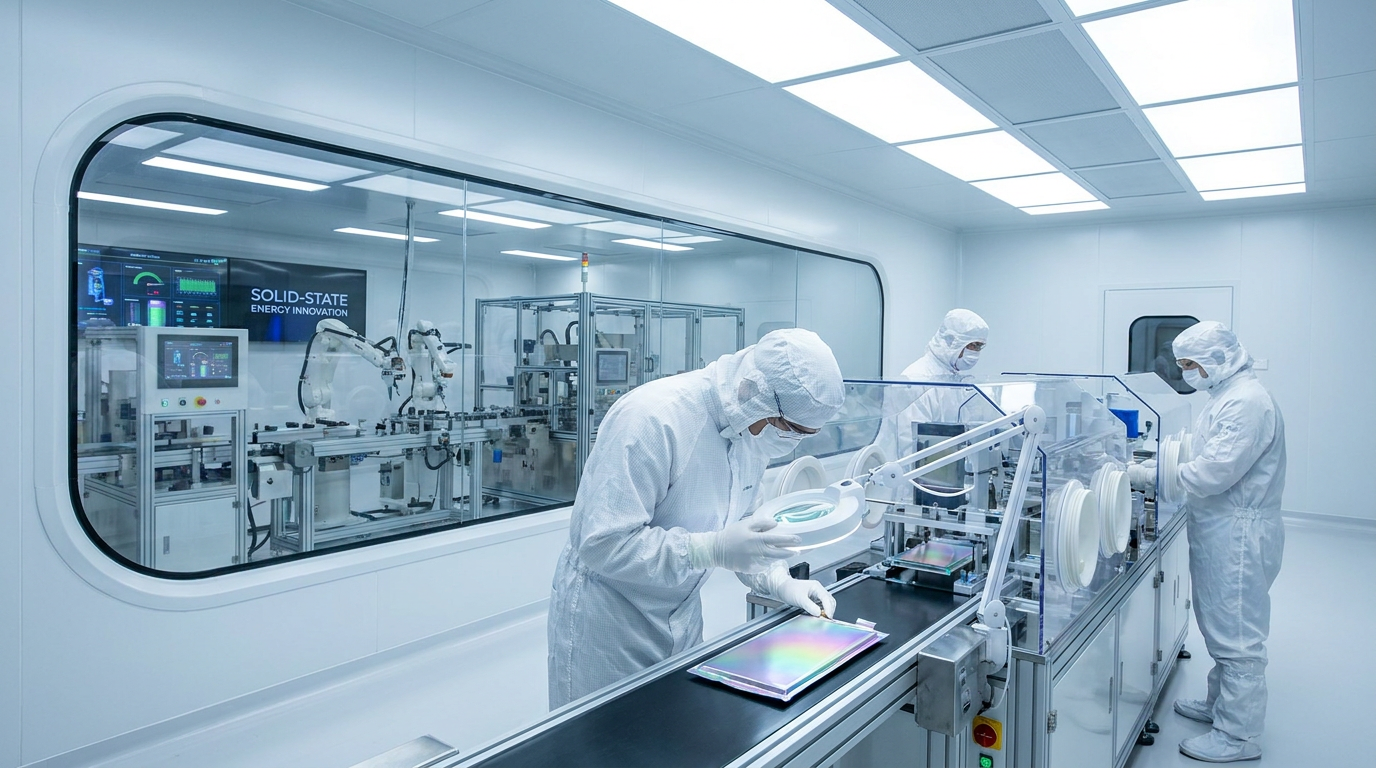
In 2026, that race is crossing a historic finish line. After years of being dismissed as perpetually "five years away," two revolutionary battery chemistries—solid-state and sodium-ion—are simultaneously graduating from laboratory prototypes to mass-market production.[1][2]
Industry analysts are calling this the dawn of a "dual-chemistry era." Rather than relying on a single lithium-ion standard, automakers are bifurcating their technology to target specific consumer needs, fundamentally altering the economics and performance of electric mobility.[3][8]
At the premium end of the market, solid-state batteries are unlocking unprecedented performance. Conventional lithium-ion batteries rely on a liquid electrolyte to shuttle ions back and forth. Under extreme stress or damage, this flammable liquid can ignite, causing thermal runaway.[6]

Solid-state technology replaces that liquid with a stable, fire-resistant solid material—typically a polymer, oxide, or sulfide. This structural shift dramatically increases safety; testing shows thermal events in solid-state systems do not begin until around 247°C, compared to just 90°C for traditional cells.[6]
Because they are inherently safer, solid-state cells can be packed much denser, utilizing lithium metal anodes to achieve massive energy gains. While today's best lithium-ion batteries hover around 250 Watt-hours per kilogram (Wh/kg), the new solid-state cells entering production are hitting 400 to 600 Wh/kg.[2][6]
The real-world implications are staggering. Chinese manufacturers like Greater Bay Technology (GBT) and Chery are launching solid-state batteries this year that promise over 1,000 kilometers (620 miles) of driving range on a single charge. Furthermore, these cells can safely absorb extreme fast-charging, allowing vehicles to recharge from 10% to 80% in roughly five minutes.[2]

Furthermore, these cells can safely absorb extreme fast-charging, allowing vehicles to recharge from 10% to 80% in roughly five minutes.
But while solid-state technology caters to premium, long-range demands, a second breakthrough is democratizing the entry-level market: the sodium-ion battery.[1][8]
Sodium-ion chemistry entirely eliminates the need for lithium, cobalt, and nickel. Instead, it relies on sodium—one of the most abundant and cheaply extractable elements on Earth, found globally in salt deposits and seawater.[5][8]
This abundance provides automakers with a powerful geopolitical and economic hedge. By stripping out critical minerals, manufacturers can insulate themselves from the severe price volatility and supply chain bottlenecks that have historically plagued lithium markets. Furthermore, sodium-ion cells use cheaper aluminum instead of copper for their anode current collectors, driving costs down even further.[5]
Beyond cost, sodium-ion batteries possess a unique superpower: extreme cold-weather resilience. Traditional lithium-ion batteries notoriously lose significant range and charging speed in freezing temperatures.[4]

In contrast, the latest generation of sodium-ion batteries retains roughly 90% of its nominal capacity at temperatures as low as -40°C. This breakthrough effectively eliminates the "winter range penalty" that has hindered EV adoption in northern climates and Canada.[4][8]
The commercialization of sodium is moving rapidly. Battery giant CATL, in partnership with Changan Automobile, is rolling out the world's first mass-produced sodium-ion passenger vehicles by mid-2026.[3]
Because sodium-ion cells have a lower energy density than lithium-ion, they are not destined for long-haul luxury cruisers. Instead, they are being deployed in urban commuter EVs, two-wheelers, and massive stationary grid-storage projects where weight is less critical than upfront cost and safety.[5][8]

Despite these breakthroughs, traditional lithium-ion—specifically the cheaper Lithium Iron Phosphate (LFP) chemistry—will not disappear overnight. LFP currently dominates over 80% of the global market and benefits from massive, deeply entrenched gigafactory infrastructure.[7]
How we got here
2010s
Automakers shift to high-energy lithium-ion chemistries (NMC) to boost early EV ranges.
2020s
Cheaper Lithium Iron Phosphate (LFP) batteries dominate the mass market, driven heavily by Chinese manufacturing scale.
Late 2023
The first small-scale pilot vehicles using sodium-ion batteries are introduced in China.
Early 2026
Solid-state batteries pass critical safety and density tests, moving from lab prototypes to A-sample production lines.
Mid-2026
Automakers like Changan and Chery begin mass-market rollout of vehicles equipped with both solid-state and sodium-ion technologies.
Viewpoints in depth
Battery Manufacturers' view
The industry is embracing a dual-chemistry strategy to capture all segments of the market.
Major battery producers like CATL and BYD view 2026 as the start of a bifurcated market. They are heavily investing in both solid-state for the premium market and sodium-ion for the mass market. This allows them to cater to luxury buyers demanding 1,000-kilometer ranges while simultaneously capturing the entry-level urban commuter segment without cannibalizing their existing lithium-ion infrastructure.
Supply Chain Analysts' view
Alternative chemistries provide a critical hedge against raw material price volatility.
Analysts emphasize that sodium-ion technology is as much a geopolitical tool as an engineering one. By removing lithium, cobalt, and copper from the equation, automakers can insulate themselves from raw material price spikes and reduce reliance on geographically concentrated mining operations. This diversification is seen as essential for the long-term stability of the global EV market.
Consumer Advocates' view
New battery technologies solve the most practical daily hurdles for everyday drivers.
For consumers, the focus is entirely on practical usability. Solid-state technology solves the "road trip problem" by enabling 5-minute charging times that rival traditional gas station stops. Meanwhile, sodium-ion solves the "winter range loss" problem that plagues cold climates, making electric vehicles viable for a much broader demographic in northern regions.
What we don't know
- How quickly solid-state manufacturing costs will fall to make the technology viable for mid-priced family vehicles.
- Whether Western automakers can catch up to the aggressive 2026 production timelines set by Chinese battery giants.
- How the widespread adoption of sodium-ion will impact the long-term global demand and pricing for lithium.
Key terms
- Solid-State Battery
- A battery that replaces the flammable liquid electrolyte found in conventional lithium-ion cells with a solid material, enabling higher capacity and safety.
- Sodium-Ion Battery
- A battery chemistry that uses abundant sodium ions instead of lithium, offering lower costs and superior cold-weather performance at the expense of some energy density.
- Energy Density (Wh/kg)
- A measure of how much energy a battery can store relative to its weight, directly impacting an electric vehicle's driving range.
- Electrolyte
- The medium inside a battery that allows ions to flow between the cathode and anode during charging and discharging.
- Thermal Runaway
- A dangerous chain reaction within a battery cell where excessive heat causes further heating, potentially leading to a fire.
Frequently asked
Will solid-state batteries make current EVs obsolete?
Not immediately. Solid-state technology will initially debut in premium vehicles due to high manufacturing costs, while traditional lithium-ion will remain standard for years.
Do sodium-ion batteries have a shorter range?
Yes, sodium-ion cells have lower energy density than lithium-ion, meaning they offer shorter ranges, making them best suited for urban EVs and grid storage.
When can I buy a car with these new batteries?
The first mass-produced vehicles featuring both solid-state and sodium-ion batteries are hitting the market in 2026, primarily from Chinese manufacturers like Changan and Chery.
Are sodium-ion batteries safer than lithium-ion?
Yes, sodium-ion batteries have a lower risk of thermal runaway and can be safely transported at zero volts, simplifying logistics and reducing fire risks.
Sources
Source coverage
8 outlets
4 viewpoints surfaced








[1]EVTech.NewsConsumer Advocates
EVTech.News Expert Analysis: Battery technology is evolving faster than any other component
Read on EVTech.News →[2]ElectrekBattery Manufacturers
China ramps up solid-state EV battery production
Read on Electrek →[3]CATLBattery Manufacturers
CHANGAN Automobile and CATL Unveil World's First Mass-Production Sodium-Ion Passenger Vehicle
Read on CATL →[4]International Energy AgencyEnergy Policymakers
Global EV Outlook 2026: Battery Deployment
Read on International Energy Agency →[5]CRU GroupSupply Chain Analysts
Sodium-ion battery technology gains traction in 2026
Read on CRU Group →[6]To7MotorBattery Manufacturers
Solid-state batteries are no longer simply lab experiments
Read on To7Motor →[7]GlobeNewswireSupply Chain Analysts
Electric Vehicle Battery Technology Research Report 2026
Read on GlobeNewswire →[8]EV Infrastructure NewsSupply Chain Analysts
The supply chain advantage of Sodium-ion batteries
Read on EV Infrastructure News →
Every angle. Every day.
Get automotive stories with full source coverage and perspective breakdowns delivered to your inbox.