
The Science of Resistant Starch: How Cooling Your Carbs Transforms Your Gut Health
Cooking and then cooling starchy foods like rice and potatoes alters their molecular structure, turning them into an indigestible fiber that feeds beneficial gut bacteria. This simple preparation method can lower blood sugar spikes and improve metabolic health without changing what you eat.
By Factlen Editorial Team
- Nutritional Scientists
- Focusing on the microbiome and the production of short-chain fatty acids.
- Metabolic Health Advocates
- Prioritizing blood sugar regulation, insulin sensitivity, and natural satiety.
- Culinary Dietitians
- Emphasizing practical, accessible food preparation methods over restrictive dieting.
What's not represented
- · Gastroenterologists treating IBS (who may advise caution with fermentable fibers)
Why this matters
By simply changing how you prepare everyday staples like rice, potatoes, and pasta, you can significantly lower their blood sugar impact and turn them into a powerful fuel for your gut microbiome. This accessible kitchen hack offers a science-backed way to improve metabolic health without restrictive dieting.
Key points
- Resistant starch is a unique carbohydrate that bypasses the small intestine and ferments in the colon.
- Cooking and cooling starchy foods like rice, potatoes, and pasta alters their molecular structure, creating resistant starch.
- The fermentation of resistant starch feeds beneficial gut bacteria and produces short-chain fatty acids like butyrate.
- Consuming resistant starch can lower blood sugar spikes, improve insulin sensitivity, and naturally increase hormones that signal fullness.
- The resistant starch formed through cooling survives the reheating process, making meal prep an effective health strategy.
Carbohydrates have long been the villain of modern diet culture, often blamed for blood sugar spikes and weight gain. But nutrition science is increasingly revealing that not all carbs behave the same way in the human body.[1]
A growing body of research highlights a specific type of carbohydrate that acts more like a superfood than a simple sugar. It is called resistant starch, and it has the remarkable ability to bypass the body's standard digestive process.[1][2]
Even more intriguing is that you can manipulate the amount of resistant starch in your food using a simple kitchen technique. By cooking and then cooling everyday staples like rice, potatoes, and pasta, you can fundamentally alter their molecular structure.[4][7]
To understand why this matters, it helps to look at how standard digestion works. When you eat regular starches—like a hot, freshly baked potato or a steaming bowl of white rice—the digestive enzymes in your small intestine rapidly break them down into glucose.[1][6]

This glucose is quickly absorbed into the bloodstream, providing immediate energy but also causing a swift spike in blood sugar and a subsequent release of insulin.[1]
Resistant starch, true to its name, resists this early breakdown. Because of its tightly packed molecular structure, it passes through the stomach and small intestine largely intact, avoiding conversion into glucose.[1][2]
Instead, it travels all the way to the large intestine, or colon. Here, it stops acting like a carbohydrate and begins functioning as a prebiotic fiber—a premium fuel source for the trillions of beneficial bacteria that make up your gut microbiome.[3][5]
When these gut microbes consume the resistant starch, they ferment it. This fermentation process produces highly beneficial byproducts known as short-chain fatty acids, or SCFAs, with butyrate being the most prominent.[3][6]
When these gut microbes consume the resistant starch, they ferment it.
Butyrate is a powerhouse molecule. It serves as the primary energy source for the cells lining the colon, helping to maintain a strong intestinal barrier and reducing systemic inflammation.[3][5]
The benefits extend far beyond the gut. The production of SCFAs triggers the release of GLP-1, a hormone that signals fullness to the brain. This is the same hormone targeted by modern weight-loss medications, naturally produced by your own microbiome.[7]

Because resistant starch is not absorbed as glucose, it also delivers fewer calories—roughly two calories per gram compared to the four calories per gram found in regular starch.[4]
So, how does the "cook and cool" hack actually work? The process is rooted in a chemical reaction called retrogradation. When starchy foods are cooked in water, their starch granules swell and lose their structure, making them easy to digest.[4][8]
However, when those same foods are allowed to cool in the refrigerator for 12 to 24 hours, the amylose and amylopectin molecules within the starch begin to realign and crystallize into tighter, indigestible structures.[1][4]
This creates Type 3 resistant starch. Studies have shown that cooling white rice for 24 hours can increase its resistant starch content by up to 180 percent, while cooling potatoes can yield a 250 percent increase.[8]

The resulting drop in glycemic impact is significant. Research indicates that cooled and reheated rice can produce a 20 to 50 percent lower blood sugar response compared to freshly cooked rice.[1][8]
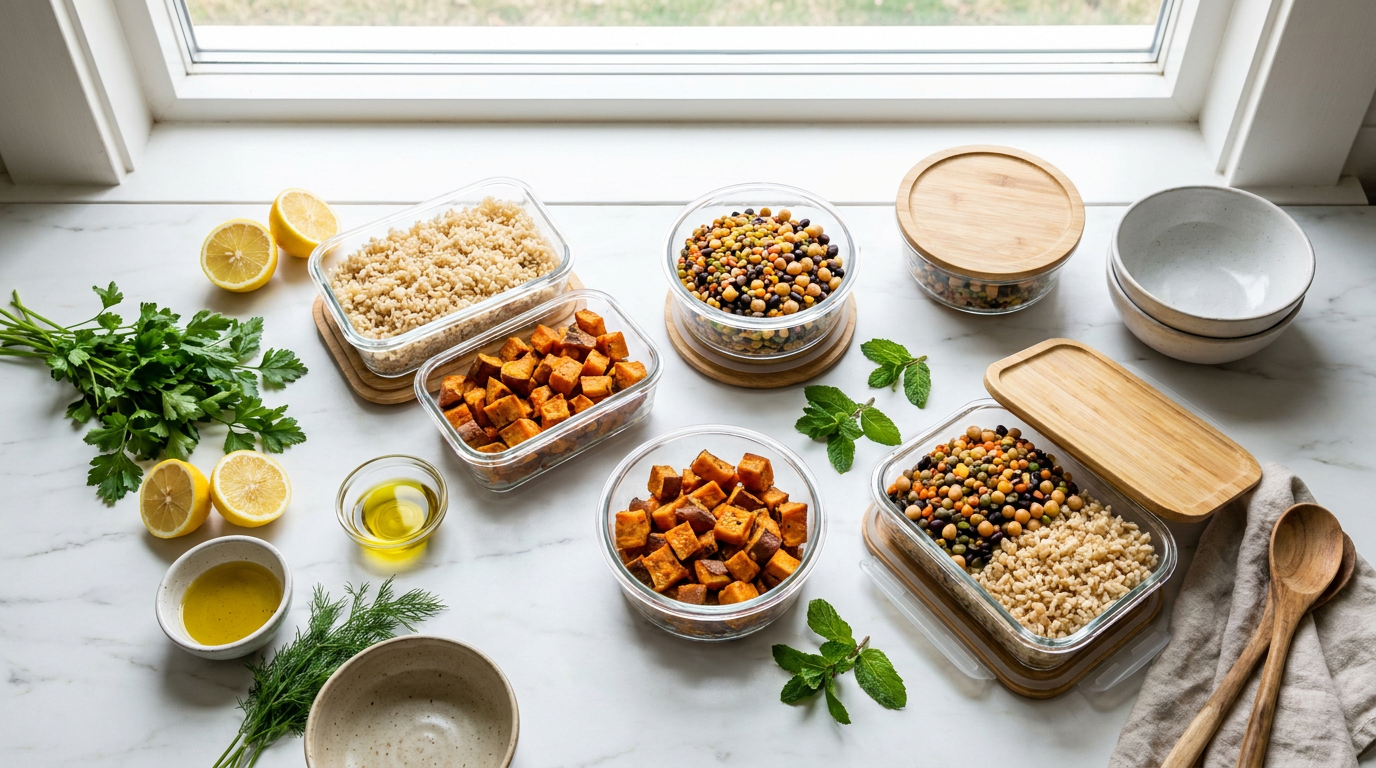
Crucially, you do not have to eat your meals cold to reap these benefits. Once the resistant starch is formed through cooling, it survives the reheating process. This makes standard meal prep—cooking a large batch of grains on Sunday and reheating portions throughout the week—a legitimate metabolic health strategy.[4][7]
Beyond the kitchen hack, resistant starch can be found naturally in several foods. Type 1 is locked inside the fibrous cell walls of whole grains, seeds, and legumes like lentils and chickpeas. Type 2 is found in raw potatoes and unripe, green bananas.[2][4]

For populations that rely on rice, potatoes, and pasta as cultural and economic staples, this science offers an empowering alternative to restrictive low-carb diets. By simply changing how these foods are prepared, individuals can support their gut health, manage their blood sugar, and turn everyday meals into functional medicine.[8]
Viewpoints in depth
Nutritional Scientists' view
Focusing on the microbiome and the production of short-chain fatty acids.
For researchers studying the gut microbiome, resistant starch is primarily viewed as a vital prebiotic. When this indigestible carbohydrate reaches the colon, it acts as a premium fuel source for beneficial bacteria like Bifidobacteria. The fermentation process yields short-chain fatty acids (SCFAs), particularly butyrate, which is essential for maintaining the integrity of the intestinal lining and modulating the body's immune response. Scientists emphasize that modern Western diets are severely deficient in these fermentable fibers, contributing to widespread gut dysbiosis.
Metabolic Health Advocates' view
Prioritizing blood sugar regulation, insulin sensitivity, and natural satiety.
Metabolic specialists look at resistant starch through the lens of glycemic control and weight management. Because resistant starch bypasses the small intestine, it does not convert into glucose, thereby blunting the sharp blood sugar spikes typically associated with eating carbohydrates. Furthermore, the fermentation of resistant starch in the gut triggers the natural release of GLP-1—a hormone that signals fullness to the brain. Advocates argue that utilizing the 'cook and cool' method allows individuals to enjoy cultural staples like rice and potatoes without compromising their metabolic health.
Culinary Dietitians' view
Emphasizing practical, accessible food preparation methods over restrictive dieting.
Dietitians and culinary experts celebrate resistant starch because it offers an additive approach to nutrition rather than a restrictive one. Instead of telling people to eliminate beloved carbohydrates, they advocate for simple preparation tweaks—like making potato salad, eating overnight oats, or batch-cooking rice for the week. They highlight that the retrogradation process survives reheating, making it a highly practical strategy for busy households. This perspective values the psychological benefits of keeping staple foods in the diet while optimizing their nutritional profile.
What we don't know
- The exact optimal cooling time and temperature required to maximize resistant starch formation across every specific variety of grain and tuber.
- How individual variations in baseline gut microbiomes affect the efficiency of short-chain fatty acid production from resistant starch.
- The long-term metabolic differences between consuming naturally occurring resistant starch (like green bananas) versus retrograded starch (like cooled rice).
Key terms
- Resistant Starch
- A type of carbohydrate that resists digestion in the small intestine and ferments in the large intestine.
- Retrogradation
- The chemical process where starch molecules realign and crystallize into an indigestible structure after being cooked and cooled.
- Short-Chain Fatty Acids (SCFAs)
- Beneficial compounds, such as butyrate, produced when gut bacteria ferment dietary fiber.
- Butyrate
- A specific short-chain fatty acid that provides energy to colon cells and reduces inflammation.
- GLP-1
- A hormone that signals fullness to the brain, naturally stimulated by the fermentation of resistant starch.
- Prebiotic
- A type of dietary fiber that serves as food for the beneficial bacteria in the gut microbiome.
Frequently asked
Does reheating the food destroy the resistant starch?
No. Once the resistant starch is formed through the cooling process, it remains stable even if you reheat the rice, pasta, or potatoes before eating.
Can I freeze the food instead of putting it in the refrigerator?
While freezing does cool the food, research indicates that the slow cooling process in a standard refrigerator (around 12 to 24 hours) is the most effective way to encourage the starch molecules to crystallize.
Does this trick work for all types of rice?
Yes, but it works best with high-amylose varieties like long-grain or basmati rice. Short-grain or sticky rice naturally contains less of the starch needed to form resistant structures.
Are there foods that naturally contain resistant starch without cooking?
Yes. Unripe green bananas, raw oats, lentils, chickpeas, and various seeds naturally contain high levels of resistant starch.
Sources
Source coverage
8 outlets
3 viewpoints surfaced








[1]Harvard HealthNutritional Scientists
What is resistant starch?
Read on Harvard Health →[2]Cleveland ClinicMetabolic Health Advocates
Resistant Starch Benefits and Foods
Read on Cleveland Clinic →[3]National Institutes of HealthNutritional Scientists
Dietary sources of resistant starch and gut microbiome
Read on National Institutes of Health →[4]HealthlineCulinary Dietitians
Resistant Starch 101 — Everything You Need to Know
Read on Healthline →[5]Quadram InstituteNutritional Scientists
Why resistant starch is good for us
Read on Quadram Institute →[6]UCLA HealthCulinary Dietitians
Prebiotics, postbiotics and resistant starch
Read on UCLA Health →[7]Henry Ford HealthMetabolic Health Advocates
What Is Resistant Starch?
Read on Henry Ford Health →[8]Factlen Editorial TeamMetabolic Health Advocates
Synthesis by Factlen editorial team
Read on Factlen Editorial Team →


Every angle. Every day.
Get food drink stories with full source coverage and perspective breakdowns delivered to your inbox.