
US-Iran Diplomatic Agreement Nears Collapse as Israeli Strikes in Lebanon Trigger Retaliation Threats
A confidential diplomatic arrangement between the Trump administration and Iran is unraveling after Israeli military operations in Lebanon prompted Tehran to warn of a 'harsh response.' The escalation strains US-Israeli relations while drawing fierce domestic criticism over the deal's secrecy.
By Factlen Editorial Team
- US Administration
- Views the unwritten agreement as a pragmatic necessity to prevent a wider regional war and protect US interests.
- Israeli Defense Establishment
- Prioritizes the neutralization of Hezbollah and views any US-Iran accommodation as dangerous appeasement.
- Iranian Leadership
- Demands that the US restrain Israeli military operations as a strict precondition for maintaining the diplomatic backchannel.
- US Congressional Critics
- Condemns the secrecy of the negotiations and frames the emerging deal as an unacceptable surrender to Tehran.
What's not represented
- · Lebanese civilians displaced by the strikes
- · European allies reliant on Middle East energy
Why this matters
The collapse of this fragile diplomatic backchannel could trigger a wider regional war in the Middle East, directly impacting global energy markets and potentially drawing US forces into a direct confrontation.
Key points
- A secret US-Iran diplomatic agreement is at risk of collapsing due to recent military escalations.
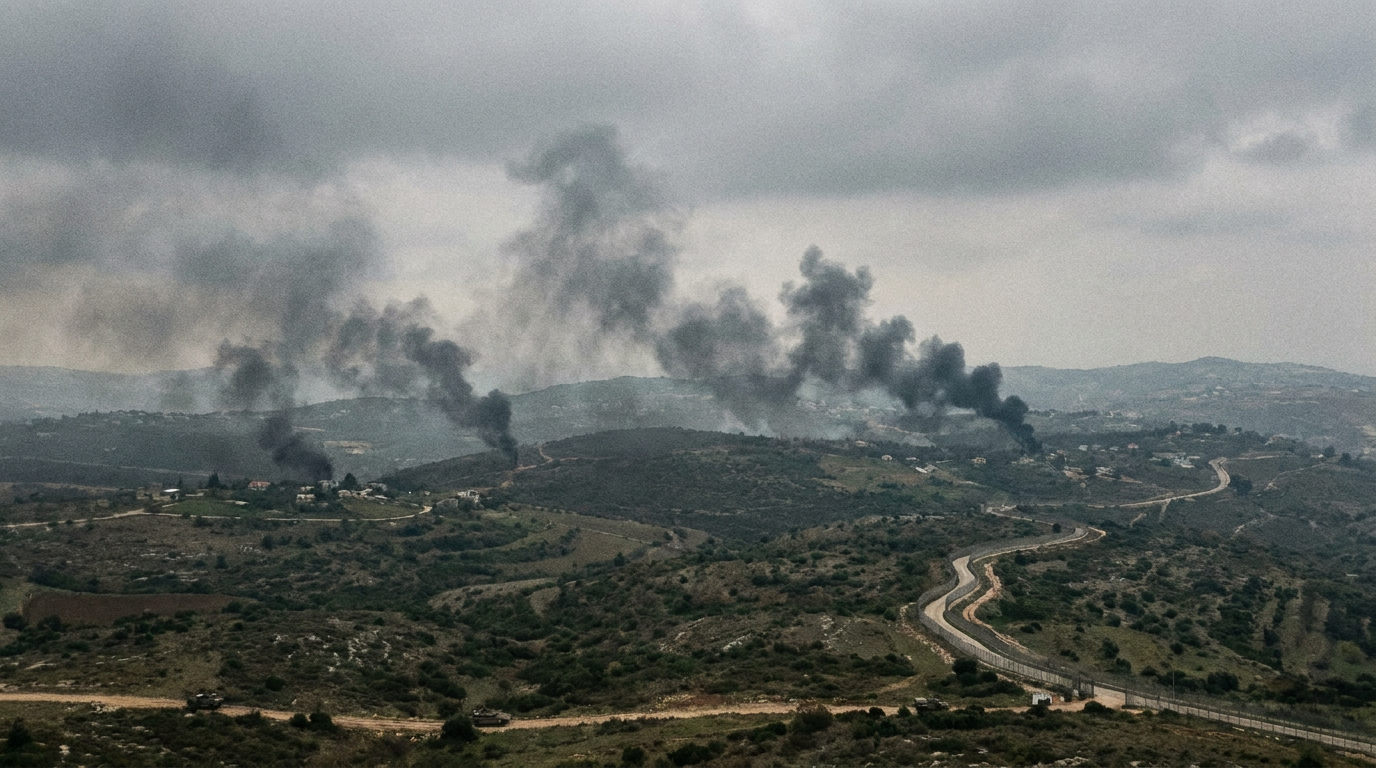
- Israeli forces have launched intense strikes against Hezbollah infrastructure in southern Lebanon.
- Iran has threatened a 'harsh response' if the US does not restrain Israeli operations.
- US lawmakers are heavily criticizing the Trump administration for the secrecy surrounding the deal.
The Middle East is bracing for a potential dramatic widening of its 110-day conflict as a fragile, unacknowledged diplomatic agreement between the United States and Iran faces imminent collapse. The catalyst is a series of intense Israeli military strikes in southern Lebanon, which Tehran claims directly violates the premises of the backchannel negotiations. The situation has created a complex three-way standoff, pitting the Trump administration's diplomatic efforts against both its closest regional ally and fierce domestic critics.[2][3]
The crisis accelerated early Wednesday when Israeli forces launched a new wave of targeted operations across the Lebanese border, aimed at degrading Hezbollah's military infrastructure. Israeli officials maintain the strikes are a non-negotiable security imperative to protect their northern communities, regardless of broader geopolitical negotiations occurring in Washington or Geneva. This unilateral action has severely strained the relationship between Prime Minister Benjamin Netanyahu and President Trump, who had reportedly hoped to use the emerging Iran deal as a stabilizing centerpiece for the region.[3][4]
In Tehran, the reaction was swift and uncompromising. Iranian state media and government spokespeople warned of a "harsh response" if the United States fails to restrain Israeli operations in Lebanon. Iranian officials argue that the unwritten parameters of their recent dialogue with Washington implicitly required a cooling of regional flashpoints, framing the Lebanon strikes as an act of bad faith that renders the diplomatic track null and void.[2][8]

The exact contours of the US-Iran arrangement remain heavily guarded, a fact that has fueled intense speculation and political backlash. Diplomatic sources suggest the framework involves a freeze on certain Iranian nuclear activities and regional militia deployments in exchange for targeted sanctions relief and the unfreezing of specific assets. However, the lack of formal documentation or congressional notification has left the agreement vulnerable to both regional spoilers and domestic political attacks.[5][6]
In Washington, the secrecy surrounding the negotiations has ignited a firestorm across the political spectrum. Republican lawmakers and conservative media outlets have launched blistering attacks on the Trump administration's strategy, with some of the harshest critics labeling the unconfirmed arrangement a "surrender" to Tehran. Lawmakers are demanding immediate briefings, arguing that any deal bypassing Senate approval is fundamentally illegitimate and dangerously emboldens a state sponsor of terrorism.[1][5]
In Washington, the secrecy surrounding the negotiations has ignited a firestorm across the political spectrum.
The administration has quietly pushed back against these characterizations, dispatching surrogates to argue that the backchannel is a necessary, pragmatic tool to prevent a full-scale regional war. Proponents of the strategy contend that a localized, transactional agreement is the only viable mechanism to secure US interests and protect global energy markets without committing American troops to another Middle Eastern conflict.[6]

Yet, the administration's pragmatic defense is struggling to gain traction as the reality on the ground deteriorates. The Israeli defense establishment views any US-Iran accommodation that leaves Hezbollah's arsenal intact as an existential threat. Consequently, Jerusalem appears willing to absorb the diplomatic fallout with Washington in order to press its tactical advantage against Iranian proxies on its immediate borders.[4][7]
European allies are watching the unravelling situation with mounting alarm. Having largely been sidelined from the bilateral US-Iran backchannel, European diplomats are now scrambling to open their own lines of communication to prevent a total breakdown. Their primary concern is that a collapse of the deal, followed by Iranian retaliation, would instantly disrupt maritime trade routes and spike global energy prices just as Western economies stabilize.[3][7]

The stakes for the broader region are immense. If Hezbollah responds to the Israeli strikes with a massive barrage, and Iran feels compelled to directly intervene to save its most valuable proxy, the 110-day localized conflict could exponentially expand. Such an escalation would likely force the United States to abandon its diplomatic posture and deploy direct military assets to defend Israel, realizing the exact scenario the secret deal was designed to prevent.[2][6]
The next 48 hours are widely viewed as critical. International mediators are working frantically to establish a temporary ceasefire in Lebanon that might provide enough political cover for Tehran to remain at the negotiating table. However, with domestic pressure mounting in the US, Israel committed to its northern campaign, and Iran threatening retaliation, the window for diplomacy is rapidly closing.[3][8]
How we got here
Early 2026
Reports emerge of unacknowledged backchannel negotiations between the US and Iran.
Day 1 of Escalation
A localized conflict begins, drawing in regional proxies and heightening tensions.
Day 110
Israel launches a new wave of intense military strikes in southern Lebanon.
June 17, 2026
Iran warns that the Israeli strikes threaten the survival of the US diplomatic agreement.
Viewpoints in depth
US Administration's View
Defending the backchannel as a necessary tool for regional stability.
Administration officials argue that traditional, public treaty negotiations are currently impossible given the toxic political environment in both Washington and Tehran. Therefore, an unwritten, transactional arrangement is the only viable path to freeze Iran's nuclear progress and prevent a wider war that could drag in US forces. They view the Israeli strikes as an unhelpful complication to a fragile but necessary diplomatic strategy.
Israeli Defense View
Viewing the diplomatic track as appeasement that ignores immediate security threats.
The Israeli government and military establishment fundamentally distrust any agreement that provides Iran with economic relief while leaving its proxy network intact. From Jerusalem's perspective, Hezbollah represents an immediate, existential threat on its northern border that must be neutralized militarily. They argue that pausing military operations to save a flawed US-Iran deal would only allow Hezbollah to regroup and rearm.
Iranian Leadership's View
Demanding US leverage over Israel as a condition for continued diplomacy.
Tehran views the US and Israel as deeply intertwined actors, refusing to accept that Washington cannot control Jerusalem's military decisions. Iranian officials argue that they entered the backchannel negotiations with the understanding that the US would enforce a broader regional de-escalation. They frame the Lebanon strikes as proof of American bad faith, warning that they will abandon the nuclear freeze and retaliate if the attacks continue.
US Congressional View
Condemning the secrecy and substance of the unacknowledged agreement.
Lawmakers across the political spectrum, but particularly Republicans, are outraged by the administration's attempt to bypass the Senate's treaty-ratification process. They argue that keeping the details secret prevents democratic oversight and signals weakness to adversaries. Critics contend that providing any form of sanctions relief to Iran while it continues to fund regional proxies is a strategic surrender that will ultimately destabilize the Middle East further.
What we don't know
- The exact terms and concessions involved in the unwritten US-Iran agreement.
- Whether the US has any actual leverage to force Israel to halt its operations in Lebanon.
- The specific nature of the 'harsh response' threatened by Tehran.
Key terms
- Backchannel
- A secret, unofficial, or irregular route for diplomatic communication between nations.
- Proxy
- A local militant group or political faction that acts on behalf of, or is supported by, a larger foreign power.
- Sanctions Relief
- The reduction or removal of economic penalties imposed on a country, often used as an incentive in diplomatic negotiations.
Frequently asked
What is the 'secret' US-Iran deal?
It is an unwritten diplomatic arrangement reportedly involving a freeze on certain Iranian nuclear activities and regional militia actions in exchange for targeted sanctions relief.
Why is Israel striking Lebanon?
Israel is conducting military operations to degrade the infrastructure of Hezbollah, an Iran-backed militant group operating in southern Lebanon.
Why are US lawmakers angry about the deal?
Lawmakers from both parties are criticizing the administration for bypassing congressional oversight and keeping the terms of the agreement hidden from the public.
Sources
Source coverage
8 outlets
4 viewpoints surfaced








[1]Fox NewsUS Congressional Critics
Republicans, media rip Trump’s secret Iran deal, with the harshest critics calling it a surrender
Read on Fox News →[2]Al JazeeraIranian Leadership
Iran war day 110: Tehran says Israeli attacks on Lebanon threaten US deal
Read on Al Jazeera →[3]ReutersUS Administration
Israeli strikes in Lebanon complicate fragile US-Iran diplomatic backchannel
Read on Reuters →[4]The Times of IsraelIsraeli Defense Establishment
IDF presses northern campaign as Jerusalem rebuffs US pressure over unwritten Iran deal
Read on The Times of Israel →[5]The New York TimesUS Congressional Critics
Bipartisan Backlash Grows Over Trump's Unacknowledged Iran Negotiations
Read on The New York Times →[6]AxiosUS Administration
Scoop: White House scrambles to save Iran backchannel amid Lebanon escalation
Read on Axios →[7]BBC News
European allies watch nervously as US-Iran diplomacy falters over Lebanon strikes
Read on BBC News →[8]Tehran TimesIranian Leadership
US must restrain Zionist regime or face consequences, officials warn
Read on Tehran Times →

Every angle. Every day.
Get news politics stories with full source coverage and perspective breakdowns delivered to your inbox.