
The 2026 Solid-State Battery Explainer: Timelines, Breakthroughs, and the Race to 800 Miles
After years of laboratory development, solid-state batteries are entering pilot production in 2026. Automakers and startups are racing to commercialize the technology, promising 800-mile ranges and 12-minute charge times by 2028, though mass-market adoption faces significant manufacturing hurdles.
By Factlen Editorial Team
- First Movers & Innovators
- Automakers and startups pushing aggressive 2026-2028 timelines, viewing solid-state as an imminent paradigm shift.
- Scale Incumbents
- Dominant battery manufacturers focused on optimizing existing liquid chemistries, arguing solid-state is too costly for mass production before 2030.
- Industry Analysts
- Market researchers projecting a phased rollout where solid-state enters premium vehicles first while cheaper chemistries dominate the mass market.
What's not represented
- · Raw Material Suppliers
- · Lithium Mining Communities
- · Independent Auto Mechanics
Why this matters
Solid-state batteries represent the biggest leap in energy storage since the 1990s. By doubling EV range, cutting charge times to 10 minutes, and eliminating fire risks, this technology will finally make electric vehicles as convenient as gas cars and unlock massive grid-scale renewable energy storage.
Key points
- Solid-state batteries replace flammable liquid electrolytes with solid ceramics or sulfides, drastically improving safety and energy density.
- Pilot production lines from companies like QuantumScape and GAC Motor are coming online in 2026 to deliver test cells to automakers.
- Toyota plans to launch its first commercial solid-state EVs between 2027 and 2028, targeting a 621-mile range and 10-minute charging.
- Incumbents like CATL argue that high manufacturing costs will delay mass-market viability until after 2030.
- Early solid-state batteries will likely be reserved for premium luxury vehicles, while mass-market EVs continue using cheaper LFP chemistries.
The electric vehicle industry is standing at the precipice of a generational technological shift. For more than a decade, the "solid-state battery" has been heralded as the holy grail of energy storage—a breakthrough promising to double driving range, slash charging times to mere minutes, and eliminate the risk of battery fires. After years of laboratory breakthroughs and missed deadlines, the technology is finally moving from the research bench to the factory floor.
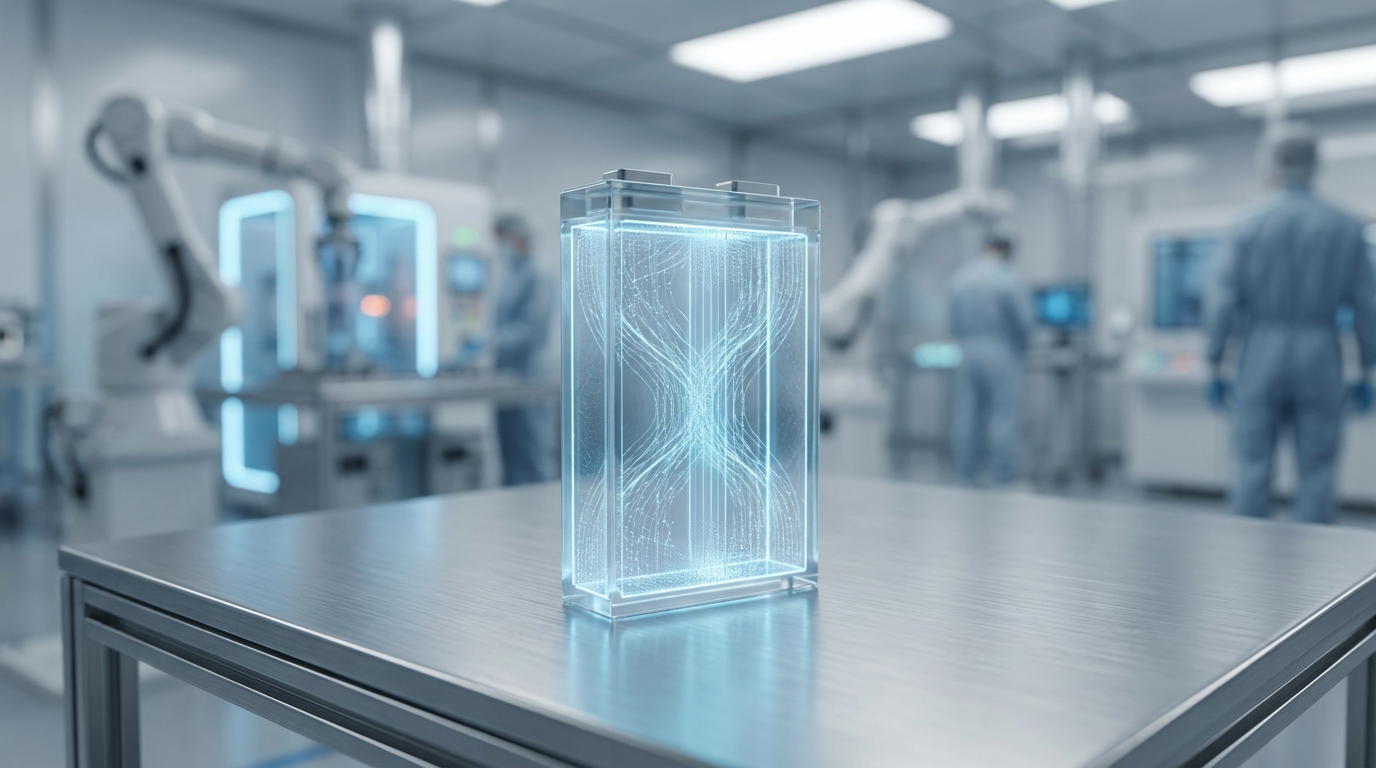
In 2026, the industry narrative has officially shifted from "can we build it?" to "can we scale it?" Global investment in solid-state technology has surpassed $20 billion, signaling a transition from feasibility studies to practical implementation timelines. Automakers and battery startups are no longer just publishing white papers; they are inaugurating pilot production lines and delivering functional prototype cells to automotive partners for rigorous field testing.[1][2]
To understand the magnitude of this shift, one must look inside the cell. Traditional lithium-ion batteries, which have powered everything from smartphones to electric vehicles since the 1990s, rely on a liquid electrolyte to shuttle ions back and forth between the anode and cathode. While effective, this liquid is highly flammable and fundamentally limits how densely energy can be packed into a given space without risking a catastrophic short circuit.
Solid-state batteries (SSBs) replace this volatile liquid with a solid material—typically a sulfide, oxide, or polymer ceramic. This architectural change allows manufacturers to utilize energy-dense lithium-metal anodes. By swapping the liquid for a solid, engineers can drastically increase the amount of power the battery holds without increasing its physical footprint, while simultaneously improving the structural integrity of the cell.[1][2]

The resulting performance metrics are staggering. Toyota and its joint-venture partners are targeting a real-world range of up to 800 miles (approximately 1,280 kilometers) on a single charge for their upcoming solid-state vehicles. This effectively doubles the range of today’s top-tier electric vehicles, eliminating "range anxiety" and making cross-country electric travel indistinguishable from driving an internal combustion engine vehicle.[5]
Charging speeds are equally transformative. Current pilot cells, such as those produced by Volkswagen-backed QuantumScape, have demonstrated the ability to charge from 10% to 80% in under 12 minutes. This breakthrough finally matches the convenience of a traditional gas station stop, removing one of the final hurdles to widespread electric vehicle adoption for consumers who lack access to home charging infrastructure.[5]
Beyond convenience, solid-state technology offers unprecedented safety and longevity. Because there is no flammable liquid electrolyte, the risk of thermal runaway—the unstoppable chain reaction that causes conventional EV fires—is virtually eliminated. Furthermore, these cells suffer significantly less chemical degradation over time. Projections suggest that solid-state batteries could sustain 3,000 to 6,000 charge cycles, which equates to an operational lifespan of up to 40 years.[4][8]

Beyond convenience, solid-state technology offers unprecedented safety and longevity.
The race to commercialize this technology is currently led by a mix of legacy automakers and specialized startups. The year 2026 marks the beginning of the critical pilot validation phase. QuantumScape has inaugurated its "Eagle Line" in California to produce B-samples for automotive testing, while Chinese manufacturers like GAC Motor and Sunwoda are initiating early semi-solid and solid-state production runs to prove their manufacturing viability.[5][9]
Toyota, which holds a commanding lead in intellectual property with over 1,000 patents in the space, has firmly planted its flag in the 2027–2028 window. The Japanese automaker plans to introduce its sulfide-based solid-state batteries in premium electric vehicles, aiming for an initial 621-mile range before pushing toward the 745-mile mark in subsequent second-generation designs.[4][6]
However, not everyone in the industry agrees that a solid-state revolution is imminent. CATL, the world's largest battery manufacturer, has publicly pushed back on the aggressive timelines touted by its competitors. Chairman Robin Zeng recently stated that fully solid-state batteries will not be commercially viable for the mass market until after 2030, citing immense engineering and manufacturing hurdles.[7]
The primary obstacle lies in the solid-solid interface. Achieving perfect contact between solid materials requires extreme manufacturing conditions. Current production methods often use warm isostatic pressing at pressures around 6,000 atmospheres to compact the differing materials. Any microstructural misalignment during this process creates internal resistance, which degrades the battery's performance and makes rapid scaling incredibly difficult.[7]

Furthermore, the economics of scale heavily favor incumbent technologies. Industry leaders like Tesla and CATL are currently focused on optimizing lithium iron phosphate (LFP) and advanced liquid lithium-ion cells. They are playing a game of scale, driving costs down to levels that solid-state batteries cannot currently match. Zeng argues that an annual production threshold of one million vehicles is necessary for solid-state batteries to achieve true industrial viability.[5][7]
Because of these manufacturing costs, industry analysts at firms like Gartner project a bifurcated market for the remainder of the decade. When solid-state batteries do arrive in 2027 and 2028, their high initial price tag will restrict them to luxury and high-performance vehicles. In this initial phase, the technology will be treated much like carbon-fiber body panels—a premium feature for early adopters.[3]
Mass-market electric vehicles will likely continue to rely on increasingly cheap LFP and emerging sodium-ion batteries. These alternative chemistries offer adequate range for daily commuting and urban driving at a fraction of the cost, ensuring that the overall transition to electric mobility continues unabated while solid-state manufacturing matures.[3]

Beyond passenger vehicles, the implications for renewable energy are profound. The extreme durability and safety of solid-state batteries make them ideal for grid-scale storage, capturing intermittent solar and wind energy. While current costs are prohibitive, projections suggest that grid-scale solid-state batteries could approach cost parity with lithium-ion—dropping to $80–$120 per kilowatt-hour—by the mid-2030s.[8]
The next 24 to 36 months will be the ultimate proving ground for the solid-state battery. As pilot lines spin up and test vehicles hit the tracks, the industry will finally discover whether the manufacturing bottlenecks can be broken. If they are, the 800-mile, 10-minute charge will not just be a luxury feature—it will be the catalyst that ends the internal combustion era for good.[5]
How we got here
1991
Sony commercializes the first liquid lithium-ion battery, setting the standard for portable electronics and eventually EVs.
2022
Toyota demonstrates a solid-state prototype achieving a 620-mile range and a 10-minute charge.
2024–2025
QuantumScape and Volkswagen test early solid-state cells, proving extreme durability and fast-charging capabilities.
2026
Multiple manufacturers, including QuantumScape and GAC Motor, launch pilot production lines for automotive B-samples.
2027–2028
Projected launch window for the first commercial electric vehicles equipped with solid-state batteries.
2030+
Anticipated timeline for solid-state batteries to reach mass-market affordability and grid-scale deployment.
Viewpoints in depth
The First Movers
Automakers and startups pushing for rapid commercialization.
Companies like Toyota, QuantumScape, and GAC Motor argue that the fundamental chemistry of solid-state batteries is solved, and the focus is now purely on manufacturing scale. They point to successful pilot lines and B-sample deliveries as proof that 800-mile, 10-minute-charging EVs will hit the premium market by 2028. For these innovators, solid-state technology is an imminent paradigm shift that justifies massive R&D spending to secure early market dominance.
The Scale Incumbents
Dominant battery manufacturers focused on optimizing existing technologies.
Industry giants like CATL and Tesla emphasize the brutal economics of automotive manufacturing. They argue that pressing solid materials together at 6,000 atmospheres of pressure is too complex and costly for mass production in the near term. Instead, they believe optimizing existing liquid lithium-ion and LFP chemistries will yield "good enough" range at a fraction of the cost, keeping them dominant through the 2030s while solid-state remains a niche luxury product.
Market Analysts
Researchers projecting a phased, bifurcated adoption curve.
Firms like Gartner and IDTechEx predict a "trickle-down" adoption curve for the technology. They forecast that early solid-state batteries will be treated like carbon-fiber chassis—an expensive technology reserved exclusively for luxury and high-performance vehicles. Mass-market EVs will continue to use cheaper sodium-ion or LFP batteries until solid-state manufacturing achieves true economies of scale well into the 2030s.
What we don't know
- Whether the extreme 6,000-atmosphere pressure required for manufacturing can be scaled cost-effectively.
- Exactly how solid-state batteries will perform in real-world, decade-long consumer driving conditions.
- If the supply chain for specialized solid electrolytes, such as lithium sulfide, can meet global automotive demand.
Key terms
- Solid-State Battery (SSB)
- A battery technology that uses solid electrodes and a solid electrolyte, instead of the liquid or polymer gel electrolytes found in conventional lithium-ion batteries.
- Electrolyte
- The medium that allows electrical charge (ions) to flow back and forth between the cathode and anode inside a battery cell.
- Thermal Runaway
- A dangerous chain reaction within a liquid battery cell where rising temperatures cause further heating, potentially leading to an unstoppable fire.
- Lithium Iron Phosphate (LFP)
- A cheaper, highly durable type of liquid lithium-ion battery currently dominating the mass-market electric vehicle sector.
- B-Sample
- A fully functional prototype battery cell delivered by manufacturers to automakers for rigorous field testing and vehicle integration.
Frequently asked
What makes a solid-state battery different?
They replace the flammable liquid electrolyte found in traditional lithium-ion batteries with a solid ceramic, sulfide, or polymer material, allowing for higher energy density and greater safety.
Will solid-state batteries make EVs cheaper?
Not initially. Early solid-state batteries will be expensive to manufacture and reserved for luxury vehicles. However, as production scales into the 2030s, they are expected to drive down the total cost of ownership.
Can solid-state batteries catch fire?
They are significantly safer than traditional batteries. Because they lack a volatile liquid electrolyte, they are virtually immune to the thermal runaway events that cause conventional EV fires.
When can I buy a car with a solid-state battery?
Pilot testing begins in 2026, with the first premium commercial vehicles from automakers like Toyota expected to launch between 2027 and 2028. Mass-market availability is projected for the early 2030s.
Sources
Source coverage
9 outlets
3 viewpoints surfaced









[1]IDTechExIndustry Analysts
Solid-State Batteries 2026-2036: Technology, Forecasts, Players
Read on IDTechEx →[2]Infinite PowerIndustry Analysts
Solid-State Batteries: The Final Push Toward Mass Production
Read on Infinite Power →[3]CleanTechnicaIndustry Analysts
Solid-State Battery Timelines and the Future of EV Range
Read on CleanTechnica →[4]Future Green TechFirst Movers & Innovators
Toyota, Samsung SDI, and QuantumScape Race to Commercialize Solid-State Batteries
Read on Future Green Tech →[5]Launchpad EVFirst Movers & Innovators
Toyota and QuantumScape's 800-Mile Solid-State Breakthrough
Read on Launchpad EV →[6]Green Car ReportsFirst Movers & Innovators
Toyota details solid-state EV battery roadmap: 621 miles by 2027
Read on Green Car Reports →[7]Battery-Tech NetworkScale Incumbents
CATL Says Solid-State Batteries Won't Hit Market Before 2030
Read on Battery-Tech Network →[8]Green Fuel JournalIndustry Analysts
When Will Solid State Batteries Be Available for Renewable Energy Storage?
Read on Green Fuel Journal →[9]Interact AnalysisFirst Movers & Innovators
Solid-State Batteries Enter Mass Production Phase from 2026
Read on Interact Analysis →
Every angle. Every day.
Get opinion stories with full source coverage and perspective breakdowns delivered to your inbox.