
The Science of Exercise Mimetics: How Researchers Are Bottling the Benefits of a Workout
Experimental drugs known as 'exercise mimetics' are entering human trials, aiming to trigger the exact cellular pathways of physical exertion without actual movement.
By Factlen Editorial Team
- Geroscience Researchers
- Focuses on correcting the metabolic decline that naturally occurs as we age by targeting the mitochondria and energy-sensing pathways.
- Public Health Advocates
- Emphasizes that fitness is holistic and that a pill cannot replace the mechanical and mental health benefits of physical movement.
- Clinical Medicine
- Views these drugs as a vital lifeline for patients who are bedridden, frail, or suffering from severe cardiovascular disease.
What's not represented
- · Professional Athletes and Anti-Doping Agencies
- · Fitness Industry Professionals
Why this matters
If successfully developed, exercise mimetics could revolutionize treatment for the elderly, the bedridden, and those with severe metabolic diseases who are physically unable to work out. By bottling the molecular signals of physical exertion, these drugs could prevent the rapid physical decline that accompanies prolonged inactivity, extending the healthy years of life.
Key points
- Exercise mimetics are experimental drugs designed to artificially trigger the cellular pathways of physical exertion.
- Cambrian Biopharma recently presented first-in-human data for ATX-304, a drug that activates the body's energy sensor, AMPK.
- In preclinical trials, AMPK activators induced muscle-sparing weight loss, drawing energy from fat rather than muscle.
- Another compound, SLU-PP-332, increased treadmill endurance in mice by 70 percent without prior training.
- These drugs are intended for patients physically unable to exercise, not as a gym replacement for healthy adults.
- A pill cannot replicate the mechanical benefits of exercise, such as building bone density or strengthening cartilage.
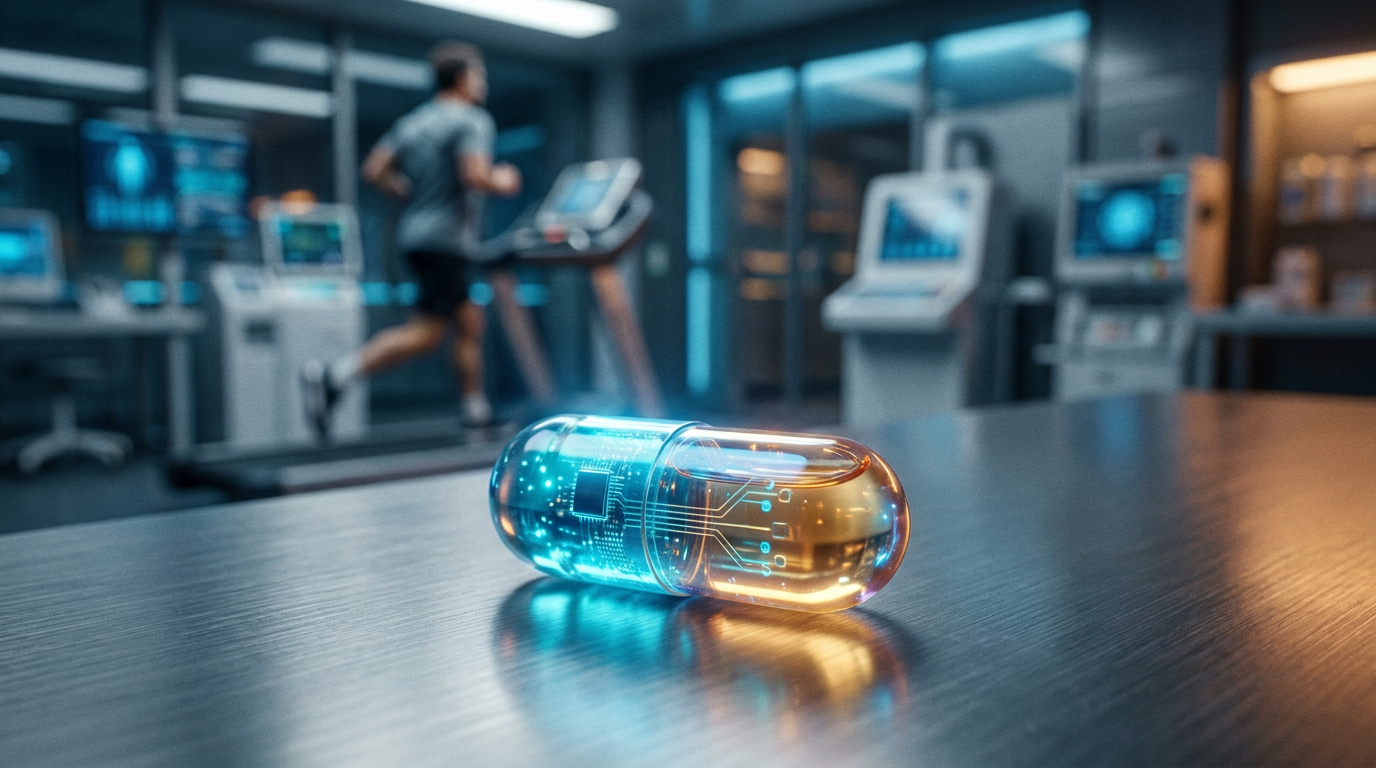
The holy grail of preventive medicine has long sounded like a late-night infomercial: a pill that delivers the metabolic benefits of a five-mile run without a single drop of sweat. But what was once dismissed as science fiction is now quietly entering human clinical trials. A new class of drugs known as "exercise mimetics" aims to artificially trigger the exact cellular pathways activated by endurance training, offering a profound new tool in the fight against metabolic decline.[1]
The premise relies on a fundamental shift in how scientists view physical activity. Exercise is not just a mechanical process of moving joints and tearing muscle fibers; it is a complex chemical signaling event. When the body is pushed to its limits, it releases a cascade of molecular messengers that instruct cells to burn fat, build new mitochondria, and improve insulin sensitivity.[2]
If those specific chemical messengers can be isolated and activated pharmacologically, researchers believe they can replicate the metabolic rewards of a workout. This month, the longevity-focused biotech firm Cambrian Biopharma presented first-in-human data for ATX-304, an experimental drug designed to do exactly that.[2][3]
ATX-304 targets a specific enzyme called AMP-activated protein kinase, or AMPK. Often described as the body’s master energy sensor, AMPK monitors the ratio of ATP (cellular energy) to AMP (depleted energy). When you go for a brisk run, your cells burn through ATP, causing AMPK to sound the alarm.[4]

Once activated, AMPK forces the body to adapt. It halts energy-consuming processes like fat storage and kicks energy-producing processes into high gear, pulling glucose from the blood and oxidizing fatty acids. ATX-304 is designed to flip this AMPK switch chemically, tricking the body into a state of high metabolic demand even while the patient is sitting perfectly still.[3]
The initial data is highly promising for the field of geroscience. In preclinical mouse models, ATX-304 induced significant weight loss. Crucially, unlike the current generation of GLP-1 weight-loss drugs—such as Ozempic or Wegovy—which often cause patients to lose valuable muscle mass alongside fat, the AMPK activator drove "muscle-sparing" weight loss.[3][6]
Because the drug mimics exercise, the muscle tissue remains metabolically active, drawing energy from stored fat rather than cannibalizing the muscle itself. The mice did not eat less; their resting metabolic rate simply increased to match the artificial signal of physical exertion.[3]

Because the drug mimics exercise, the muscle tissue remains metabolically active, drawing energy from stored fat rather than cannibalizing the muscle itself.
AMPK is not the only pathway under investigation. Another highly publicized compound, SLU-PP-332, targets a different set of exercise-responsive proteins known as estrogen-related receptors (ERRs). Specifically, it acts as a "pan-agonist" for ERR-alpha, beta, and gamma.[4]
During prolonged aerobic exercise, ERRs are upregulated, prompting the muscles to shift toward oxidative, high-endurance fibers. In laboratory settings, mice administered a 50 mg/kg dose of SLU-PP-332 exhibited a 70 percent increase in treadmill endurance and a marked reduction in fat mass, all without any prior training regimen.[4][7]
However, SLU-PP-332 remains strictly a preclinical research tool. It has no FDA approval, no human clinical data, and no legitimate pathway for human consumption, despite growing illicit interest from biohackers and longevity enthusiasts seeking a shortcut to fitness.[1][4]
The enthusiasm surrounding these molecules is tempered by a stark biological reality: exercise is a systemic, full-body stressor, and a single molecule cannot replicate its entirety. While an AMPK activator might improve mitochondrial function and fat oxidation, it does not subject the skeletal system to the mechanical loading required to build bone density.[7]
Furthermore, a pill cannot replicate the cardiovascular hemodynamics of a pumping heart, the strengthening of joint cartilage, or the complex release of endorphins and brain-derived neurotrophic factor (BDNF) that makes exercise a potent antidepressant.[1][7]
Tinkering with master metabolic regulators also carries unforeseen risks. A recent study highlighted by The Washington Post examined the interaction between exercise and rapamycin, another popular longevity drug that inhibits the mTOR pathway. Researchers were stunned to find that older adults taking rapamycin actually gained less strength and physical function from an exercise program than those taking a placebo.[5]
The rapamycin study serves as a cautionary tale: the body's metabolic pathways are intricately balanced. Artificially suppressing or activating one node can blunt the natural, beneficial stress responses that the body relies on to maintain homeostasis.[5][6]

Because of these complexities, the clinical target for exercise mimetics is not the healthy 30-year-old looking for a shortcut to a beach body. Instead, biopharma companies are utilizing a "stepping stone" regulatory strategy. They are developing these drugs for patients who are physically incapable of exercising due to severe obesity, heart failure, peripheral artery disease, or muscular dystrophy.[1][3]
For an elderly patient bedridden by frailty or a patient recovering from a severe cardiovascular event, an exercise mimetic could prevent the rapid metabolic decline that accompanies prolonged inactivity. If these drugs prove safe and effective in treating specific diseases, they may eventually be prescribed more broadly as preventative longevity therapeutics.[2][6]
We are entering an era where the molecular signals of physical exertion can be bottled and prescribed. But rather than replacing the gym, exercise mimetics will likely serve as a crucial medical bridge—giving the most vulnerable patients the metabolic strength they need to eventually get up and move on their own.[1][7]

How we got here
2021
Researchers demonstrate that AMPK activators can improve cardiac function and exercise capacity in aged mice.
2023
Cambrian Biopharma launches Amplifier Therapeutics to bring the first AMPK activator to the clinic.
April 2026
Studies reveal that the longevity drug rapamycin may unexpectedly blunt the benefits of exercise in older adults.
June 2026
Cambrian Biopharma presents first-in-human clinical data for the AMPK activator ATX-304 at the American Diabetes Association sessions.
Viewpoints in depth
Geroscience Researchers
Focuses on the cellular mechanisms of aging and metabolic decline.
Researchers in the geroscience field view exercise mimetics as a way to correct the metabolic decline that naturally occurs as we age. By specifically targeting the mitochondria and energy-sensing pathways like AMPK, they believe it is possible to extend healthspan. Their evidence relies heavily on preclinical mouse models showing that activating these pathways can reverse cardiometabolic diseases and promote muscle-sparing weight loss, addressing the root causes of age-related frailty rather than just treating symptoms.
Public Health Advocates
Emphasizes that fitness is holistic and cannot be entirely replicated by a pill.
Public health experts argue that while a pill might improve specific blood markers or increase fat oxidation, it cannot replace the mechanical and psychological benefits of weight-bearing exercise. They point out that physical movement is required to build bone density, strengthen joint cartilage, and release the complex cascade of endorphins that make exercise a potent tool for mental health. They caution against the societal temptation to view these drugs as a shortcut that excuses sedentary lifestyles.
Clinical Medicine
Focuses on the immediate therapeutic applications for vulnerable patients.
Doctors and clinical practitioners see these drugs as a vital lifeline for patients who are bedridden, frail, or suffering from severe cardiovascular disease. For these populations, actual exercise is physically impossible, leading to a rapid downward spiral of muscle atrophy and metabolic dysfunction. Clinicians view exercise mimetics not as a gym replacement, but as a metabolic bridge to recovery—providing the internal strength necessary for patients to eventually engage in physical therapy.
What we don't know
- Whether the profound endurance benefits seen in preclinical mouse models will fully translate to human biology.
- How long-term artificial activation of master metabolic regulators like AMPK might affect other bodily systems.
- If exercise mimetics can be safely combined with other longevity therapeutics or GLP-1 weight-loss drugs without causing adverse metabolic interactions.
Key terms
- Exercise Mimetic
- A pharmacological agent that replicates the physiological and cellular benefits of physical exercise without actual movement.
- AMPK
- AMP-activated protein kinase, an enzyme that serves as the body's master energy sensor, triggering fat burning when cellular energy is low.
- ERR (Estrogen-Related Receptor)
- A group of proteins that regulate genes involved in energy metabolism and mitochondrial function, heavily activated during endurance exercise.
- Mitochondrial Biogenesis
- The process by which cells increase their number of mitochondria, improving their ability to produce energy.
- Geroscience
- A field of research focused on understanding the biological mechanisms of aging to develop interventions that delay age-related diseases.
Frequently asked
What is an exercise mimetic?
It is an experimental drug designed to trigger the same cellular pathways—such as AMPK or ERR—that are normally activated by physical activity, simulating the metabolic effects of a workout.
Will this pill replace going to the gym?
No. While it mimics metabolic changes like fat oxidation, a pill cannot replicate the mechanical loading that strengthens bones, the cardiovascular hemodynamics of a pumping heart, or the mental health benefits of exercise.
Is SLU-PP-332 available for humans?
No. SLU-PP-332 is strictly a preclinical research chemical used in laboratory mice. It has not been approved by the FDA and has no legitimate pathway for human consumption.
How are these drugs different from Ozempic?
Current GLP-1 drugs primarily reduce appetite, which often leads to the loss of both fat and valuable muscle mass. Exercise mimetics aim to increase energy expenditure and preserve muscle mass by drawing energy exclusively from fat stores.
Sources
Source coverage
7 outlets
3 viewpoints surfaced







[1]Factlen Editorial TeamGeroscience Researchers
Synthesis by Factlen editorial team
Read on Factlen Editorial Team →[2]STAT NewsClinical Medicine
STAT+: Cambrian’s experimental longevity drug mimics exercise
Read on STAT News →[3]American Diabetes AssociationGeroscience Researchers
Cambrian Bio Presents First-in-Human Data for ATX-304, an AMPK Activator
Read on American Diabetes Association →[4]National Institutes of HealthGeroscience Researchers
SLU-PP-332: A synthetic ERR pan-agonist that mimics aerobic exercise
Read on National Institutes of Health →[5]The Washington PostPublic Health Advocates
This 'longevity drug' may weaken gains from exercise
Read on The Washington Post →[6]Science NewsClinical Medicine
The quest for an anti-aging pill
Read on Science News →[7]MDPIPublic Health Advocates
Exercise Mimetics and Their Connection with Nutrition: A Systematic Review
Read on MDPI →

More in health
See all 6 stories →Nutritional Psychiatry
The Emerging Evidence for Nutritional Psychiatry: How Diet is Becoming a Mainstream Mental Health Tool
7 sources

Longevity Tech
The 'Exercise Mimetic' Pill: First Human Data Shows AMPK Activator Boosts Metabolism and Cuts Liver Fat
6 sources
Biomimetic Dentistry
The End of 'Drill and Fill': How Biomimetic Peptides and Nanoparticles Are Regrowing Tooth Enamel
7 sources

Cognitive Health
Shingles Vaccine Linked to 24% Lower Dementia Risk in Major New Study
8 sources

Every angle. Every day.
Get health stories with full source coverage and perspective breakdowns delivered to your inbox.