
Neuroaesthetics: How the Science of Interior Design Actively Shapes Brain Chemistry
A growing field at the intersection of neuroscience and architecture reveals that our physical environments trigger measurable biological responses. By applying biophilic design and neuroaesthetics, spaces can be engineered to lower stress, improve focus, and accelerate healing.
By Factlen Editorial Team
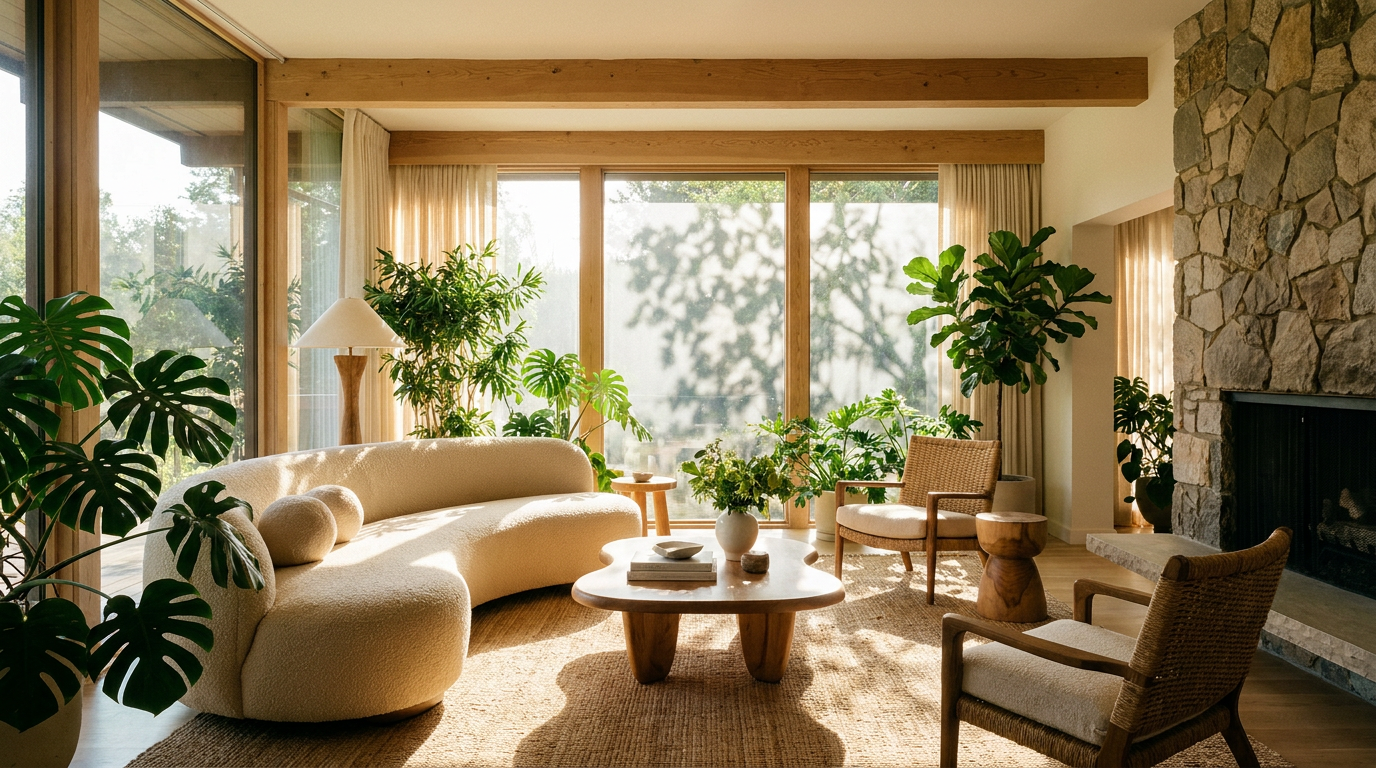
- Neuroscience Researchers
- Scientists studying the biological mechanisms of how spatial environments alter brain chemistry.
- Architects & Interior Designers
- Practitioners translating clinical data into tangible residential and commercial spaces.
- Public Health Advocates
- Voices pushing for the integration of neuroaesthetics into public and equitable infrastructure.
What's not represented
- · Renters with limited control over their spaces
- · Individuals with severe sensory processing disorders
Why this matters
Understanding how your environment affects your nervous system empowers you to make intentional design choices that support your mental health. Simple changes to lighting, texture, and layout can transform a home or office from a source of subconscious stress into a tool for emotional regulation.
Key points
- Neuroaesthetics studies how the brain and nervous system respond to spatial environments, proving that interior design impacts biology.
- Biophilic design, which incorporates natural light, organic textures, and plants, can reduce stress hormones by up to 20 percent.
- Aesthetically pleasing spaces activate the brain's orbitofrontal cortex, an area responsible for emotional regulation and reward processing.
- Curvilinear furniture and rounded spatial geometry are processed by the brain as safe, while sharp angles can subconsciously trigger threat responses.
- Healthcare facilities are increasingly adopting these principles, as evidence shows natural environments accelerate patient recovery times.
Have you ever walked into a room and felt an immediate, inexplicable sense of calm? Or, conversely, stepped into a brightly lit office and felt your shoulders tense up without knowing why? For decades, interior designers attributed these visceral reactions to an intuitive sense of 'good taste' or the elusive concept of 'vibes.' But a rapidly growing scientific discipline is proving that our reactions to our physical environments are neither subjective nor accidental. They are deeply biological, hardwired into our evolutionary history. Every time we enter a new space, our brains are rapidly calculating whether the environment is safe, stimulating, or threatening, triggering a cascade of physiological responses before we even consciously register the color of the walls.[1]
Welcome to the field of neuroaesthetics. Sitting at the intersection of neuroscience, cognitive psychology, and architecture, neuroaesthetics is the rigorous study of how the brain and body respond to aesthetic experiences and spatial environments. It moves interior design past the superficial realm of color trends, throw pillows, and decorative arts, reframing the spaces we inhabit as active participants in our physical and mental health. By utilizing advanced brain-scanning technology and biometric tracking, researchers are finally able to quantify the exact biological toll of a poorly designed room—and the measurable healing power of a thoughtfully crafted one.[1][2]
The premise underlying this field is straightforward but profound: human beings do not just see a room; we feel it through our nervous systems. When we cross a threshold, our brains process spatial proportions, lighting, acoustics, and textures in a matter of milliseconds. These environmental stimuli trigger immediate, measurable physiological responses, dictating our heart rate, our blood pressure, our cortisol levels, and even the release of neurotransmitters like serotonin and dopamine. A room is not merely a passive backdrop to our lives; it is a continuous stream of sensory data that actively modulates our brain chemistry.[2][6]
The term 'neuroaesthetics' was first coined in the late 1990s by British neurobiologist Semir Zeki, who used early brain-scanning technology to observe how the human brain processes beauty. Since then, functional magnetic resonance imaging (fMRI) has allowed researchers to map exactly what happens when we experience a well-designed space. Studies consistently show that aesthetically pleasing environments activate the orbitofrontal cortex, a brain region heavily involved in emotional regulation and reward processing. When this area is stimulated by harmonious spatial design, it fosters a deep sense of well-being and emotional stability.[3][6]

A central pillar of applied neuroaesthetics is 'biophilic design,' an architectural framework based on the hypothesis that humans possess an innate, evolutionary drive to connect with nature. For the vast majority of human history, our nervous systems evolved outdoors, attuned to the rhythms of the sun, the sound of water, and the textures of the forest. When we are trapped in sterile, rectilinear boxes devoid of natural light and organic materials, our bodies register a subtle, chronic state of environmental stress, leading to fatigue and cognitive depletion.[4][5]
Reintroducing natural elements into the built environment acts as a biological balm. Environmental consulting firm Terrapin Bright Green codified this approach into '14 Patterns of Biophilic Design,' detailing how specific natural interventions alter human biology. The data supporting this framework is striking: incorporating biophilic elements like natural light, organic textures, and plant life has been shown to reduce stress hormones by 15 to 20 percent. Office workers in biophilic environments consistently report higher productivity, enhanced creativity, and a significant reduction in daily anxiety compared to those in conventional workspaces.[4][6]

The mechanism behind this stress reduction is deeply rooted in evolutionary psychology. Consider the widespread human preference for wood grain. Research indicates that touching or even just looking at natural wood stimulates the somatosensory cortex, producing feelings of warmth and belonging. Wood and natural fibers signal a safe, resource-rich environment to the primitive brain, gently down-regulating the sympathetic nervous system—our 'fight or flight' response. In contrast, an overabundance of synthetic materials like harsh plastics and reflective metals can keep the nervous system in a state of low-level hyper-vigilance.[2][4]
The mechanism behind this stress reduction is deeply rooted in evolutionary psychology.
Shape and geometry play an equally vital role in neuroaesthetic design. Functional imaging studies have revealed that curvilinear spaces and rounded furniture activate the brain's reward networks much more strongly than sharp, rectilinear contours. Sharp angles and hard edges are subconsciously processed by the amygdala as potential physical threats, requiring more cognitive effort to navigate safely. Soft curves, arches, and circular forms, however, evoke a sense of safety and comfort, mimicking the organic shapes found in nature and inviting the body to relax.[3][6]
Lighting is perhaps the most biologically potent tool in the neuroaesthetic arsenal. The human circadian rhythm is entirely dependent on the shifting color temperature of the sun. Environments that utilize dynamic, circadian lighting—bright, blue-toned light in the morning to stimulate cortisol and focus, transitioning to warm, amber light in the evening to trigger melatonin production—profoundly impact sleep quality and daily cognitive performance. Stagnant, artificial fluorescent lighting disrupts this delicate biological clock, contributing to insomnia, mood disorders, and chronic fatigue.[5][6]
The medical community has been among the first to fully embrace these findings, shifting away from the sterile, institutional hospital designs of the 20th century. A 2024 systematic review published in Frontiers in Built Environment analyzed over a decade of data on biophilic hospital design. The researchers found that patients in rooms with natural light, views of greenery, and organic materials experienced lower pain levels, required less medication, and were discharged faster than those recovering in standard, windowless clinical rooms.[5]

This evidence-based approach is now transforming mental health facilities across the globe. At the University of Kansas Health System's Strawberry Hill Campus, architects utilized neuroaesthetic principles to design an inpatient psychiatric facility that actively promotes healing rather than mere containment. By incorporating vertical green walls, abundant natural light, and varied spatial volumes that allow patients to choose between social stimulation and quiet refuge, the architecture itself becomes a form of therapeutic intervention, supporting the clinical work being done inside.[3]
To quantify these effects in real-time, researchers are increasingly taking their instruments out of the laboratory and into the living room. In a landmark 2019 exhibition titled 'A Space for Being,' Google partnered with the Johns Hopkins International Arts + Mind Lab to build three distinct, fully furnished rooms. Visitors wore biometric bands that tracked their heart rate, skin temperature, and breathing patterns as they moved through the different aesthetic environments, providing a real-time map of their nervous system's response to design.[3][7]
The results of the Johns Hopkins experiment were highly revealing: the room where visitors consciously thought they felt most relaxed did not always align with what their biometric data showed. This fascinating disconnect highlights the immense power of the subconscious brain in processing our environments. It proves that our biological reactions to space often bypass our conscious aesthetic preferences entirely, reacting to subtle cues in lighting, acoustics, and texture that we may not even realize we are actively perceiving.[3][7]
Despite the robust clinical data, researchers acknowledge that neuroaesthetics is not a universal, one-size-fits-all prescription. Human perception is heavily filtered through cultural background, personal memories, and individual neurodivergence. A sprawling, open-concept room with floor-to-ceiling windows might feel liberating and awe-inspiring to one person, but deeply exposing and anxiety-inducing to someone who requires a sense of enclosed refuge to feel secure. What soothes one nervous system may overstimulate another, making personalized design crucial. Designers must account for these varied psychological profiles when crafting spaces meant to serve diverse populations.[1][3]

Because of this inherent subjectivity, the future of neuroaesthetic design lies in flexibility and sensory control. The goal is not to mandate a specific style of furniture or a rigid color palette, but to create adaptable environments where individuals can modulate lighting, acoustics, and spatial flow to suit their immediate neurological needs. Adjustable lighting systems, movable acoustic partitions, and varied seating arrangements empower occupants to tailor their environment, ensuring that the space can shift from a zone of high focus to a sanctuary of deep rest.[1][2]
As the science matures, public health advocates are pushing to democratize these design principles. If natural light, acoustic dampening, and biophilic textures are proven to lower blood pressure and enhance cognitive development, they argue, these elements cannot remain the exclusive domain of luxury real estate and high-end corporate offices. Integrating neuroaesthetics into public schools, affordable housing developments, and community centers is increasingly viewed as a matter of fundamental public health equity, ensuring that everyone has access to environments that support their well-being.[7]
Ultimately, neuroaesthetics invites us to fundamentally rethink our relationship with our homes and workplaces. It encourages a shift away from decorating for visual perfection or fleeting social media aesthetics, and toward decorating from the inside out. By understanding the continuous biological dialogue between our brains and our surroundings, we can craft spaces that do not just look beautiful, but actively care for us. When we align our architecture with our biology, we transform the built environment from a source of subconscious stress into a powerful, daily tool for human flourishing.[1][7]
How we got here
1990s
British neurobiologist Semir Zeki coins the term 'neuroaesthetics' to describe the neural basis of how humans experience beauty.
2014
Environmental consulting firm Terrapin Bright Green publishes the '14 Patterns of Biophilic Design,' standardizing how to integrate nature into architecture.
2019
Google and Johns Hopkins University debut 'A Space for Being' in Milan, using wearable tech to prove that interior design alters heart rate and skin temperature.
2024
A comprehensive review in Frontiers in Built Environment confirms that biophilic hospital designs measurably accelerate patient recovery and reduce pain levels.
Viewpoints in depth
Neuroscience Researchers
Scientists studying the biological mechanisms of how spatial environments alter brain chemistry.
For neuroscientists, the built environment is a constant stream of sensory input that the brain must process. They focus on measurable biological markers—using fMRI scans to watch the orbitofrontal cortex light up in response to beauty, or tracking cortisol levels and heart rate variability to measure stress. Their research proves that our preference for natural light and organic shapes isn't just a matter of taste, but a hardwired evolutionary survival mechanism that down-regulates the sympathetic nervous system.
Architects & Interior Designers
Practitioners translating clinical data into tangible residential and commercial spaces.
Designers are utilizing neuroaesthetic data to move beyond purely visual aesthetics, creating spaces that actively support emotional regulation. They apply these principles by prioritizing circadian lighting systems, specifying natural materials like exposed wood grain, and utilizing curvilinear furniture to soften a room's psychological impact. For this camp, the challenge lies in balancing the universal biological need for nature with the subjective, culturally specific ways different clients experience comfort and refuge.
Public Health Advocates
Voices pushing for the integration of neuroaesthetics into public and equitable infrastructure.
Public health experts view the built environment as a critical determinant of community health. They argue that if biophilic design and acoustic optimization are scientifically proven to reduce anxiety, accelerate hospital recovery times, and improve cognitive function in students, these architectural interventions cannot be reserved for luxury real estate. This camp advocates for updating building codes and funding models to ensure schools, affordable housing, and public hospitals are designed to actively support mental well-being.
What we don't know
- How long the biological benefits of a neuroaesthetic intervention last before the brain habituates to the new environment.
- The exact degree to which cultural background and personal trauma override universal biological preferences for certain spatial designs.
- How to perfectly optimize shared spaces, like open-plan offices, where individuals have conflicting sensory needs and neurodivergent profiles.
Key terms
- Neuroaesthetics
- The scientific study of how the brain and nervous system respond to visual stimuli, beauty, and spatial environments.
- Biophilic Design
- An architectural approach that seeks to connect building occupants more closely to nature by incorporating natural light, materials, and greenery.
- Orbitofrontal Cortex
- A region of the brain involved in emotional regulation and decision-making, which is highly activated by aesthetically pleasing spaces.
- Circadian Lighting
- Artificial lighting systems designed to mimic the natural progression of daylight to help regulate human sleep-wake cycles.
- Somatosensory Cortex
- The part of the brain that processes sensory input from the body, such as touch, which is stimulated by natural textures like wood grain.
Frequently asked
Do I need to buy expensive furniture to apply neuroaesthetics?
No. Simple, low-cost changes like maximizing natural light, adding houseplants, and decluttering to reduce visual noise can significantly improve a room's psychological impact.
Is biophilic design just about adding plants?
While plants are a key element, biophilic design also includes incorporating natural textures like wood, utilizing organic shapes, adding water features, and maximizing natural light.
How quickly does the brain respond to a room's design?
Research shows the human nervous system reacts within milliseconds to environmental stimuli like lighting, texture, and spatial arrangement, often before we consciously register the space.
Can interior design really affect physical health?
Yes. Studies in healthcare settings show that patients in rooms with natural light and views of nature experience lower blood pressure, require less pain medication, and recover faster.
Sources
Source coverage
7 outlets
3 viewpoints surfaced







[1]LivingetcArchitects & Interior Designers
Neuroaesthetics Explains How Your Home Makes You Feel
Read on Livingetc →[2]ArchDailyArchitects & Interior Designers
Neuroesthetics: The Influence of Design on Human Experience
Read on ArchDaily →[3]Johns Hopkins International Arts + Mind LabNeuroscience Researchers
Neuroaesthetics and the Built Environment: Measuring the Impact of Space on the Brain
Read on Johns Hopkins International Arts + Mind Lab →[4]Terrapin Bright GreenArchitects & Interior Designers
14 Patterns of Biophilic Design: Improving Health and Well-Being in the Built Environment
Read on Terrapin Bright Green →[5]Frontiers in Built EnvironmentPublic Health Advocates
Biophilic Design Positively Impacts the Physical and Mental Wellbeing of Patients and Staff in Hospital Settings
Read on Frontiers in Built Environment →[6]Science in DesignNeuroscience Researchers
Neuroaesthetics for Interior Designers: The Biology of Beauty
Read on Science in Design →[7]Factlen Editorial TeamPublic Health Advocates
Synthesis by Factlen editorial team
Read on Factlen Editorial Team →
More in home
See all 13 stories →Mass Timber
How Engineered Wood is Replacing Steel and Concrete in the World's Newest Skyscrapers
0 sources
Home Energy
How Bidirectional Charging is Turning Electric Vehicles into Massive Home Batteries
0 sources

Heat Pumps
How Heat Pumps Conquered the Cold: The 2026 Guide to Home Heating
0 sources

Neuroarchitecture
How Neuroaesthetics is Rewiring Interior Design for Mental Health
0 sources
Every angle. Every day.
Get home stories with full source coverage and perspective breakdowns delivered to your inbox.