
How Neuroaesthetics is Rewiring Interior Design for Mental Health
A growing body of neuroscience research reveals that interior design choices directly alter brain chemistry and nervous system function. By applying 'neuroarchitecture,' designers are moving beyond visual aesthetics to create homes that actively lower stress and improve cognitive health.
By Factlen Editorial Team
- Neuroaesthetics Researchers
- Focus on objective biometric data, using fMRI and EEG to prove that aesthetic experiences trigger measurable biological events in the brain.
- Biophilic Design Advocates
- Emphasize evolutionary psychology, arguing that human nervous systems require natural materials, fractal patterns, and organic shapes to feel safe.
- Neuro-Inclusive Designers
- Stress that neurology is not uniform, advocating for adaptable spaces that prevent sensory overload for neurodivergent individuals.
What's not represented
- · Real estate developers prioritizing cost-efficiency over cognitive health features
- · Low-income housing advocates addressing the accessibility and affordability of neuroaesthetic design
Why this matters
Most people spend nearly 90 percent of their lives indoors, yet rarely consider how their walls, lighting, and furniture affect their biology. Understanding neuroaesthetics empowers you to optimize your living space to actively reduce daily anxiety, improve your sleep, and boost your focus.
Key points
- Neuroaesthetics uses medical technology like fMRI to measure how interior design physically alters brain chemistry.
- The human brain strongly prefers curvilinear shapes over sharp angles, associating curves with safety and emotional reward.
- Biophilic design, particularly the use of natural fractal patterns, induces a meditative state that lowers cortisol levels.
- Dynamic lighting that mimics the sun's natural progression is crucial for maintaining a healthy circadian rhythm.
- Neuro-inclusive design ensures that spaces are adaptable, preventing sensory overload for neurodivergent individuals.
For decades, interior design has been dominated by visual trends, driven by magazine spreads and, more recently, the highly curated aesthetics of social media. Homeowners and designers alike have focused on what a space looks like—the symmetry of a room, the coordination of textiles, and the striking appeal of statement furniture. But a quiet revolution is shifting the foundation of how we build and decorate our living spaces. A growing interdisciplinary field known as neuroaesthetics is proving that our interiors do much more than reflect our personal style; they actively alter our brain chemistry. By measuring physiological responses to architectural stimuli, scientists are discovering that the built environment can either chronically stress the nervous system or serve as a powerful tool for mental restoration.[1][6]
This shift is anchored in "neuroarchitecture," a discipline that merges neuroscience, psychology, and spatial design. The core premise is simple but profound: humans now spend an estimated 80 to 90 percent of their lives indoors. Our nervous systems, which evolved to navigate the complex, organic stimuli of the natural world, are constantly processing the artificial environments we inhabit. When a space is poorly designed—featuring harsh lighting, sharp angles, and synthetic materials—the brain interprets these signals as low-level threats, triggering a subtle but continuous release of stress hormones. Conversely, environments designed with neurological principles in mind can actively calm the body, lower blood pressure, and enhance cognitive function.[2][3]
To understand exactly how spaces affect us, researchers have moved beyond subjective surveys and begun utilizing objective medical technology. By employing functional magnetic resonance imaging (fMRI), electroencephalograms (EEG), and biometric sensors that track heart rate and galvanic skin response, scientists can watch the brain react to a room in real time. This data-driven approach has revealed that aesthetic experiences are not merely subjective opinions; they are biological events. When a person enters a thoughtfully designed space, the brain's reward centers activate, releasing serotonin and dopamine. These neurochemical shifts create the biological foundation for the feeling of comfort and safety that people often describe as "hominess."[5][6]
The measurable health impacts of neuroaesthetic design are striking. Research consistently demonstrates that environments optimized for the human nervous system can yield a 15 to 20 percent reduction in stress hormones like cortisol. Furthermore, these spaces have been shown to decrease heart rates, lower blood pressure, and improve sustained attention. In healthcare settings, where evidence-based design has been pioneered, patients in rooms with natural light and views of nature recover faster and require less pain medication. Now, interior designers are translating these clinical findings into residential spaces, treating home design as a form of preventive mental healthcare.[3][5]

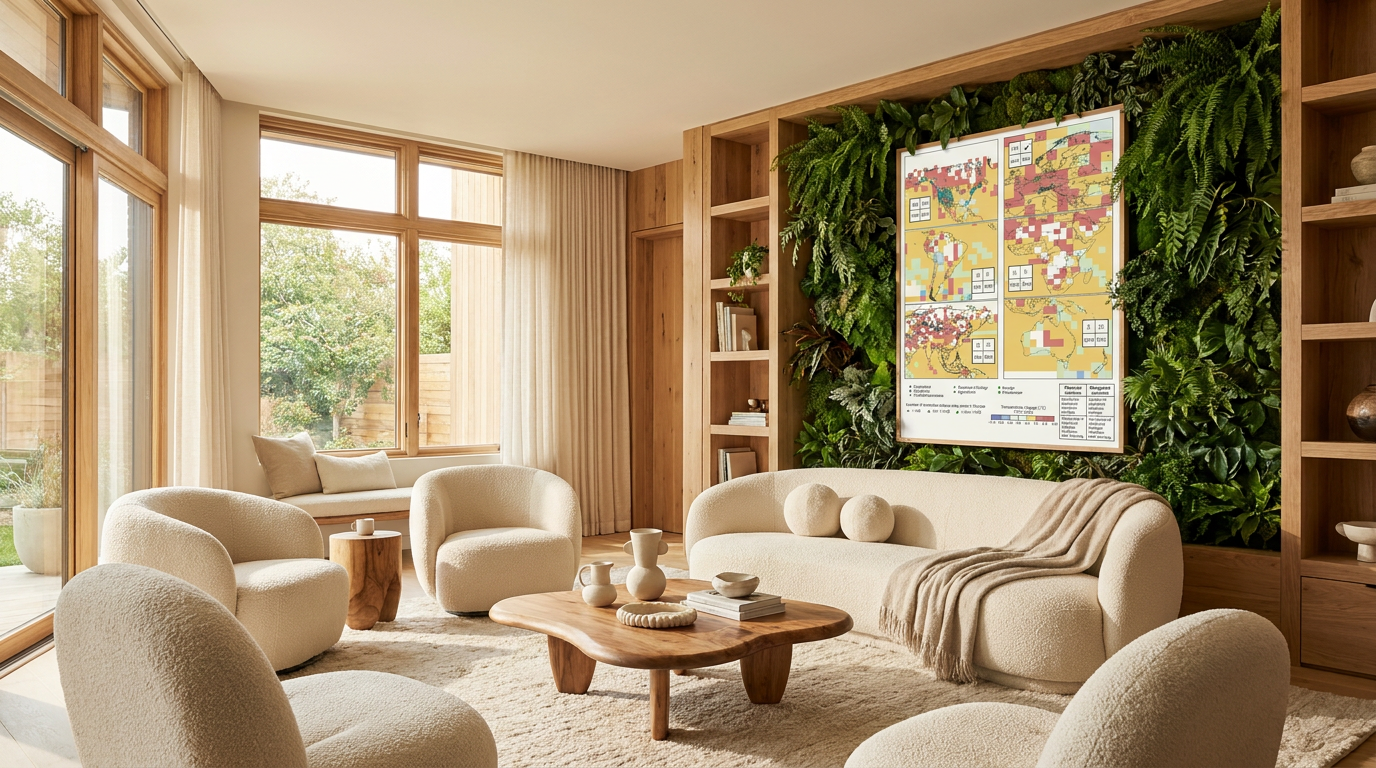
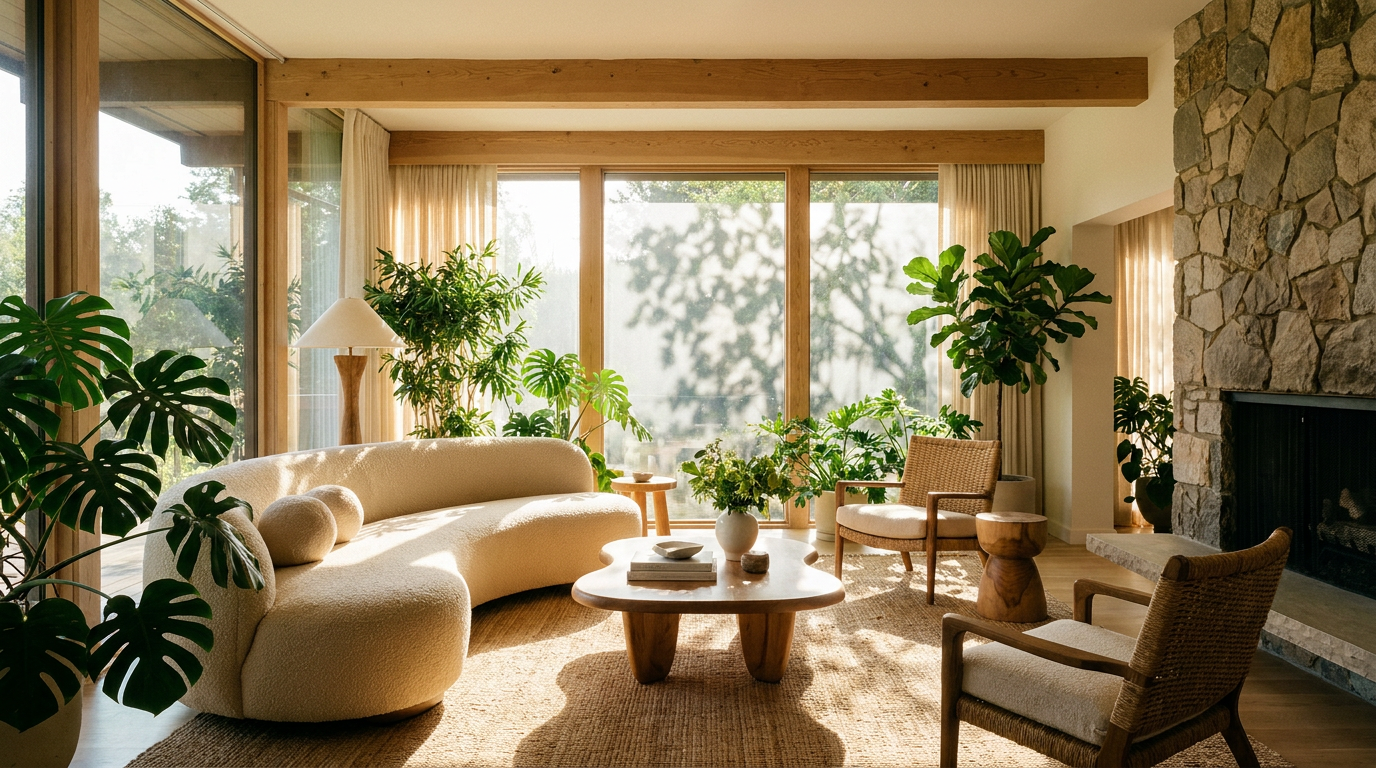
One of the most fascinating discoveries in neuroaesthetics revolves around the brain's response to geometric shapes—specifically, the difference between rectilinear and curvilinear forms. Modern architecture has long favored sharp angles, straight lines, and boxy configurations for their efficiency and ease of construction. However, neural data suggests that the human brain strongly prefers curves. A landmark study published by Oxford University Press utilized fMRI to examine how participants reacted to different interior contours. The researchers found that viewing curvilinear rooms activated the anterior cingulate cortex, a region of the brain deeply involved in processing emotion and reward.[4]
This neurological preference for curves is rooted in evolutionary psychology. In the natural world, sharp angles are rare and often signal danger—such as thorns, jagged rocks, or the teeth of a predator. Curves, on the other hand, mimic the organic shapes of living organisms, rolling landscapes, and water currents. When interior designers incorporate arched doorways, rounded furniture, and flowing spatial layouts, they are essentially speaking the brain's ancestral language. These curvilinear elements signal safety to the subconscious mind, allowing the sympathetic nervous system (responsible for the fight-or-flight response) to stand down, and the parasympathetic nervous system (responsible for rest and digest) to take over.[4][6]
Beyond shape, the integration of nature into the built environment—known as biophilic design—is a cornerstone of neuroarchitecture. But biophilia extends far beyond simply placing a potted plant in a corner. It involves the strategic use of natural materials, dynamic daylighting, and, crucially, fractal patterns. Fractals are complex, repeating geometric patterns found abundantly in nature, such as the branching of trees, the veins of leaves, and the structure of snowflakes. Research indicates that the human visual system is uniquely tuned to process these specific mathematical patterns with minimal cognitive effort.[2][3]
Beyond shape, the integration of nature into the built environment—known as biophilic design—is a cornerstone of neuroarchitecture.
When the eye encounters biophilic fractals in an interior space—whether through the grain of natural wood, the veining of stone, or the intricate patterns of a woven textile—it induces a state of "soft fascination." This is a mild, meditative state that holds the brain's attention without draining its cognitive resources. Exposure to fractal-rich environments has been shown to lower cortisol levels and support creative thinking by allowing the mind to wander without becoming overwhelmed. By surrounding ourselves with materials that echo the complexity of the natural world, we create environments that feel inherently grounding and mentally restorative.[3][6]

Lighting is another critical vector through which interior design impacts neurobiology. For decades, residential and commercial spaces have relied on static, artificial lighting that remains at a constant color temperature and intensity throughout the day. This fundamentally disrupts the body's circadian rhythm—the internal 24-hour clock that regulates sleep, hormone production, and metabolism. Insufficient or improperly timed lighting can lead to sleep disorders, mood fluctuations, and impaired cognitive performance. Neuroarchitecture prioritizes dynamic lighting systems that mimic the natural progression of the sun, shifting from cool, blue-toned light in the morning to warm, amber hues in the evening.[2][3]
Color psychology, long a staple of interior design, is also being validated and refined by neuroscience. Different wavelengths of light (which we perceive as color) stimulate different areas of the brain. Warm colors like terracotta and muted yellows can enhance productivity and concentration, making them ideal for home offices. Conversely, specific shades of pink and soft blue have been scientifically shown to calm the nervous system and reduce feelings of anger or anxiety. By strategically zoning a home with evidence-based color palettes, designers can create tailored emotional experiences for different rooms—stimulating energy in the kitchen and promoting deep relaxation in the bedroom.[1][2]
While visual elements dominate the conversation, neuroaesthetics also accounts for the invisible environment: air quality and acoustics. The quality of the air we breathe directly affects cognitive function and emotional balance. Poor indoor air, often laden with volatile organic compounds (VOCs) from synthetic furniture and excess carbon dioxide from poor ventilation, can lead to brain fog, fatigue, and headaches. Similarly, poor acoustics that allow echoes and background noise to reverberate can cause chronic sensory overload. Neuroarchitects mitigate these invisible stressors by specifying non-toxic materials, integrating advanced air purification, and utilizing sound-absorbing textures to create a serene auditory landscape.[3][6]
As the field matures, a vital sub-discipline is emerging: neuro-inclusive design. Neurology is not deterministic, and human brains process sensory input in vastly different ways. What feels pleasantly stimulating to a neurotypical individual might be overwhelmingly chaotic to someone with autism, ADHD, or sensory processing differences. Neuro-inclusive design seeks to create spaces that accommodate this neurological diversity. It emphasizes user control—allowing occupants to adjust lighting, temperature, and acoustic privacy—and utilizes clear spatial zoning to reduce cognitive load. By designing for the margins, architects are discovering that they create more comfortable and adaptable environments for everyone.[1][6]

The democratization of these principles is the next major frontier. Historically, evidence-based design has been confined to high-end corporate headquarters, luxury wellness retreats, and cutting-edge hospitals. However, as the science becomes more accessible, everyday homeowners are beginning to apply neuroaesthetic concepts to their own living spaces. This doesn't necessarily require a massive renovation budget; it can be as simple as rearranging furniture to maximize natural light, swapping out harsh LED bulbs for circadian-friendly alternatives, or introducing natural textures to a sterile room. The goal is intentionality—designing for the brain rather than just the eye.[5][6]
Ultimately, the rise of neuroaesthetics represents a profound shift in how we value our built environments. A home is no longer viewed merely as a container for our possessions or a backdrop for our lives; it is an active participant in our physical and mental well-being. By bridging the gap between art and neuroscience, designers are uncovering how spatial stimuli elicit specific biological responses. This empowers us to craft interiors that serve as true sanctuaries, buffering us against the stress of the modern world and fostering psychological resilience.[1][3]
As we continue to spend the vast majority of our lives indoors, the importance of thoughtful, evidence-based design cannot be overstated. The spaces we inhabit shape the architecture of our minds. By aligning aesthetics with empathy and scientific rigor, neuroarchitecture transforms buildings into allies of human flourishing. It ensures that our homes do not just look beautiful, but fundamentally feel safe, restorative, and deeply aligned with our biological needs.[3][6]
Viewpoints in depth
Neuroaesthetics Researchers
Focus on objective biometric data to prove that aesthetic experiences trigger measurable biological events.
For this camp, the conversation about design must move away from subjective taste and anchor itself in hard science. Researchers utilize fMRI, EEG, and biometric sensors to demonstrate that specific spatial configurations trigger predictable neurochemical responses. They argue that because environments can measurably lower blood pressure and increase serotonin, architectural design should be treated with the same scientific rigor as preventive medicine, prioritizing measurable health outcomes over passing visual trends.
Biophilic Design Advocates
Emphasize evolutionary psychology, arguing that human nervous systems require natural elements to feel safe.
This perspective is rooted in the idea that the human brain has not evolved fast enough to adapt to the sterile, rectilinear environments of the modern world. Advocates argue that our nervous systems are still wired for the savanna and the forest. Therefore, integrating natural materials, dynamic daylighting, and complex fractal patterns isn't just an aesthetic choice—it is a biological necessity. They point to studies showing that visual access to nature directly accelerates physical healing and restores depleted cognitive energy.
Neuro-Inclusive Designers
Stress that neurology is not uniform, advocating for adaptable spaces that prevent sensory overload.
While general neuroaesthetic principles apply to the majority, this camp highlights the danger of assuming a 'one-size-fits-all' brain. Neuro-inclusive designers focus on the margins, noting that individuals with autism, ADHD, or sensory processing differences can be easily overwhelmed by environments that neurotypical people find stimulating. They advocate for highly adaptable spaces that offer users control over their sensory inputs—such as adjustable lighting, acoustic dampening, and clear spatial zoning—ensuring that the built environment is accessible and comfortable for all neurotypes.
What we don't know
- How long the physiological benefits of a neuroaesthetic space last once a person leaves the environment.
- The exact threshold at which a space transitions from being pleasantly stimulating to overwhelmingly chaotic for different neurotypes.
- How to effectively scale these evidence-based design principles for affordable, mass-market housing.
Key terms
- Neuroaesthetics
- The scientific study of how the brain processes and responds to aesthetic experiences, beauty, and art.
- Biophilic Design
- An architectural approach that seeks to connect building occupants more closely to nature through natural lighting, ventilation, landscape features, and organic materials.
- Fractal Patterns
- Complex, repeating geometric shapes found in nature (like tree branches or leaf veins) that the human brain processes easily, inducing a calming effect.
- Anterior Cingulate Cortex
- A region of the brain involved in processing emotion, learning, and memory, which is highly activated by curvilinear architectural forms.
- Circadian Lighting
- Artificial lighting systems designed to mimic the natural daily cycle of sunlight, supporting the body's internal clock and improving sleep quality.
Frequently asked
What is neuroarchitecture?
Neuroarchitecture is an interdisciplinary field that combines neuroscience, psychology, and architecture to design spaces that positively influence human emotions, cognitive function, and physical health.
How do curved lines affect the brain?
fMRI studies show that viewing curvilinear shapes activates the anterior cingulate cortex, a brain region linked to emotion and reward. The brain associates curves with the safety of the natural world, unlike sharp angles which can signal danger.
Can interior design actually lower stress?
Yes. Research demonstrates that environments utilizing neuroaesthetic principles—such as natural light, biophilic fractals, and proper acoustics—can reduce stress hormones like cortisol by 15 to 20 percent.
What is neuro-inclusive design?
Neuro-inclusive design creates adaptable spaces that accommodate diverse neurological needs, ensuring that environments do not overstimulate or exclude individuals with autism, ADHD, or sensory processing differences.
Sources
Source coverage
6 outlets
3 viewpoints surfaced






[1]ArchDailyNeuro-Inclusive Designers
Neuroaesthetics and Neuroarchitecture: Designing for the Mind
Read on ArchDaily →[2]Connections by FinsaBiophilic Design Advocates
Neuroarchitecture: intelligently designed buildings
Read on Connections by Finsa →[3]International Journal of Environment, Sustainability and HealthBiophilic Design Advocates
Neuroarchitecture in Interior Design: Enhancing Human Behaviour and Well-being
Read on International Journal of Environment, Sustainability and Health →[4]Oxford University PressNeuroaesthetics Researchers
The Neuroaesthetics of Architecture
Read on Oxford University Press →[5]Science in DesignNeuroaesthetics Researchers
The Simple Truth: Neuroaesthetics and Health Outcomes
Read on Science in Design →[6]Factlen Editorial TeamNeuro-Inclusive Designers
Synthesis by Factlen editorial team
Read on Factlen Editorial Team →
More in home
See all 13 stories →Mass Timber
How Engineered Wood is Replacing Steel and Concrete in the World's Newest Skyscrapers
0 sources
Home Energy
How Bidirectional Charging is Turning Electric Vehicles into Massive Home Batteries
0 sources
Heat Pumps
How Heat Pumps Conquered the Cold: The 2026 Guide to Home Heating
0 sources

Neuroaesthetics
Neuroaesthetics: How the Science of Interior Design Actively Shapes Brain Chemistry
0 sources
Every angle. Every day.
Get home stories with full source coverage and perspective breakdowns delivered to your inbox.