
The Science of the 'Sensory Sanctuary': How Interior Design Literally Rewires Your Brain
Neuroaesthetics is transforming interior design from a matter of taste into a measurable science, proving that lighting, curves, and natural textures can significantly lower stress hormones and alter brain waves.
By Factlen Editorial Team
- Cognitive Neuroscientists
- Argue that aesthetic experiences are measurable biological events that directly alter brain chemistry and nervous system states.
- Evidence-Based Designers
- Focus on translating biometric data into practical architectural choices, treating interior design as a form of preventive healthcare.
- Public Health Researchers
- Emphasize the macro-level impact of the built environment on population health, stress reduction, and the broader Brain Economy.
What's not represented
- · Low-income housing developers, who face budget constraints that often preclude custom acoustic dampening or circadian lighting systems.
Why this matters
For decades, decorating a home was considered a purely aesthetic pursuit. Now, neuroscience reveals that the shapes, sounds, and textures of your living space actively dictate your heart rate, cortisol levels, and daily mental health.
Key points
- Neuroaesthetics measures how interior design choices directly alter heart rates, blood pressure, and stress hormones.
- Sharp angles and harsh lighting can trigger the brain's threat detection centers, causing low-grade chronic stress.
- Curvilinear geometry and natural fractal patterns increase alpha brain waves, promoting relaxation and creativity.
- Circadian lighting systems that mimic the sun's natural progression help regulate cortisol and melatonin production.
- Thoughtfully designed spaces have been shown to reduce stress hormones by 15 to 20 percent.
For years, interior designers have relied on a simple, intuitive truth: a well-designed room just "feels good." Clients walk into a sunlit, carefully curated living space and visibly relax, their shoulders dropping as they cross the threshold. But what was once dismissed as a subjective matter of taste—a luxury reserved for the pages of architectural magazines—has quietly become the subject of rigorous scientific inquiry. The aesthetic choices we make in our homes are no longer just about visual appeal; they are about biological impact.[6]
Welcome to the emerging field of neuroaesthetics. By placing human subjects in functional MRI machines and outfitting them with biometric sensors, cognitive scientists are mapping exactly how the built environment interacts with the human nervous system. They are finding that beauty is not merely in the eye of the beholder; it is a measurable biological event that alters heart rates, blood pressure, and brain chemistry. Academic institutions are now staging immersive exhibitions to capture these neural signals in real-time, proving that our surroundings shape our cognition at the boundary of conscious awareness.[4][6]
The urgency behind this research stems from the modern condition of sensory overload. The average urban environment keeps the human body in a state of low-grade, permanent tension. Sirens, harsh fluorescent lighting, sharp concrete angles, and digital notifications force the brain to constantly filter out unnecessary visual and auditory stimuli. This chronic strain depletes cognitive reserves, elevates stress hormones, and prevents the mind from entering a state of natural regeneration, making the home environment more critical than ever.[6]
In response, researchers and architects are championing the concept of the "sensory sanctuary." The goal is to design homes and commercial spaces that act as external filters for this daily chaos. When a space is optimized for the human nervous system, the brain stops "listening" for threats and can fully dedicate its energy to neural recovery and emotional regulation. This research-driven perspective is central to creating environments that actively promote human health, adaptability, and long-term cognitive capacity.[3][6]

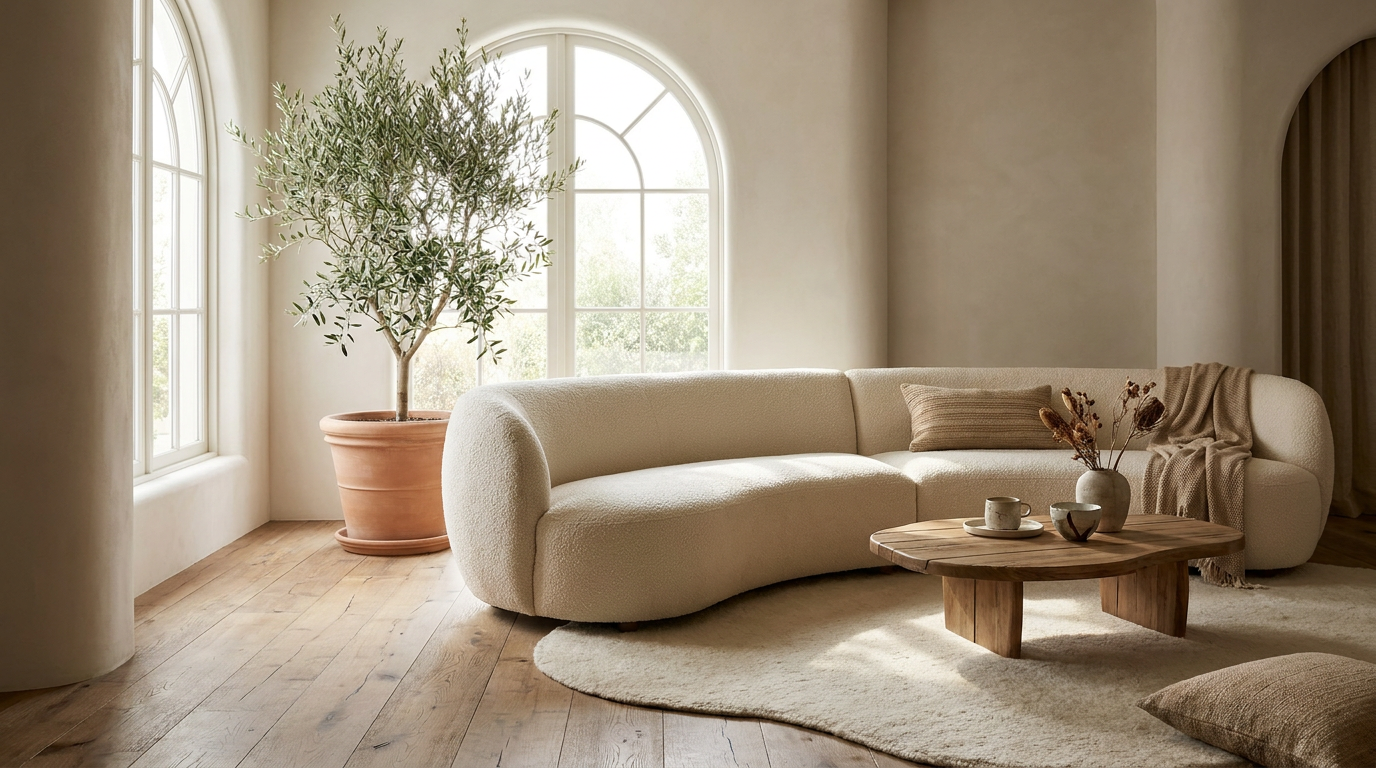
The foundation of a sensory sanctuary begins with geometry. Evolutionary biologists note that in nature, sharp angles and jagged edges often signal danger—a thorn, a cliff edge, or a predator's teeth. Consequently, harsh, enclosed environments with sharp corners can activate the anterior cingulate cortex, a region of the brain associated with threat detection and anxiety. The brain's sensory-motor networks are constantly scanning the room, and sharp geometry forces them to remain on high alert.[2][5]
Conversely, studies using EEG technology reveal that curvilinear spaces and gentle, organic shapes activate the brain's pleasure and comfort centers. When the eye does not trip over sharp edges, the brain processes the visual field effortlessly. This reduction in cognitive friction can lower stress levels significantly within just three to four seconds of entering a room, as the unconscious mind immediately registers the environment as safe and welcoming.[2][5]
Beyond simple curves, the brain craves specific mathematical patterns known as fractals. These are naturally occurring, repeating structures found in tree branches, leaf veins, and coastlines. Because the human visual system evolved outdoors over millions of years, it is uniquely optimized to process these fractal patterns with almost zero effort. Viewing these intricate patterns is directly linked to an increase in alpha brainwave activity, which helps the mind effortlessly enter states of calm, focus, and heightened creativity.[2]
Beyond simple curves, the brain craves specific mathematical patterns known as fractals.
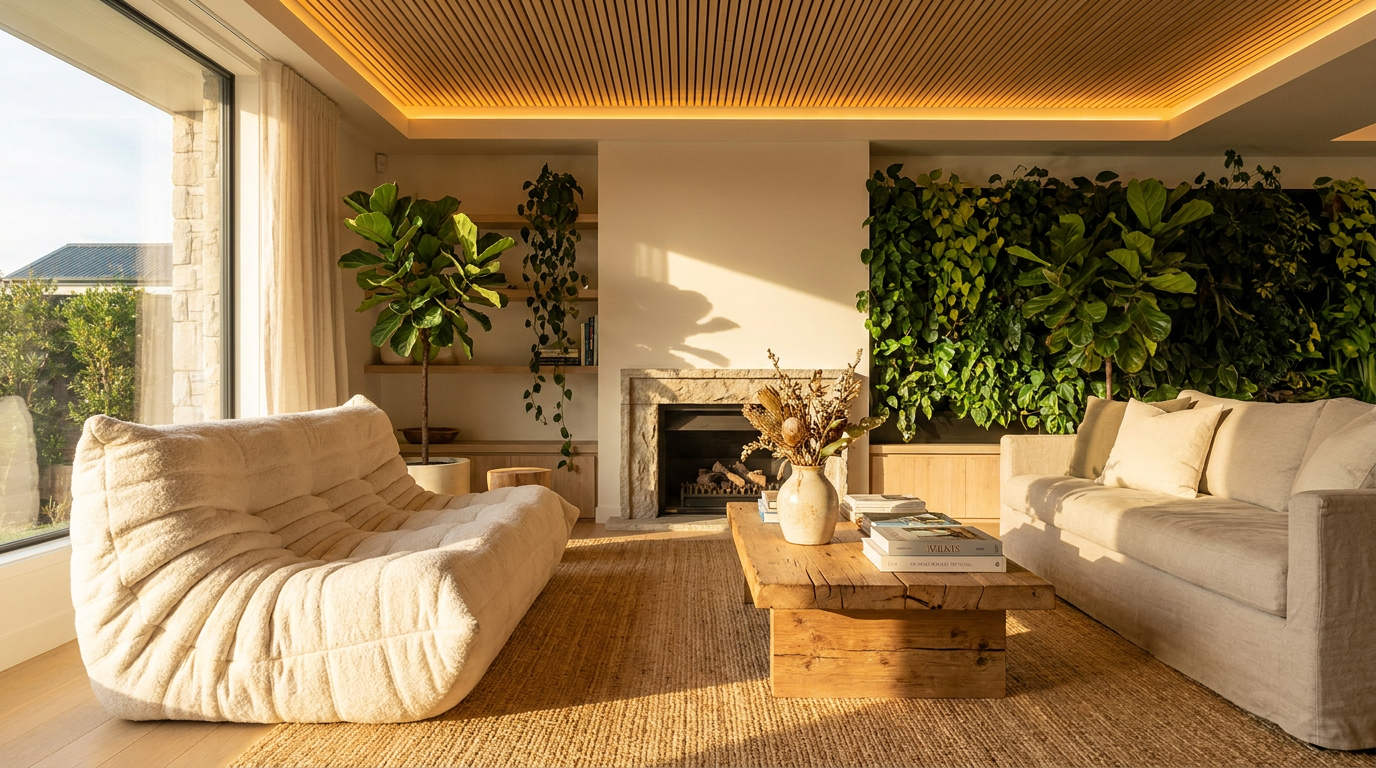
When we view artificial environments devoid of fractals, it is akin to navigating a country where we do not speak the language; the brain works harder to process the atmosphere. Introducing natural fractals—through the visible grain of wood furniture, the veining in stone countertops, or even biomimetic flooring—provides a crucial sensory bridge to nature. This biophilic approach ensures that the brain does not have to expend excess energy decoding its surroundings.[2][5]

Lighting serves as the primary metronome for our biological clocks. Traditional interior design often treated light merely as a tool for illumination, but neuroarchitecture views it as a powerful hormonal regulator. The color temperature and intensity of light directly dictate the body's production of cortisol, the alertness hormone, and melatonin, the sleep hormone. Human-building interactions are profoundly shaped by how well a space's lighting aligns with our natural circadian rhythms, dictating our daily energy levels and mood.[5][6]
A neuroaesthetic approach to lighting mimics the natural progression of the sun. Morning spaces are bathed in cool, blue-toned light to stimulate energy and focus for the day ahead. As the day progresses, the lighting shifts to warm, amber hues. This deliberate synchronization signals the body to begin winding down, initiating the physiological preparation for sleep hours before a person actually goes to bed, thereby supporting deep, restorative rest and long-term metabolic health.[6]
The tactile environment is equally critical, yet often overlooked in traditional design. Touch is one of the most powerful senses for emotional regulation. Textures can deeply affect our well-being, from soft, acoustic-dampening furnishings that calm the nervous system to harsh, synthetic materials that jar it. Smooth surfaces and varied natural textures hold our interest without being overwhelming, creating subtle wayfinding cues that help users intuitively navigate spaces while maintaining a baseline of physical comfort.[2][5]
Remarkably, humans do not even need to physically touch a surface to experience its neurological effects. Our brains "feel" through our eyes. Looking at smooth stone, rippling water, or plush textiles can elicit emotional responses that trigger the release of oxytocin—the same bonding hormone that floods the system during acts of trust or physical affection. The visual perception of texture is enough to signal safety and comfort to the nervous system.[2]

The evidence supporting these mechanisms is rapidly moving from the laboratory to the real world. In a landmark 2019 experiment titled "A Space for Being," a coalition including Google, Johns Hopkins University, and architectural firms outfitted visitors with biometric wristbands. As participants moved through differently designed rooms, the sensors tracked their heart rates, breathing, and skin temperatures, proving definitively that distinct aesthetic choices provoked distinct, measurable physiological states in real time, bridging the gap between art and biology.[1]
The data is compelling enough that commercial sectors are taking serious notice. Research consistently demonstrates that thoughtfully designed spaces can yield a 15 to 20 percent reduction in stress hormones. In office environments, biophilic and neuroaesthetic design has been linked to higher productivity and lower fatigue, while in healthcare settings, patients with access to natural light and organic views experience accelerated recovery times, improved emotional stability, and a reduced need for pain relief.[3][5]

Ultimately, the convergence of neuroscience and interior design represents a profound paradigm shift. It validates the intuition of designers while demanding a higher standard for the spaces we inhabit daily. By understanding the invisible dialogue between our surroundings and our biology, we can transform our homes from mere shelters into active participants in our physical and mental health, proving that true beauty is fundamentally healing and essential for human flourishing.[3][6]
How we got here
1990s
Early brain scanning technology allows neurobiologists like Semir Zeki to observe the brain's real-time physiological responses to beauty.
2015
Major studies confirm that students and workers in biophilic, naturally lit environments show significantly higher focus and lower fatigue.
2019
Google and Johns Hopkins launch the 'A Space for Being' exhibition, using biometric wristbands to prove interior design alters heart rates in real time.
2024–2026
Neuroarchitecture moves from academic theory to mainstream commercial and residential design, driven by a post-pandemic focus on mental health.
Viewpoints in depth
Cognitive Neuroscientists
Focuses on the biological metrics of aesthetic experience.
For neuroscientists, beauty is not a subjective opinion but a physiological event. Using fMRI and EEG technology, this camp maps exactly how spatial stimuli alter brain chemistry. They argue that our evolutionary wiring dictates our responses to environments, meaning that elements like fractals and curves universally trigger alpha brain waves and lower cortisol, regardless of personal taste.
Evidence-Based Designers
Focuses on applying biometric data to practical architecture.
This camp views interior design as a critical component of preventive healthcare. Rather than relying on intuition or fleeting trends, evidence-based designers use scientific data to craft 'sensory sanctuaries.' They advocate for spaces that actively reduce cognitive friction—using acoustic dampening, circadian lighting, and organic materials to lower the daily stress burden on the nervous system.
Public Health Researchers
Focuses on the macro-level impact of the built environment.
Researchers looking at population health argue that chronic sensory overload in modern environments is a public health crisis. They emphasize the 'Brain Economy,' suggesting that optimizing homes, schools, and hospitals through neurodesign is essential for improving societal focus, accelerating medical recovery times, and reducing widespread anxiety.
What we don't know
- How long the physiological benefits of a neuroaesthetic space last once a person leaves the environment and returns to a high-stress setting.
- The exact degree to which individual neurodivergence (such as ADHD or autism) alters the baseline biological response to specific fractal patterns and lighting temperatures.
Key terms
- Neuroaesthetics
- The scientific study of how aesthetic experiences and design choices measurably affect the brain, body, and behavior.
- Biophilic Design
- An architectural approach that connects building occupants to nature through direct elements like plants and indirect elements like natural textures.
- Fractals
- Naturally occurring, repeating mathematical patterns found in nature (like leaf veins) that the human brain processes with minimal cognitive effort.
- Anterior Cingulate Cortex
- A region of the brain involved in emotional regulation and threat detection, which can be triggered by harsh or enclosed environments.
- Circadian Rhythm
- The body's internal 24-hour clock that regulates sleep and alertness, heavily influenced by the color and intensity of environmental light.
Frequently asked
What is the main goal of neuroaesthetics in design?
The primary goal is to create spaces that actively support the human nervous system, reducing stress and cognitive load through scientifically validated choices in lighting, geometry, and texture.
Why do sharp angles cause stress?
Evolutionarily, sharp edges and harsh angles often signaled danger in nature. In interior spaces, they can subtly activate the brain's threat detection centers, keeping the body in a state of low-grade tension.
How does lighting affect my brain at home?
Light color and intensity regulate your circadian rhythm. Cool, blue-toned light stimulates cortisol for alertness, while warm, amber light triggers melatonin production to prepare the body for sleep.
Do I need expensive renovations to apply this?
No. Simple changes like maximizing natural daylight, adding plants for biophilic fractals, and using soft textures to dampen harsh acoustics can significantly improve a room's neurological impact.
Sources
Source coverage
6 outlets
3 viewpoints surfaced






[1]Connections by FinsaEvidence-Based Designers
Neuroaesthetics in interior design
Read on Connections by Finsa →[2]ART domainsCognitive Neuroscientists
The Healing Power of Spaces: A Conversation with Saskia Wheeler
Read on ART domains →[3]RISE Research Institutes of SwedenPublic Health Researchers
Neuroarchitecture and neurodesign for health-promoting environments
Read on RISE Research Institutes of Sweden →[4]Harvard Department of History of Art and ArchitectureCognitive Neuroscientists
Neuroaesthetics: At the Threshold of Consciousness
Read on Harvard Department of History of Art and Architecture →[5]ModulyssEvidence-Based Designers
The Science of Neuroaesthetics: Design for Well-Being
Read on Modulyss →[6]Factlen Editorial TeamEvidence-Based Designers
Synthesis by Factlen editorial team
Read on Factlen Editorial Team →
More in home
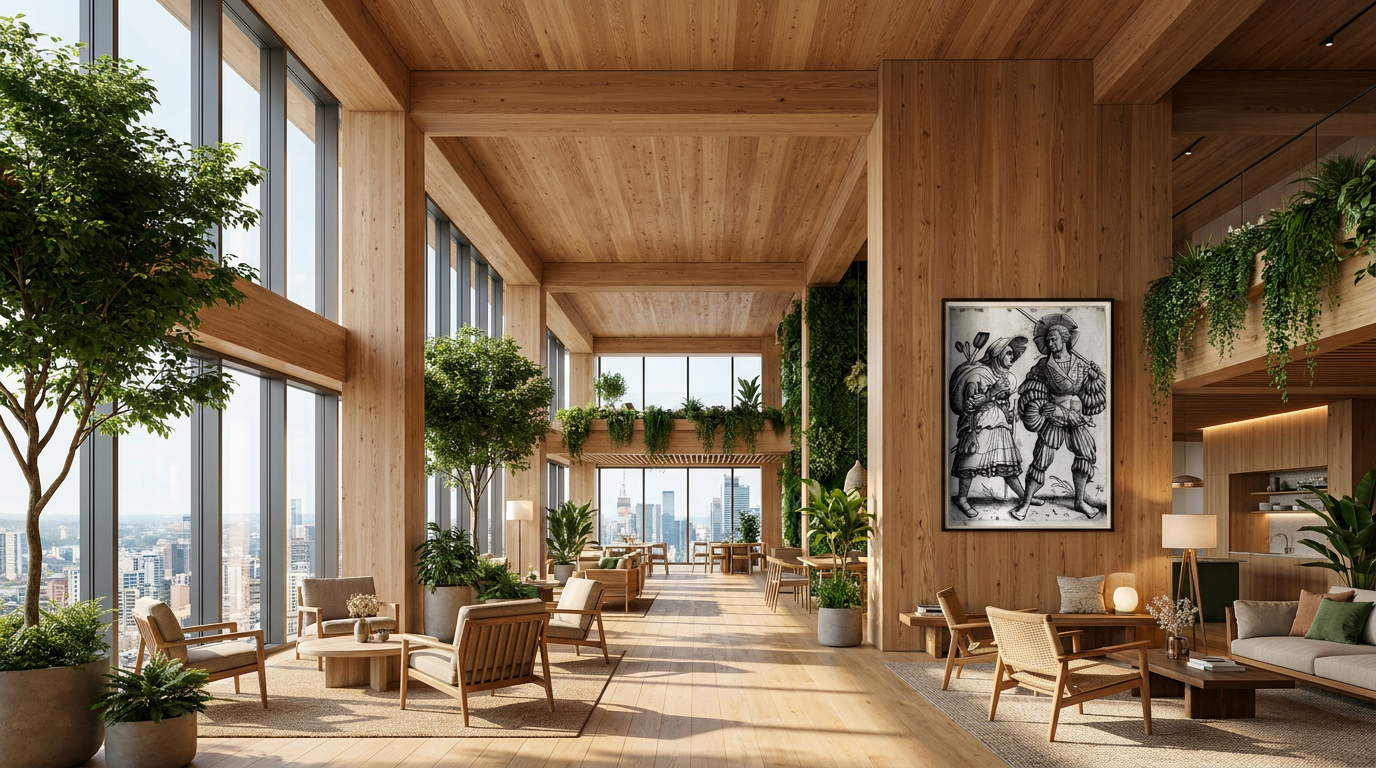
See all 14 stories →Mass Timber
How Engineered Wood is Replacing Steel and Concrete in the World's Newest Skyscrapers
0 sources
Home Energy
How Bidirectional Charging is Turning Electric Vehicles into Massive Home Batteries
0 sources

Heat Pumps
How Heat Pumps Conquered the Cold: The 2026 Guide to Home Heating
0 sources

Neuroaesthetics
Neuroaesthetics: How the Science of Interior Design Actively Shapes Brain Chemistry
0 sources
Every angle. Every day.
Get home stories with full source coverage and perspective breakdowns delivered to your inbox.