
The Science of Space: How Your Home's Interior Literally Shapes Your Brain
Neuroaesthetics is transforming interior design from an intuitive art into an evidence-based science, revealing how natural light, acoustics, and spatial geometry actively regulate our nervous systems.
By Factlen Editorial Team
- Biophilic Design Advocates
- Emphasizes humanity's evolutionary connection to nature, advocating for natural light, organic shapes, and greenery to boost well-being.
- Neuroaesthetics Researchers
- Focuses on measurable biological outcomes, brain imaging, and translating architectural features into experimental science.
- Inclusive Design Practitioners
- Highlights the need to design for the full spectrum of neurodiversity and varying sensory sensitivities.
- Editorial Synthesis
- Bridges academic research and practical application to help the general public understand how their homes affect their health.
What's not represented
- · Low-Income Housing Advocates (addressing how to apply these principles affordably when natural light and premium acoustic materials are scarce)
- · Traditional Decorators (who prioritize historical preservation or pure artistic expression over measurable biological outcomes)
Why this matters
Because the average person in the developed world spends over 90 percent of their life indoors, the physical spaces we inhabit quietly dictate our baseline stress levels, cognitive focus, and emotional resilience. Understanding the science of neuroaesthetics empowers you to arrange your home and workspace in ways that actively lower your blood pressure and protect your mental health.
Key points
- Neuroaesthetics is an emerging field that measures how the human brain biologically responds to interior spaces and architectural design.
- Studies show that thoughtfully designed rooms can lower heart rates, reduce cortisol levels by up to 20 percent, and elevate serotonin.
- The visual brain evaluates spaces based on three core dimensions: coherence (ease of processing), fascination (informational richness), and hominess (comfort).
- Biophilic design, which incorporates natural light and organic shapes, has been clinically proven to accelerate hospital recovery times and boost workplace productivity.
- Designing for neurodiversity requires adaptable spaces that account for varying sensory sensitivities, particularly regarding lighting and acoustics.
For decades, interior design was treated primarily as an exercise in personal taste and aesthetic intuition. A room was judged by how it looked in a photograph, with success measured in color coordination, furniture placement, and stylistic cohesion. But as people in developed nations now spend over 90 percent of their lives inside built environments, a quiet revolution is reshaping how architects and designers approach their work. The focus is shifting from how a space looks to how a space literally alters the human brain.[1][7]
This shift is driven by an emerging interdisciplinary field known as neuroaesthetics. By combining neuroscience, psychology, and architecture, researchers are mapping the exact biological mechanisms triggered when we step into a room. Brain scanning technology, such as functional magnetic resonance imaging (fMRI) and electroencephalography (EEG), has advanced enough to measure our physiological responses to spatial environments in real time.[1][6]
The findings are profound: design decisions are not biologically neutral. The moment a person enters a room, their limbic system—the emotional and memory center of the brain—processes the spatial landscape within milliseconds. A thoughtfully designed space can lower blood pressure, reduce stress hormones like cortisol by up to 20 percent, and elevate serotonin levels. Conversely, environments with harsh lighting, angular furniture, and excessive visual noise can activate the body's stress responses, leading to chronic mental fatigue.[6][7]
To transform interior design from an intuitive art into an experimental science, researchers at the Penn Center for Neuroaesthetics conducted landmark studies on how the visual brain reacts to architectural interiors. By analyzing human responses to curated images of indoor spaces, they identified three core psychological dimensions that govern our aesthetic experience: coherence, fascination, and hominess.[1]

Coherence refers to the ease with which the brain can organize and comprehend a scene. When a room is visually coherent, it requires less cognitive effort to process, which naturally induces a sense of calm. Fascination involves the informational richness of a space—elements that generate interest and engage the mind without overwhelming it. Finally, hominess captures the deeply personal feeling of ease, comfort, and safety.[1][7]
Researchers found that these psychological dimensions correspond to specific neural activity. For instance, the degree of fascination in a room covaries with activity in the right lingual gyrus, a region of the brain involved in visual processing and logical analysis. Hominess, meanwhile, activates the left cuneus when individuals make subconscious decisions about whether to approach or avoid a space. By understanding these neural pathways, designers can intentionally craft environments that signal safety and stimulate positive emotional valence.[1]
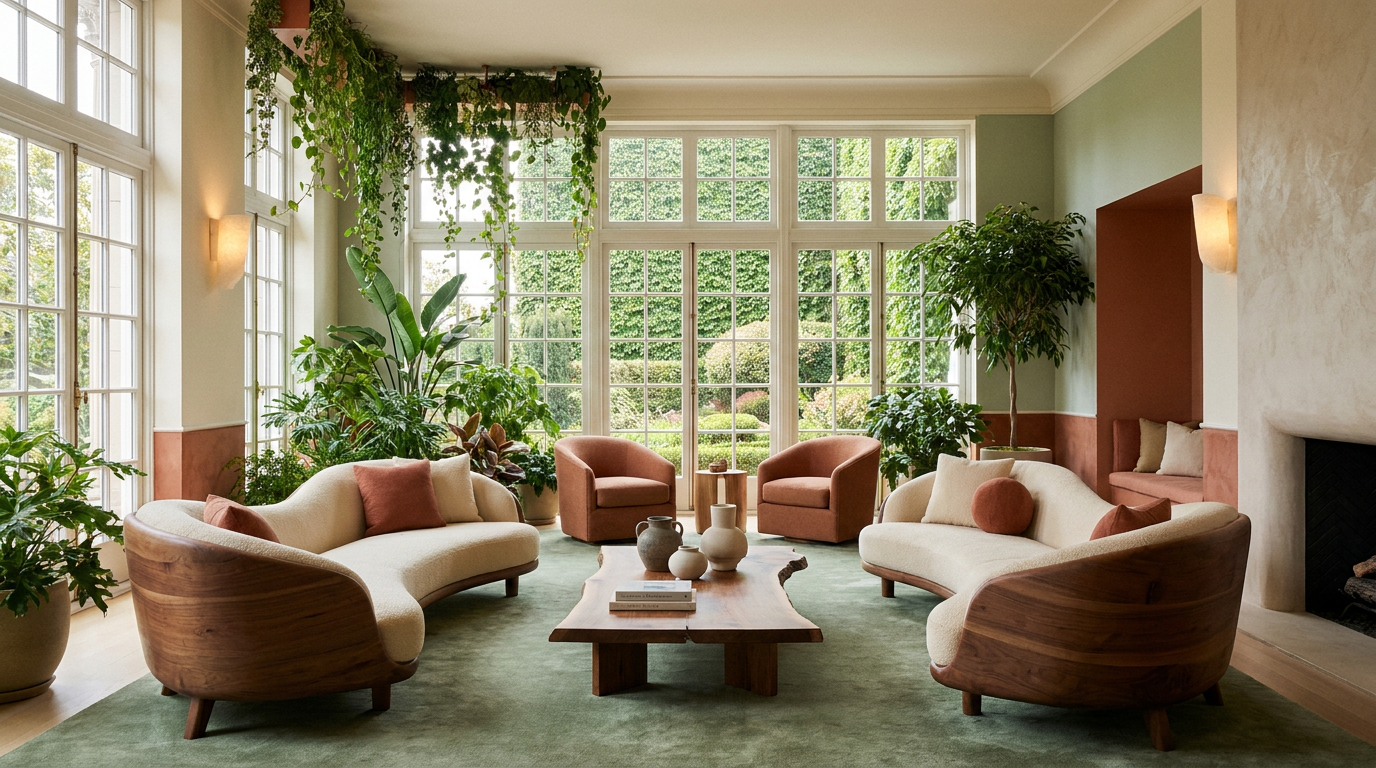
The most widely adopted application of neuroaesthetics in modern design is biophilia—the concept that humans possess an innate, evolutionary affinity for the natural world. Biophilic design intentionally integrates natural elements, patterns, and processes into indoor spaces to satisfy this biological need, bridging the gap between our ancestral environments and modern architecture.[5][6]
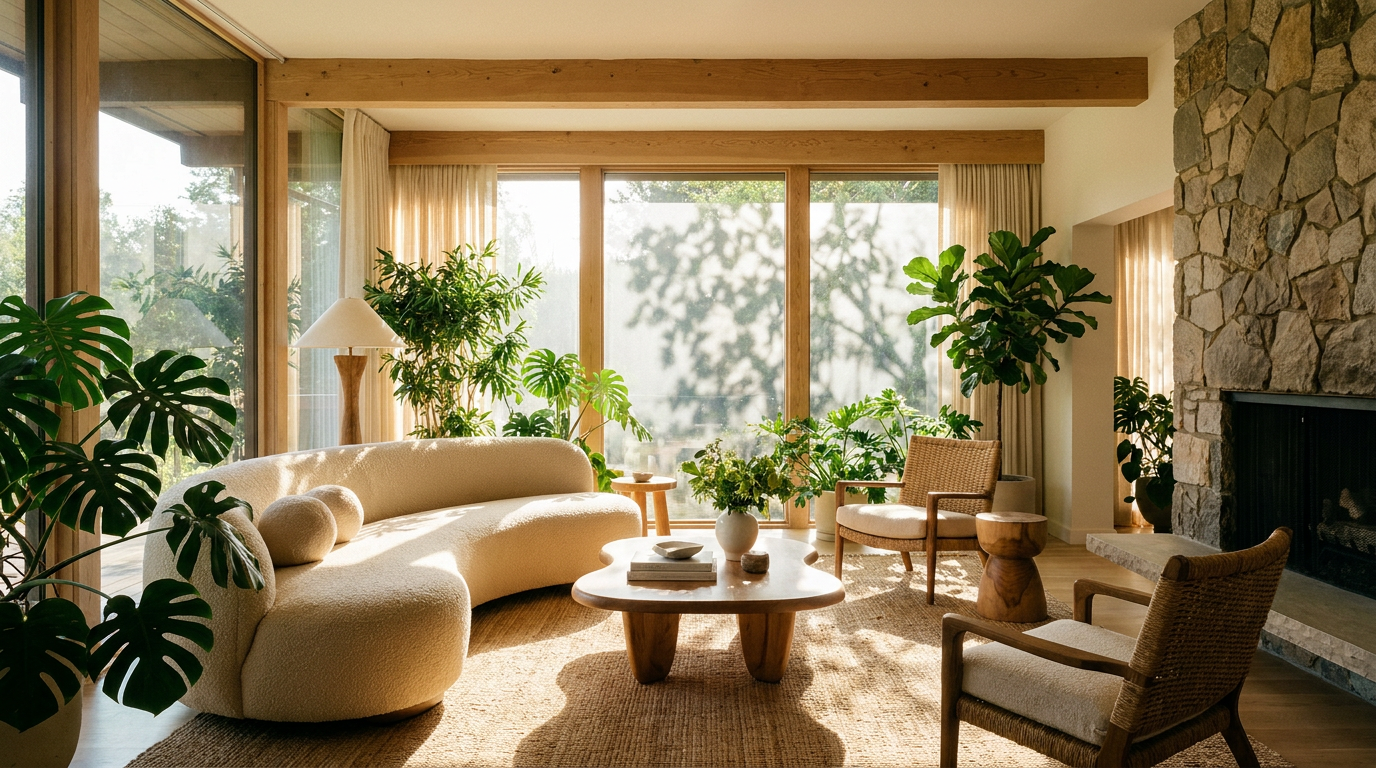
The demand for biophilic interiors surged exponentially during the COVID-19 pandemic and has since solidified as a foundational principle of wellness-focused architecture. People instinctively gravitate toward spaces that feature abundant daylight, living plants, flowing water, and organic materials like wood and stone. These elements provide immediate sensory engagement that mimics the restorative qualities of nature, offering a daily antidote to screen fatigue.[5][7]

People instinctively gravitate toward spaces that feature abundant daylight, living plants, flowing water, and organic materials like wood and stone.
The health benefits of biophilic design are rigorously documented in clinical settings. A 2024 systematic review of hospital environments found that biophilic wards consistently reduced patient and staff stress, creating therapeutic environments that supported faster recovery. Patients exposed to natural light and views of greenery required fewer strong painkillers and experienced shorter hospitalization times compared to those in conventional, sterile wards.[2]
These benefits extend far beyond healthcare settings. In the workplace, employees operating in offices rich with natural elements report a 15 percent higher sense of well-being and measurable lifts in productivity and creativity. A comprehensive 2024 review in the Journal of Environmental Psychology confirmed that access to natural light consistently elevates mood, regulates circadian rhythms, and reduces mental fatigue across dozens of independent studies.[3][6]

Importantly, the brain does not always require literal nature to reap these benefits; it also responds to the representation of nature. Exposure to natural shapes—especially fractal patterns found in leaves, snowflakes, and ocean waves—can significantly reduce stress and regulate heart rates. Incorporating curvilinear furniture, botanical motifs, and textured fabrics can stimulate the somatosensory cortex, producing feelings of belonging and comfort even in high-rise urban apartments.[6][7]
Beyond visual elements, neuroaesthetics places a heavy emphasis on the acoustic environment. Unpredictable noise and poor acoustics elevate cortisol and maintain heightened stress states, making it difficult for individuals to focus or relax. Intentional design strategies, such as utilizing soft, sound-absorbing furnishings, acoustic panels, and ambient white noise systems, are critical for creating spaces that support cognitive calm.[4][7]
As the field matures, industry leaders are emphasizing the importance of inclusive design. During a 2025 webinar hosted by the Business and Institutional Furniture Manufacturer's Association (BIFMA), experts highlighted that neuroaesthetics must account for the full spectrum of human neurodiversity. Because individuals possess varying sensory sensitivities, a space that feels pleasantly stimulating to one person might feel overwhelmingly chaotic to another.[4]
Designing for neurodiversity means creating adaptable environments that offer users control over their sensory inputs. This includes providing options for dimmable, warm lighting, creating quiet zones separated from collaborative areas, and balancing bold, saturated colors with calm, neutral backgrounds. By prioritizing empathy and evidence, designers can ensure that spaces serve the emotional and cognitive needs of all occupants.[4][7]

Looking ahead, the integration of smart technology promises to make neuroaesthetic spaces even more responsive. Artificial intelligence systems are being developed to monitor how people use a room, automatically adjusting lighting, temperature, and acoustics in real time to optimize comfort and productivity. This adaptive approach aligns perfectly with the core philosophy of human-centric design, allowing the built environment to actively care for its inhabitants.[4][7]
Ultimately, the rise of neuroaesthetics represents a profound paradigm shift. It challenges the industry to move beyond aesthetics-as-style and embrace a practice rooted in biology and human flourishing. By translating the complex language of the brain into tangible design principles, architects and interior designers are proving that beauty is not just a luxury—it is a fundamental component of our mental and physical health.[1][4][7]
How we got here
1984
Biologist Edward O. Wilson popularizes the term 'biophilia,' describing humanity's innate affinity for the natural world.
1990s
Advancements in brain scanning technology allow researchers to begin measuring physiological responses to aesthetic beauty in real time.
2021
Researchers publish landmark studies identifying coherence, fascination, and hominess as the core psychological dimensions of architectural neuroaesthetics.
2024
Systematic reviews confirm that biophilic design in hospitals and workplaces measurably reduces stress hormones and accelerates recovery.
2025
Major design institutions formally integrate neuroaesthetics and inclusive design into their industry-wide educational frameworks.
Viewpoints in depth
The Clinical Neuroscience View
Examines the measurable biological mechanisms triggered by architectural spaces.
For clinical researchers, the value of neuroaesthetics lies in its empirical data. By utilizing fMRI and EEG technology, this camp has moved interior design out of the realm of subjective taste and into the laboratory. They focus on how specific spatial dimensions—like coherence and fascination—activate distinct regions of the brain, such as the lingual gyrus and the cuneus. Their ultimate goal is to establish a rigorous, evidence-based framework where architects can prescribe design interventions with the same precision that a doctor prescribes medication.
The Biophilic Wellness View
Focuses on humanity's evolutionary need for natural elements to regulate the nervous system.
Advocates of biophilic design argue that modern anxiety and mental fatigue are largely symptoms of our separation from nature. This perspective emphasizes that our brains evolved over millennia to process the fractal patterns, natural lighting, and organic sounds of the outdoors. By reintroducing these elements into our homes and offices, they argue, we are not just decorating—we are providing the sensory inputs our biology requires to feel safe, lower cortisol levels, and achieve cognitive restoration.
The Neuroinclusive View
Highlights the necessity of adaptable spaces that accommodate varying sensory processing needs.
Inclusive design practitioners caution against a one-size-fits-all approach to neuroaesthetics. They point out that because human brains are highly diverse, a space that feels pleasantly stimulating to a neurotypical individual might trigger sensory overload in someone who is neurodivergent. This camp advocates for environments that prioritize user control—such as adjustable lighting, modular acoustic dampening, and designated quiet zones—ensuring that restorative spaces are accessible and comfortable for the full spectrum of human cognition.
What we don't know
- How long-term exposure to highly optimized neuroaesthetic environments affects baseline brain plasticity over decades.
- The exact threshold at which 'moderate visual complexity' tips into 'overwhelming visual noise' for different neurodivergent populations.
- How the widespread adoption of AI-driven, adaptive smart spaces will impact human privacy and psychological autonomy in the home.
Key terms
- Neuroaesthetics
- The scientific study of how beauty, art, and spatial environments affect the human brain and biological systems.
- Biophilic Design
- An architectural approach that intentionally incorporates natural elements, patterns, and light to satisfy humanity's innate connection to nature.
- Limbic System
- The complex set of brain structures that regulates emotion, behavior, and memory, which processes spatial environments in milliseconds.
- Fractal Patterns
- Complex, repeating geometric shapes found in nature (like ferns or snowflakes) that have been shown to reduce visual stress.
- Coherence
- In environmental psychology, the ease with which the brain can visually organize and comprehend a physical space.
Frequently asked
Do I need real plants to get the benefits of biophilic design?
While real plants offer air-purifying benefits, studies show the brain also responds positively to representations of nature. Botanical patterns, natural wood textures, and fractal shapes can all trigger similar stress-reducing neural pathways.
How does lighting affect my mental health at home?
Natural daylight helps regulate your circadian rhythm, which improves sleep quality and daytime mood. In the evening, transitioning to warm, dimmable artificial light signals the brain to produce melatonin and begin relaxing.
Can interior design actually lower my stress?
Yes. Clinical research demonstrates that spaces with moderate visual complexity, natural materials, and good acoustic control can lower heart rates and reduce stress hormones like cortisol by up to 20 percent.
Sources
Source coverage
7 outlets
4 viewpoints surfaced







[1]PubMed / SpringerNeuroaesthetics Researchers
The neuroaesthetics of architectural spaces
Read on PubMed / Springer →[2]Frontiers in Built EnvironmentBiophilic Design Advocates
Biophilic Design Positively Impacts the Physical and Mental Wellbeing of Patients and Staff in Hospital Settings
Read on Frontiers in Built Environment →[3]Journal of Environmental PsychologyBiophilic Design Advocates
Systematic review of natural light and mental fatigue
Read on Journal of Environmental Psychology →[4]BIFMAInclusive Design Practitioners
Designing for the Mind: How Neuroaesthetics is Reshaping the Built Environment
Read on BIFMA →[5]Architectural DigestBiophilic Design Advocates
The rising demand for biophilic interior design
Read on Architectural Digest →[6]Global Wellness InstituteBiophilic Design Advocates
Biophilic Design: Healthy Buildings, Healthy Brain
Read on Global Wellness Institute →[7]Factlen Editorial TeamEditorial Synthesis
Synthesis by Factlen editorial team
Read on Factlen Editorial Team →
More in home
See all 13 stories →Mass Timber
How Engineered Wood is Replacing Steel and Concrete in the World's Newest Skyscrapers
0 sources
Home Energy
How Bidirectional Charging is Turning Electric Vehicles into Massive Home Batteries
0 sources
Heat Pumps
How Heat Pumps Conquered the Cold: The 2026 Guide to Home Heating
0 sources

Neuroaesthetics
Neuroaesthetics: How the Science of Interior Design Actively Shapes Brain Chemistry
0 sources
Every angle. Every day.
Get home stories with full source coverage and perspective breakdowns delivered to your inbox.