
The 2026 EV Road Trip: How Standardized Charging and Smart Software Eliminated Range Anxiety
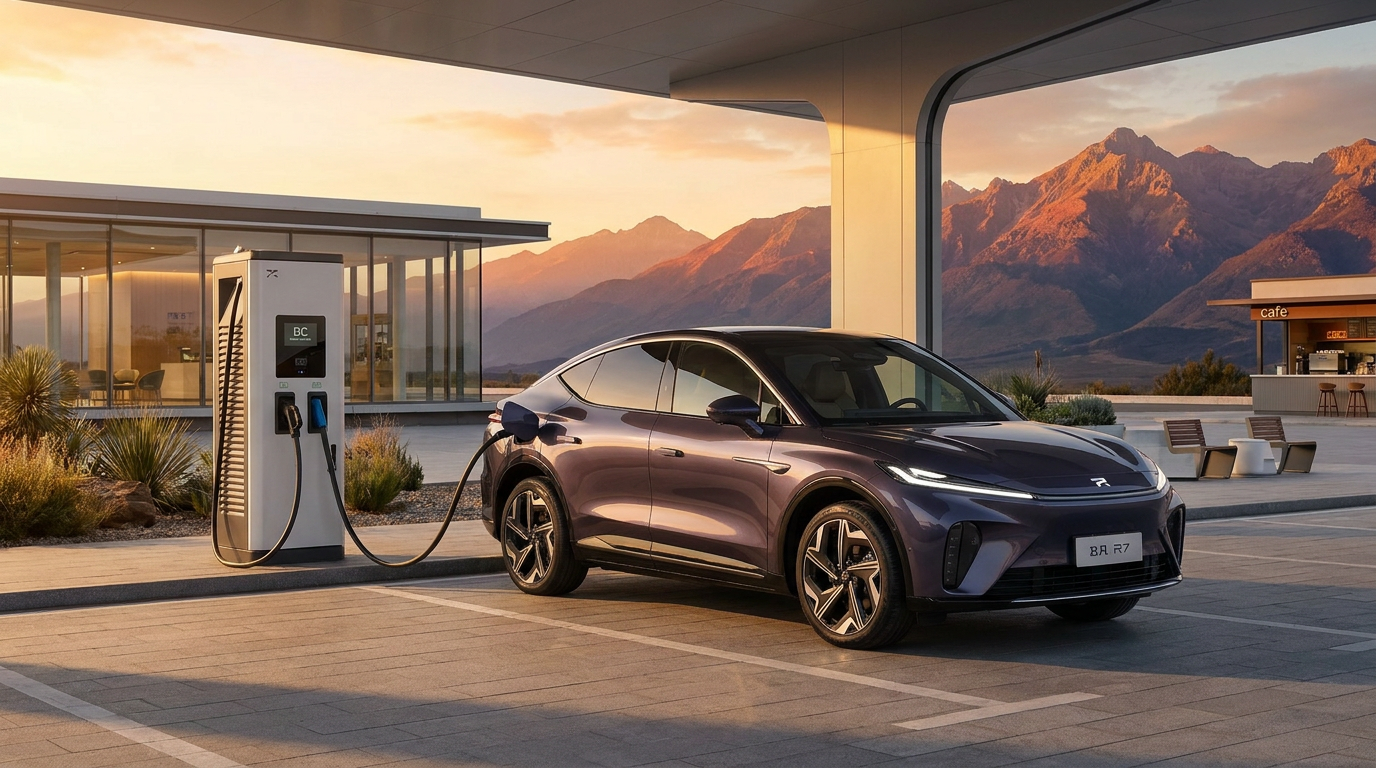
With the widespread adoption of the NACS plug and denser fast-charging networks, taking an electric vehicle on a cross-country road trip has transitioned from a pioneer's gamble to a seamless, mainstream travel method.
By Factlen Editorial Team
- EV Drivers & Advocates
- Focus on the practical, day-to-day reality of route planning and the shift from range anxiety to charging confidence.
- Charging Network Operators
- Prioritize expanding network density, improving uptime reliability, and standardizing the hardware experience.
- Automotive Industry Analysts
- View the charging infrastructure maturation as the key catalyst for the next wave of mainstream EV adoption.
What's not represented
- · Rural drivers in charging deserts
- · Apartment dwellers without home charging access
Why this matters
For millions of drivers, the fear of being stranded with a dead battery has been the primary barrier to buying an electric vehicle. Understanding how the 2026 charging landscape actually works unlocks cheaper, smoother, and more environmentally friendly travel for families and road-trippers.
Key points
- The adoption of the NACS standard has opened over 27,500 Tesla Superchargers to most major EV brands.
- Drivers should follow the '20-80 rule', unplugging at 80 percent capacity to avoid drastic slowdowns in charging speeds.
- A 300-mile EPA range typically translates to roughly 200 miles of actual highway driving between charging stops.
- Successful route planning requires a mix of ABRP for math, PlugShare for reliability checks, and built-in navigation for battery preconditioning.
- Booking hotels with Level 2 'destination chargers' allows drivers to wake up with a full battery, saving significant travel time.
The great electric road trip used to be a pioneer's gamble. Early adopters swapped stories of range anxiety, broken chargers, and white-knuckle drives through charging deserts. But as the summer travel season of 2026 kicks into gear, the landscape has fundamentally shifted. Taking a multi-day journey in an electric vehicle is no longer a risky adventure; it has matured into a predictable, mainstream travel method.[6][8]
The single biggest catalyst for this transformation is the standardization of the North American Charging Standard (NACS). For years, the EV market was fragmented: Tesla drivers enjoyed a seamless, ubiquitous Supercharger network, while everyone else relied on a patchwork of third-party stations using the CCS plug. That wall has officially come down.[2][5]
Today, Tesla's Supercharger network is open to almost every major EV brand on the road. Drivers of Ford, General Motors, Rivian, Hyundai, Kia, Volvo, and most recently Stellantis vehicles can now plug into more than 27,500 fast-charging stalls across the continent. This unprecedented interoperability has effectively neutralized the biggest hurdle to EV road-tripping: finding a reliable place to plug in.[2][5]
For shoppers and drivers in 2026, this convergence looks like one of two everyday scenarios. Many newer models—like the 2025 Hyundai Ioniq 5, the 2026 Ioniq 9, and the latest Rivian lineup—now roll off the assembly line with a native NACS port built right into the vehicle. Older models equipped with CCS ports simply use an automaker-approved adapter, unlocking the exact same access to the Supercharger network.[2][5]

But the infrastructure story extends far beyond Tesla. Competing networks like Electrify America, EVgo, and the newly launched IONNA joint venture have aggressively expanded their footprints along major travel corridors. In metropolitan areas and along interstate highways, drivers now enjoy significant charging redundancy. If one station is full, another high-speed option is usually just a few miles down the road.[1]
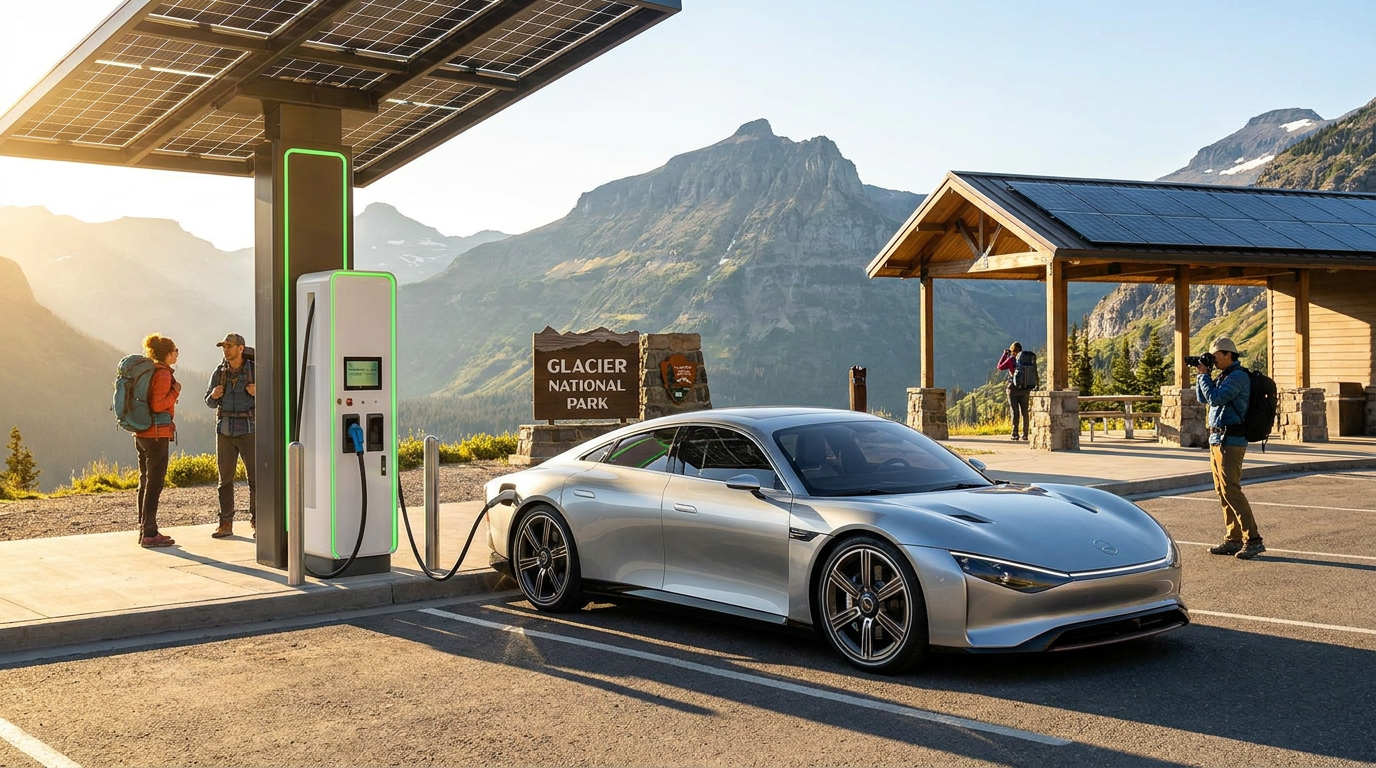
Despite this rapid growth, the map is not yet perfect. While coastal corridors and major interstates boast dense coverage, rural areas and certain cross-country stretches still present noticeable gaps. Venturing off the beaten path into national parks or remote regions requires deliberate planning, as the safety net of high-speed chargers thins out considerably.[1][6]
Successfully navigating these routes requires a fundamental mindset shift. In a gasoline-powered car, refueling is an interruption; in an EV, charging is a scheduled intermission. A 20- to 30-minute stop at a DC fast charger provides a natural break to stretch your legs, grab a meal, or use the restroom. By syncing charging sessions with natural human downtime, the perceived wait time effectively disappears.[3][6][7]
Successfully navigating these routes requires a fundamental mindset shift.
The most critical rule of EV road-tripping is understanding the charging curve. Unlike a gas tank that fills at a constant rate, an EV battery accepts energy rapidly when it is low, but slows to a trickle as it approaches full capacity. Fast-charging a battery from 80 percent to 100 percent can take as long as charging it from 10 percent to 80 percent.[3][7]
Because of this physics bottleneck, veteran EV drivers strictly adhere to the "20-80 rule" while on the highway. The most efficient strategy is to arrive at a charger with roughly 15 to 20 percent battery, charge up to 80 percent, and immediately hit the road again. Trying to fill the battery to 100 percent at a fast charger is a rookie mistake that wastes time and occupies a stall that other drivers might need.[3][7]

This strategy requires recalibrating how you think about your vehicle's range. If your EV boasts an EPA-estimated range of 300 miles, you will not be driving 300 miles between stops. Because you are only utilizing the battery's middle capacity—stopping at 20 percent and unplugging at 80 percent—a realistic driving stint is closer to 180 or 200 miles.[3][7]
Real-world conditions further impact that math. Cruising at 80 mph consumes significantly more energy than driving at 65 mph, potentially reducing range by up to 20 percent. Climbing mountain passes, battling strong headwinds, or running the heater in freezing temperatures will also drain the battery faster than the dashboard initially predicts.[3][4][7]

To manage these variables, drivers rely on a specific trinity of software tools, starting with A Better Route Planner (ABRP). Widely considered the gold standard for EV travel, ABRP allows users to input their exact vehicle model, starting charge, and destination. The app calculates the optimal route, factoring in elevation changes, weather conditions, and real-world energy consumption data to pinpoint exactly where and how long to charge.[3][4]
The second tool is PlugShare, a crowdsourced app that functions like Waze for EV chargers. Before committing to a stop, savvy drivers check PlugShare for recent user check-ins and the "last used" timestamp. This crucial step verifies that the station is actually operational, preventing the dreaded scenario of arriving with a low battery only to find broken equipment.[3][4][7]
Finally, drivers use their vehicle's built-in navigation system for the actual driving. Beyond providing turn-by-turn directions, modern EV software communicates with the battery. When the car knows it is navigating to a fast charger, it automatically "preconditions" the battery—warming or cooling it to the optimal temperature so it can accept power at maximum speed the moment it is plugged in.[4][7]

The ultimate road trip hack, however, happens while you sleep. "Destination charging" involves booking hotels, Airbnbs, or campsites equipped with Level 2 chargers. While these chargers are too slow for highway pit stops, they are perfect for overnight stays, allowing drivers to wake up to a 100 percent charge and skip the first fast-charging stop of the day entirely.[3][7]
As the summer of 2026 unfolds, the electric road trip has shed its reputation as a logistical puzzle. With a unified charging standard, denser infrastructure, and intelligent software doing the heavy lifting, the experience has become smoother, quieter, and increasingly effortless. The open road is fully electric, and it is ready for the masses.[6][8]
How we got here
Late 2022
Tesla open-sources its proprietary charging connector design, renaming it the North American Charging Standard (NACS).
2023–2024
Nearly every major global automaker announces plans to transition away from the CCS plug and adopt NACS for the North American market.
2025
Automakers begin distributing NACS adapters to existing owners, while the first non-Tesla vehicles with native NACS ports roll off assembly lines.
March 2026
Stellantis brands (Jeep, Ram, Dodge) officially gain access to the Supercharger network, completing the industry-wide convergence.
Viewpoints in depth
EV Drivers & Advocates
Focus on the practical, day-to-day reality of route planning and the shift from range anxiety to charging confidence.
For the people actually behind the wheel, the 2026 landscape represents a massive sigh of relief. Advocacy groups and veteran drivers emphasize that the hardware is no longer the primary bottleneck; success now comes down to software and habits. By utilizing tools like A Better Route Planner and adhering to the 20-80% charging rule, drivers argue that EV road trips are not just viable, but actively more relaxing than gasoline trips due to the smoother ride and forced, healthy rest breaks.
Charging Network Operators
Prioritize expanding network density, improving uptime reliability, and standardizing the hardware experience.
Network operators view 2026 as the year of convergence. With the industry coalescing around the NACS standard, the focus has shifted from format wars to pure deployment and reliability. Operators highlight the massive capital being deployed to build out high-speed corridors and multi-stall 'rechargeries' that resemble premium travel plazas. However, they acknowledge that maintaining 99% uptime and bridging the remaining rural charging gaps remain their most pressing operational challenges.
Automotive Industry Analysts
View the charging infrastructure maturation as the key catalyst for the next wave of mainstream EV adoption.
Industry watchers note that the early hype cycle of EVs has transitioned into a more durable, practical phase. Analysts argue that solving the road-trip equation—historically the biggest psychological barrier for holdout buyers—is crucial for market penetration. By outsourcing the charging network heavy-lifting to standardized plugs and joint ventures, automakers can now focus on lowering vehicle costs and improving battery chemistry, confident that their customers will actually have places to plug in.
What we don't know
- How quickly rural charging gaps will be filled by federal infrastructure funding.
- Whether peak holiday travel weekends will overwhelm the newly unified charging networks.
- How fast solid-state battery technology will arrive to further reduce necessary charging times.
Key terms
- NACS
- The North American Charging Standard, originally developed by Tesla, which has now become the universal plug shape for almost all new EVs in North America.
- DC Fast Charging
- Also known as Level 3 charging, these high-power stations are found along highways and can add hundreds of miles of range in 20 to 30 minutes.
- Level 2 Charging
- Slower AC chargers typically found at homes, hotels, and workplaces that take several hours to fully recharge a battery.
- Charging Curve
- The graph that shows how an EV's charging speed changes over time, typically starting very fast when the battery is low and slowing down significantly as it gets full.
- Destination Charging
- The practice of plugging into a Level 2 charger overnight at a hotel or rental property so the vehicle is fully charged by morning.
Frequently asked
Can I use a Tesla Supercharger if I don't drive a Tesla?
Yes. As of 2026, most major brands including Ford, GM, Rivian, Hyundai, and Stellantis have access to the Supercharger network. You will either need an automaker-approved NACS adapter or a newer vehicle with a native NACS port built in.
Why shouldn't I charge my EV to 100% on a road trip?
EV batteries charge rapidly up to 80%, but the charging speed slows to a trickle for the final 20% to protect the battery chemistry. Waiting for a 100% charge at a fast charger wastes your time and occupies a stall others might need.
Does driving fast reduce my EV's range?
Yes. Driving at 80 mph consumes significantly more energy than driving at 65 mph due to aerodynamic drag, which can reduce your effective range by up to 20 percent.
What is battery preconditioning?
When you use your car's built-in navigation to route to a fast charger, the vehicle automatically warms or cools the battery to its optimal temperature while you drive, ensuring it can accept power at maximum speed the moment you plug in.
Sources
Source coverage
8 outlets
3 viewpoints surfaced








[1]GreenCarsCharging Network Operators
State of EV Charging Infrastructure in 2026
Read on GreenCars →[2]Cars MultiverseAutomotive Industry Analysts
Tesla's Supercharger network is now open to most major EV brands
Read on Cars Multiverse →[3]Plug In AmericaEV Drivers & Advocates
The Ultimate Guide to EV Road Trip Planning
Read on Plug In America →[4]HealvannaEV Drivers & Advocates
The Best EV Route Planning Apps for 2026
Read on Healvanna →[5]TeslaCharging Network Operators
Supercharger: Expanding Charging Access
Read on Tesla →[6]Factlen Editorial Team
Synthesis by Factlen editorial team
Read on Factlen Editorial Team →[7]Bolt.EarthEV Drivers & Advocates
How to Plan a Road Trip with an Electric Car: A 2026 Checklist
Read on Bolt.Earth →[8]Bridge MichiganAutomotive Industry Analysts
The EV transition is recalibrating in 2026
Read on Bridge Michigan →
More in travel
See all 9 stories →Astrotourism
The Rise of Astrotourism: How the Search for Dark Skies is Reshaping Global Travel
0 sources

Sleep Tourism
The Science of Sleep Tourism: How Hotels Are Engineering the Perfect Night of Rest
0 sources

Sustainable Tourism
How to Navigate Japan's 2026 Sustainable Tourism Rules: A Guide to Kyoto and Mount Fuji
0 sources

Stratospheric Tourism
How Stratospheric Balloons Are Redefining Luxury Space Tourism for 2026
0 sources
Every angle. Every day.
Get travel stories with full source coverage and perspective breakdowns delivered to your inbox.