
The Science of Sleep Tourism: How Hotels Are Engineering the Perfect Night of Rest
Driven by a global epidemic of burnout, luxury hotels are transforming their rooms into high-tech sleep labs equipped with AI mattresses, circadian lighting, and precise climate control.
By Factlen Editorial Team
- Hospitality Executives
- Hotel leaders view sleep optimization as the ultimate luxury differentiator and a major revenue driver.
- Sleep Scientists & Wellness Experts
- Medical professionals emphasize the biological necessity of sleep architecture while cautioning against wellness marketing.
- Travelers & Culture Analysts
- Cultural observers see the trend as a symptom of a chronically exhausted, hyper-connected society.
What's not represented
- · Budget Travelers
- · Housekeeping Staff
Why this matters
As chronic exhaustion becomes a defining feature of modern life, the hospitality industry's multi-billion-dollar investment in sleep science is democratizing new technologies—from AI mattresses to circadian lighting—that travelers can eventually adopt in their own homes.
Key points
- The global sleep tourism market has surged to $75.7 billion as travelers prioritize rest over traditional sightseeing.
- Luxury hotels are engineering rooms with AI mattresses, circadian lighting, and absolute soundproofing.
- The 'dark, quiet, cool' standard aims for less than 1 lux of light and temperatures between 60 and 67 degrees Fahrenheit.
- Properties like Equinox Hotel New York are partnering with neuroscientists to create $1,700-a-night 'Sleep Labs.'
- The 'hushpitality' trend reflects a broader cultural desire to escape digital fatigue and sensory overstimulation.
- Experts praise the environmental engineering but caution against expensive placebo amenities that lack scientific backing.
For decades, the hospitality industry sold stimulation: bustling lobby bars, 24-hour concierges, and itineraries packed with adrenaline. But in 2026, the ultimate luxury status symbol is the absence of all of that. Driven by a global epidemic of chronic exhaustion and digital fatigue, travelers are increasingly seeking out destinations where the primary objective is simply to fall asleep. This shift has given rise to "sleep tourism," a rapidly expanding sector where hotels engineer their rooms specifically to optimize circadian rhythms and deep rest. Instead of boasting about rooftop views or proximity to nightlife, high-end properties are now marketing their acoustic isolation, air purification, and AI-driven mattresses.[1][4]
The financial scale of this pivot is staggering. The global sleep tourism market was valued at over $75.7 billion in 2024 and has continued to grow at an annual rate of more than 8 percent. Major hospitality conglomerates are reorienting their entire brands around the concept; Hilton recently named "Sleep Tourizzzm 2.0" as a top trend in its annual report, noting that 70 percent of luxury guests now actively seek out sleep-focused amenities when booking a stay. The demand reflects a broader public health reality: the Centers for Disease Control and Prevention has long classified insufficient sleep as a public health epidemic, linking it to cardiovascular disease and metabolic disorders. Travelers are now willing to pay a premium to reclaim the restorative rest they cannot seem to achieve in their own homes.[1][6]
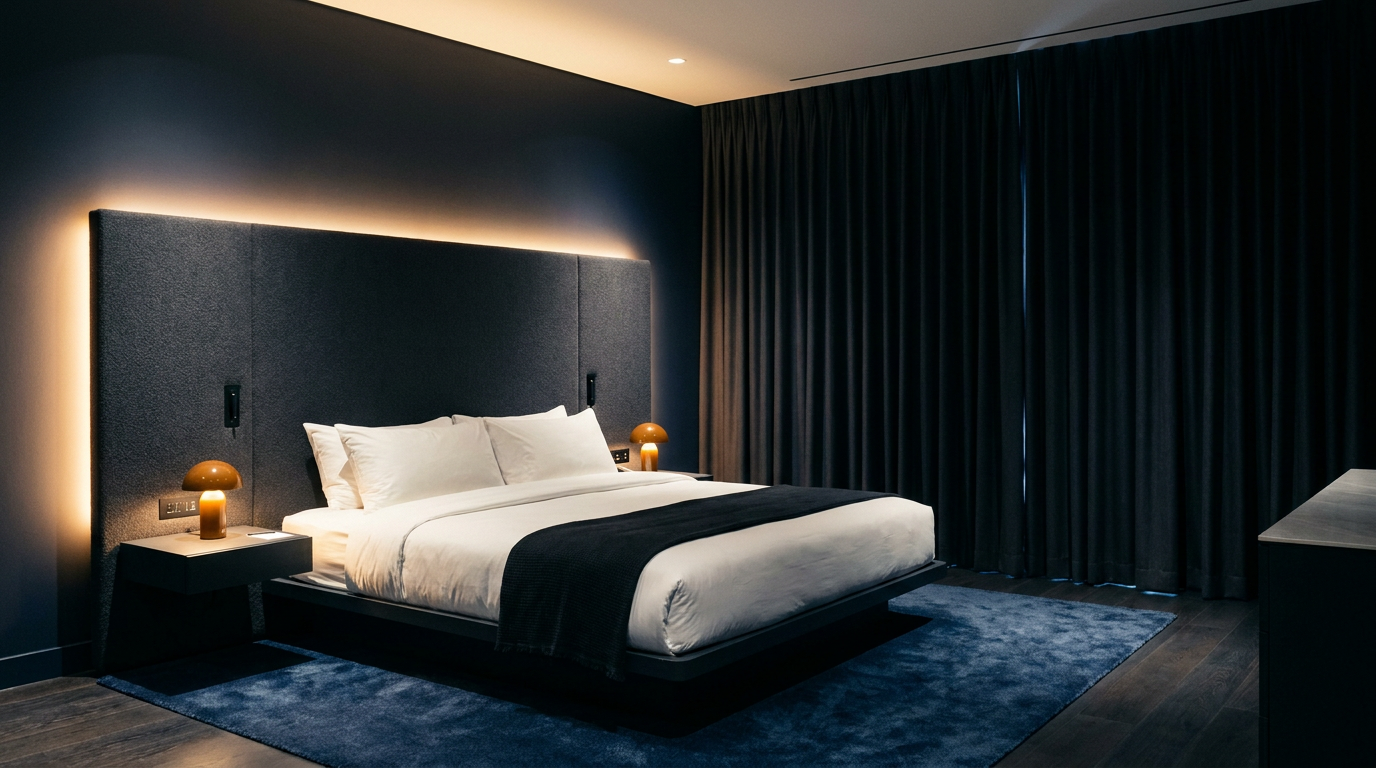
At the core of the sleep tourism movement is a rigorous approach to environmental engineering, often summarized by the mantra "dark, quiet, and cool." While a standard hotel room might feature flimsy curtains and a noisy air conditioning unit, properties optimized for sleep treat the bedroom as a controlled scientific laboratory. Achieving true darkness is the first critical step. High-end sleep suites utilize triple-lined, floor-to-ceiling blackout systems set on motorized tracks to eliminate light gaps at the edges. The goal is to reduce ambient light to less than one lux in the sleeping area. Research indicates that even dim light exposure during sleep—such as the glow from a streetlamp or a hallway under the door—can suppress melatonin production, elevate heart rates, and impair glucose metabolism the following morning.[6][7]

Temperature control is equally vital to the architecture of a restorative night. Human circadian rhythms dictate that core body temperature must drop slightly to initiate and maintain deep sleep. Consequently, sleep-focused hotels have upgraded their HVAC systems to maintain precise, whisper-quiet microclimates. Experts generally recommend a sleeping environment between 60 and 67 degrees Fahrenheit (15 to 19 degrees Celsius). In ultra-luxury properties, this temperature regulation is entirely automated. Guests can press a single "power down" button on a bedside tablet, which simultaneously lowers the thermostat, draws the blackout shades, and shifts the room's acoustics to mask disruptive urban noise.[1][7]
Beyond the foundational elements of darkness and temperature, the most significant technological leap in sleep tourism involves the integration of artificial intelligence into the bed itself. Properties like the Park Hyatt New York have introduced dedicated "Sleep Suites" centered around smart mattresses developed by companies like Bryte. These AI-enhanced beds feature dynamic cushions that continuously adjust their firmness and pressure zones throughout the night in response to the sleeper's movements. By tracking biometric data, the mattress can alleviate pressure points that might otherwise cause a guest to toss and turn. Furthermore, these beds can utilize gentle, meditative physical pulses to lull guests to sleep and wake them gradually, replacing the jarring alarm clock with a subtle somatic cue.[1][4]

Properties like the Park Hyatt New York have introduced dedicated "Sleep Suites" centered around smart mattresses developed by companies like Bryte.
The Equinox Hotel in New York City has pushed this scientific approach to its current extreme with the launch of "The Sleep Lab," a specialized program developed in collaboration with neuroscientist Dr. Matthew Walker. Available for a premium of roughly $1,700 per night, these rooms feature adaptive mattress technology from Eight Sleep, which transforms each side of the bed into a personalized climate zone. The system actively cools the body to induce deep sleep and gradually warms up to naturally awaken the guest in the morning. The room's automation is synchronized with the guest's desired schedule, ensuring that lighting, temperature, and ambient sound shift in perfect alignment with their biological clock.[5][7]
The Equinox Sleep Lab experience extends beyond the mattress, incorporating a holistic, 24-hour approach to circadian health. The room features a specialized contrast therapy shower, allowing guests to alternate between hot steam infused with lavender and frankincense, and a 40-second blast of ice-cold water to regulate the nervous system. Evening rituals include breathwork exercises and circadian color meditation, while morning routines are designed to increase circulation and alertness. The hotel even secured special permission from safety officials to disable the LED indicator lights on in-room smoke detectors, ensuring absolute darkness. This level of obsessive detail underscores how luxury hospitality is transitioning from passive accommodation to active physiological intervention.[5][7]
Lighting design is another critical frontier in the science of hotel sleep. The human suprachiasmatic nucleus—the brain's master clock—relies heavily on light cues to regulate the sleep-wake cycle. Traditional hotel lighting, often heavy in blue wavelengths, can severely disrupt this cycle, particularly for travelers crossing multiple time zones. In response, wellness-oriented hotels are installing dynamic circadian lighting systems. These smart bulbs mimic the natural progression of the sun, emitting bright, blue-enriched light in the morning to suppress melatonin and boost alertness, and gradually shifting to warm, amber tones in the evening to signal the brain that it is time to wind down.[2][4]

This broader shift in the travel industry has been dubbed "hushpitality," a term that captures the growing desire for environments that actively lower sensory stimulation. According to recent industry surveys, more than half of travelers are now interested in silent retreats or vacations that require minimal cognitive load. Hotels are responding by creating spaces that are not just quiet, but intentionally hushed. This includes investing in advanced acoustic engineering, such as specialized wall insulation, triple-glazed windows, and curated soundscapes that utilize white or pink noise to mask intermittent disturbances. The goal is to create a sanctuary where the nervous system can finally disengage from the hyper-connectivity of modern life.[3]
However, the rapid commercialization of sleep science has also sparked debate among medical professionals and wellness advocates. While the core principles of sleep architecture—darkness, temperature control, and a supportive mattress—are universally backed by clinical evidence, some of the more esoteric amenities offered by luxury resorts invite skepticism. Features like crystal-infused rooms, specialized sleep mocktails, and certain aromatherapy blends may offer a relaxing placebo effect rather than measurable physiological benefits. Sleep experts caution that while a $1,000-a-night smart suite can provide a spectacular night of rest, it cannot cure chronic insomnia or sleep apnea, which require medical diagnosis and sustained behavioral changes.[1][6]

Furthermore, the rise of sleep tourism highlights a stark socioeconomic divide in public health. The Global Wellness Institute notes that while affluent travelers can purchase precision-engineered rest in five-star hotels, millions of people continue to suffer from environmental sleep disruptions—such as light pollution, noise, and lack of climate control—in their daily lives. The irony of sleep tourism is that it commodifies a fundamental biological necessity. Yet, industry analysts argue that the innovations pioneered in luxury hotels often trickle down to the broader consumer market. The widespread adoption of blackout curtains, white noise machines, and affordable cooling mattress toppers in residential homes can be traced back to standards originally set by the hospitality sector.[2][6]
Ultimately, the sleep tourism trend reflects a profound recalibration of how society values rest. Sleep is no longer viewed as passive downtime or a sign of unproductivity; it is recognized as the ultimate performance enhancer and the foundation of holistic health. By transforming the hotel room from a mere place to crash into a sophisticated instrument for recovery, the hospitality industry is meeting travelers exactly where they are: exhausted, overstimulated, and desperate for a reset. Whether through an AI-powered mattress in Manhattan or a silent alpine retreat in Switzerland, the message is clear: the most luxurious destination in 2026 is a good night's sleep.[1][3][4]
How we got here
1999
Westin launches the 'Heavenly Bed', kicking off the initial hotel bed wars.
2019
Equinox opens its first hotel in New York, centering its brand around high-performance living and sleep.
2022
Park Hyatt New York introduces dedicated Sleep Suites featuring AI-enhanced Bryte mattresses.
2024
The global sleep tourism market reaches $75.7 billion as post-pandemic travelers prioritize wellness.
July 2025
Equinox Hotels launches 'The Sleep Lab' in collaboration with neuroscientist Dr. Matthew Walker.
2026
Hilton names 'Sleep Tourizzzm 2.0' a top trend, cementing 'hushpitality' as a mainstream travel movement.
Viewpoints in depth
Hospitality Executives
Hotel leaders view sleep optimization as the ultimate luxury differentiator and a major revenue driver.
For hospitality brands, the pivot to sleep tourism is a highly lucrative response to shifting consumer demands. Executives note that travelers are increasingly willing to pay a premium—often hundreds of dollars above standard room rates—for guaranteed rest. By partnering with sleep tech companies and neuroscientists, hotels can market their rooms not just as places to stay, but as active wellness interventions. This allows properties to capture a growing segment of health-conscious consumers who prioritize recovery over traditional luxury amenities like sprawling lobbies or nightlife.
Sleep Scientists & Wellness Experts
Medical professionals emphasize the biological necessity of sleep architecture while cautioning against wellness marketing.
Researchers and wellness advocates celebrate the hospitality industry's adoption of evidence-based sleep architecture, particularly the focus on total darkness, precise temperature control, and circadian lighting. They argue that these environmental factors genuinely improve sleep quality by aligning with the body's natural rhythms. However, many experts draw a sharp line between scientifically validated interventions and 'wellness washing.' They caution that while a smart mattress can optimize comfort, it cannot replace the foundational lifestyle habits required to cure chronic sleep disorders, and warn against upcharging for placebo amenities like sleep crystals.
Culture Analysts
Cultural observers see the trend as a symptom of a chronically exhausted, hyper-connected society.
From a cultural perspective, the rise of 'hushpitality' is a direct reaction to the burnout epidemic. Analysts point out that modern life is characterized by relentless digital connectivity and cognitive overload, making true silence and rest a scarce commodity. The fact that people must travel to a luxury hotel simply to experience a dark, quiet room speaks volumes about the baseline stress of daily life. For these observers, sleep tourism is less about the technology itself and more about purchasing permission to completely disconnect.
What we don't know
- Whether the high costs of AI-driven sleep technology will eventually drop enough to become standard in mid-tier hotels.
- The long-term efficacy of smart mattresses in permanently altering poor sleep habits once a guest returns home.
Key terms
- Sleep Tourism
- A travel trend where the primary motivation for the trip is to achieve high-quality, restorative sleep through specialized accommodations.
- Hushpitality
- A hospitality design philosophy focused on lowering sensory stimulation, emphasizing quiet, calm, and cognitive rest.
- Circadian Lighting
- Smart lighting systems that mimic the natural progression of sunlight to help regulate the body's internal clock and melatonin production.
- Lux
- A standardized unit of illuminance used to measure the intensity of light in a given area.
- Sleep Architecture
- The deliberate engineering of a physical environment—including light, temperature, and sound—to optimize the biological stages of sleep.
- Contrast Therapy
- A recovery technique alternating between hot and cold water exposure to regulate the nervous system and improve circulation.
Frequently asked
What makes a hotel room a 'sleep suite'?
Sleep suites go beyond standard luxury by incorporating AI-adjusting mattresses, circadian lighting, medical-grade soundproofing, and automated temperature controls designed to optimize the body's natural sleep cycles.
How much does sleep tourism cost?
While some budget chains are adding basic sleep amenities, ultra-luxury experiences like the Equinox Sleep Lab or Park Hyatt Sleep Suites typically range from $1,200 to $1,700 per night.
What is the optimal temperature for sleep?
Sleep scientists and luxury hotels target a microclimate between 60 and 67 degrees Fahrenheit (15 to 19 degrees Celsius) to help the body's core temperature drop, which is necessary for deep sleep.
Can I recreate this experience at home?
Yes. Experts note that the foundational elements of hotel sleep architecture—investing in true blackout curtains, lowering the thermostat, and using white noise—can be replicated at home for a fraction of the cost.
Sources
Source coverage
7 outlets
3 viewpoints surfaced







[1]Business InsiderHospitality Executives
How Ultra-Luxury Hotels Are Catering to Wealthy Sleep Enthusiasts
Read on Business Insider →[2]Global Wellness InstituteSleep Scientists & Wellness Experts
Sleep Initiative Trends for 2026
Read on Global Wellness Institute →[3]The Zoe ReportTravelers & Culture Analysts
Move Over Quiet Luxury — Hushpitality Is Travel's New Status Symbol
Read on The Zoe Report →[4]Hospitality InvestorHospitality Executives
The science of sleep tourism
Read on Hospitality Investor →[5]Business WireHospitality Executives
Equinox Hotels Launches The Sleep Lab with Dr. Matthew Walker: A Scientific Approach to Transforming Sleep
Read on Business Wire →[6]Mattress MiracleSleep Scientists & Wellness Experts
Sleep Trends 2026: Tourism, Sleepmaxxing & Dopamine Menus
Read on Mattress Miracle →[7]Travel WeeklyTravelers & Culture Analysts
The Sleep Lab: A scientific approach to the weary traveler's dream night
Read on Travel Weekly →
Every angle. Every day.
Get travel stories with full source coverage and perspective breakdowns delivered to your inbox.