
The 2026 E-Bike Buying Guide: How to Choose the Right Electric Bicycle
From mid-drive motors to torque sensors and battery watt-hours, here is everything you need to know before buying an electric bike in 2026.
By Factlen Editorial Team
- Urban Commuters
- Prioritize low maintenance, flat-terrain efficiency, and integrated commuter accessories.
- Casual & Senior Riders
- Prioritize comfort, accessibility, and a smooth, natural ride feel over raw power.
- Performance & Off-Road Riders
- Prioritize torque, balance, and hill-climbing ability for steep or rugged terrain.
What's not represented
- · Cargo delivery couriers
- · Traditional acoustic bicycle purists
Why this matters
With e-bike technology rapidly evolving, understanding the difference between motor types, sensor styles, and battery metrics can save you hundreds of dollars and prevent you from buying a bike that doesn't fit your daily commute or fitness goals.
Key points
- Hub motors are affordable and low-maintenance, making them ideal for flat city commuting.
- Mid-drive motors leverage the bike's gears, providing superior balance and hill-climbing ability.
- Torque sensors offer a natural, intuitive ride feel by multiplying the rider's physical effort.
- Battery capacity should be measured in Watt-hours (Wh), with 500 Wh serving as a solid baseline.
- Step-through frames have become the industry standard for comfort and accessibility across all demographics.
E-bikes have fundamentally transformed urban transportation and outdoor recreation by 2026. No longer a niche novelty, electric bicycles are replacing car trips, extending the range of casual cyclists, and opening up rugged trails to a wider demographic.[7]
However, the sheer volume of options on the market can be overwhelming for first-time buyers. Choosing the right e-bike requires looking past flashy marketing and understanding the core electrical components that dictate how the machine actually rides.[1]
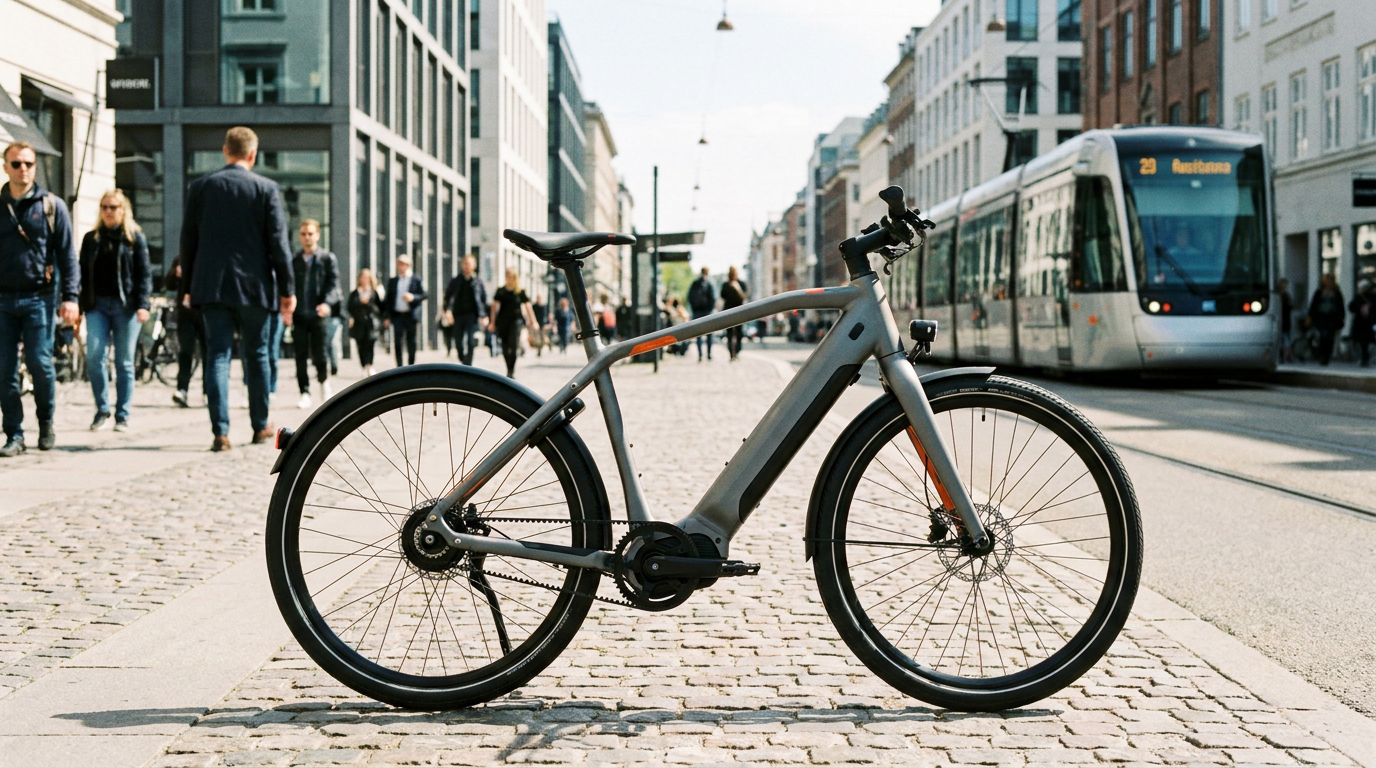
The most foundational decision is motor placement, which generally comes down to a choice between a hub motor and a mid-drive motor. A hub motor sits directly in the center of the wheel—usually the rear—and provides a distinct sensation of being pushed forward from behind.[4]
Hub motors are mechanically simpler, generally more affordable, and highly effective for flat-city commuting. Because they operate independently of the bicycle's chain and gears, they cause less wear and tear on the drivetrain, making them a low-maintenance option for daily urban riders.[3]

Conversely, a mid-drive motor is located at the bottom bracket, directly between the pedals. This placement keeps the heaviest part of the bike low and centered, significantly improving the bike's balance and handling compared to a heavy rear hub.[1][2]
The true advantage of a mid-drive system, however, is mechanical. By driving the front chainring, a mid-drive motor leverages the bicycle's rear gears. Just like shifting a manual transmission in a car, this allows the motor to operate in its optimal RPM range, making it vastly superior for climbing steep hills or navigating technical off-road trails.[4][5]
Beyond where the motor is placed, buyers must consider how the motor knows when to deliver power. This is controlled by sensors, and the difference between a cadence sensor and a torque sensor dramatically alters the ride experience.[3]
A cadence sensor is the more basic technology. It simply detects whether the pedals are turning and delivers a predetermined amount of power based on your assist setting. This can sometimes feel like an on/off switch, providing a sudden surge of power that some riders find jarring.[4]
It simply detects whether the pedals are turning and delivers a predetermined amount of power based on your assist setting.
A torque sensor, on the other hand, measures exactly how much physical force the rider is applying to the pedals and multiplies that effort in real-time. If you push gently, the motor provides a gentle assist; if you stomp on the pedals to get through an intersection, the motor surges to match you. This creates a highly intuitive, natural feel that many describe as having "bionic legs."[4][6]
The next critical component is the battery, often referred to as the e-bike's gas tank. While manufacturers frequently advertise maximum range estimates, real-world mileage fluctuates wildly based on rider weight, terrain, wind, and how heavily you rely on the motor.[4][6]

To accurately compare battery capacity across different brands, buyers should look at Watt-hours (Wh). If a spec sheet only lists Volts (V) and Amp-hours (Ah), you can find the Watt-hours by multiplying the two numbers together. For example, a 36V, 14Ah battery yields 504 Wh.[2][4]
By 2026 standards, 500 Wh is considered the baseline for a quality recreational e-bike, providing enough juice for a solid day of moderate riding. Commuters with long routes or riders planning extensive weekend tours should look for high-capacity batteries offering 700 Wh or more.[4][5]
Voltage is another metric that impacts performance. A standard 36V system is highly efficient for cruising, but a 48V system acts like a wider electrical pipe, delivering power more rapidly when the motor is under heavy load. This makes 48V setups ideal for cargo bikes or performance mountain bikes tackling steep gradients.[5]
Battery placement also affects the ride. Batteries integrated directly into the down tube keep the weight low and centered, making the bike much easier to handle and less prone to tipping than older designs that mounted heavy batteries high up on a rear rack.[1]

When it comes to raw motor power, measured in Watts, more is not universally better. A 250W or 500W motor is generally more than sufficient for riders under 200 pounds navigating flat or gently rolling terrain.[6]
While 750W motors—the legal maximum for standard Class 2 e-bikes in many jurisdictions—offer aggressive acceleration and superior hill-climbing for heavier loads, they can sometimes feel startlingly powerful to casual or senior riders who prefer a gentler assist.[6]
Finally, buyers must consider the physical frame and components. Step-through frames have surged in popularity across all demographics, offering a relaxed, upright riding position and eliminating the need to swing a leg over a high top tube—a major benefit for riders with limited mobility or those carrying cargo.[4][6]

Ultimately, the perfect e-bike is the one tailored to your specific lifestyle. By prioritizing the right motor type, insisting on a natural-feeling sensor, and calculating the true battery capacity, consumers can confidently navigate the 2026 market and find a ride that will serve them for years to come.[7]
Viewpoints in depth
Urban Commuters
Prioritize low maintenance and flat-terrain efficiency.
For city riders, the simplicity of a rear hub motor is often the best choice. These motors provide steady, reliable power without putting extra strain on the bicycle's chain and gears. Combined with integrated lights, fenders, and a rear rack, this setup is optimized for getting to work without breaking a sweat or requiring constant drivetrain maintenance.
Performance & Off-Road Riders
Prioritize torque, balance, and hill-climbing ability.
Riders tackling steep inclines or off-road trails heavily favor mid-drive motors. By positioning the motor at the pedals, the bike maintains a low, centered center of gravity. More importantly, mid-drives leverage the bike's mechanical gearing, allowing the motor to spin efficiently even when the bike is moving slowly up a steep grade. This group also leans toward 48V systems for higher peak power delivery.
Casual & Senior Riders
Prioritize comfort, accessibility, and natural ride feel.
For older adults or casual weekend riders, raw power is less important than how that power is delivered. A torque sensor is highly recommended here, as it provides a smooth, natural assist that mirrors the rider's own effort, avoiding the sudden jolts associated with basic cadence sensors. Step-through frames and moderate 500W motors ensure the bike remains manageable, safe, and easy to mount.
What we don't know
- How rapidly emerging solid-state battery technology will replace current lithium-ion standards in the consumer market.
- Whether local municipalities will introduce new speed or wattage restrictions on e-bikes sharing traditional bike lanes.
Key terms
- Watt-hours (Wh)
- A measure of total battery capacity, calculated by multiplying Volts by Amp-hours, which determines how far the e-bike can travel.
- Mid-drive motor
- An electric motor positioned at the bike's pedals that leverages the mechanical gears for efficient hill climbing.
- Hub motor
- An electric motor housed in the center of the front or rear wheel, providing direct propulsion ideal for flat terrain.
- Torque sensor
- A component that measures the physical force applied to the pedals and smoothly scales the motor's power output to match.
- Cadence sensor
- A basic sensor that detects when the pedals are rotating and triggers the motor to deliver a set amount of power.
Frequently asked
How far can I go on a single charge?
Real-world range depends on battery capacity (Watt-hours), rider weight, terrain, and assist level. A standard 500Wh battery typically provides 30 to 50 miles of range on moderate assist settings.
What is the difference between a cadence and torque sensor?
A cadence sensor delivers power simply because the pedals are turning, which can feel like an on/off switch. A torque sensor measures how hard you push and multiplies your effort for a smoother, more natural ride.
Do I need a 750-watt motor?
Not necessarily. While 750W motors are great for heavy cargo or steep hills, a 250W or 500W motor is highly efficient and often provides plenty of power for flat terrain and casual riding.
How do I maintain my e-bike battery?
To extend the life of your lithium-ion battery, avoid draining it completely. Experts recommend following the 20-80% charging rule and storing the battery indoors during extreme hot or cold weather.
Sources
Source coverage
7 outlets
3 viewpoints surfaced







[1]REIUrban Commuters
How to Choose an Electric Bike
Read on REI →[2]HeybikeCasual & Senior Riders
E-bike Buying Guide
Read on Heybike →[3]Crazy Lenny's E-BikesUrban Commuters
Commuter E-Bike Buying Guide 2026
Read on Crazy Lenny's E-Bikes →[4]Epic CyclesPerformance & Off-Road Riders
E-Bike Buying Guide
Read on Epic Cycles →[5]Bike LinePerformance & Off-Road Riders
The Ultimate E-Bike Buying Guide for Beginners: 2026 Edition
Read on Bike Line →[6]SixthreezeroCasual & Senior Riders
E-Bike Buying Guide for Seniors: How to Choose the Right Electric Bike
Read on Sixthreezero →[7]Factlen Editorial TeamCasual & Senior Riders
Synthesis by Factlen editorial team
Read on Factlen Editorial Team →

More in shopping
See all 24 stories →Home Appliances
Heat Pump Dryers: The 2026 Buying Guide and Explainer
0 sources
Display Tech
OLED vs. Mini-LED in 2026: The Ultimate Home Theater Trade-Off Analysis
0 sources

TV Tech
OLED vs. Mini-LED: Choosing the Right Premium TV in 2026
0 sources

Home Electrification
The 2026 Guide to Buying a Heat Pump: Ratings, Rebates, and Avoiding Costly Mistakes
0 sources
Every angle. Every day.
Get shopping stories with full source coverage and perspective breakdowns delivered to your inbox.