
The 2026 Guide to Buying a Heat Pump: Ratings, Rebates, and Avoiding Costly Mistakes
Heat pumps have overtaken gas furnaces as America's top heating choice, but navigating new efficiency ratings and shifting 2026 rebate programs requires careful planning. This guide breaks down the jargon, the technology, and why your installer matters more than the brand.
By Factlen Editorial Team
- HVAC Professionals
- Emphasize that proper sizing via Manual J calculations and high-quality installation matter more than the equipment brand.
- Electrification Advocates
- Argue that transitioning to heat pumps is essential for reducing residential carbon emissions and moving away from fossil fuels.
- Cost-Conscious Homeowners
- Focus on maximizing state rebates, utility incentives, and long-term utility savings to offset the high initial installation costs.
What's not represented
- · Natural Gas Industry Representatives
- · Renters Unable to Upgrade
Why this matters
With federal tax incentives shifting in 2026 and heat pumps now outselling gas furnaces, choosing the right system dictates your home's comfort and energy bills for the next 15 years. Understanding new efficiency ratings and proper sizing prevents costly installation mistakes.
Key points
- Heat pumps are now the most popular heating appliance in the U.S., outselling traditional gas furnaces.
- Modern cold-climate heat pumps can efficiently heat homes even when outdoor temperatures drop to minus 20 degrees Fahrenheit.
- The 2023 shift to SEER2 and HSPF2 ratings provides a more accurate, real-world measure of a system's efficiency.
- While the federal 25C tax credit ended in 2025, robust state and utility rebates are available for 2026 installations.
- A proper Manual J load calculation by your installer is more important to system performance than the equipment brand.
For decades, the American basement was dominated by the familiar rumble of the natural gas furnace. But a quiet revolution has taken over the HVAC industry. Heat pumps are now the most popular heating appliance installed in the United States, with over 5 million new units sold annually—outpacing traditional gas furnaces by a significant margin. This shift isn't just a fleeting trend; it represents a fundamental change in how we control the climate inside our homes. Driven by massive leaps in cold-weather technology, rising fossil fuel costs, and unprecedented state incentives, homeowners are increasingly abandoning combustion in favor of electrification. But for first-time buyers, navigating the world of heat pumps can feel like learning a new language.[2]
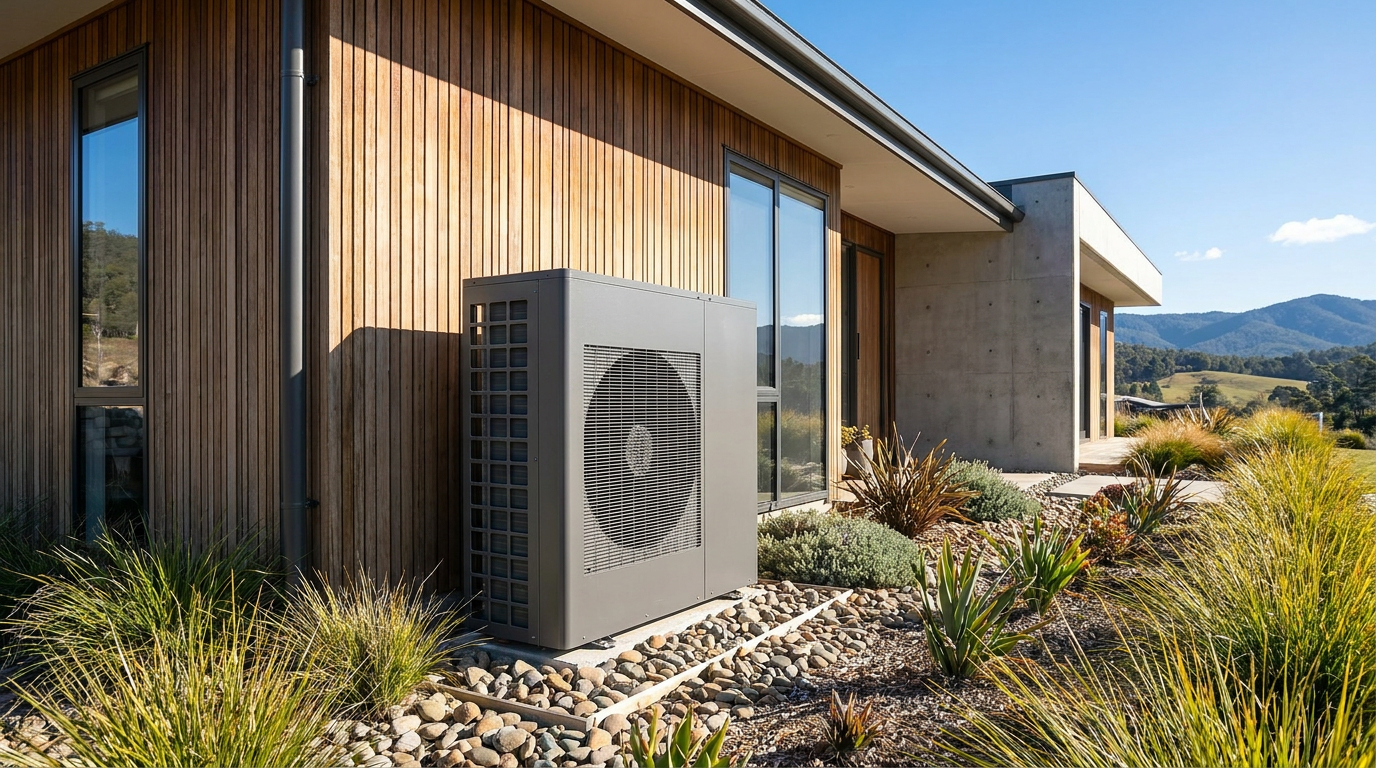
Unlike a traditional furnace that burns fuel to generate heat, a heat pump doesn't create heat at all—it moves it. In the winter, the system extracts ambient thermal energy from the outside air (yes, even when it is freezing outside) and transfers it indoors to warm your living space. In the summer, a reversing valve flips the entire process, allowing the unit to act exactly like a high-efficiency central air conditioner by pulling heat out of your home and dumping it outside. Because moving heat requires significantly less energy than generating it from scratch, heat pumps can operate at efficiencies well over 300 percent, meaning they produce three units of heating for every one unit of electricity consumed.[4][7]
When shopping for a heat pump in 2026, the first hurdle most homeowners face is the alphabet soup of efficiency ratings. The two most critical acronyms to understand are SEER2 and HSPF2. SEER2, which stands for Seasonal Energy Efficiency Ratio 2, measures the system's cooling efficiency over an entire summer season. Think of it as the miles-per-gallon rating for your air conditioning. A higher SEER2 rating means the unit requires less electricity to keep your home cool. Conversely, HSPF2, or Heating Seasonal Performance Factor 2, measures the system's heating efficiency during the colder months. If you live in a region with brutal winters, a high HSPF2 rating is the single most important metric for keeping your winter utility bills in check.[3]

You might be wondering about the "2" at the end of those acronyms. In 2023, the U.S. Department of Energy overhauled its testing standards, replacing the old SEER and HSPF metrics with SEER2 and HSPF2. The updated testing procedures are much more rigorous and better reflect real-world conditions. Previously, units were tested in laboratories with virtually no duct resistance. The new standards account for the static pressure and airflow restrictions found in actual homes with typical ductwork. As a result, a unit that might have boasted a 15 SEER rating a few years ago might now be rated at 14.3 SEER2. The numbers look slightly lower, but the equipment is just as efficient—the grading scale has simply become more honest.[3]
Understanding these ratings is crucial not just for your monthly utility bills, but for accessing the financial incentives that offset installation costs. While the famous $2,000 federal tax credit under Section 25C of the Inflation Reduction Act was ended early for installations completed after December 2025, the financial assistance landscape remains robust in 2026. The focus has simply shifted from federal tax returns to state-administered programs. Through the IRA Home Energy Rebates program (often referred to as HEEHRA), low- and moderate-income households can access massive point-of-sale rebates, while utility companies nationwide continue to offer their own substantial cash incentives for high-efficiency upgrades.[1][6]
To qualify for these state and utility rebates in 2026, the installed air-source heat pump must generally meet strict efficiency minimums set by the Consortium for Energy Efficiency (CEE). Typically, this means the unit must achieve a SEER2 rating of at least 16 and an HSPF2 rating of at least 9. Unlike tax credits, which require homeowners to wait until tax season to see any financial return, many of the 2026 state-level rebates are applied directly at the point of sale. This immediate discount drastically lowers the upfront sticker price, making premium, high-efficiency equipment accessible to a much broader range of homeowners without requiring them to float the cost for months.[1][6]

Typically, this means the unit must achieve a SEER2 rating of at least 16 and an HSPF2 rating of at least 9.
One of the most persistent myths about heat pumps is that they only work in mild climates like Florida or California. While that may have been true twenty years ago, modern engineering has completely rewritten the rules. Today's cold-climate heat pumps utilize advanced variable-speed inverter compressors. Unlike older single-stage compressors that blast on at 100 percent capacity and then shut off, an inverter compressor can ramp its speed up and down in tiny increments, much like the accelerator pedal in a car. This allows the system to extract usable heat from the outdoor air even when temperatures plummet to minus 20 degrees Fahrenheit, making them perfectly viable for winters in New England or the Midwest.[8]
For homeowners in the most extreme northern climates—or those who live in areas with unusually high electricity rates but cheap natural gas—a dual-fuel or "hybrid" system offers an elegant compromise. A dual-fuel setup pairs a high-efficiency electric heat pump with a traditional gas furnace. During the fall, spring, and mild winter days, the heat pump handles the heating load, operating at peak efficiency and saving money. But when a polar vortex hits and the temperature drops below a specific economic balance point (often around 30 degrees Fahrenheit), the system automatically switches over to the gas furnace for backup heat. This hybrid approach optimizes both comfort and operating costs across the entire year.[8]
Beyond the compressor technology, buyers must also choose between ducted and ductless configurations. If your home already has a network of central air ducts in good condition, a standard ducted air-source heat pump is usually the most straightforward replacement for an aging furnace and AC combo. However, for older homes without existing ductwork, or for new additions and specific problem rooms, ductless mini-splits are the gold standard. These systems feature a single outdoor compressor connected to one or more wall-mounted indoor air handlers via small refrigerant lines. Because they eliminate the energy losses associated with leaky ductwork, mini-splits are incredibly efficient and offer precise, room-by-room temperature zoning.[8]

With the market booming, dozens of brands are vying for consumer attention, but industry professionals and consumer surveys consistently highlight a few clear leaders. Brands like Trane and American Standard frequently top reliability charts, known for their rugged durability and long lifespans, though they often come with a premium price tag. Carrier and Lennox are celebrated for pushing the envelope on variable-speed technology and whisper-quiet operation. Meanwhile, when it comes to ductless mini-splits and cold-climate performance, Mitsubishi Electric remains the undisputed heavyweight champion, offering systems that reliably deliver heat in sub-zero conditions while maintaining exceptional efficiency.[2][5]
Yet, any seasoned HVAC technician will tell you a hard truth: the brand name on the outside of the box matters far less than the quality of the installation. A top-tier, ultra-efficient heat pump will perform miserably, break down frequently, and cost a fortune to run if it is installed incorrectly. The most critical step in the installation process is proper sizing. A heat pump that is too small will run constantly and struggle to keep the house warm, while a unit that is too large will "short cycle," turning on and off rapidly, which ruins efficiency and fails to properly dehumidify the air during the summer.[4][5]
To ensure perfect sizing, a reputable contractor will never just guess or base their recommendation solely on the square footage of your home. Instead, they must perform a rigorous mathematical calculation known as a Manual J load calculation. This assessment takes into account the home's orientation, the quality of the insulation, the number and type of windows, ceiling heights, and local climate data to determine the exact heating and cooling demands of the structure. If a contractor offers a quote without performing a Manual J calculation, or if they simply offer to swap your old unit for one of the exact same size, it is a massive red flag.[4]

Ultimately, upgrading to a heat pump in 2026 is a significant financial investment, with full installation costs typically ranging from $8,000 to over $20,000 depending on the system's complexity and local labor rates. However, when you factor in the immediate point-of-sale state rebates and the substantial month-over-month savings on energy bills, the long-term return on investment is compelling. By taking the time to understand efficiency ratings, choosing the right technology for your climate, and partnering with a meticulous installer who insists on proper mathematical sizing, homeowners can secure decades of quiet, eco-friendly, and highly efficient comfort.[1][6]
How we got here
Jan 2023
The Department of Energy implements the rigorous new SEER2 and HSPF2 testing standards for HVAC equipment.
2024
Heat pumps officially surpass traditional gas furnaces in annual U.S. sales, crossing the 5 million unit mark.
July 2025
New federal legislation ends the Section 25C tax credit early, setting a cutoff for installations completed by the end of 2025.
2026
The incentive landscape shifts to state-administered point-of-sale rebates and utility programs, providing immediate discounts on high-efficiency units.
Viewpoints in depth
The Electrification Push
Environmental advocates view heat pumps as a critical tool for decarbonizing the residential sector.
For electrification advocates, the transition away from natural gas furnaces is a non-negotiable step in fighting climate change. Because heat pumps run entirely on electricity, their carbon footprint shrinks every year as the national power grid incorporates more wind and solar energy. This camp frequently highlights that even when powered by a fossil-heavy grid, the sheer 300 percent efficiency of a heat pump results in lower overall emissions than burning gas directly in a basement. They champion rebate policies as necessary market accelerators to make green technology accessible to middle-class households.
The HVAC Industry Standard
Contractors stress that the transition to heat pumps requires a massive leap in installation precision and technician training.
HVAC professionals are largely supportive of the heat pump boom, but they caution that the industry is facing a severe skills gap. Unlike a gas furnace, which can often be oversized with minimal immediate consequences, a heat pump requires exact mathematical sizing to function properly. The industry standard dictates that a Manual J load calculation must be performed for every installation. Technicians warn that as consumer demand skyrockets, inexperienced contractors are rushing installations, leading to poorly optimized systems that fail to deliver the promised energy savings or comfort, ultimately damaging the technology's reputation.
The Consumer ROI Focus
Homeowners are primarily motivated by the financial math of upfront costs versus long-term energy savings.
For the average homeowner, the decision to install a heat pump rarely hinges on environmental idealism; it comes down to cold, hard math. The initial sticker shock of a $15,000 installation can be daunting. Therefore, this perspective is hyper-focused on navigating the complex web of state-level HEEHRA rebates and utility incentives to bring the upfront cost down. Cost-conscious buyers are also closely analyzing their local utility rates, often opting for dual-fuel systems in regions where electricity is expensive but natural gas remains cheap, ensuring they are insulated from price spikes in either energy market.
What we don't know
- How quickly state energy offices will fully roll out and deplete their allotted HEEHRA rebate funds in 2026.
- Whether future legislation will reinstate federal tax credits for heat pumps after the early termination of Section 25C.
Key terms
- SEER2 (Seasonal Energy Efficiency Ratio 2)
- A metric that measures a heat pump's cooling efficiency over an entire summer season, based on updated, real-world testing standards.
- HSPF2 (Heating Seasonal Performance Factor 2)
- A metric that measures a heat pump's heating efficiency over the winter season; a higher number indicates lower winter electricity usage.
- Inverter Compressor
- Advanced technology that allows a heat pump to adjust its output in small increments rather than just turning on or off, vastly improving cold-weather performance.
- Manual J Load Calculation
- A detailed mathematical assessment performed by HVAC contractors to determine the exact heating and cooling capacity a specific home requires.
- Dual-Fuel System
- A hybrid HVAC setup that pairs an electric heat pump with a traditional gas furnace, automatically switching to gas during extreme cold to optimize costs.
Frequently asked
Do heat pumps really work in freezing weather?
Yes. Modern cold-climate heat pumps use variable-speed inverter compressors that can efficiently extract heat from the outside air even at temperatures as low as minus 20 degrees Fahrenheit.
What is the difference between SEER2 and HSPF2?
SEER2 measures a heat pump's cooling efficiency during the summer, while HSPF2 measures its heating efficiency during the winter. Higher numbers mean lower energy bills.
Is the $2,000 federal tax credit for heat pumps still available?
No. The federal Section 25C tax credit ended for systems installed after December 31, 2025. However, homeowners in 2026 can still access substantial state-administered rebates and utility incentives to offset costs.
Do I need ductwork to install a heat pump?
No. While air-source heat pumps can use existing central ductwork, ductless mini-split systems are available for homes without ducts, using wall-mounted units to provide zoned heating and cooling.
Sources
Source coverage
8 outlets
3 viewpoints surfaced








[1]Home Energy DecisionsCost-Conscious Homeowners
Federal Tax Credits for HVAC in 2026: What's Still Available
Read on Home Energy Decisions →[2]House DigestCost-Conscious Homeowners
Finding the best heat pump for your home
Read on House Digest →[3]CarrierHVAC Professionals
Defining Important Efficiency Terms: SEER2, HSPF2, EER & COP
Read on Carrier →[4]TraneHVAC Professionals
Buying a Heat Pump: A Checklist
Read on Trane →[5]ModernizeCost-Conscious Homeowners
Best Heat Pump Brands of 2026
Read on Modernize →[6]Factlen Editorial TeamCost-Conscious Homeowners
Synthesis by Factlen editorial team
Read on Factlen Editorial Team →[7]EcoHomeElectrification Advocates
Heat pump buying guide and reviews
Read on EcoHome →[8]Aircon ExpertsHVAC Professionals
Expert heat pump buying guide 2026: costs, types, efficiency ratings
Read on Aircon Experts →

Every angle. Every day.
Get shopping stories with full source coverage and perspective breakdowns delivered to your inbox.