
OLED vs. Mini-LED: Choosing the Right Premium TV in 2026
As QD-OLED and advanced Mini-LED technologies mature, the gap between the two premium TV panel types has narrowed, making the choice heavily dependent on room lighting and viewing habits.
By Factlen Editorial Team
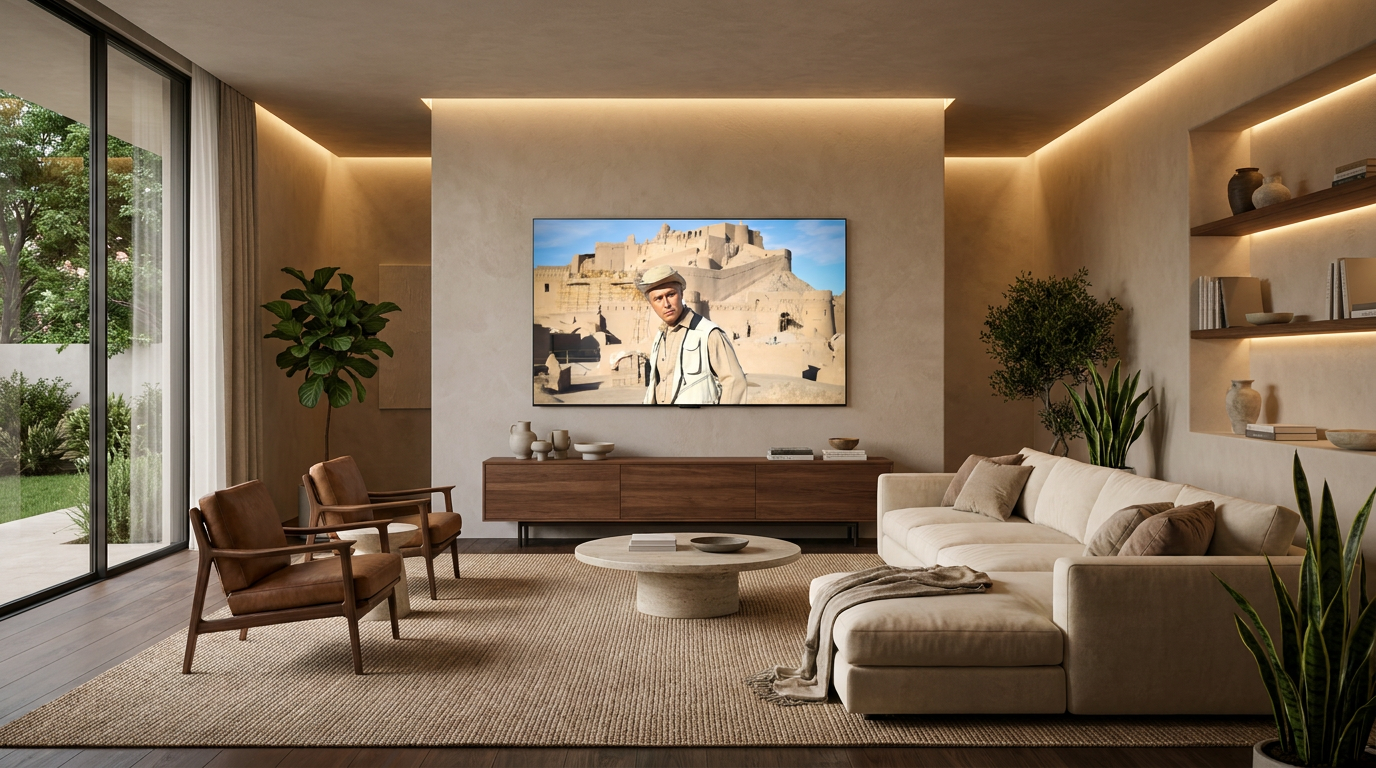
- Home Theater Purists
- Prioritize perfect black levels, infinite contrast, and pixel-level precision for cinematic viewing in dark rooms.
- Bright-Room Generalists
- Value peak brightness, glare reduction, and vibrant color volume for daytime sports and casual viewing.
- Value & Longevity Maximizers
- Focus on cost-per-inch at massive screen sizes and total immunity to burn-in for long-term peace of mind.
What's not represented
- · Budget-conscious buyers looking at standard LED/LCDs
- · Projector enthusiasts building dedicated home theaters
Why this matters
Premium televisions represent a significant household investment, often serving as the entertainment centerpiece for five to ten years. Understanding the specific strengths of OLED and Mini-LED prevents buyers from overspending on the wrong technology for their specific living room environment.
Key points
- OLED TVs offer perfect black levels and infinite contrast by turning individual pixels completely off.
- Mini-LED TVs utilize thousands of microscopic backlights to achieve blinding peak brightness, ideal for sunlit rooms.
- Newer QD-OLED and MLA technologies have significantly closed the brightness gap, making OLEDs viable in brighter spaces.
- Mini-LED remains the most cost-effective way to purchase massive screens (85 inches and above) without sacrificing premium picture quality.
- Both technologies offer excellent gaming features, but Mini-LED provides total immunity to static HUD burn-in.
The golden age of television hardware has arrived. For years, consumers walking into an electronics store were forced to choose between the perfect black levels of an OLED and the vibrant, room-filling brightness of a standard LED. In 2026, the landscape has evolved into a clash of two highly refined titans: advanced OLEDs and next-generation Mini-LEDs. Both technologies have largely solved their historical weaknesses, meaning there is no longer a single "best" TV on the market, only the best TV for a specific room and viewer.[2][6]
To understand the comparison, it helps to look at how each screen creates an image. OLED, which stands for Organic Light Emitting Diode, is a self-emissive technology. Every single one of the 8.3 million pixels on a 4K OLED screen generates its own light and color. When a scene calls for true black—like the vacuum of space in a sci-fi film—the pixels in that area simply turn off completely. This creates an infinite contrast ratio, giving OLEDs a three-dimensional, "pop-off-the-screen" depth that traditional backlit televisions have historically struggled to match.[1][5]

Historically, the trade-off for OLED's perfect blacks was a lack of peak brightness, making them difficult to watch in sun-drenched living rooms. However, recent advancements have dramatically shifted this narrative. The introduction of Micro Lens Array (MLA) technology and Quantum Dot OLED (QD-OLED) panels has allowed these screens to push significantly more light without increasing the risk of panel degradation. Modern premium OLEDs can now comfortably exceed 1,500 nits of peak brightness in small highlights, making them far more versatile than the models sold just a few years ago.[3][5]
On the other side of the aisle sits Mini-LED, the ultimate refinement of traditional LCD technology. Instead of relying on a few dozen large backlights, a Mini-LED TV uses thousands of microscopic light-emitting diodes packed behind the screen. These diodes are grouped into "local dimming zones"—often numbering in the thousands on premium 2026 models. By tightly controlling which zones light up and which stay dark, Mini-LEDs can simulate the deep blacks of an OLED while retaining the massive brightness advantages of an LCD panel.[1][4]
The sheer luminance of a Mini-LED is its greatest weapon. Top-tier models can easily push 2,000 to 3,000 nits of peak brightness. In a bright living room with unshaded windows or sliding glass doors, a Mini-LED effortlessly cuts through the glare, maintaining color saturation and image clarity where an OLED might look washed out or act like a dark mirror. For daytime sports viewing or casual background watching in a sunlit open-concept home, Mini-LED provides an undeniably superior, punchy image.[2][4]

Top-tier models can easily push 2,000 to 3,000 nits of peak brightness.
However, Mini-LED is not without its compromises. Because the backlight zones are still larger than individual pixels, bright objects on dark backgrounds—like white subtitles on a black letterbox bar, or a streetlamp in a night scene—can exhibit "blooming" or a halo effect. While 2026's advanced algorithmic backlight controls have reduced blooming to near-imperceptible levels for most viewers, home theater purists watching in pitch-black rooms will still notice the slight light bleed that OLED entirely avoids.[1][3]
Viewing angles present another distinct divergence between the two technologies. Because OLED pixels emit light in all directions uniformly, the picture retains its color accuracy and contrast even if you are sitting far off to the side of the screen. Mini-LEDs, bound by the physical limitations of their LCD layers, tend to lose color saturation and exhibit worse blooming when viewed from an angle. For wide, U-shaped sectional sofas, OLED remains the safer bet for ensuring every seat is the best seat in the house.[1][6]

For gamers, the decision is equally nuanced. OLED panels offer near-instantaneous pixel response times, usually around 0.1 milliseconds, resulting in incredibly smooth motion clarity with zero ghosting during fast-paced action. However, Mini-LEDs counter with complete immunity to permanent image retention, or "burn-in." While modern OLEDs have robust mitigation features to prevent static elements like news tickers or video game HUDs from burning into the screen, Mini-LED offers absolute peace of mind for users who leave their TVs on a single channel all day or use them as massive PC monitors.[2][4]
Pricing and sizing dynamics also play a crucial role in the 2026 market. While 55-inch and 65-inch OLEDs have become highly competitive in price, the manufacturing costs of organic panels scale poorly at massive sizes. If you are looking to build a cinematic experience with an 85-inch or 98-inch screen, Mini-LED offers drastically better value, often costing thousands of dollars less than an equivalently sized OLED while still delivering a flagship-tier picture.[5][6]
Ultimately, the choice comes down to a simple environmental assessment. OLED fits perfectly when the primary use case is evening movie watching, prestige television, or gaming in a light-controlled room. It is the cinephile's choice, offering unmatched contrast, perfect blacks, and a pristine image that looks exactly as the director intended, provided the room isn't fighting the sun.[1][2]

Conversely, Mini-LED fits perfectly when the TV lives in a bright, multi-use family room. It is the ultimate generalist, shrugging off daytime glare, delivering blindingly bright HDR highlights, and offering total immunity to burn-in anxiety. As both technologies continue to borrow strengths from one another, consumers are left in the enviable position of choosing between two distinct flavors of excellence.[3][4]
How we got here
2013
The first large-screen OLED TVs enter the consumer market, praised for contrast but criticized for low brightness and high cost.
2019
Mini-LED technology begins appearing in premium consumer televisions, offering a high-brightness alternative to OLED.
2022
QD-OLED panels are introduced, combining OLED's perfect blacks with quantum dots for significantly improved color brightness.
2024
Mini-LED zone counts cross the 5,000 mark in flagship models, reducing blooming artifacts to near-imperceptible levels.
2026
Both technologies reach maturity, shifting the consumer decision from 'which is better' to 'which fits my room best'.
Viewpoints in depth
Home Theater Purists
Advocates for OLED technology who prioritize absolute picture accuracy and infinite contrast.
For cinephiles and home theater enthusiasts, the conversation begins and ends with OLED. This camp argues that the foundation of a great image is its black level. Because OLED pixels can turn completely off, the contrast ratio is infinite, giving movies a three-dimensional depth that backlit screens cannot replicate. They point out that in a light-controlled room with the curtains drawn, the massive peak brightness of a Mini-LED is actually unnecessary and can cause eye strain, making OLED's pixel-perfect precision the undisputed champion for prestige television and 4K Blu-rays.
Bright-Room Generalists
Advocates for Mini-LED who prioritize peak brightness, color volume, and versatility in mixed-use spaces.
This perspective reflects the reality of how most people actually live: in open-concept homes with lots of natural light. Bright-room generalists argue that perfect black levels are irrelevant if the screen is too dim to see during a Sunday afternoon football game. They champion Mini-LED for its sheer horsepower, noting that 3,000 nits of peak brightness allows the TV to cut through window glare effortlessly. Furthermore, they appreciate the "set it and forget it" nature of Mini-LED, valuing the absolute zero risk of burn-in when family members leave news channels or video games paused for hours.
Value & Longevity Maximizers
Consumers focused on the cost-to-size ratio and the long-term durability of their investment.
For buyers looking to maximize their budget, the debate shifts away from pure picture quality and toward screen real estate and lifespan. This camp heavily favors Mini-LED when shopping for screens 85 inches or larger, noting that the manufacturing costs of massive OLED panels remain prohibitively expensive for most households. They also factor in the psychological comfort of LCD technology; knowing that a Mini-LED TV can serve as a giant PC monitor or display static sports tickers all day without any risk of permanent panel degradation makes it the safer long-term investment for a busy household.
What we don't know
- How quickly true Micro-LED technology will become affordable enough to replace both OLED and Mini-LED in the consumer market.
- The long-term degradation curve of the newest, ultra-bright QD-OLED panels after 5-7 years of heavy use.
Key terms
- OLED
- Organic Light Emitting Diode; a display technology where each pixel generates its own light, allowing for perfect black levels.
- Mini-LED
- An LCD display that uses thousands of microscopic LEDs for its backlight, allowing for highly precise brightness control.
- Local Dimming Zones
- Specific areas of a TV's backlight that can be dimmed or turned off independently to improve contrast in dark scenes.
- Nits
- A unit of measurement for screen brightness; higher numbers indicate a brighter display capable of cutting through room glare.
- Blooming
- A visual artifact where light bleeds from a bright object into surrounding dark areas of the screen, common on backlit TVs.
- QD-OLED
- Quantum Dot OLED; a hybrid panel that uses a blue OLED light source passed through a quantum dot layer to produce brighter, purer colors.
Frequently asked
Will an OLED TV get burn-in?
While permanent image retention is technically possible on OLEDs, 2026 models feature advanced pixel-shifting and localized dimming algorithms that make burn-in highly unlikely under normal, varied viewing conditions.
Is Mini-LED the same as Micro-LED?
No. Mini-LED uses tiny backlights behind a traditional LCD screen. Micro-LED is a futuristic, vastly more expensive technology where microscopic LEDs act as individual pixels, combining the brightness of LED with the perfect blacks of OLED.
Which TV is better for a bright room with windows?
Mini-LED is generally the better choice for bright rooms. Its significantly higher peak brightness allows it to cut through glare and reflections much more effectively than an OLED.
Do I need QD-OLED or MLA OLED?
If you want an OLED but have a moderately bright room, QD-OLED and MLA (Micro Lens Array) panels offer a massive brightness boost over traditional WOLED panels, making them worth the premium.
Sources
Source coverage
6 outlets
3 viewpoints surfaced






[1]RTINGSHome Theater Purists
OLED vs LED vs LCD: Which TV Type Is Best?
Read on RTINGS →[2]CNETBright-Room Generalists
Mini-LED vs. OLED: The premium TV battle in 2026
Read on CNET →[3]The VergeValue & Longevity Maximizers
Why Mini-LED is finally catching up to OLED
Read on The Verge →[4]Tom's GuideBright-Room Generalists
OLED vs Mini-LED: Which TV should you buy?
Read on Tom's Guide →[5]TechRadarHome Theater Purists
The ultimate TV panel guide: QD-OLED, MLA, and Mini-LED explained
Read on TechRadar →[6]WiredValue & Longevity Maximizers
How to buy a TV in 2026: The complete guide
Read on Wired →
More in shopping
See all 24 stories →Home Appliances
Heat Pump Dryers: The 2026 Buying Guide and Explainer
0 sources
Display Tech
OLED vs. Mini-LED in 2026: The Ultimate Home Theater Trade-Off Analysis
0 sources
Home Electrification
The 2026 Guide to Buying a Heat Pump: Ratings, Rebates, and Avoiding Costly Mistakes
0 sources
Used EVs
The Complete Guide to Buying a Used EV: Battery Health, Tax Credits, and Hidden Value
0 sources

Every angle. Every day.
Get shopping stories with full source coverage and perspective breakdowns delivered to your inbox.