
The Collapse of the Paper Ceiling: How Skills-Based Hiring is Rewriting the Rules of Work
In 2026, the traditional bachelor's degree is rapidly losing its status as the ultimate corporate gatekeeper. Employers are increasingly adopting skills-based hiring to tap into a massive pool of non-traditional talent, dramatically improving both equity and retention.
By Factlen Editorial Team

- Skills-First Advocates
- Argue that removing degree requirements is a moral and economic imperative that democratizes opportunity.
- Corporate Strategists
- Focus on the measurable business ROI of skills-based hiring, prioritizing retention and performance.
- Policy & Assessment Experts
- Concentrate on the mechanics of evaluating talent and the regulatory frameworks needed to standardize it.
What's not represented
- · University Administrators
- · Recent College Graduates with High Debt
Why this matters
For decades, millions of capable workers were locked out of high-paying careers simply because they lacked a specific academic credential. The shift toward skills-based evaluation means your career trajectory is increasingly determined by what you can actually do, rather than where you went to school—fundamentally democratizing access to the middle class.
Key points
- 85% of employers have adopted skills-based hiring practices in 2026, moving away from traditional degree requirements.
- The shift opens the door for 70 million 'STARs'—workers skilled through alternative routes like bootcamps or military service.
- Data shows that employees hired for their skills rather than their degrees stay in their roles 34% longer.
- AI-assisted recruitment tools are bridging the execution gap, allowing companies to match candidate competencies at scale.
For decades, the traditional bachelor’s degree served as the undisputed golden ticket to the corporate middle class, acting as a universal proxy for competence, reliability, and intellect. Hiring managers relied on it as a safe, standardized filter to manage overwhelming applicant volumes. But in 2026, the corporate world is undergoing a massive structural correction. The 'paper ceiling'—the invisible barrier that filters out highly capable candidates simply because they lack a four-year university degree—is rapidly collapsing across nearly every major industry.[1]
In its place, organizations are adopting skills-based hiring, a recruitment philosophy that evaluates candidates on verified, job-relevant abilities rather than relying on titles, degrees, or broad resume signals. This is no longer a fringe HR experiment championed by a few progressive tech startups; it is the dominant talent strategy of the decade. Industry data reveals that 85% of employers have now integrated skills-based practices into their core hiring workflows, representing a significant jump from previous years as companies realize the limitations of credentialism.[1][2]
The shift is being driven by a stark mathematical reality: the traditional, degree-holding talent pool is simply too small to meet the demands of a hyper-competitive digital economy. By strictly adhering to rigid degree requirements, companies automatically exclude nearly half of the adult workforce from consideration. This massive exclusion zone includes a demographic known as STARs—workers who are Skilled Through Alternative Routes, such as community college, military service, intensive coding bootcamps, or years of hands-on, on-the-job training.[4][5]

Historically, applicant tracking systems (ATS) were programmed to act as ruthless, unthinking gatekeepers. A hiring manager might post a role for a senior data analyst, and the software would instantly discard hundreds of applications from self-taught programmers or veteran logisticians simply because they lacked a specific academic keyword. This degree-gated screening artificially shrank candidate pools while completely ignoring the reality that the practical skills required for modern jobs evolve far faster than university curricula can possibly adapt.[1][5]
By removing these arbitrary educational filters, companies are experiencing a massive, immediate expansion in available talent. Economic researchers analyzing modern hiring platforms have found that taking a skills-first approach can expand a company's potential talent pool by up to 15.9 times. This wider net catches highly capable candidates who might use different language to describe their abilities, fundamentally changing how organizations source talent for hard-to-fill technical, operational, and managerial roles that have sat vacant for months.[3]
The transition is also delivering measurable, bottom-line improvements in workforce performance and overall stability. Hiring based on demonstrated, practical skills is proven to be five times more predictive of future job performance than hiring based on educational background alone. When candidates are evaluated on what they can actually do in a simulated environment, rather than where they spent four years studying, the alignment between their daily capabilities and the business's long-term strategic outcomes tightens significantly. This precision reduces the friction of onboarding and accelerates the time it takes for a new hire to become fully productive.[5]
The transition is also delivering measurable, bottom-line improvements in workforce performance and overall stability.
Retention rates are seeing a similar, highly lucrative boost across the board. Employees hired without a four-year degree tend to stay in their roles 34% longer than their degree-holding counterparts in similar positions. This increased loyalty translates to massive cost savings for employers, who avoid the severe financial drain of constant turnover, the lost productivity of empty seats, and the steep recruitment costs associated with replacing costly mis-hires who looked perfect on paper but struggled in practice.[1][5]

However, executing skills-based hiring at a global scale presents a formidable operational challenge for legacy HR departments. Evaluating granular competencies rather than scanning for credentials requires a completely different, highly structured infrastructure. Organizations cannot simply delete the 'Bachelor's Degree Required' line from a job description and expect overnight success; they must build unified, comprehensive skills taxonomies that explicitly define the technical and behavioral competencies required for every single role in the company. Without this architecture, hiring managers are left guessing how to measure a candidate's true capability.[1][2]
This is exactly where artificial intelligence has stepped in to bridge the execution gap. AI-assisted recruitment tools have seen massive, widespread adoption, climbing to 43% utilization among enterprise human resources teams in 2026. These sophisticated platforms use semantic matching to evaluate a candidate's diverse portfolio, work samples, and assessment scores, seamlessly translating non-traditional experiences and alternative phrasing into standardized competency metrics that hiring managers can easily compare and trust. This automation removes the crushing administrative burden of manually reviewing thousands of non-traditional resumes.[2][7]
The public sector is also recognizing the urgent economic necessity of this shift. In May 2026, advocacy groups and government leaders convened for the 'Tear the Paper Ceiling Sprint,' a high-profile policy accelerator designed to help states and localities modernize public sector hiring. By drafting legislation and executive orders that mandate skills-based evaluations for government jobs, policymakers are actively working to dismantle bureaucratic barriers and expand stable, high-paying career pathways for STARs across the country. These government initiatives serve as a powerful proof of concept for the private sector.[4]
Despite the overwhelming momentum, traditional credentialists and some risk-averse hiring managers remain skeptical of the transition. They argue that a four-year university degree is not just about the specific academic subject matter learned, but rather serves as a reliable, time-tested signal of soft skills like persistence, long-term commitment, and the ability to navigate complex institutional bureaucracies. They worry that replacing degrees with a patchwork of digital assessments could introduce new, unforeseen biases or fail to capture a candidate's holistic leadership potential.[1]

To counter this skepticism, organizations are increasingly deploying sophisticated, AI-driven behavioral assessments alongside technical tests. Talent acquisition leaders overwhelmingly rank critical thinking and problem-solving as their absolute top hiring priorities, noting that these crucial traits cannot be reliably inferred from a university diploma. Modern competency models now routinely include situational judgment tests and immersive simulations that accurately measure how a candidate reacts under pressure, collaborates across departments, and adapts to sudden changes in strategy. These tools provide a much clearer window into a worker's actual day-to-day behavior.[2][6]
The equity implications of this structural shift are profound and far-reaching. Degree-based filtering has historically disadvantaged first-generation professionals, candidates from lower socioeconomic backgrounds, and underrepresented communities who lacked the financial resources to access elite institutions. By shifting the focus entirely to verifiable skills, companies are moving their diversity and inclusion commitments from aspirational corporate statements to structural, measurable accountability, ensuring that economic opportunity is distributed based on actual merit and capability rather than inherited pedigree.[1][3]
Ultimately, the organizations winning the global talent war in 2026 are those that view skills-based hiring not as a temporary tactical recruitment adjustment, but as a foundational, long-term workforce strategy. They are building dynamic internal mobility frameworks that allow current employees to continuously upskill and transition laterally based on their growing competencies. In this new, highly adaptable paradigm, capability definitively outranks credentials, and the restrictive paper ceiling is being permanently replaced by a landscape of continuous, measurable professional growth.[1][5][7]
How we got here
2018
Degree requirements peak, with the vast majority of corporate job postings mandating a bachelor's degree as a baseline filter.
2021–2023
Major tech companies like IBM and Google begin formally dropping degree requirements for technical roles, sparking a wider industry conversation.
Jan 2024
Over half of all U.S. job postings on major platforms include no formal education requirement for the first time.
May 2026
Public sector leaders convene for the 'Tear the Paper Ceiling Sprint' to codify skills-based hiring into government policy.
Viewpoints in depth
Skills-First Advocates
Argue that removing degree requirements is a moral and economic imperative that democratizes opportunity.
This camp, which includes workforce equity groups and economic researchers, emphasizes the exclusionary history of degree mandates. They point out that requiring a bachelor's degree automatically filters out massive segments of the population, disproportionately affecting first-generation professionals and minority communities. By focusing on STARs (workers Skilled Through Alternative Routes), they argue that companies not only build more diverse teams but also tap into a massive, underutilized talent pool that possesses the exact practical skills the modern economy demands.
Corporate Strategists
Focus on the measurable business ROI of skills-based hiring, prioritizing retention and performance.
For management consultants and enterprise HR leaders, the shift is less about social equity and more about operational survival. They cite hard data showing that skills-based hires stay in their roles significantly longer and perform better than those hired purely on academic pedigree. This camp advocates for rigorous internal skills taxonomies and views the traditional resume as an outdated, low-fidelity signal that leads to costly mis-hires and widening capability gaps in a fast-moving digital market.
Policy & Assessment Experts
Concentrate on the mechanics of evaluating talent and the regulatory frameworks needed to standardize it.
This group acknowledges the value of skills-based hiring but focuses heavily on the execution challenges. They argue that without standardized, scientifically validated assessments, companies risk replacing the 'paper ceiling' with opaque, biased algorithmic filters. They advocate for government involvement—such as policy sprints and public sector reforms—to establish clear guidelines for AI-assisted matching, ensuring that the new competency models are fair, transparent, and legally defensible.
What we don't know
- How traditional universities will restructure their tuition models and curricula as the corporate premium on a four-year degree continues to decline.
- Whether the proliferation of AI-driven skills assessments will inadvertently create new types of algorithmic bias that filter out capable candidates.
Key terms
- Paper Ceiling
- The invisible barrier that filters out highly capable candidates simply because they lack a bachelor's degree.
- STARs
- An acronym for workers 'Skilled Through Alternative Routes,' such as community college, military service, bootcamps, or on-the-job training.
- Skills Taxonomy
- A structured framework that identifies, categorizes, and defines the specific capabilities required across an organization.
- Competency-Based Assessment
- An evaluation method that tests a candidate's practical ability to perform job-specific tasks rather than relying on their employment history.
Frequently asked
Does skills-based hiring mean degrees are useless?
No. Degrees remain essential for highly specialized and regulated fields like medicine, law, and advanced engineering. However, they are no longer treated as a universal proxy for general professional competence.
How do employers test soft skills without a degree signal?
Companies increasingly deploy AI-driven situational judgment tests and behavioral simulations to objectively measure traits like adaptability, communication, and problem-solving under pressure.
Is this trend just a way for companies to pay workers less?
Data indicates the opposite. Skills-based hiring often leads to higher starting salaries for non-traditional workers because compensation is tied directly to verified capabilities rather than pedigree or past salary history.
Sources
Source coverage
7 outlets
3 viewpoints surfaced






[1]Factlen Editorial TeamCorporate Strategists
Synthesis by Factlen editorial team
Read on Factlen Editorial Team →[2]Society for Human Resource ManagementPolicy & Assessment Experts
2026 Talent Trends Brief: The Operationalization of Skills-Based Hiring
Read on Society for Human Resource Management →[3]LinkedIn Economic GraphSkills-First Advocates
Expanding the Talent Pool: The Impact of a Skills-First Architecture
Read on LinkedIn Economic Graph →[4]Opportunity@WorkSkills-First Advocates
Tear the Paper Ceiling Sprint: Turning Policy Ideas Into Action
Read on Opportunity@Work →[5]Boston Consulting GroupCorporate Strategists
Skills-Based Hiring Can Shred the Paper Ceiling
Read on Boston Consulting Group →[6]Korn FerryCorporate Strategists
2026 Talent Acquisition Trends Report
Read on Korn Ferry →[7]The Regulatory ReviewPolicy & Assessment Experts
Tearing Down the Paper Ceiling
Read on The Regulatory Review →
More in business
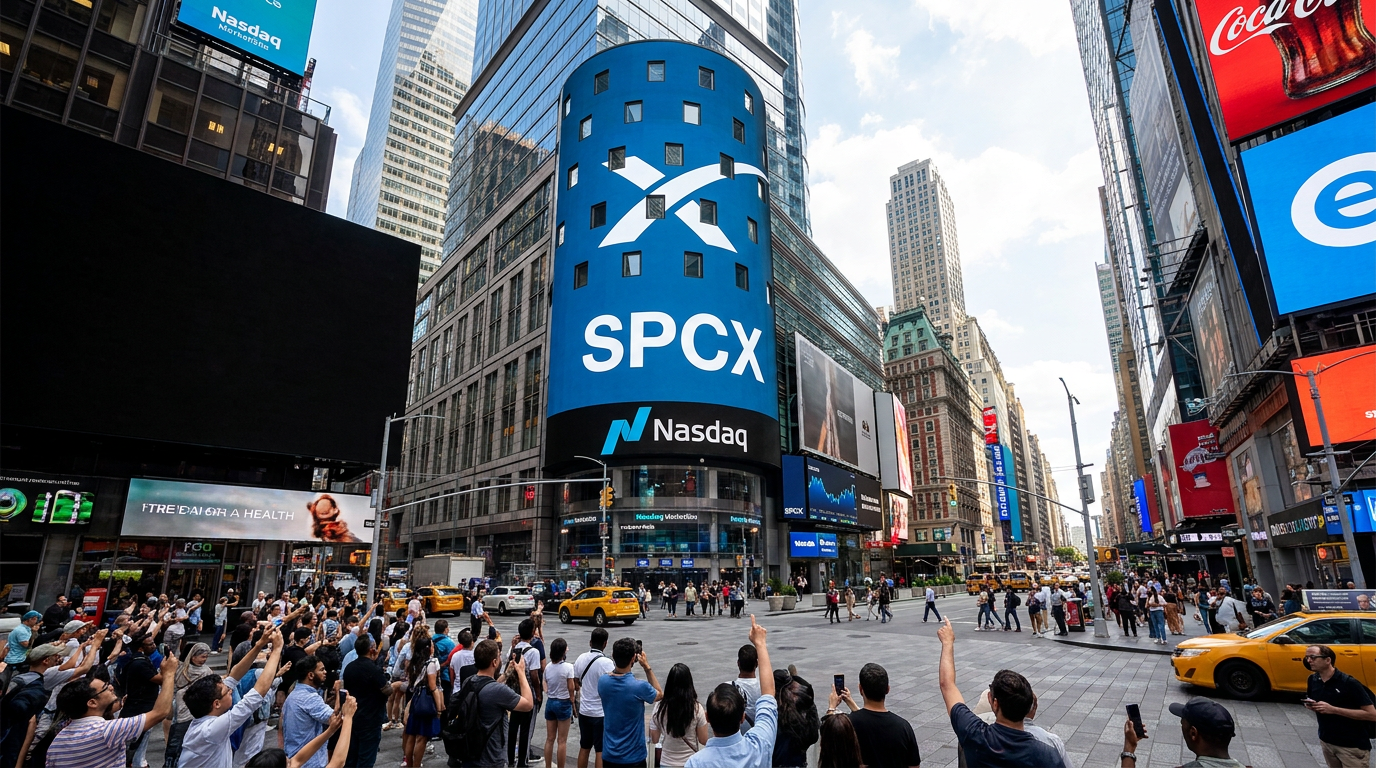
See all 14 stories →SpaceX IPO
SpaceX Completes Historic $75 Billion IPO, Pushing Elon Musk to Trillionaire Status
0 sources

Space Economy
SpaceX Completes Historic $75 Billion IPO, Reshaping Global Equity Markets
0 sources

Robotics Industry
The Billion-Dollar Race to Commercialize Humanoid Robots
0 sources

Space Economy
SpaceX Completes Historic IPO, Reaching $2 Trillion Market Valuation on First Day of Trading
0 sources

Every angle. Every day.
Get business stories with full source coverage and perspective breakdowns delivered to your inbox.