
The 2026 E-Bike Buying Guide: Decoding Classes, Motors, and Battery Math
As electric bicycles transition from novelty to primary transportation, understanding the technical differences between motor types, battery capacities, and legal classifications is essential for buyers.
By Factlen Editorial Team
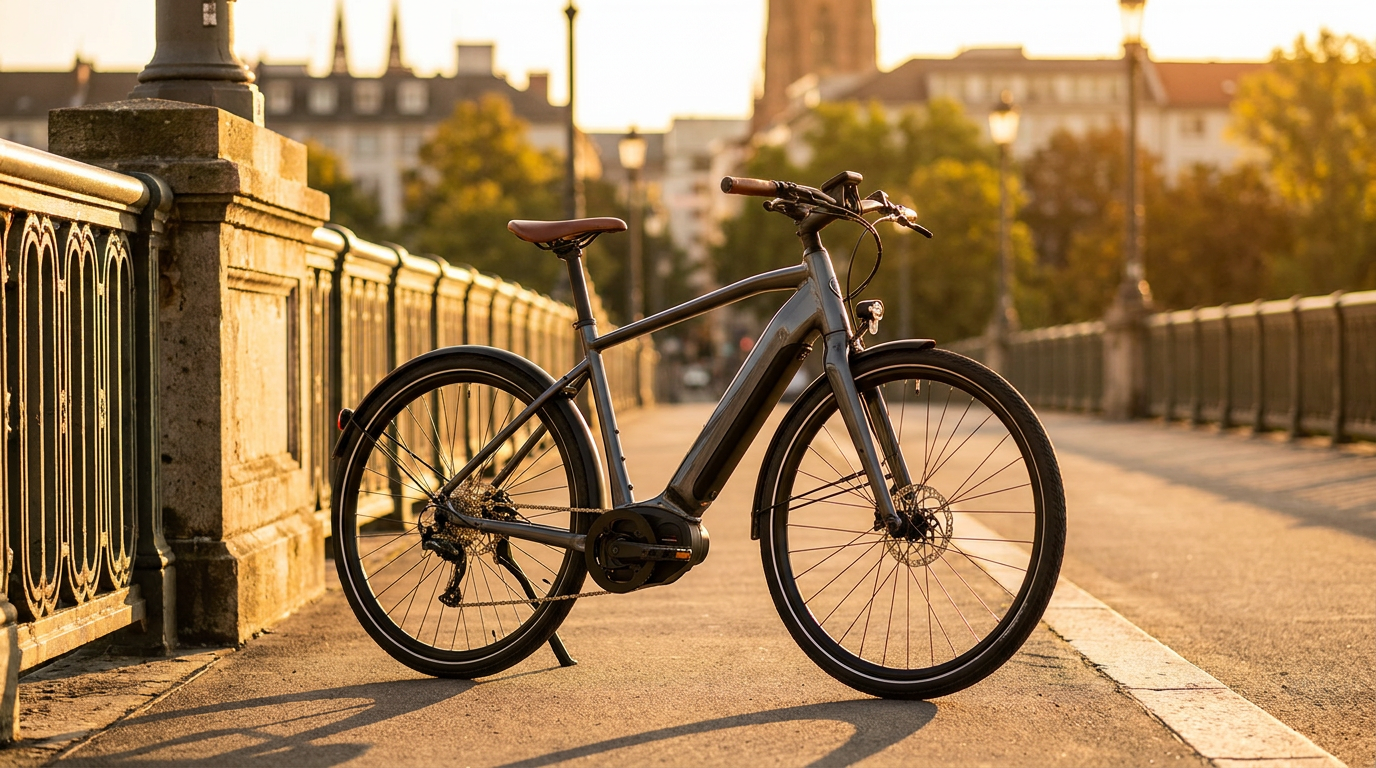
- Urban Commuters
- Prioritize high speeds, integrated lighting, and low-maintenance setups for daily city travel.
- Recreational Trail Riders
- Value the natural pedal feel of torque sensors and the climbing efficiency of mid-drive motors.
- Cargo and Utility Riders
- Rely on throttle capabilities and massive battery capacities to move heavy loads efficiently.
What's not represented
- · Traditional cyclists concerned about trail erosion
- · Pedestrians navigating shared paths with high-speed e-bikes
Why this matters
Purchasing an e-bike is a significant investment that can transform your daily commute and fitness routine. Understanding the underlying technology ensures you buy a machine capable of handling your specific terrain and range requirements without overpaying.
Key points
- E-bikes are categorized into three legal classes that dictate top speed and whether a throttle is permitted.
- Class 1 and 2 e-bikes assist up to 20 mph, while Class 3 models can reach speeds of 28 mph.
- Mid-drive motors offer superior hill-climbing and a natural ride feel, while hub motors are simpler and more budget-friendly.
- Battery capacity should always be compared using watt-hours (Wh) to accurately gauge potential range.
- A standard urban commuter e-bike typically requires a battery capacity between 400Wh and 500Wh.
In 2026, the electric bicycle has fully transitioned from a niche recreational novelty to a primary mode of transportation. With urban infrastructure adapting and battery technology maturing, more consumers are looking to replace car trips with pedal-assisted rides. However, walking into a bike shop or browsing online can feel like stepping into an electrical engineering seminar.[3][8]
Buyers are immediately bombarded with technical jargon—watt-hours, torque sensors, mid-drives, and legal classifications. Without a clear understanding of these terms, it is easy to overspend on unnecessary features or, conversely, buy a bike that lacks the power for a hilly commute. This guide demystifies the core components of modern e-bikes to help riders make an informed, confident purchase.[4][8]
The most fundamental decision a buyer must make is choosing the correct legal classification. In the United States, e-bikes are divided into a three-class system that dictates how the motor engages and how fast it is legally allowed to assist the rider. This is not a marketing gimmick; it is a legal framework that determines where the bike can be ridden safely and legally.[6]
Class 1 e-bikes are widely considered the most universally accepted and beginner-friendly. The motor only provides assistance when the rider is actively pedaling, and that assistance cuts off entirely once the bike reaches 20 miles per hour. Because they closely mimic the natural feel of a traditional bicycle, Class 1 models are generally permitted on shared-use paths, rail trails, and mountain bike singletracks.[1][6]
Class 2 e-bikes introduce a throttle mechanism. Like Class 1, the motor assistance stops at 20 mph, but the rider can propel the bike forward without pedaling at all. This feature is particularly useful for starting from a dead stop at traffic lights, carrying heavy cargo, or providing a break for riders with limited mobility. However, because of the throttle, some municipal trails and mountain bike parks restrict Class 2 access.[1][6]
Class 3 e-bikes are built for speed and efficient commuting. They are pedal-assist only, but the motor continues to provide power up to 28 mph. This higher top speed makes them ideal for riders sharing the road with vehicular traffic, allowing them to keep pace with city flow. Because of their speed, they are frequently disqualified from multi-use pedestrian paths and often carry age restrictions.[1][6]

Once the class is decided, the next major architectural choice is the motor type. The two dominant designs in 2026 are hub-drive and mid-drive motors, and they offer vastly different riding experiences, maintenance requirements, and price points.[5]
Once the class is decided, the next major architectural choice is the motor type.
Hub motors are housed inside the center of the front or rear wheel. They represent the older, simpler, and more cost-effective technology in the e-bike world. When the motor engages, it directly spins the wheel, creating a sensation that the bike is being pushed or pulled along. Because they operate independently of the bike's chain and gears, they are relatively low-maintenance and highly budget-friendly.[2][5]
However, hub motors come with distinct mechanical drawbacks. They can make the bike feel rear-heavy, affecting balance and handling on tight turns. More importantly, because they do not leverage the bike's mechanical gearing, they can struggle, bog down, and even overheat on steep, sustained climbs, especially when carrying heavy loads or heavier riders.[2][5]
Mid-drive motors, by contrast, are positioned directly between the pedals at the bike's bottom bracket. This central placement keeps the center of gravity low and perfectly centered, resulting in a balanced, highly stable ride feel that closely mimics the handling of a premium traditional bicycle.[2][5]

The defining advantage of a mid-drive motor is its direct integration with the bike's drivetrain. When the rider shifts gears to tackle a steep hill, the motor benefits from that exact same mechanical advantage. This synergy makes mid-drives vastly superior for climbing and significantly more energy-efficient, translating to a longer range per charge. The trade-off is a higher upfront cost and increased wear and tear on the chain and cassette.[2][5]
The way a motor decides to deliver its power is governed by its internal sensors. Budget-friendly e-bikes typically use cadence sensors, which act like a simple on/off switch: if the pedals are turning, the motor delivers a fixed amount of power. Premium models, particularly mid-drives, use sophisticated torque sensors that measure exactly how hard the rider is pushing. The motor then amplifies that specific effort, resulting in a smooth, intuitive power delivery that feels like having bionic legs.[3][5]
Powering all of this advanced technology is the battery, and evaluating battery capacity is where many buyers make mathematical errors. While manufacturers often advertise voltage (V) or amp-hours (Ah) prominently, the only reliable metric for comparing total energy capacity across different brands is watt-hours (Wh).[7]
Watt-hours represent the total size of the e-bike's "fuel tank." It is calculated simply by multiplying the battery's voltage by its amp-hours. For example, a 48V, 10Ah battery has a capacity of 480Wh. A higher watt-hour rating directly translates to a longer potential range and more consistent power delivery, especially when riding uphill or into a headwind.[7]

In 2026, standard urban commuter bikes typically feature batteries in the 400Wh to 500Wh range, which is sufficient for 20 to 40 miles of mixed riding. For longer commutes, heavy cargo hauling, or full-day mountain biking excursions, experts strongly recommend batteries of 600Wh to 750Wh, or even dual-battery systems exceeding 1000Wh to eliminate range anxiety entirely.[4][7]
Ultimately, choosing the right e-bike requires matching the machine's specifications to the rider's daily reality. A rider in a flat city looking for a budget-friendly grocery getter will be perfectly served by a Class 2 hub-drive bike. Conversely, a commuter facing steep suburban hills will find the investment in a Class 1 or Class 3 mid-drive model with a high-capacity battery to be essential for a joyful, sweat-free ride.[3][8]
How we got here
1990s
Early e-bikes feature heavy lead-acid batteries and basic hub motors, severely limiting their practical range and consumer appeal.
2010s
Lithium-ion battery technology becomes affordable and widespread, sparking a global surge in e-bike adoption and lighter frame designs.
2015
The three-class legal framework is introduced in California, setting the regulatory standard for e-bike classifications across the United States.
2026
E-bikes mature into highly specialized categories, with mid-drive motors and high-capacity batteries becoming the standard for daily commuters.
Viewpoints in depth
The Urban Commuter's View
Focusing on speed, reliability, and integration for daily city transit.
For riders replacing a car commute, the e-bike is a utility vehicle. This camp heavily favors Class 3 e-bikes that can sustain 28 mph, allowing them to safely take the lane and keep pace with urban traffic. They prioritize low-maintenance components like internal gear hubs and belt drives over traditional chains. Range anxiety is a primary concern, so they advocate for batteries exceeding 600Wh to ensure they can complete round trips on maximum assist without needing to charge at the office.
The Trail Rider's View
Prioritizing natural ride feel, balance, and trail access.
Off-road and recreational riders view the e-bike as an extension of traditional cycling rather than a moped. This group almost exclusively advocates for Class 1 mid-drive systems. Because mid-drives keep the weight centered and low, the bike handles predictably over rocks and roots. Furthermore, they insist on sophisticated torque sensors that respond instantly to pedal pressure, providing traction control on loose dirt. They are also acutely aware of trail access politics, noting that Class 2 throttles are frequently banned on singletrack networks.
The Utility and Cargo View
Maximizing torque and ease of use for hauling heavy loads.
Riders transporting children, groceries, or delivery goods have entirely different requirements. This camp values the Class 2 throttle above all else, as getting a 100-pound cargo bike moving from a dead stop using only pedal power can be unstable and dangerous. They prioritize raw motor torque and massive, often dual-battery setups to handle the immense energy drain of moving heavy weight. For this group, the slight rear-heavy feel of a hub motor is a non-issue compared to the sheer utility it provides.
What we don't know
- How future municipal regulations might further restrict or expand trail access for Class 2 and Class 3 e-bikes.
- Whether solid-state battery technology will become commercially viable for e-bikes in the near future, potentially doubling range.
Key terms
- Watt-hour (Wh)
- A measurement of total battery capacity, calculated by multiplying voltage by amp-hours, which acts as the 'fuel tank' size for an e-bike.
- Mid-drive motor
- An electric motor positioned at the bike's pedals that drives the chain, leveraging the bike's gears for highly efficient climbing.
- Hub motor
- An electric motor housed directly in the center of the front or rear wheel, providing direct propulsion independent of the bike's gears.
- Torque sensor
- A sophisticated sensor that measures exactly how hard the rider is pedaling and delivers motor power proportionally, creating a smooth, natural ride feel.
- Cadence sensor
- A basic sensor that detects whether the pedals are turning, delivering a fixed amount of motor power regardless of the rider's physical effort.
Frequently asked
Do I need a license or insurance to ride an e-bike?
In most US states, Class 1, 2, and 3 e-bikes do not require a license, registration, or insurance, as they are legally treated as bicycles. However, local age restrictions and helmet laws often apply, particularly for Class 3 models.
How long do e-bike batteries last before needing replacement?
Most high-quality lithium-ion e-bike batteries are rated for 500 to 1,000 full charge cycles. For the average rider, this translates to roughly 3 to 5 years of regular use before noticeable capacity degradation occurs.
Can I ride an electric bike in the rain?
Yes, modern e-bikes are highly water-resistant and designed to withstand rain and puddles. However, they are not completely waterproof, so they should never be fully submerged or cleaned with a high-pressure power washer.
What happens if the battery dies while I am riding?
The motor will stop providing assistance, but the e-bike will function exactly like a traditional, albeit heavier, bicycle. You can still pedal and shift gears normally to reach your destination.
Sources
Source coverage
8 outlets
3 viewpoints surfaced








[1]AventonCargo and Utility Riders
Finding Your Ebike Class: Class 1 vs Class 2 vs Class 3
Read on Aventon →[2]Bosch eBike SystemsRecreational Trail Riders
Hub-Drive vs. Mid-Drive eBikes: What to Know Before Buying
Read on Bosch eBike Systems →[3]BikelineUrban Commuters
E-Bike Buying Guide for Beginners (2026 Edition)
Read on Bikeline →[4]Electric Bike AdvisorUrban Commuters
The Beginner's E-Bike Buying Guide (2026 Edition)
Read on Electric Bike Advisor →[5]TenwaysCargo and Utility Riders
Mid-Drive vs Hub Motor: Which is Better?
Read on Tenways →[6]GoGravaRecreational Trail Riders
Class 1 vs Class 2 vs Class 3 E-Bikes: What They Mean and Where You Can Ride
Read on GoGrava →[7]GyroorCargo and Utility Riders
Introduction to E-Bike Battery Capacity
Read on Gyroor →[8]Factlen Editorial TeamUrban Commuters
Synthesis by Factlen editorial team
Read on Factlen Editorial Team →

More in shopping
See all 25 stories →Home Appliances
Heat Pump Dryers: The 2026 Buying Guide and Explainer
0 sources
Display Tech
OLED vs. Mini-LED in 2026: The Ultimate Home Theater Trade-Off Analysis
0 sources

TV Tech
OLED vs. Mini-LED: Choosing the Right Premium TV in 2026
0 sources

Home Electrification
The 2026 Guide to Buying a Heat Pump: Ratings, Rebates, and Avoiding Costly Mistakes
0 sources
Every angle. Every day.
Get shopping stories with full source coverage and perspective breakdowns delivered to your inbox.