
Local vs. Cloud Smart Home Hubs: Which Architecture Wins in 2026?
As smart homes become more complex, the divide between local processing hubs and cloud-reliant systems is widening. We compare the privacy, speed, and reliability of both approaches to help you choose the right foundation for your home.
By Factlen Editorial Team
- Privacy-First Tinkerers
- Advocates who believe smart home data should never leave the local network.
- Plug-and-Play Consumers
- Users who prioritize frictionless setup and advanced conversational AI.
- Hybrid Pragmatists
- Tech enthusiasts who blend local reliability with cloud convenience.
What's not represented
- · Smart home device manufacturers
- · Cybersecurity researchers focused on IoT vulnerabilities
Why this matters
Choosing the right smart home architecture dictates whether your lights turn on instantly during an internet outage and whether your daily routines are stored on remote corporate servers. A local hub keeps your data private and your home functional offline, while cloud systems offer unmatched plug-and-play simplicity.
Key points
- Local hubs process data on-device, ensuring total privacy and offline reliability.
- Cloud systems offer easier setup and seamless voice assistant integration.
- Edge AI is bringing advanced automation directly into local hubs in 2026.
- The Matter standard is making it easier to mix and match devices across both architectures.
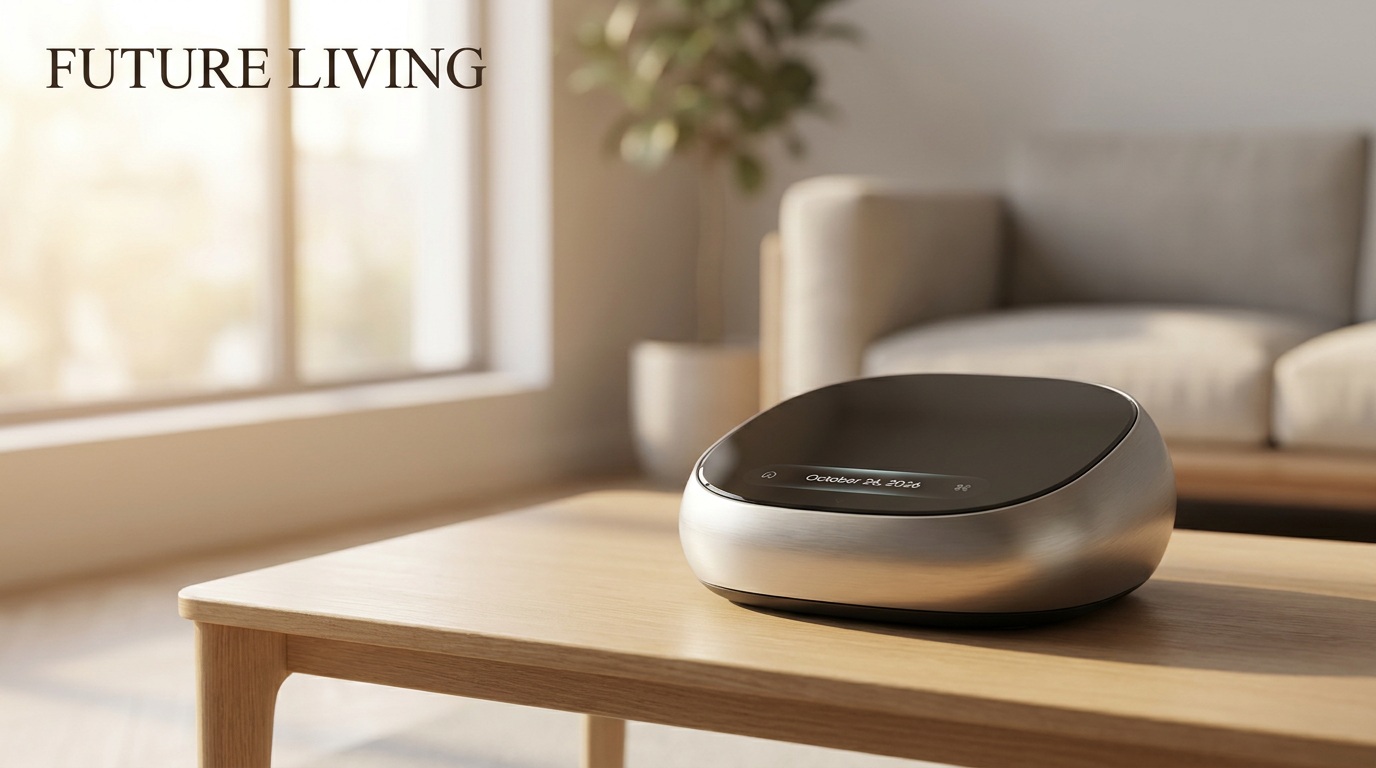
The smart home landscape in 2026 has matured far beyond the novelty of voice-controlled lightbulbs. As consumers integrate dozens of sensors, cameras, and automated routines into their daily lives, a fundamental architectural debate has emerged: should your home’s digital brain live in the cloud, or locally on a dedicated hub? This decision dictates everything from how fast your lights turn on to what happens to your personal data.[5][7]
For years, the industry default was cloud computing. Devices from Amazon, Google, and Samsung’s SmartThings primarily routed commands through remote servers. You would speak a command, the audio would travel to a data center hundreds of miles away, an algorithm would process the request, and a signal would bounce back to your living room to trigger a smart plug.[1][5]
However, a growing segment of power users and privacy advocates are championing the edge computing model. Local hubs like Home Assistant, Hubitat Elevation, and Homey Pro process automations entirely within the home network. By keeping data on-site, these systems are fundamentally changing the expectations for smart home performance and security.[3][4]
Analyzing the case for local hubs reveals significant advantages in speed and reliability. Because commands do not need to make a round trip to a remote server, latency is slashed to near-instantaneous levels. In human-computer interaction, any delay over 200 milliseconds begins to feel sluggish; local processing ensures that motion sensors and light switches react without that frustrating lag.[2][5]

Furthermore, the evidence for local hubs strongly supports enhanced privacy and offline resilience. Devices process data locally, meaning sensitive information like voice transcripts and security camera feeds never leave the house. If the internet connection drops, a local smart home continues to function perfectly, executing complex automations and security routines without missing a beat.[1][2]
The case against local hubs centers primarily on the learning curve and upfront investment. While devices like the Home Assistant Green have made local control more accessible, configuring a local network still requires more technical patience than plugging in a mainstream smart speaker. Users must also purchase dedicated hardware, which typically costs between $150 and $200, rather than relying on an inexpensive smart display.[4][6]
The case against local hubs centers primarily on the learning curve and upfront investment.
Conversely, the case for cloud-based ecosystems is built on unmatched simplicity and out-of-the-box functionality. Platforms like Google Home and Amazon Alexa offer zero-configuration setups that appeal to the mass market. Users simply plug the device in, connect it to Wi-Fi, and immediately gain access to advanced, cloud-powered voice assistants capable of answering complex queries.[3][4]
The evidence supporting cloud hubs also highlights their seamless integration with third-party web services and massive computing power. Cloud servers can leverage vast resources to run sophisticated generative AI models that are currently difficult to replicate on low-power local hardware. For users who prioritize conversational AI over instant light-switch response times, the cloud remains highly attractive.[3][5]
However, the case against cloud hubs points to their inherent vulnerabilities. The most glaring issue is internet dependency; a network outage renders most cloud-based automations useless. Additionally, users must accept that their daily routines, home occupancy patterns, and voice requests are logged on corporate servers, which raises ongoing privacy concerns for families.[1][5]

The introduction of the Matter standard and Thread networking protocols in recent years has begun to blur these lines. Matter allows devices from different manufacturers to communicate locally, reducing the friction between competing ecosystems. This means a user can theoretically enjoy the local communication benefits of Matter while still using a cloud-based interface for voice control.[1][3]
Despite these advancements, choosing an architecture requires acknowledging distinct trade-offs. A local hub fits well when a homeowner prioritizes absolute privacy, demands lightning-fast response times, and wants a system that survives internet outages. It is the ideal choice for users willing to invest a little time upfront to build a resilient, self-contained ecosystem.[1][4][7]
A local hub does not fit well when the user wants a completely hands-off, plug-and-play experience, or when they rely heavily on conversational AI to manage their calendar and answer general knowledge questions. For those users, the maintenance and setup of a local system may feel like an unnecessary chore.[4][6][7]

On the other hand, a cloud-based ecosystem fits well when the primary goal is convenience. It is perfect for renters, beginners, or anyone who wants to control a few smart plugs and a thermostat with their voice without thinking about network topology or device drivers.[4][6][7]
A cloud system does not fit well when the home is equipped with dozens of critical automations, such as security alarms or complex lighting scenes, that must trigger instantly and reliably. It is also a poor fit for households that are uncomfortable with the idea of corporate servers acting as the middleman for their most private domestic activities. Ultimately, there is no single winner; the best foundation depends entirely on whether you value frictionless setup over total ownership of your digital home.[1][2][7]
How we got here
2014–2018
Cloud-dependent smart speakers like Amazon Echo and Google Home popularize the modern smart home.
2022
The Matter standard is officially released, promising better local interoperability between competing brands.
2024
Home Assistant launches 'Green' plug-and-play hardware, significantly lowering the barrier to entry for local control.
2026
Edge AI and local Large Language Models (LLMs) become viable, allowing advanced voice control without cloud servers.
Viewpoints in depth
Privacy-First Tinkerers
Advocates who believe smart home data should never leave the local network.
This camp argues that the convenience of cloud computing is not worth the privacy trade-off. They point out that sending daily routines, voice transcripts, and occupancy data to remote servers creates unnecessary vulnerabilities. By utilizing Edge AI and local hubs, they prioritize systems that offer 100% data retention and function flawlessly during internet outages, even if it requires a steeper initial learning curve.
Plug-and-Play Consumers
Users who prioritize frictionless setup and advanced conversational AI.
For this group, the smart home is about ultimate convenience. They argue that the vast majority of consumers do not want to manage YAML files, troubleshoot network protocols, or maintain dedicated hardware. They favor cloud-based ecosystems because these platforms offer instant setup, seamless integration with third-party web services, and access to massive server-side computing power that drives highly capable voice assistants.
Hybrid Pragmatists
Tech enthusiasts who blend local reliability with cloud convenience.
This perspective seeks the best of both worlds. Hybrid adopters use local hubs like Hubitat or Home Assistant to manage critical infrastructure—such as security sensors and complex lighting automations—ensuring these systems remain fast and functional offline. However, they still bridge these local networks to cloud services like Alexa or Google Assistant to maintain the convenience of casual voice control in the kitchen or living room.
What we don't know
- How quickly major cloud providers will shift more processing to the edge to compete with local hubs.
- Whether local LLM voice assistants will eventually match the conversational fluidity of cloud-based AI.
Key terms
- Edge Processing
- Data analysis that happens locally on the device rather than on a remote server.
- Matter
- A universal smart home standard that allows devices from different brands to work together seamlessly.
- Thread
- A low-power, wireless mesh networking protocol designed specifically for smart home devices.
- Local LLM
- A large language model that runs entirely on your own hardware, providing AI capabilities without sending data to the internet.
- Latency
- The delay between issuing a command and the smart home device executing the action.
Frequently asked
Do local smart hubs work when the internet is down?
Yes. Because the processing happens on the device itself, your automations, lights, and sensors will continue to function normally without an internet connection.
Is Home Assistant hard to set up?
Historically, yes, but new dedicated hardware like Home Assistant Green has made it much closer to a plug-and-play experience, though it still requires more tinkering than a Google Home.
Can I use voice control with a local hub?
Yes. Local hubs now support on-device voice assistants and local LLMs, though you can also bridge them to cloud assistants like Alexa or Siri if you prefer.
What is the Matter standard?
Matter is a universal smart home protocol that allows devices from different brands to communicate with each other locally, regardless of which hub you use.
Sources
Source coverage
7 outlets
3 viewpoints surfaced






[1]TechByDevanshPrivacy-First Tinkerers
The Future of the Smart Home Hub Without Cloud Dependency
Read on TechByDevansh →[2]BetterSmarterHomePrivacy-First Tinkerers
Edge AI Revolution: How Local Processing is Transforming Smart Home Privacy
Read on BetterSmarterHome →[3]6MonthsLaterPlug-and-Play Consumers
Smart Home Guide 2026: What to Buy & Platform Updates
Read on 6MonthsLater →[4]EverydayHomeComfortPlug-and-Play Consumers
Best Home Automation Hub in 2026
Read on EverydayHomeComfort →[5]MediumHybrid Pragmatists
Local AI and the Cloud-Free Smart Home
Read on Medium →[6]r/HomeAssistantPrivacy-First Tinkerers
Decided to switch to Home Assistant. Advice moving from SmartThings V3?
Read on r/HomeAssistant →[7]Factlen Editorial TeamHybrid Pragmatists
Synthesis by Factlen editorial team
Read on Factlen Editorial Team →

More in shopping
See all 25 stories →Home Appliances
Heat Pump Dryers: The 2026 Buying Guide and Explainer
0 sources
Display Tech
OLED vs. Mini-LED in 2026: The Ultimate Home Theater Trade-Off Analysis
0 sources

TV Tech
OLED vs. Mini-LED: Choosing the Right Premium TV in 2026
0 sources

Home Electrification
The 2026 Guide to Buying a Heat Pump: Ratings, Rebates, and Avoiding Costly Mistakes
0 sources
Every angle. Every day.
Get shopping stories with full source coverage and perspective breakdowns delivered to your inbox.