
How the World's Major Religions Are Uniting to Drive Global Climate Action
From solar-powered mosques to zero-waste ashrams, a global movement known as eco-theology is transforming places of worship into hubs of sustainability. By framing climate change as a profound moral crisis, faith leaders are mobilizing billions to protect the planet.
By Factlen Editorial Team
- Eco-Theologians & Clergy
- Viewing the climate crisis as a fundamental moral and spiritual failing rather than just a scientific problem.
- Grassroots Faith Activists
- Translating lofty theological concepts into concrete, community-level environmental action.
- Institutional Pragmatists
- Balancing ecological ideals with the economic realities of funding massive religious and social networks.
- Secular Climate Advocates
- Valuing religious networks primarily for their unparalleled capacity for mass mobilization and behavioral change.
What's not represented
- · Indigenous communities whose traditional practices are sometimes co-opted or overshadowed by major institutional religions
- · Fossil fuel workers in developing nations who rely on the industries that eco-theology seeks to dismantle
Why this matters
With over 80 percent of the global population identifying with a religion, faith communities possess an unparalleled capacity for mass mobilization. By translating environmental science into the language of moral duty, eco-theology is reaching demographics that secular climate campaigns often miss, driving tangible behavioral change at the grassroots level.
Key points
- Major world religions are increasingly framing climate change as a moral and spiritual crisis.
- Pope Francis's 2015 encyclical Laudato Si' catalyzed global Catholic climate action and popularized 'integral ecology.'
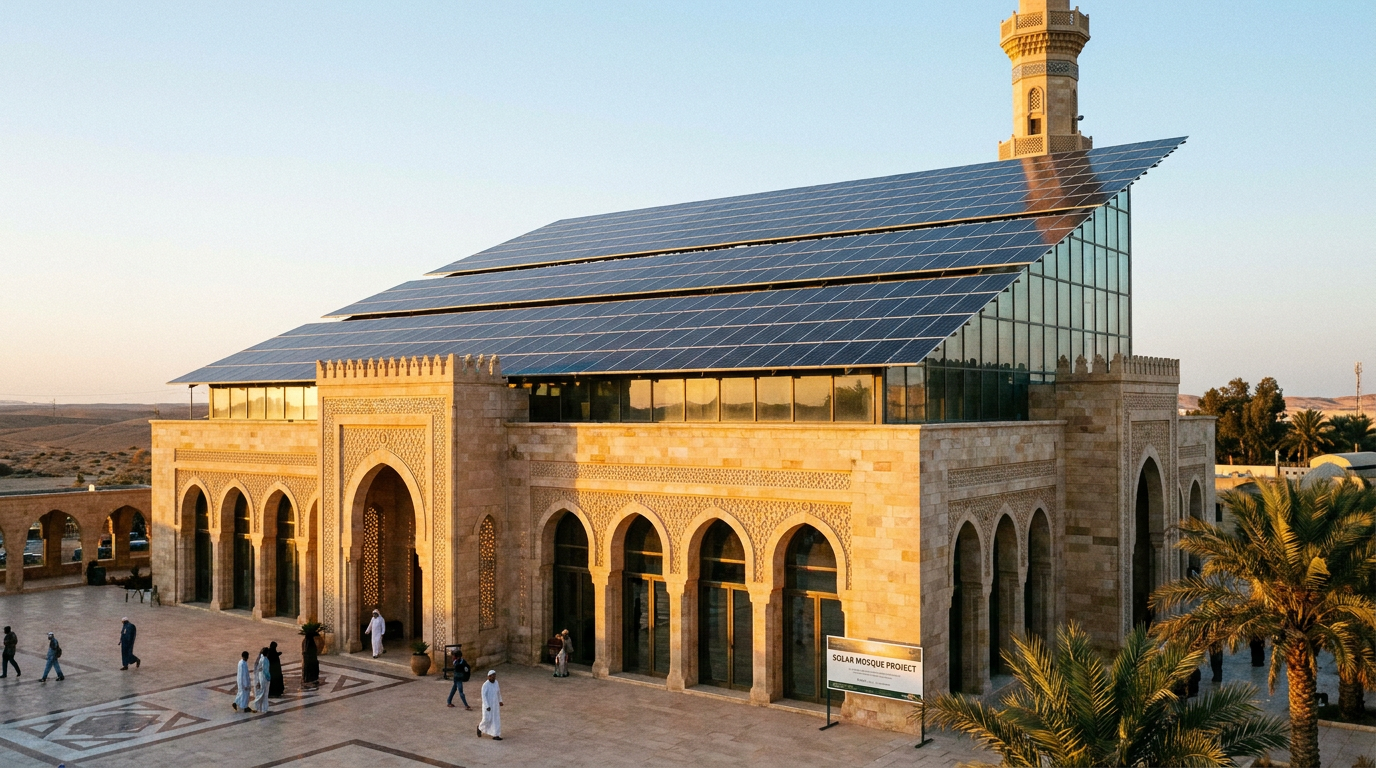
- The 'Green Mosques' movement is retrofitting thousands of Islamic places of worship with solar power and water recycling.
- Hindu eco-theology utilizes concepts like ahiṃsā (non-violence) to promote sustainable living and combat overconsumption.
- Interfaith coalitions are combining theological principles with Indigenous conservation practices to protect vulnerable ecosystems.
For decades, the fight against climate change has been framed in the secular language of parts-per-million, carbon taxes, and international treaties. Yet, as the ecological crisis deepens, environmentalism is finding a potent new engine in the world's oldest institutions. Across the globe, major religions are undergoing a profound "green" awakening, reinterpreting ancient scriptures to address modern planetary boundaries. This movement, broadly known as eco-theology, is transforming places of worship into hubs of sustainability and reframing climate action not merely as a political necessity, but as a sacred moral duty.[1][8]
The sheer arithmetic of this shift is staggering. With an estimated 80 to 85 percent of the global population identifying with a religious community, faith leaders possess an unparalleled capacity for mass mobilization. By translating the abstract science of environmental degradation into the intimate language of sin, stewardship, and spiritual harmony, these communities are reaching demographics that secular climate campaigns often miss. From solar-powered mosques in North Africa to zero-waste Hindu ashrams and Catholic divestment campaigns, the integration of faith and ecology is moving from the academic fringes to the theological mainstream.[1][2][3][5]
At the heart of this transformation is eco-theology—a discipline that integrates modern scientific perspectives on the natural world with traditional theological concepts. Rather than viewing human beings as rulers entitled to exploit the Earth, eco-theologians emphasize humanity's role as caretakers. This paradigm shift challenges the dominant culture of consumerism and unchecked industrialization, arguing that the ecological crisis is fundamentally a crisis of values. By rooting environmental protection in divine mandate, eco-theology offers a transformative pathway that challenges secular, anthropocentric views of nature.[6][8]
In the Christian tradition, this movement was radically accelerated by Pope Francis's 2015 encyclical, Laudato Si' (Praise Be to You). Subtitled "On Care for Our Common Home," the landmark document provided the Catholic Church's 1.3 billion followers—and the broader world—with a comprehensive ethical lens for viewing biodiversity loss and pollution. The encyclical popularized the concept of "integral ecology," asserting that the destruction of ecosystems and the suffering of marginalized human populations are inextricably linked. In the Pope's framing, the cry of the earth and the cry of the poor are one and the same.[2][7]

The impact of Laudato Si' has rippled outward into tangible grassroots action. The Vatican's Laudato Si' Action Platform now encompasses thousands of institutions, driving ecological stewardship projects worldwide. In Kenya and the Philippines, Franciscan communities are spearheading tree-planting initiatives, sustainable farming education, and advocacy for Indigenous rights. Meanwhile, the World Council of Churches, representing 580 million Christians, has increasingly focused on climate justice, even exploring legal strategies to hold fossil fuel financiers accountable for environmental damage.[2][7]
Parallel to the Christian ecological awakening is the rapid rise of "Green Islam." Islamic eco-theology centers on the concept of khalīfah, which designates humans as stewards or caretakers of the Earth, and the principle that the faith is a mercy to all creation. In this view, protecting the environment is an act of worship. This theological foundation is manifesting in physical infrastructure through the "Green Mosques" movement, which seeks to reduce the heavy energy and water consumption typical of daily prayer routines.[3][4]
Morocco has been a pioneer in this space, launching a government-backed initiative to retrofit its 15,000 state-owned mosques with solar panels, LED lighting, and solar water heaters. The effort began with the iconic 900-year-old Koutoubia Mosque in Marrakech, which now generates 100 percent of its electricity from a sleek array of solar panels installed near its ancient minaret. Beyond the hardware, the Moroccan program includes training for imams and female clerics to deliver Friday sermons focused on environmental stewardship, drawing directly from Quranic verses.[3][4]
Indonesia, home to the world's largest Muslim population, is pushing the boundaries of Green Islam even further. In Jakarta, the massive Istiqlal Mosque became the first place of worship globally to receive environmental certification from the International Finance Corporation, boasting smart energy meters, solar panels, and extensive water recycling systems. The country has also launched the "Eco-Pesantren" program, integrating environmental science into the curricula of its vast network of influential Islamic boarding schools.[3][4]

Indonesia, home to the world's largest Muslim population, is pushing the boundaries of Green Islam even further.
At the local level, Indonesian innovation is striking. In the city of Garut, West Java, a local institute is constructing twin eco-mosques using walls made entirely from 12 tons of recycled plastic and 24 tons of rice husks. The project is part of a broader community effort to adopt a "zero waste" lifestyle, directly addressing the nation's severe waste management crisis while cultivating a new generation of religiously motivated peace and change makers.[4]
In the Dharmic traditions, Hinduism offers a profound, ancient vocabulary for ecological preservation. Hindu philosophy does not view nature merely as a resource, but as Prakriti—a sacred manifestation of the divine. The ecological worldview of Hinduism is anchored in principles like ṛta (cosmic order), ahiṃsā (non-violence), and aparigraha (non-possessiveness). These concepts encourage a life of balance, self-restraint, and deep respect for the interconnected web of all living things.[5]
Hindu eco-theologians are increasingly drawing on ancient scriptures to address modern crises. The metaphor of "cutting down the tree to get the fruit," found in traditional texts, is now widely cited as a warning against the shortsighted greed driving deforestation and fossil fuel consumption. By re-envisioning epics like the Ramayana and the Vedas through an ecological lens, Hindu scholars are providing a moral framework that links personal spiritual practice—such as yoga and meditation—with grassroots climate action and sustainable living.[5]
The true power of eco-theology, however, emerges when these distinct traditions collaborate. In regions highly vulnerable to climate change, interfaith ecological ethics are taking root. In Indonesia, researchers have documented how the synergy between Islamic, Christian, Hindu, and Buddhist eco-theologies is being combined with local Indigenous wisdom. Conservation practices like Subak (traditional Balinese water management) and Sasi (a Moluccan practice of resource prohibition) are being elevated as models of sustainable governance, enriched by the moral backing of multiple faiths.[6]

This interfaith solidarity is increasingly visible on the global stage. Initiatives like the Interfaith Rainforest Initiative and the Green Pilgrimage Network bring together religious leaders, scientists, and conservationists to protect tropical forests and promote eco-friendly travel to sacred sites. By sharing resources and mobilizing their respective congregations for events like Earth Day, these coalitions are challenging the dominant paradigms of materialism and offering alternative visions of well-being based on simplicity and spiritual harmony.[1]
Despite this momentum, the integration of faith and environmentalism is not without friction. The transition from spiritual ideal to institutional reality often involves complex compromises. For instance, while Indonesian Islamic organizations like Nahdlatul Ulama and Muhammadiyah champion environmental protection, they recently faced controversy after accepting coal mining concessions from the government. The decision, justified as a means of financial empowerment for their massive social and educational networks, highlights the difficult tension between economic development and ecological purity.[4]
Furthermore, within many congregations, climate change remains a sensitive topic. Surveys indicate that while a vast majority of religious leaders privately acknowledge human-caused climate change, a significant portion rarely mention it from the pulpit, fearing political polarization among their followers. Overcoming this reticence requires framing environmental action not as a partisan political issue, but as an undeniable tenet of faith—a return to the core teachings of stewardship and compassion.[2]

Ultimately, the rise of eco-theology signals a critical evolution in the global climate movement. Science can diagnose the physical degradation of the planet, and policy can mandate emissions targets, but neither can easily change the human heart. By framing the ecological crisis as a profound spiritual disconnect, the world's religions are providing the moral vocabulary necessary for deep, lasting behavioral change. In the quest to save our common home, faith communities are proving that the most sustainable solutions may be rooted in our oldest beliefs.[6][8]
How we got here
1225
St. Francis of Assisi composes The Canticle of the Creatures, a foundational text for Christian ecological thought.
2015
Pope Francis releases the encyclical Laudato Si', catalyzing global Catholic climate action.
2016
Morocco launches a government-backed initiative to retrofit 15,000 state-owned mosques with solar power.
2022
Indonesia's Istiqlal Mosque becomes the world's first place of worship to receive IFC green certification.
2024
Major Indonesian Islamic organizations accept coal mining concessions, sparking debate over institutional environmentalism.
Viewpoints in depth
Eco-Theologians & Clergy
Viewing the climate crisis as a fundamental moral and spiritual failing rather than just a scientific problem.
This camp argues that centuries of interpreting religious texts through an anthropocentric lens has led to the exploitation of the Earth. By returning to core concepts like khalīfah (stewardship) in Islam, integral ecology in Christianity, and ṛta (cosmic order) in Hinduism, they assert that protecting the environment is an act of worship. They believe that true sustainability requires a profound shift in human values, which science alone cannot achieve.
Grassroots Faith Activists
Translating lofty theological concepts into concrete, community-level environmental action.
For these activists, faith must be demonstrated through practice. They are the driving force behind the "Green Mosques" movement, the Laudato Si' Action Platform, and zero-waste ashrams. They focus on retrofitting places of worship with solar panels, teaching sustainable farming, and organizing interfaith tree-planting drives. Their evidence of success lies in the millions of congregants who are changing their daily habits due to religiously motivated environmental education.
Institutional Pragmatists
Navigating the tension between ecological ideals and the financial needs of massive religious organizations.
Leaders of large religious institutions often face a difficult balancing act. While they support the principles of eco-theology, they also manage vast networks of schools, hospitals, and charities that require substantial funding. This pragmatism was highlighted when major Indonesian Islamic organizations accepted coal mining concessions to fund their social programs. This camp argues that without economic empowerment, religious institutions cannot effectively serve their poorest and most vulnerable members, even if it means temporary compromises on environmental goals.
What we don't know
- Whether the grassroots momentum of eco-theology can successfully influence national climate policies in heavily religious, fossil-fuel-dependent nations.
- How religious institutions will reconcile their massive financial portfolios with the growing internal pressure to divest entirely from fossil fuels.
Key terms
- Eco-Theology
- The integration of environmental science with traditional theological concepts, framing ecological protection as a spiritual duty.
- Integral Ecology
- A concept asserting that environmental degradation and social injustice are inextricably linked, popularized by Pope Francis.
- Khalīfah
- An Islamic concept designating humans as stewards or caretakers of the Earth, responsible for its well-being.
- Ahiṃsā
- The Hindu, Buddhist, and Jain principle of non-violence and deep respect for all living beings.
- Eco-Pesantren
- Islamic boarding schools in Indonesia that have integrated environmental science and sustainability practices into their religious curricula.
- Subak
- A traditional Balinese cooperative water management system that reflects Hindu ecological and spiritual principles.
Frequently asked
What is eco-theology?
Eco-theology is a movement that integrates environmental science with traditional religious concepts, framing the protection of the Earth as a sacred moral duty rather than just a secular policy goal.
What is the Green Mosque movement?
It is an initiative to retrofit Islamic places of worship with renewable energy, water recycling, and energy-efficient lighting. It is prominently active in countries like Morocco, Jordan, and Indonesia.
How does Hinduism approach climate change?
Hindu eco-theology relies on ancient principles like ṛta (cosmic order) and ahiṃsā (non-violence), viewing nature as a sacred manifestation of the divine and warning against the greed of overconsumption.
What is 'integral ecology'?
Popularized by Pope Francis in his 2015 encyclical Laudato Si', integral ecology is the concept that environmental degradation and social injustice are deeply interconnected, meaning we cannot solve one without addressing the other.
Sources
Source coverage
8 outlets
4 viewpoints surfaced








[1]Earth.orgInstitutional Pragmatists
How Faith Communities Can Drive Climate Action
Read on Earth.org →[2]Covering Climate NowSecular Climate Advocates
When Climate Action Meets Christian Faith
Read on Covering Climate Now →[3]The WorldGrassroots Faith Activists
Muslim environmentalists give their religion — and their mosques — a fresh coat of green
Read on The World →[4]IUMS OnlineGrassroots Faith Activists
Indonesia Leads “Green Islam”: Eco-Friendly Mosques and Religious Initiatives to Combat Climate Change
Read on IUMS Online →[5]The AcademicEco-Theologians & Clergy
Hindu Ecological Philosophy and Climate Ethics
Read on The Academic →[6]Asian Journal of Media and CultureSecular Climate Advocates
Toward Interfaith Ecological Ethics: Synergizing Religious Eco-Theology and Local Cultural Wisdom for Environmental Governance in Indonesia
Read on Asian Journal of Media and Culture →[7]Franciscans InternationalEco-Theologians & Clergy
Celebrating the Canticle of Creatures and Laudato Si'
Read on Franciscans International →[8]Factlen Editorial TeamEco-Theologians & Clergy
Synthesis by Factlen editorial team
Read on Factlen Editorial Team →

More in culture
See all 8 stories →Mass Timber
The Rise of the 'Plyscraper': How Mass Timber is Rewriting the Rules of High-Rise Construction
0 sources

Workplace Culture
The Right to Disconnect: How Global Ethics Are Redrawing the Boundaries of Work
0 sources

Deep Reading
The Science of Deep Reading: How Literary Fiction Rewires the Brain for Empathy
0 sources

Wildfire Management
How Indigenous Cultural Burning Could Help Solve the Global Wildfire Crisis
0 sources
Every angle. Every day.
Get culture stories with full source coverage and perspective breakdowns delivered to your inbox.