
How Community Land Trusts Are Rewriting the Rules of Homeownership
As traditional homeownership becomes increasingly out of reach, a model that separates the ownership of a house from the land beneath it is rapidly expanding across North America and Europe.
By Factlen Editorial Team
- Community Housing Advocates
- View housing as a fundamental human right and argue that land must be decommodified to prevent displacement.
- Urban Planners & Policymakers
- Value CLTs as a highly efficient use of public subsidies that locks in neighborhood affordability permanently.
- Market-Oriented Skeptics
- Highlight that restricting equity limits generational wealth creation and that the model is too dependent on grants to scale.
What's not represented
- · Commercial real estate developers
- · Market-rate landlords
Why this matters
As the traditional housing market locks out millions of working families, Community Land Trusts offer a proven, permanent alternative to the affordability crisis. Understanding this model empowers communities to reclaim control over their neighborhoods, protect vulnerable residents from displacement, and rethink how generational stability is built.
Key points
- Community Land Trusts (CLTs) lower housing costs by separating the ownership of the house from the land beneath it.
- Homeowners buy the physical structure and lease the land from a non-profit trust on a 99-year renewable agreement.
- A restricted resale formula allows sellers to build some equity while ensuring the home remains affordable for the next buyer.
- During the 2008 financial crisis, CLT homeowners experienced significantly lower foreclosure rates due to active trust stewardship.
- The model is expanding rapidly, with rental units now making up 44% of the U.S. shared-equity housing portfolio.
- CLTs are governed democratically by boards consisting of residents, community members, and public interest experts.
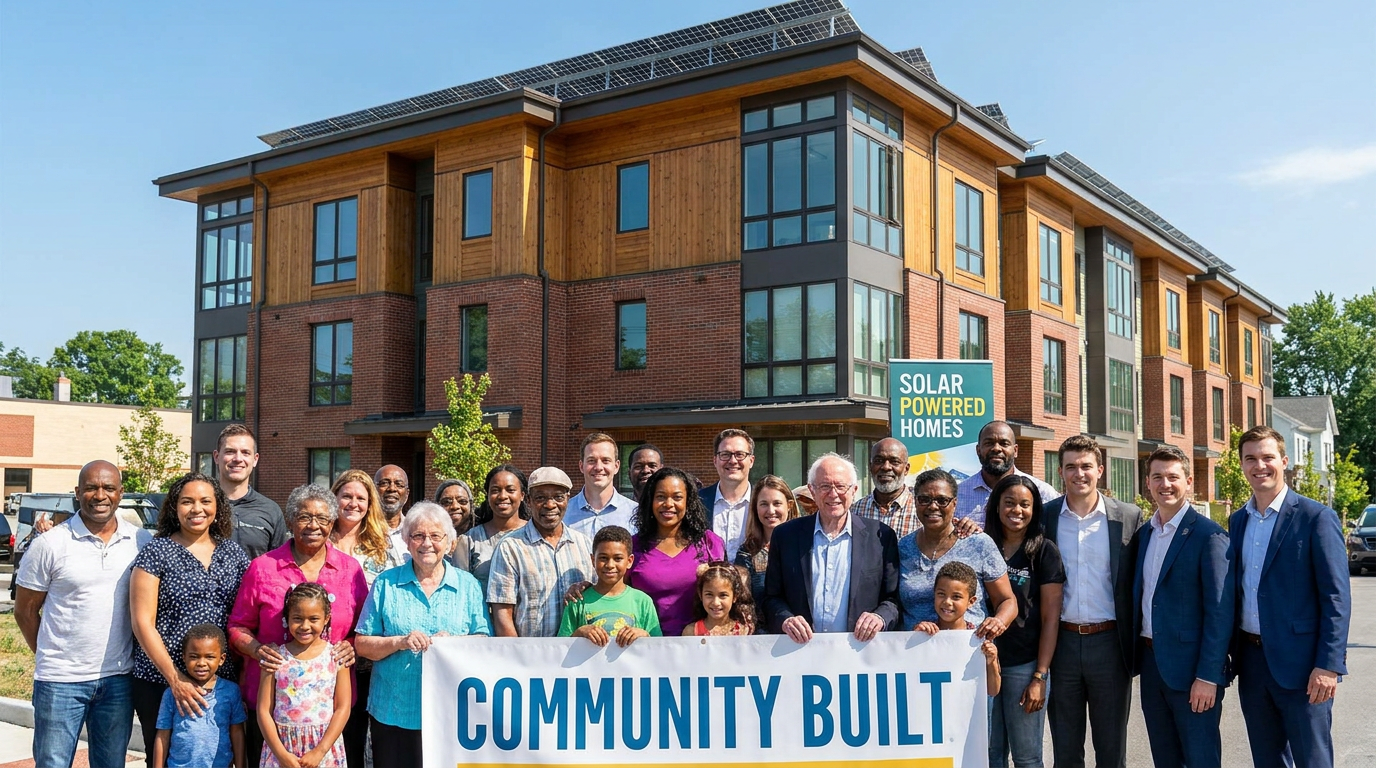
The dream of homeownership has become mathematically impossible for millions of working families. With median home prices surging and mortgage rates remaining stubborn, the traditional path to building wealth through real estate is increasingly walled off. Yet, in neighborhoods across North America and Europe, a quiet revolution is redefining how communities own and steward property. It is called the Community Land Trust (CLT), and it relies on a deceptively simple premise: separate the ownership of the house from the ownership of the land beneath it.[1][6]
By removing the cost of the land from the transaction, CLTs drastically lower the barrier to entry for prospective buyers. A non-profit organization—the trust itself—acquires the land and holds it in perpetuity for the benefit of the community. When a family buys a home in a CLT, they purchase only the physical structure. They then lease the land from the trust through a long-term, renewable agreement, typically lasting 99 years.[4]
This separation of land and structure fundamentally changes the economics of housing. In a traditional real estate market, the bulk of a property's appreciating value comes from the land, driven by speculation and neighborhood development. By taking the land out of the speculative market, CLTs ensure that the housing built upon it remains insulated from the wild price swings of gentrification.[1][4]
The mechanism that guarantees this long-term stability is the "resale formula." When a CLT homeowner decides to move, they cannot sell the house for whatever the open market will bear. Instead, their ground lease dictates a restricted resale price. The formula allows the seller to recoup their initial investment and a modest, fixed percentage of the home's appreciation. The rest of the equity remains with the property, ensuring that the home is just as affordable for the next low-to-moderate-income buyer as it was for the first.[1][3]

"With CLTs, long-term affordability is ingrained in the DNA of the model," notes recent coverage of the movement's expansion. Traditional affordable housing programs often rely on subsidies given to private developers, which typically expire after 15 to 30 years. Once those covenants lapse, the units revert to market rates, displacing residents and forcing municipalities to start from scratch. A Community Land Trust, by contrast, locks in affordability forever.[1][6]
The model also provides an unprecedented safety net for its residents. Because the trust retains ownership of the land, it has a vested interest in the success of the homeowner. CLTs actively monitor their properties and step in at the first sign of financial distress. During the 2008 foreclosure crisis, homeowners on CLT land experienced significantly lower rates of delinquency and foreclosure than those in the traditional market, largely because the trusts provided financial counseling and direct intervention to keep families in their homes.[1][4]
Governance is another pillar of the CLT framework. These trusts are not faceless corporations; they are deeply democratic institutions. The classic CLT is governed by a tripartite board of directors: one-third are residents who live on CLT land, one-third are members of the surrounding community, and one-third are public interest representatives, such as local officials or housing experts. This structure ensures that development decisions are driven by the people who actually live in the neighborhood, rather than distant investors.[1][4]
These trusts are not faceless corporations; they are deeply democratic institutions.
While the CLT model was born in the rural American South during the 1960s civil rights movement—originally designed to help Black farmers secure land—it has rapidly evolved to meet the modern urban housing crisis. Today, the Grounded Solutions Network estimates that CLTs and shared-equity programs house nearly 44,000 families in the United States alone.[2][3]
And the model is no longer limited to single-family homeownership. A major shift is underway toward collective and rental housing. Recent census data reveals that rental units now account for 44 percent of all homes stewarded by shared-equity programs in the U.S. As traditional homeownership remains out of reach for the lowest-income earners, CLTs are stepping in to purchase and preserve existing apartment buildings, protecting vulnerable renters from sudden eviction or massive rent hikes.[3]

Internationally, the model is scaling even faster by merging with other cooperative structures. In Canada, a staggering 59 percent of CLT units are now cooperative housing. This hybrid approach marries the permanent land affordability of the CLT with the collective resident management of a co-op. In British Columbia, the regional land trust has expanded to include 34 co-ops with 2,800 units, with hundreds more currently in the development pipeline.[2]
Across the Atlantic, the European Community Land Trust Network reports that CLTs are delivering over 30,000 homes. In cities like Brussels, CLT homes are being sold at an average of 40 percent below market value. European trusts are also pioneering ways to tie affordable housing to climate goals. Through initiatives like the Upcycling Trust project, CLTs are acquiring older, energy-inefficient buildings and performing deep, circular renovations. Because the land is held in trust, the public funds spent on green retrofits generate permanent social value, rather than simply inflating the property's resale price for a private landlord.[5]
Despite these successes, the CLT movement faces formidable structural challenges. The most pressing is the acquisition of land. In hyper-expensive urban markets, non-profit trusts cannot compete with deep-pocketed commercial developers at auction. To get off the ground, CLTs almost universally rely on municipal land donations, philanthropic grants, or heavy government subsidies. As housing advocates note, CLTs often struggle with the Catch-22 of needing to prove their model to secure financing, yet lacking the initial financing to prove themselves.[6]

Furthermore, the very mechanism that makes CLTs work—the restricted resale formula—is the source of its most persistent critique. Skeptics point out that while CLTs provide stable shelter, they intentionally limit the amount of wealth a family can build. In a society where real estate is the primary engine of generational wealth, capping a homeowner's equity growth means they may never accumulate the capital needed to transition into the open market or pass down substantial financial assets to their children.[1][6]
Defenders of the model argue that this critique misses the point. For the families moving into CLT homes, the alternative is not a lucrative market-rate mortgage; the alternative is perpetual, unstable renting. By decommodifying the land, CLTs offer a stepping stone. A 2021 study by the Lincoln Institute found that 60 percent of people who sold their CLT homes were subsequently able to purchase a market-rate home, using the modest equity they had built as a down payment.[1][4]
Ultimately, the rise of Community Land Trusts represents a profound philosophical shift in how society views a neighborhood. It challenges the entrenched idea that housing is primarily a financial asset meant to be traded for maximum profit. By treating land as a shared community resource, CLTs are proving that it is possible to build vibrant, stable neighborhoods where affordability is not a fleeting phase, but a permanent promise.[4][6]
How we got here
1969
The first Community Land Trust, New Communities Inc., is founded in Georgia by civil rights leaders to secure land for Black farmers.
1980s
The CLT model adapts to urban environments, focusing on preserving affordable housing in gentrifying city neighborhoods.
2008
During the global financial crisis, CLT homeowners experience significantly lower foreclosure rates than market-rate buyers due to trust stewardship.
2022
National census data reveals a major shift, with rental units growing to account for 44 percent of all shared-equity homes in the U.S.
2026
European and Canadian CLT networks report rapid expansion, integrating cooperative housing models and energy-efficient retrofits into the trust framework.
Viewpoints in depth
Community Housing Advocates
Viewing housing as a fundamental right rather than a speculative commodity.
For community organizers and housing advocates, the CLT model is a vital defense against gentrification and displacement. They argue that the speculative real estate market inherently preys on low-income neighborhoods, driving up rents and pushing out long-term residents. By taking land out of the market entirely, CLTs transfer power back to the people who actually live in the community. Advocates emphasize that the tripartite board structure ensures democratic control, making the neighborhood resilient against outside corporate developers.
Urban Planners & Policymakers
Focusing on the long-term efficiency of public housing subsidies.
Municipal leaders and urban planners increasingly favor CLTs because they solve the "expiring subsidy" problem. Traditional affordable housing programs give tax breaks to private developers in exchange for 15 to 30 years of affordable rents. When those agreements expire, the public loses its investment. Planners argue that subsidizing a CLT is a one-time investment that guarantees permanent affordability. Furthermore, the active stewardship of CLTs drastically reduces foreclosure rates, stabilizing the local tax base and reducing the burden on municipal social services.
Market-Oriented Skeptics
Highlighting the limitations on wealth creation and the challenges of scaling.
Critics from traditional real estate and finance backgrounds argue that while CLTs provide stable shelter, they fail to deliver the primary benefit of American homeownership: generational wealth. By artificially capping the resale value of the home, residents are excluded from the equity windfalls that middle-class families use to fund retirements or college tuitions. Additionally, skeptics point out that CLTs are notoriously difficult to scale. Because they cannot outbid commercial developers for prime urban land, they remain heavily dependent on philanthropic grants and government land donations, limiting their overall impact on the broader housing shortage.
What we don't know
- Whether federal housing policy will shift to prioritize funding for community-owned land models over traditional private developer subsidies.
- How effectively CLTs can scale in hyper-expensive coastal cities where the initial cost of land acquisition is prohibitively high.
- The long-term impact of the shift toward CLT rental units on the model's original goal of fostering individual homeownership.
Key terms
- Community Land Trust (CLT)
- A non-profit, community-based organization that acquires and holds land in perpetuity to ensure housing remains permanently affordable.
- Ground Lease
- A long-term, renewable agreement (typically 99 years) where a homeowner leases the land beneath their house from the trust.
- Resale Formula
- A contractual rule that limits how much a CLT home can be sold for, balancing the seller's equity growth with future affordability.
- Shared Equity
- A housing model where the financial benefits of property appreciation are split between the homeowner and the community organization.
Frequently asked
Do I actually own the house in a Community Land Trust?
Yes. You own the physical structure and hold a deed to the house, but you lease the land underneath it from the non-profit trust.
Can I pass a CLT home down to my children?
Yes. The 99-year ground lease is renewable and can be inherited by your heirs, allowing the home to stay in your family across generations.
Do I make a profit when I sell a CLT home?
Yes, but the profit is capped. You receive your paid-off principal plus a restricted percentage of the home's appreciation, keeping the price affordable for the next buyer.
Who makes the decisions for a Community Land Trust?
CLTs are typically governed by a tripartite board made up equally of CLT residents, members of the surrounding community, and public interest experts.
Sources
Source coverage
6 outlets
3 viewpoints surfaced






[1]TimeUrban Planners & Policymakers
How Community Land Trusts Can Help Solve the Housing Crisis
Read on Time →[2]ShelterforceCommunity Housing Advocates
How CLTs are Powering Co-op Growth in Canada: Lessons for the U.S.
Read on Shelterforce →[3]Grounded Solutions NetworkCommunity Housing Advocates
New National Study Explores Community Land Trusts as Rental Preservation Tool
Read on Grounded Solutions Network →[4]Lincoln Institute of Land PolicyUrban Planners & Policymakers
Community Land Trusts: Affordable Access to Land and Housing
Read on Lincoln Institute of Land Policy →[5]European Environmental BureauCommunity Housing Advocates
Community Land Trusts: A fair energy transition
Read on European Environmental Bureau →[6]Factlen Editorial TeamMarket-Oriented Skeptics
Synthesis by Factlen editorial team
Read on Factlen Editorial Team →

More in community
See all 8 stories →Community Ownership
Community-Owned Pubs Defy Industry Decline as Survival Rates Hit 94%
0 sources

Sharing Economy
How the 'Library of Things' Movement is Rewiring Neighborhoods
0 sources
School Tech Policy
The Evidence Behind the Global Push for Phone-Free Schools
0 sources

Housing Models
How Community Land Trusts Are Rewriting the Rules of Homeownership
0 sources
Every angle. Every day.
Get community stories with full source coverage and perspective breakdowns delivered to your inbox.