
How the 'Library of Things' Movement is Rewiring Neighborhoods
Communities are increasingly pooling resources to share tools, appliances, and gear, saving residents thousands of dollars while cutting carbon emissions.
By Factlen Editorial Team
- Community Organizers
- Advocates focused on the social cohesion and mutual aid generated by shared resources.
- Environmental Advocates
- Proponents focused on the circular economy and the reduction of manufacturing waste.
- Municipal Planners
- Public sector leaders looking to modernize civic infrastructure and expand library services.
What's not represented
- · Big-box hardware retailers who rely on individual consumer purchases.
- · Traditional gig-economy platforms that monetize peer-to-peer rentals.
Why this matters
By shifting from individual ownership to community access, neighborhoods are lowering the financial barrier to home maintenance, reducing environmental waste, and rebuilding local trust.
Key points
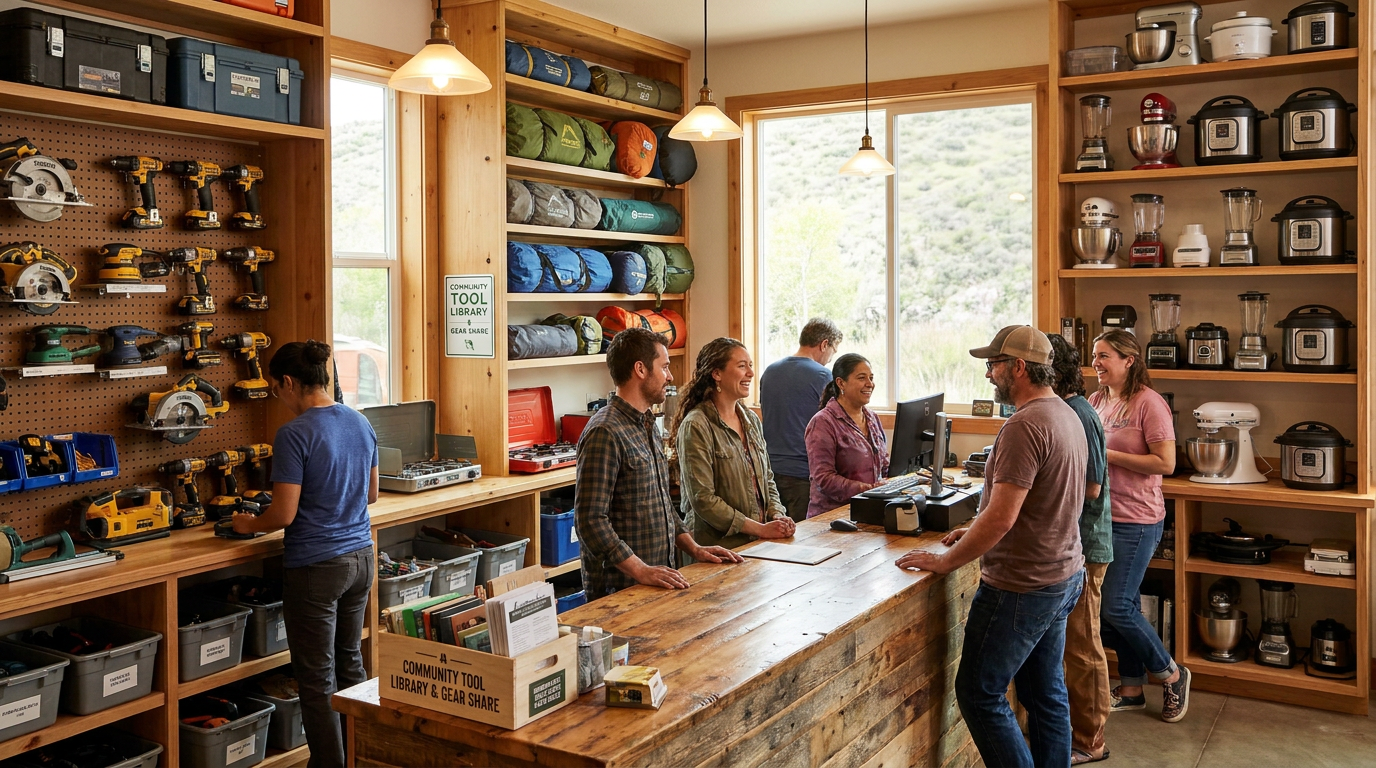
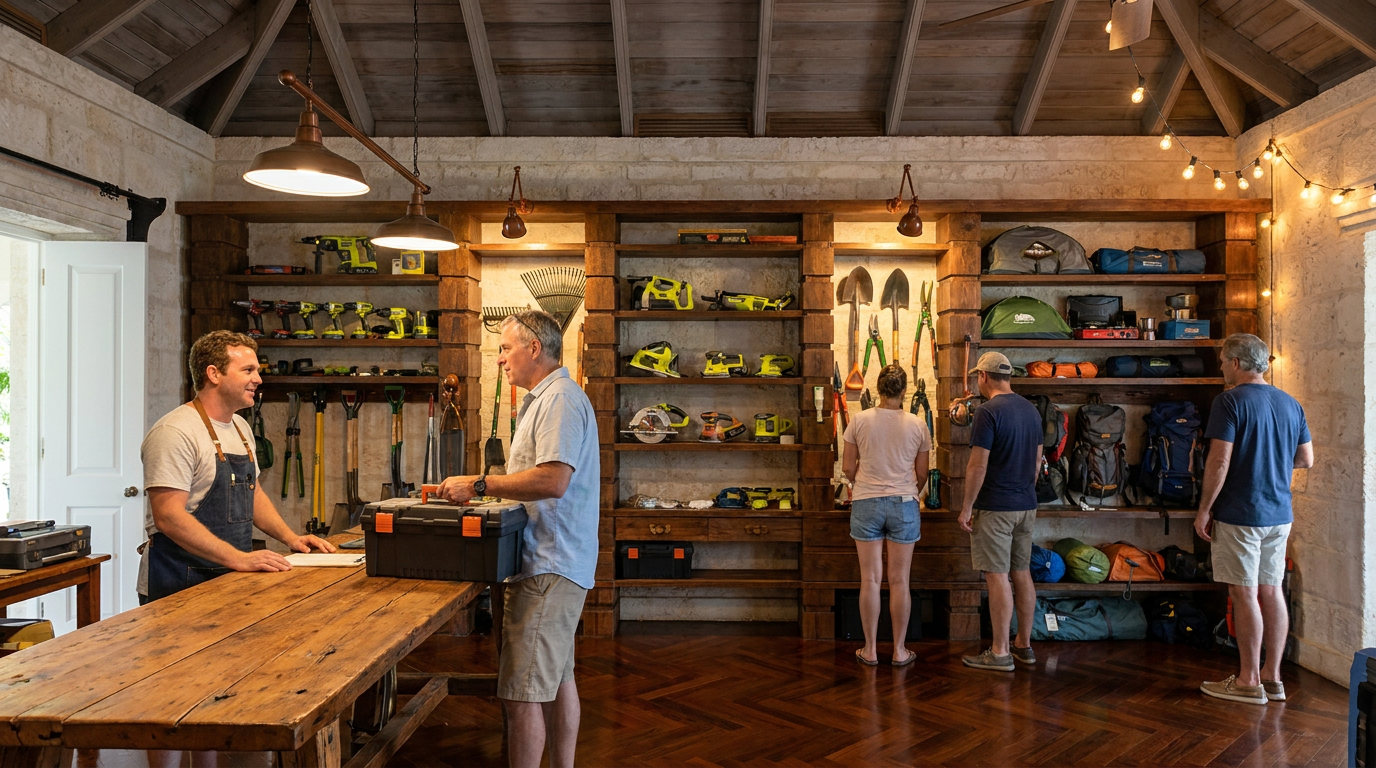
- Libraries of Things (LoTs) allow community members to borrow infrequently used items like tools, camping gear, and appliances.
- Over 2,000 formal LoTs operate globally, helping residents save money and reduce household clutter.
- The model significantly cuts carbon emissions by reducing the need to manufacture new, rarely used goods.
- Many municipal libraries are integrating LoTs into their systems, utilizing 24/7 smart lockers for easy access.
- Beyond lending, these hubs often host repair cafes and workshops, fostering local connections and teaching practical skills.
The modern household is packed with items that spend 99% of their lifespan gathering dust. From pressure washers and carpet cleaners to camping tents and specialized baking pans, the financial and spatial burden of individual ownership is immense.
In response, a quiet but rapidly expanding movement is challenging the necessity of hyper-consumerism. The "Library of Things" (LoT) model—a community-based system that allows people to borrow, share, and collectively steward physical resources—is transforming neighborhoods.[6]
While communal resource sharing is an ancient concept, the modern LoT infrastructure is scaling up. Today, there are over 2,000 formal Libraries of Things operating worldwide, alongside countless informal neighborhood networks.[1]
The mechanism is straightforward but revolutionary. Operating much like a traditional public library, an LoT houses an inventory of durable goods. Members, often paying a sliding-scale annual fee or nothing at all, can check out a power drill or a sewing machine for a week, complete their project, and return it.[1]

Behind the scenes, specialized inventory management platforms have standardized the logistics. Software designed specifically for lending libraries allows local organizers to track thousands of items, manage reservations, and monitor maintenance schedules without needing bespoke IT solutions.[1]
The physical footprint of these libraries is also evolving. While many began in donated sheds or church basements, they are increasingly being integrated into formal municipal library systems as public institutions rethink their role in the 21st century.[4]
To increase accessibility, some library systems are deploying 24/7 self-service smart lockers. A 2025 survey of library technology revealed that 60% of respondents prioritized multiple locker sizes specifically to accommodate the diverse, bulky items found in a Library of Things.[4]
To increase accessibility, some library systems are deploying 24/7 self-service smart lockers.
The financial impact on local communities is striking. By providing affordable access to expensive equipment, LoTs reduce the need for high-interest debt and large, infrequent purchases, particularly for low-income households.[1][5]
A 2025 impact report from a two-year pilot project at the Charlton Kings Library in the UK quantified this benefit: by facilitating the borrowing of just 482 items over a year, the community saved an estimated £53,490 compared to buying those items new.[2]

Beyond household savings, the environmental dividends are a core driver of the movement. Environmental advocates note that LoTs directly reduce the demand to manufacture new goods, which in turn preserves habitat and cuts industrial pollution.[1]
In the Charlton Kings pilot alone, sharing those 482 items avoided approximately 16.74 tonnes of carbon dioxide equivalent (CO2e) emissions, demonstrating how localized sharing economies can yield measurable climate benefits.[2]
Yet, organizers emphasize that the most profound impact is social. Tool libraries and LoTs serve as "third spaces" that foster local connections and reciprocal care, acting as an antidote to the isolation of modern urban life.[5]
Unlike the corporate "sharing economy"—dominated by multi-billion-dollar platforms that monetize peer-to-peer rentals—these community hubs represent a "real sharing economy." They democratize access to resources and allow neighbors to cultivate self-sufficiency together.[3][5]

Many of these hubs also host repair cafes and practical skills workshops. By demystifying the repair process, volunteers teach community members how to fix wobbly chairs, mend clothing, or operate power tools, breaking down barriers for those who may feel intimidated by DIY projects.[3]
Despite the momentum, sustaining a standalone Library of Things is notoriously difficult. They require rent-free space, ongoing funding for tool maintenance, and a massive influx of volunteer labor to keep operations running smoothly.[1]
Burnout is a persistent threat for volunteer-run sheds, prompting the shift toward hybrid models where grant-funded social enterprises or municipal governments absorb the operational overhead and provide paid staff.[1][4]
Ultimately, the Library of Things movement is about more than just borrowing a ladder. It is a structural shift in how communities view abundance, proving that shared access can provide a higher quality of life than isolated ownership.[6]
How we got here
1979
The Berkeley Public Library establishes one of the earliest modern tool lending libraries.
2010s
The concept expands globally, aided by specialized inventory software designed for lending hubs.
2020–2022
Pandemic-era mutual aid networks accelerate interest in hyper-local resource sharing.
2025–2026
Municipal libraries increasingly adopt the model, deploying 24/7 smart lockers to expand access.
Viewpoints in depth
Community Organizers
Advocates focused on the social cohesion and mutual aid generated by shared resources.
For community organizers, the primary value of a Library of Things is not the tools themselves, but the interactions they facilitate. They view these hubs as "third spaces" where neighbors meet, exchange knowledge, and build trust. By sidestepping traditional retail, organizers argue that communities can reclaim their self-sufficiency and provide a safety net for low-income residents who might otherwise be priced out of home repair or creative projects.
Environmental Advocates
Proponents focused on the circular economy and the reduction of manufacturing waste.
Environmental groups champion the movement as a direct counter to hyper-consumerism. They point out that manufacturing, shipping, and eventually disposing of rarely used items carries a massive carbon footprint. By maximizing the utility of a single item—such as a power drill shared among fifty households rather than sitting idle in fifty garages—advocates argue that communities can drastically reduce their greenhouse gas emissions and resource extraction.
Municipal Planners
Public sector leaders looking to modernize civic infrastructure and expand library services.
For municipal planners and librarians, the Library of Things represents the natural evolution of the public library. Recognizing that information access is no longer confined to books, they are integrating physical tools, digital devices, and 24/7 smart lockers into their service models. Planners view this expansion as a way to maintain the library's relevance as a vital community anchor while efficiently delivering high-value services to residents.
What we don't know
- How the long-term funding model for independent tool libraries will stabilize as grant money fluctuates.
- Whether big-box hardware retailers will eventually push back against or attempt to co-opt the municipal tool-lending model.
Key terms
- Library of Things (LoT)
- A community-based system that allows people to borrow, share, and collectively steward physical resources like tools and appliances.
- Circular Economy
- An economic model focused on sharing, leasing, reusing, repairing, and recycling existing materials and products for as long as possible.
- Third Space
- A social environment separate from the two usual social environments of home and the workplace, crucial for community building.
- Real Sharing Economy
- Grassroots, community-focused resource sharing, as opposed to corporate platforms that monetize peer-to-peer rentals.
Frequently asked
What exactly is a Library of Things?
It is a community lending hub where people can borrow infrequently used physical items—like power tools, camping gear, and kitchen appliances—instead of buying them.
How much does it cost to borrow items?
Many are completely free, especially those integrated into public libraries. Independent tool libraries often use a sliding-scale annual membership fee to cover maintenance costs.
What are the most commonly borrowed items?
Popular items include carpet cleaners, pressure washers, power drills, sewing machines, and large tents—items that are expensive to buy and take up significant storage space.
How do these libraries handle broken tools?
Most libraries expect normal wear and tear and rely on volunteer "fixers" or repair cafes to maintain the inventory. Members are generally only held responsible for gross negligence or loss.
Sources
Source coverage
6 outlets
3 viewpoints surfaced





[1]ShareableCommunity Organizers
Library of Things Toolkit
Read on Shareable →[2]Gloucestershire LibrariesMunicipal Planners
Impact Report 2025
Read on Gloucestershire Libraries →[3]Green AmericaEnvironmental Advocates
Tool Libraries Are for Everyone
Read on Green America →[4]D-Tech InternationalMunicipal Planners
The Future of Libraries Survey 2025
Read on D-Tech International →[5]Sierra Service ProjectCommunity Organizers
Tool Libraries and Community Care
Read on Sierra Service Project →[6]Factlen Editorial Team
Synthesis by Factlen editorial team
Read on Factlen Editorial Team →
More in community
See all 8 stories →Community Ownership
Community-Owned Pubs Defy Industry Decline as Survival Rates Hit 94%
0 sources

School Tech Policy
The Evidence Behind the Global Push for Phone-Free Schools
0 sources
Housing Models
How Community Land Trusts Are Rewriting the Rules of Homeownership
0 sources
Urban Greening
Tennis-Court Sized 'Mini-Forests' Are Transforming Concrete Neighborhoods Across the US
0 sources
Every angle. Every day.
Get community stories with full source coverage and perspective breakdowns delivered to your inbox.