
Do Consumer Sleep Trackers Actually Work? The Peer-Reviewed Evidence
Clinical validation studies reveal that popular sleep trackers excel at measuring total sleep duration and heart rate, but struggle to accurately map deep and REM sleep stages.
By Factlen Editorial Team
- Clinical Sleep Specialists
- Medical professionals who value the behavioral trends wearables reveal but warn against using them for diagnosis.
- Quantified Self Advocates
- Data-driven consumers and athletes who rely on wearables for daily performance optimization.
- Device Manufacturers
- The companies building the hardware and algorithms, focusing on continuous, real-world monitoring.
What's not represented
- · People with clinical sleep disorders whose data is misrepresented by consumer algorithms
- · Low-income consumers priced out of premium subscription-based trackers
Why this matters
Millions of consumers spend hundreds of dollars on wearables to optimize their rest. Understanding where these devices are clinically accurate—and where they are simply guessing—prevents sleep anxiety and helps you use the data to actually improve your health.
Key points
- Consumer wearables achieve 85% to 95% accuracy when detecting basic sleep versus wakefulness.
- Devices struggle to accurately classify deep and REM sleep, often miscategorizing stages.
- Wearables systematically overestimate total sleep time by misinterpreting quiet wakefulness as light sleep.
- Premium trackers excel at measuring Heart Rate Variability (HRV) with error rates under 6%.
- Longitudinal trends over weeks are more clinically valuable than single-night sleep scores.
The consumer sleep tracking market has exploded into a multi-billion-dollar industry, with millions of users strapping on Apple Watches, Oura Rings, and Whoop bands before bed. These devices promise to decode the mysteries of our nightly rest, offering granular breakdowns of deep sleep, REM cycles, and recovery metrics. But as the technology has become ubiquitous, a critical question has emerged in the medical community: how much of this data is actually accurate, and how much is algorithmic guesswork?[6]
To answer this, clinical researchers evaluate consumer wearables against polysomnography (PSG). PSG is the undisputed gold standard of sleep medicine. Conducted in a clinical laboratory, it uses electrodes to measure brain waves, eye movements, and muscle tension, providing a definitive map of a patient's sleep architecture.[2][4]
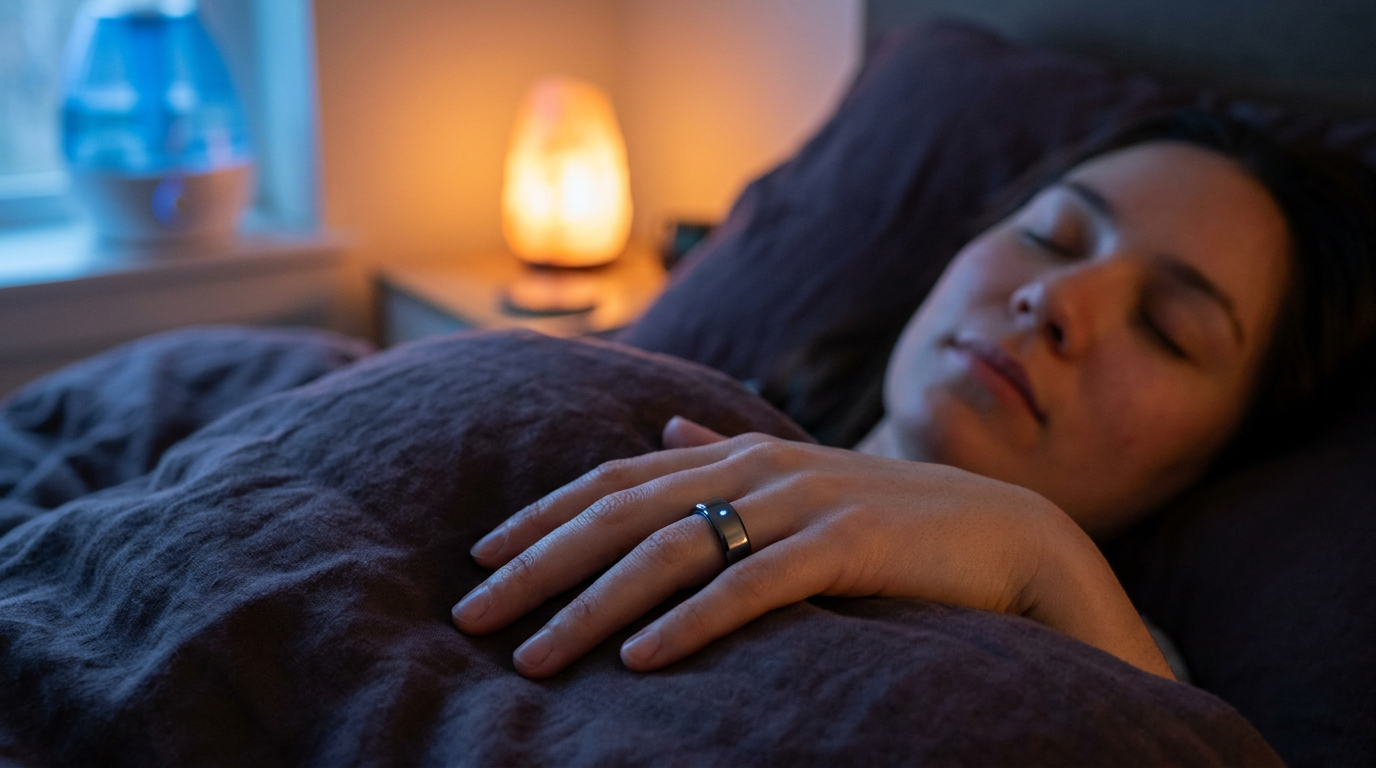
Consumer wearables, by contrast, are entirely blind to brain activity. They rely on a combination of actigraphy—motion tracking via accelerometers—and photoplethysmography (PPG), which uses green and red LEDs to measure changes in blood volume and heart rate. From these peripheral signals, proprietary algorithms attempt to reverse-engineer what the brain is doing.[3][4]
The evidence for basic sleep detection is robust and highly encouraging. When tasked simply with determining whether a user is asleep or awake, modern premium wearables perform exceptionally well. A 2025 meta-analysis published in the Journal of Clinical Sleep Medicine, which aggregated 24 studies and nearly 800 patients, found that wrist-worn and finger-worn trackers achieve 85% to 95% agreement with clinical PSG.[1][4]

However, this high top-line accuracy masks a specific vulnerability known as the "wakefulness detection problem." Wearables are highly sensitive to sleep, but they lack specificity for wakefulness. If a user is lying perfectly still in bed—perhaps dealing with mild insomnia or reading quietly—the device's accelerometer registers no movement, and the algorithm frequently misclassifies this quiet wakefulness as light sleep.[1][3]
Because of this blind spot, peer-reviewed data shows that consumer trackers systematically overestimate total sleep time. Across multiple studies, devices like the Apple Watch and Garmin were found to overestimate sleep duration by an average of 10 to 15 minutes per night, while underreporting the number of brief awakenings that naturally occur.[1][4]
The most heavily marketed feature of modern wearables is their ability to divide your night into light, deep, and REM sleep. Here, the clinical evidence is significantly weaker. When researchers evaluate four-stage classification, the accuracy of consumer devices drops precipitously, ranging from 50% to roughly 79% depending on the device and the study.[2][4]
Deep sleep is particularly difficult for wearables to pin down. During deep sleep, heart rate and breathing stabilize, but these physiological markers can look remarkably similar to light sleep from the perspective of a wrist sensor. A comprehensive head-to-head study published in Sensors revealed that devices frequently miscategorize deep sleep as light sleep, leading to artificially low deep-sleep scores that can unnecessarily alarm users.[4]

Deep sleep is particularly difficult for wearables to pin down.
REM sleep, characterized by elevated heart rate variability and muscle paralysis, is slightly easier for PPG sensors to detect, but still falls short of clinical precision. The consensus among sleep scientists is that while wearables can identify broad shifts in sleep architecture, their nightly stage-by-stage percentages should be viewed as estimates rather than medical facts.[2][3]
When tested simultaneously against PSG, different devices reveal distinct strengths. The Oura Ring Generation 3 and Whoop 4.0 consistently lead the pack in measuring Heart Rate Variability (HRV) and resting heart rate. Validation studies show these devices achieve error rates of less than 6% for HRV, making their cardiovascular recovery metrics highly reliable.[2][4]
The Apple Watch, meanwhile, excels in different areas. In controlled lab settings, Apple's algorithms proved superior at detecting awake time and brief sleep interruptions. However, the Apple Watch struggled more with deep sleep accuracy compared to the Oura Ring, which currently boasts some of the strongest peer-reviewed validation for four-stage sleep classification among consumer devices.[2][4]
Form factor also plays a crucial role in data quality. A 2025 systematic review noted that smart rings often achieve better longitudinal adherence than smartwatches. Users find rings more comfortable for side-sleeping and less obtrusive, which leads to fewer nights of missing data. Furthermore, the blood vessels in the finger are closer to the surface than those in the wrist, occasionally providing a cleaner PPG signal.[5][6]

Can a smartwatch diagnose a sleep disorder? The clinical evidence says no. A 2025 study in Scientific Reports evaluated wearables in a university sleep lab using patients with existing sleep conditions. In this clinical population, the all-stage classification accuracy for premium trackers plummeted to roughly 53%.[5]
These devices are calibrated using data from healthy individuals. When introduced to the erratic heart rates and movement patterns of sleep apnea or restless leg syndrome, the algorithms break down. Therefore, consumer trackers cannot replace a doctor's diagnosis, though they can serve as an early warning system that prompts a user to seek a clinical evaluation.[5][6]
The psychological impact of daily sleep tracking is also drawing scrutiny from the medical community. Researchers have documented a rising phenomenon termed "orthosomnia"—an unhealthy, anxiety-driven obsession with achieving perfect sleep scores.[3][6]
Studies indicate that users who obsessively check their sleep scores every morning often experience increased pre-sleep anxiety. The pressure to perform well for the tracker ironically increases sleep-onset latency, making it harder to fall asleep. Sleep specialists now recommend reviewing weekly trends rather than fixating on single-night scores to mitigate this anxiety.[3][6]

Ultimately, the true power of consumer sleep trackers lies in their ability to capture longitudinal data. A clinical PSG provides a highly accurate, but highly artificial, snapshot of a single night in a strange bed covered in wires. A wearable, despite its staging inaccuracies, monitors you in your natural environment for months or years.[1][6]
This long-term data is invaluable for behavioral modification. It clearly illustrates how a late-night glass of wine suppresses HRV, or how a consistent bedtime lowers resting heart rate. The peer-reviewed consensus is clear: use your wearable as a behavioral compass to track long-term trends, but do not treat its nightly sleep-stage percentages as gospel truth.[1][6]
Viewpoints in depth
Clinical Sleep Specialists
Medical professionals who value the behavioral trends wearables reveal but warn against using them for diagnosis.
Sleep physicians emphasize that polysomnography remains the only valid tool for diagnosing disorders like sleep apnea or insomnia. They frequently encounter patients suffering from 'orthosomnia'—anxiety induced by poor wearable sleep scores. While clinicians appreciate that trackers encourage patients to prioritize sleep and maintain consistent bedtimes, they caution that the algorithms' inability to accurately map deep and REM sleep can lead to unnecessary medical panic over perfectly normal nights of rest.
Quantified Self Advocates
Data-driven consumers and athletes who rely on wearables for daily performance optimization.
For athletes and biohackers, the absolute accuracy of a single sleep stage is less important than the directional accuracy of recovery metrics. This camp relies heavily on Heart Rate Variability (HRV) and resting heart rate—metrics where premium wearables boast exceptionally low error rates. By tracking these cardiovascular baselines, they can accurately gauge central nervous system fatigue, adjust their training loads, and measure the direct impact of lifestyle choices like alcohol consumption or late meals on their physical recovery.
Device Manufacturers
The companies building the hardware and algorithms, focusing on continuous, real-world monitoring.
Companies like Oura, Whoop, and Apple argue that comparing a wearable to a single night in a clinical sleep lab misses the point of the technology. They highlight that polysomnography is an artificial, highly disruptive environment that often results in the 'first-night effect,' where a patient sleeps poorly simply because they are covered in wires. Manufacturers contend that capturing months or years of continuous data in a user's natural environment provides a more holistic and actionable picture of sleep health than a single, perfectly accurate clinical snapshot.
What we don't know
- How upcoming AI-driven algorithms will improve sleep stage classification without requiring new hardware.
- Whether long-term reliance on sleep trackers definitively improves or harms population-level sleep quality.
- How accurately these devices perform across diverse skin tones, as optical sensors can vary in efficacy.
Key terms
- Polysomnography (PSG)
- The clinical gold standard for sleep testing, conducted in a lab using sensors to monitor brain waves, blood oxygen, heart rate, and breathing.
- Photoplethysmography (PPG)
- An optical technology used in wearables that shines light into the skin to measure changes in blood volume and calculate heart rate.
- Actigraphy
- The continuous measurement of physical activity and movement using a wearable accelerometer, used to estimate when a person is awake or asleep.
- Heart Rate Variability (HRV)
- The measure of the variation in time between each heartbeat, used as a key indicator of physical recovery and nervous system stress.
- Orthosomnia
- An unhealthy obsession with achieving perfect sleep data on a wearable device, which can ironically cause anxiety that disrupts sleep.
Frequently asked
Can a smartwatch diagnose sleep apnea?
No. While some modern wearables can detect breathing disturbances or drops in blood oxygen, they cannot officially diagnose obstructive sleep apnea. A clinical polysomnography (PSG) study is required for a medical diagnosis.
Why does my tracker say I got zero deep sleep?
Consumer wearables frequently misclassify deep sleep as light sleep because the physiological markers (like heart rate and movement) look very similar to a wrist sensor. If you feel rested, it is likely an algorithm error rather than a lack of actual deep sleep.
Are smart rings more accurate than smartwatches?
They are generally comparable in accuracy, but smart rings often provide more consistent data. Rings are less prone to shifting during the night, and users tend to find them more comfortable to wear to bed consistently compared to bulky watches.
What is the most accurate metric these devices track?
Heart Rate Variability (HRV) and resting heart rate are the most accurate metrics, with premium devices showing error rates below 6% compared to clinical electrocardiograms (ECG).
Sources
Source coverage
6 outlets
3 viewpoints surfaced





[1]Journal of Clinical Sleep MedicineClinical Sleep Specialists
Meta-analysis of wrist-worn sleep tracking devices against polysomnography
Read on Journal of Clinical Sleep Medicine →[2]SLEEP AdvancesDevice Manufacturers
Validation of premium consumer wearables for sleep stage classification
Read on SLEEP Advances →[3]NPJ Digital MedicineDevice Manufacturers
Meta-analysis of consumer trackers across 1,247 nights
Read on NPJ Digital Medicine →[4]SensorsDevice Manufacturers
Head-to-head comparison of six wearable devices for assessing sleep
Read on Sensors →Evaluation of ring trackers against PSG in clinical populations
Read on Scientific Reports →[6]Factlen Editorial TeamQuantified Self Advocates
Synthesis by Factlen editorial team
Read on Factlen Editorial Team →

More in shopping
See all 24 stories →Home Appliances
Heat Pump Dryers: The 2026 Buying Guide and Explainer
0 sources
Display Tech
OLED vs. Mini-LED in 2026: The Ultimate Home Theater Trade-Off Analysis
0 sources
TV Tech
OLED vs. Mini-LED: Choosing the Right Premium TV in 2026
0 sources

Home Electrification
The 2026 Guide to Buying a Heat Pump: Ratings, Rebates, and Avoiding Costly Mistakes
0 sources
Every angle. Every day.
Get shopping stories with full source coverage and perspective breakdowns delivered to your inbox.