
Do At-Home LED Face Masks Actually Work? The Scientific Evidence, Explained
Clinical evidence shows that at-home LED light therapy masks can effectively boost collagen and clear acne, but achieving results requires strict consistency and a high-quality device.
By Factlen Editorial Team
- Dermatological Consensus
- Argues that LED masks offer statistically significant but modest benefits and must be used consistently as a complementary treatment.
- Consumer Enthusiasts
- Values the convenience, safety, and cumulative anti-aging benefits of bringing clinical light therapy into the home routine.
- Clinical Skeptics
- Cautions against the high cost, the prevalence of underpowered knockoffs, and the lack of independent, long-term data for consumer devices.
What's not represented
- · Individuals with highly melanated skin
- · Aesthetic device manufacturers
Why this matters
With premium LED masks costing upwards of $400, consumers need to know if they are investing in legitimate, science-backed photomedicine or falling for an expensive beauty fad. Understanding the clinical evidence helps buyers choose effective devices and set realistic expectations for their skin health.
Key points
- Red and near-infrared light stimulate cellular energy to boost collagen and reduce inflammation.
- Blue light effectively neutralizes the bacteria responsible for inflammatory acne breakouts.
- At-home masks are significantly less powerful than clinical devices, requiring strict consistency.
- Visible improvements in skin texture and fine lines typically take 8 to 12 weeks of regular use.
- Dermatologists warn against cheap knockoffs that lack precise wavelength accuracy and power.
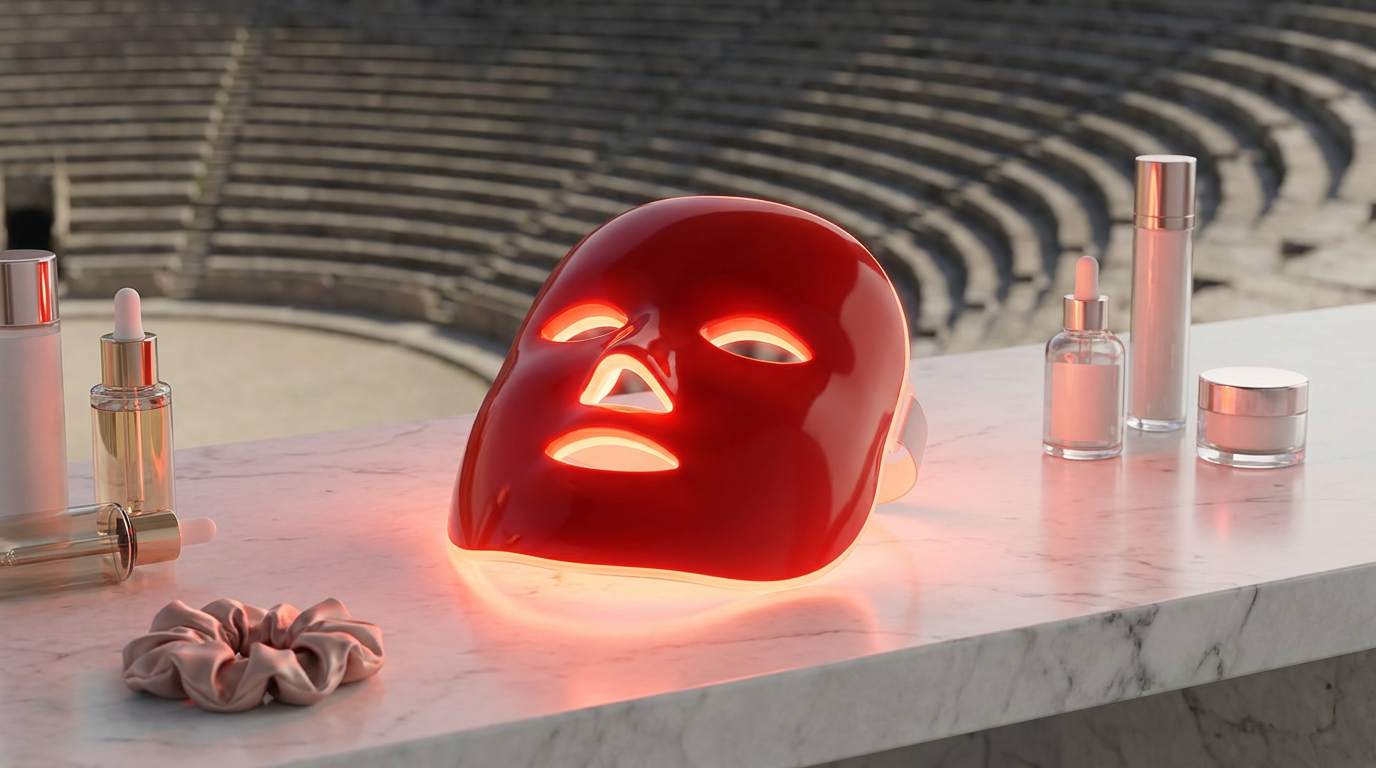
They look like props from a science fiction film, but light-emitting diode (LED) face masks have become the defining skincare trend of the decade. What was once a niche, expensive treatment reserved for high-end dermatology clinics and specialized facialists has now migrated to bathroom vanities worldwide. Consumers are strapping glowing, Stormtrooper-esque contraptions to their faces for ten minutes a day, driven by bold marketing promises of reversed aging, banished breakouts, and clinical-grade skin rejuvenation from the comfort of the couch. But as the market floods with devices, the line between medical science and beauty hype has blurred.[1][2]
The financial stakes for consumers are surprisingly high. The current market offers a dizzying array of LED masks, with prices ranging from $50 for generic online knockoffs to well over $2,000 for premium, laser-integrated models. For the average buyer, navigating this landscape requires separating legitimate photomedicine from expensive, glowing placebos. Shoppers are left wondering whether these devices can actually deliver the same results as an expert-led treatment, or if the entire category is merely an elaborate exercise in wishful thinking. To answer that, one must look past the social media endorsements and examine the underlying clinical evidence.[2][4]
The science underpinning these devices is entirely real, rooted in a biological process known as photobiomodulation. When specific, optimized wavelengths of light penetrate the skin, they do not generate heat or cause thermal damage like traditional lasers. Instead, the light particles are absorbed by the mitochondria—the energy-producing powerhouses inside human cells. This absorption kicks off a biochemical chain reaction that increases the production of adenosine triphosphate (ATP). With more available cellular energy, the skin's natural repair mechanisms shift into overdrive, accelerating tissue healing, reducing baseline inflammation, and signaling the body to optimize its cellular function.[1][7]

The most heavily researched application for at-home LED masks is the use of red and near-infrared light to combat the visible signs of aging. The evidence here is robust, though the results are generally classified as modest rather than miraculous. Red light, which operates in the 630 to 700-nanometer wavelength range, penetrates the outer layers of the skin to stimulate fibroblasts. These are the specific cells responsible for synthesizing new collagen and elastin—the structural proteins that keep skin firm and supple. Near-infrared light, which operates at longer wavelengths (typically around 830 nanometers), travels even deeper to address subcutaneous inflammation.[5][6]
Systematic reviews and randomized controlled trials consistently support the efficacy of red light therapy for skin rejuvenation. Clinical studies have demonstrated statistically significant improvements in fine lines, skin texture, and overall collagen density after consistent use. Patients in these trials frequently report a reduction in the depth of wrinkles and a more even skin tone. However, dermatologists emphasize that the magnitude of these effects is gradual. Red light therapy is not a substitute for aggressive in-office procedures like fractional laser resurfacing or deep chemical peels, but rather a gentle, cumulative approach to dermal remodeling.[1][6]
While red light focuses on cellular repair, blue light therapy operates on an entirely different, highly effective mechanism targeted at acne vulgaris. Operating at a shallower wavelength—typically between 415 and 465 nanometers—blue light does not penetrate deeply into the dermis. Instead, it interacts directly with the surface of the skin to activate toxic free radicals that are lethal to Cutibacterium acnes, the primary bacteria responsible for inflammatory breakouts. By effectively neutralizing this bacteria, blue light halts the acne cycle at its source without the drying or irritating side effects often associated with topical chemical treatments.[1][6]

While red light focuses on cellular repair, blue light therapy operates on an entirely different, highly effective mechanism targeted at acne vulgaris.
The dermatological consensus on blue light is particularly strong. A comprehensive systematic review of home-based dermatological devices confirmed that blue light therapy effectively reduces both inflammatory and non-inflammatory acne lesions. In several trials, participants experienced a dramatic decrease in blemish counts and a faster resolution of existing breakouts. Furthermore, many modern premium masks combine both blue and red light in a single session. This dual-action approach is highly favored by clinicians, as the blue light clears the bacterial infection while the red light simultaneously reduces the associated post-inflammatory redness and accelerates the healing of the skin barrier.[6][7]
Despite the solid biological mechanisms, there is a significant caveat to the at-home LED mask boom: the issue of power. The devices sold directly to consumers are engineered to be inherently safe, meaning they operate at a fraction of the power output—known as irradiance—of the clinical panels used in a dermatologist's office. A medical-grade LED panel can deliver a massive dose of therapeutic light in a matter of minutes. An at-home mask, constrained by battery size and safety regulations, delivers a much lower dose per minute. This power gap fundamentally changes how the treatment must be administered.[4][5]
Because of this lower irradiance, home users cannot expect to mimic an in-office treatment schedule. To achieve comparable clinical results, consumers must commit to a rigorous, long-term routine. Most evidence-based protocols require using the mask for ten to twenty minutes, three to five times a week, for a minimum of eight to twelve weeks before visible changes emerge. Patience and extreme consistency are the true costs of at-home light therapy. For users who struggle to maintain a daily skincare regimen, an expensive LED mask is likely to end up abandoned in a drawer long before it has a chance to alter their cellular biology.[1][5]

The explosion of the LED mask category has also created a highly unregulated market dynamic, where not all devices are created equal. Dermatologists frequently warn against purchasing cheap, unverified knockoffs from online marketplaces. Effective photobiomodulation requires precise wavelength accuracy; if a mask's LEDs are off by even a few nanometers, the light will fail to trigger the necessary mitochondrial response. Furthermore, many budget devices lack the proper irradiance to penetrate the skin, effectively acting as nothing more than expensive, colorful flashlights. Experts strongly advise consumers to look for devices that are FDA-cleared and backed by independent clinical testing.[2][3]
It is equally important to understand the limitations of the technology. Red light therapy is a complementary tool, not a panacea. It cannot replace foundational skincare practices like daily sunscreen application, nor can it substitute for prescription retinoids or medical interventions for severe dermatological diseases. While it excels at reducing baseline inflammation and supporting gradual collagen synthesis, it cannot instantly erase deep hyperpigmentation or reverse decades of severe photoaging in a single month. Setting realistic expectations is crucial for anyone investing in the technology.[1][5]
While the foundational science of photobiomodulation is well-established, transparent uncertainty remains regarding the specific long-term efficacy of consumer devices. Many of the clinical trials cited by mask brands are funded internally by the manufacturers themselves, which introduces an inherent risk of bias. Independent, long-term, head-to-head studies comparing different at-home masks against each other are still sparse. Additionally, clinical trials have historically underrepresented individuals with highly melanated skin, leaving open questions about how different skin tones absorb and respond to specific wavelengths and irradiance levels over extended periods.[4][7]
Ultimately, the evidence pack on at-home LED face masks delivers a clear verdict: the technology works, provided the consumer understands the assignment. For those willing to invest in a high-quality, FDA-cleared device with accurate wavelengths, and who possess the discipline to use it consistently for months, the science strongly supports the investment. It is a safe, non-invasive, and effective way to support long-term skin health. But for those seeking an overnight miracle or a replacement for professional medical care, the glowing mask will remain just a futuristic fantasy.[3][5]
How we got here
1960s
Hungarian physician Endre Mester accidentally discovers the hair-growth and wound-healing benefits of low-level red light on mice.
1990s
NASA begins researching LED technology to promote plant growth and wound healing for astronauts in space.
2010s
LED light therapy becomes a staple in high-end dermatology clinics for anti-aging and acne treatments.
2020s
Advances in flexible silicone and battery technology allow clinical-grade LED masks to enter the mainstream consumer market.
Viewpoints in depth
Dermatological Consensus
Medical professionals view at-home LED masks as effective but modest complementary tools.
The prevailing medical view is that photobiomodulation is a scientifically sound mechanism. Dermatologists acknowledge that specific wavelengths of red and blue light successfully stimulate collagen and neutralize acne-causing bacteria. However, they consistently temper consumer expectations, emphasizing that the low irradiance of at-home devices means results will be gradual and subtle compared to in-office laser treatments. They advocate for using these masks as part of a broader, evidence-based skincare regimen rather than a standalone cure.
Consumer Enthusiasts
Beauty editors and consumers champion the accessibility and cumulative benefits of home devices.
For skincare enthusiasts, the appeal of LED masks lies in their non-invasive nature and long-term cumulative benefits. This camp argues that while home devices lack the raw power of clinical panels, the ability to use them three to five times a week bridges the efficacy gap. They highlight the convenience of treating fine lines and breakouts from the couch, viewing the high upfront cost of premium, FDA-cleared masks as a worthwhile investment that ultimately saves money on expensive professional facials.
Clinical Skeptics
Researchers highlight the lack of independent data and the risks of an unregulated market.
Skeptics within the clinical research community do not deny the underlying science of light therapy, but they raise concerns about the consumer market's execution. They point out that many clinical trials are funded by the device manufacturers, creating a potential conflict of interest. Furthermore, they warn that the market is flooded with cheap, unregulated knockoffs that lack the precise wavelength calibration required to trigger a biological response, leading consumers to waste money on devices that offer no therapeutic value.
What we don't know
- How different at-home devices perform in independent, head-to-head clinical trials.
- The precise long-term efficacy of consumer masks on highly melanated skin, which is often underrepresented in studies.
- Whether the newest laser-based home masks offer significantly better results than standard LED models.
Key terms
- Photobiomodulation
- The process where specific wavelengths of light stimulate cellular functions, such as energy production and tissue repair.
- Mitochondria
- The energy-producing structures within cells that absorb red and near-infrared light to boost cellular activity.
- Irradiance
- The power density of the light emitted by a device, which determines how effectively the light penetrates the skin.
- Fibroblasts
- Cells in the skin's connective tissue that produce collagen and elastin, which are stimulated by red light therapy.
- Wavelength
- The distance between light waves, measured in nanometers (nm), which determines the color of the light and how deeply it penetrates the skin.
Frequently asked
How long does it take to see results from an LED mask?
Most clinical studies indicate that visible improvements in skin texture and fine lines require 8 to 12 weeks of consistent use.
Can I use an LED mask every day?
Yes, most at-home devices are designed for regular use, typically three to five times a week, though users should follow the specific manufacturer guidelines.
Are cheap LED masks on Amazon just as good?
Usually not. Dermatologists warn that inexpensive devices often lack the precise wavelengths and power output (irradiance) necessary to trigger a biological response.
Does red light therapy hurt or burn?
No. Unlike lasers or UV light, LED therapy is non-invasive, does not cause thermal damage, and is completely painless.
Sources
Source coverage
7 outlets
3 viewpoints surfaced






[1]National GeographicClinical Skeptics
LED light therapy for skin is trendy—but does it work?
Read on National Geographic →[2]Los Angeles TimesConsumer Enthusiasts
The Best Red Light Therapy Masks Actually Worth the Hype
Read on Los Angeles Times →[3]Global NewsConsumer Enthusiasts
The Curator: A dermatologist's expert evaluation on LED face masks
Read on Global News →[4]Mayo Clinic PressDermatological Consensus
Do LED Face Masks Work? Skip, Save or Splurge?
Read on Mayo Clinic Press →[5]American Academy of DermatologyDermatological Consensus
Is red light therapy right for your skin?
Read on American Academy of Dermatology →[6]PubMed CentralDermatological Consensus
Home-based devices in dermatology: a systematic review of safety and efficacy
Read on PubMed Central →[7]Factlen Editorial TeamClinical Skeptics
Synthesis by Factlen editorial team
Read on Factlen Editorial Team →

More in shopping
See all 24 stories →Home Appliances
Heat Pump Dryers: The 2026 Buying Guide and Explainer
0 sources
Display Tech
OLED vs. Mini-LED in 2026: The Ultimate Home Theater Trade-Off Analysis
0 sources
TV Tech
OLED vs. Mini-LED: Choosing the Right Premium TV in 2026
0 sources
Home Electrification
The 2026 Guide to Buying a Heat Pump: Ratings, Rebates, and Avoiding Costly Mistakes
0 sources
Every angle. Every day.
Get shopping stories with full source coverage and perspective breakdowns delivered to your inbox.