
Trump Signs $70 Billion Secure America Act, Securing ICE and Border Patrol Funding Through 2029
President Donald Trump has signed a $70 billion immigration enforcement package into law, ending a 75-day partial shutdown of the Department of Homeland Security.
By Anaya Sharma

President Donald Trump signed the $70 billion Secure America Act into law on Wednesday, securing uninterrupted funding for federal immigration enforcement through the remainder of his term. Flanked by Republican congressional leaders in the Oval Office, Trump celebrated the passage of the package, which guarantees financial backing for Immigration and Customs Enforcement (ICE) and Customs and Border Protection (CBP) through September 2029. The signing effectively ends a bitter, months-long partisan standoff that had paralyzed the Department of Homeland Security (DHS).[1][2]
The legislation allocates $38 billion directly to ICE and $26 billion to CBP, with an additional $5 billion reserved for the DHS to cover unforeseen operational costs. By front-loading routine annual appropriations, the law ensures a steady flow of capital for the administration's stated goal of deporting approximately one million people per year. The package supplements the $140 billion the agencies previously received under the One Big Beautiful Bill Act passed last July.[2][4]
"This morning I'm thrilled to sign the Secure America Act to immediately and fully fund the Department of Homeland Security through the end of my term, so we won't have that to be talking about anymore," Trump said during the signing ceremony. He praised ICE and Border Patrol agents as "heroes" and asserted that the funding is crucial for combating child exploitation, dismantling criminal cartels, and restoring domestic law and order.[1][2]
The bill's passage concludes a historic 75-day partial shutdown of the DHS, the longest such agency closure in U.S. history. The funding impasse began in January following the deaths of two U.S. citizens, Alex Pretti and Renee Good, who were killed by federal agents during an intensive immigration enforcement operation in Minneapolis. The incident prompted swift backlash from Democratic lawmakers, who refused to authorize further DHS funding without strict new operational guardrails.[2][5]
Following the Minneapolis shootings, Democrats demanded that federal immigration officers adhere to the same standards as other law enforcement agencies. Their proposed reforms included mandatory body cameras, requirements to obtain judicial warrants before entering private homes, and a prohibition on agents wearing masks that obscure their identities. When negotiations over these restrictions broke down, Republican lawmakers opted to draft their own funding vehicle devoid of any new constraints.[3]
The resulting Secure America Act moved through Congress on strictly partisan lines. The Senate approved the measure late last week following an exhausting 18-hour marathon voting series. On Tuesday evening, the House of Representatives pushed the package across the finish line with a narrow 214-212 vote. Kevin Kiley, an independent who typically aligns with Republicans, joined all House Democrats in voting against the measure.[1][2]
Democratic leaders fiercely condemned the final legislation. House Minority Leader Hakeem Jeffries characterized the package as a "$70 billion blank check" handed to a "violent mass deportation machine." Jeffries and other critics argued that granting multi-year funding without oversight or accountability measures effectively rewards the agencies for the very operational overreach that triggered the shutdown in the first place.[2][4]
Despite the partisan friction, the final text of the Secure America Act was stripped of several highly controversial riders that had threatened to derail the bill entirely. Republican negotiators scrapped a proposed $1 billion allocation for White House security upgrades—which included funding for a new presidential ballroom—as well as a $1.8 billion fund designed to compensate political allies who claimed to be victims of political prosecution.
With those politically toxic elements removed, the legislation focused exclusively on border security and interior enforcement. The White House stated that the resources will be deployed to secure the border, stop the flow of deadly drugs, and enforce the nation's immigration laws. For the administration, the bill represents a major legislative victory, insulating its core domestic policy agenda from future congressional funding battles.[2]
As the DHS resumes full operations, government and industry leaders are already preparing to implement the influx of capital. The funding is expected to drive significant investments in border security technology, screening infrastructure, and expanded detention facilities. With the financial runway now clear through 2029, the administration faces no further legislative hurdles to executing its expansive immigration enforcement strategy.
Viewpoints in depth
The Administration's View
The White House argues the funding is essential for national security and restoring order.
President Trump and Republican leaders frame the Secure America Act as a necessary step to combat human trafficking, dismantle drug cartels, and secure the nation's borders. By securing multi-year funding, the administration argues it can effectively execute its mandate to deport undocumented individuals without the constant threat of congressional defunding. Proponents view the lack of operational restrictions as a show of trust in federal law enforcement, arguing that guardrails would only hinder agents in the field.
Democratic & Civil Rights View
Critics argue the bill provides a blank check to agencies with a history of overreach.
Democratic lawmakers and civil rights organizations strongly opposed the legislation, pointing to the January deaths of two U.S. citizens in Minneapolis as proof that ICE requires strict operational oversight. They argue that providing $70 billion without mandating body cameras, judicial warrants, or unmasking requirements removes any incentive for the agencies to reform. Critics characterize the package as funding a 'mass deportation machine' that operates with impunity.
Key points
- President Trump signed the $70 billion Secure America Act, funding ICE and CBP through September 2029.
- The legislation ends a historic 75-day partial shutdown of the Department of Homeland Security.
- The bill provides $38 billion for ICE and $26 billion for CBP without new operational restrictions.
- Democrats had demanded guardrails like body cameras following the deaths of two U.S. citizens in January.
What we don’t know
- It remains unclear exactly how the agencies will allocate the $5 billion reserved for unforeseen costs.
- The long-term operational impact of the 75-day DHS shutdown on backlogged immigration cases is not yet fully quantified.
How we got here
January 2026
Two U.S. citizens, Alex Pretti and Renee Good, are killed during a federal immigration operation in Minneapolis.
Mid-February 2026
A funding impasse over proposed ICE guardrails triggers a partial shutdown of the Department of Homeland Security.
Early June 2026
The Senate passes the Secure America Act following an 18-hour marathon voting session.
June 9, 2026
The House passes the $70 billion package in a narrow 214-212 vote.
June 10, 2026
President Trump signs the bill into law, ending the 75-day DHS shutdown.
- Administration & Enforcement Advocates
- Argue that robust, unrestricted funding for ICE and CBP is essential to secure the border and combat cartels.
- Democratic Opposition
- Argue that giving billions to immigration agencies without operational guardrails enables a dangerous lack of accountability.
- Institutional Watchdogs
- Focus on the legislative mechanics, the impact of the 75-day DHS shutdown, and the front-loading of multi-year appropriations.
Perspectives this story doesn't cover
- Border community residents directly impacted by increased enforcement operations
- Immigration lawyers and advocates representing undocumented individuals
Sources
Source coverage
5 outlets
3 viewpoints surfaced





- [1]CBS NewsAdministration & Enforcement Advocates
Trump signs $70 billion immigration bill, capping lengthy fight over ICE funding
Read on CBS News → - [2]The GuardianDemocratic Opposition
ICE, borders and DHS: what’s in Trump’s $70bn immigration crackdown bill?
Read on The Guardian → - [3]New Jersey MonitorDemocratic Opposition
Billions for the next 3 years of Trump's mass deportation campaign signed into law
Read on New Jersey Monitor → - [4]Al JazeeraDemocratic Opposition
Pakistan says its security forces killed 29 fighters along Afghan border
Read on Al Jazeera → - [5]TIMEDemocratic Opposition
What's In the $70 Billion Bill Funding Immigration Enforcement
Read on TIME →
More in News & Politics
See all →Climate Liability
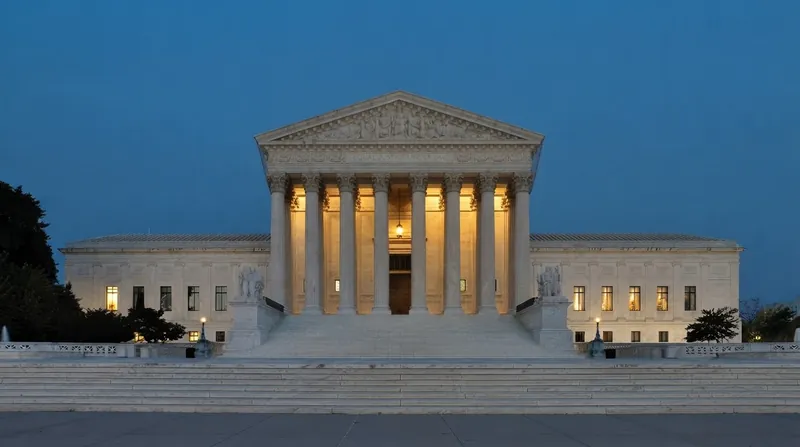
Supreme Court Hears Landmark Arguments on Whether Cities Can Sue Big Oil Over Climate Damages
4 sources
Executive Power
Trump Directs $2 Billion From Medicare Fund for $90 Senior Rebates Ahead of Midterms
7 sources
Federal Savings Programs
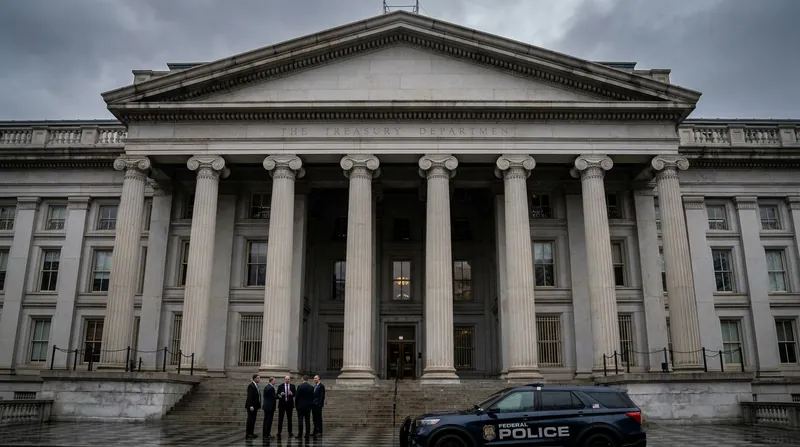
Treasury Department Completes Automatic Enrollment of 60 Million Children in Trump Accounts
8 sources
Executive Power
Trump Cancels $810 Million in Domestic Spending Using 'Pocket Rescission' Maneuver
5 sources

Comments
Every angle. Every day.
Get News & Politics stories with full source coverage and perspective breakdowns, free every day.