
The Global Audio Village: How AI Voice Translation is Breaking Down Podcast Language Barriers
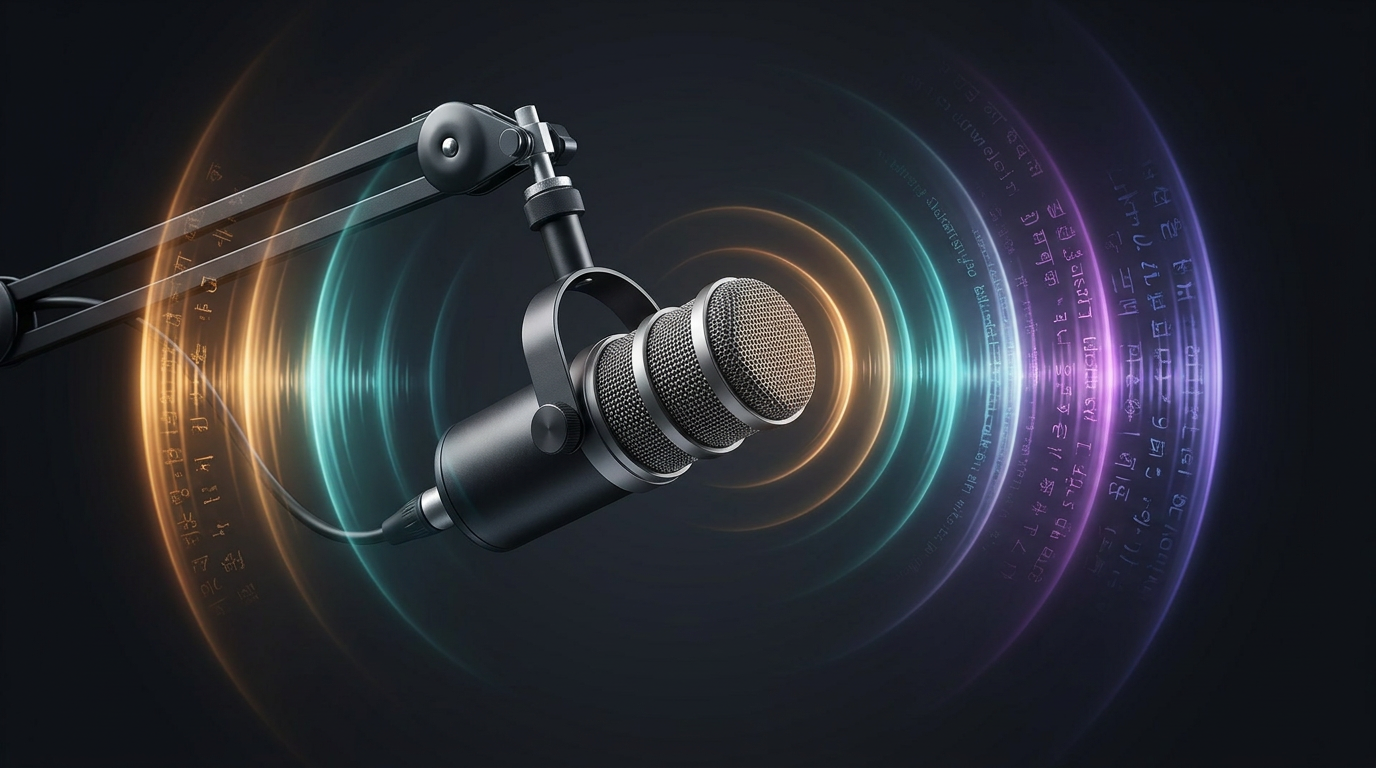
AI-powered voice cloning and translation tools are allowing podcasters to seamlessly dub their episodes into dozens of languages while preserving their original tone and emotion. The technology is rapidly transforming the economics of global audio distribution.
By Factlen Editorial Team
- Independent Creators
- View AI dubbing as an empowering tool that democratizes global distribution and breaks down historical language barriers.
- Audio Tech Developers
- Focus on the rapid advancement of machine learning models to perfect prosody, emotional resonance, and lip-syncing capabilities.
- Localization Experts
- Emphasize that while AI provides scale, human review remains essential for cultural nuance, comedic timing, and brand safety.
What's not represented
- · Traditional human voice actors facing industry displacement
- · Non-English native listeners evaluating the cultural authenticity of the translations
Why this matters
For over two decades, the reach of a podcast was strictly limited by the language of its host. The advent of high-fidelity, emotion-preserving AI dubbing means creators can now access a global audience of over 600 million listeners, fundamentally changing the economics of independent media.
Key points
- AI voice translation allows podcasters to dub episodes into multiple languages while keeping their exact voice and tone.
- The technology relies on a four-step process: transcription, context-aware translation, voice cloning, and audio synchronization.
- The cost and time required to localize audio have plummeted, opening global markets to independent creators.
- AI still struggles with comedic timing, sarcasm, and certain script-based languages.
- Enterprise networks increasingly use 'human-in-the-loop' workflows to ensure cultural accuracy and brand safety.
For the first two decades of the podcasting medium, a fundamental barrier dictated the limits of a creator's success: language. A brilliant investigative series recorded in Spanish remained inaccessible to English speakers, and a hit American comedy show could not reach audiences in Japan. Traditional dubbing—hiring voice actors, booking studio time, and manually syncing audio—was a luxury reserved for massive film studios, not independent audio creators.[5][7]
In 2026, that barrier has effectively collapsed. A podcaster recording an episode in a London bedroom can now instantly distribute that same episode in fluent Hindi, Japanese, and Portuguese. Crucially, the translated audio does not sound like a generic, robotic text-to-speech generator. It sounds exactly like the original host, complete with their unique vocal timbre, pacing, and emotional inflections.[2][7]
The catalyst for this shift began when major platforms recognized that audio-first localization could unlock massive untapped markets. Spotify pioneered the mainstream application of this technology with its Voice Translation pilot, partnering with OpenAI to translate massive shows hosted by figures like Lex Fridman and Dax Shepard into Spanish, French, and German. The goal was to replicate the speaking style of the original host, delivering an authentic experience that traditional dubbing could rarely match.[1]
But how does a machine take an English audio file and output a flawless Spanish clone? The modern AI dubbing pipeline relies on a sophisticated, four-step mechanism. It begins with high-fidelity transcription. Advanced speech-to-text models analyze the raw audio, achieving up to 99% accuracy even when dealing with cross-talk, background noise, or heavy accents. These systems automatically label different speakers, ensuring the AI knows exactly who is talking at any given millisecond.[2][6]

The second step is context-aware translation. Older machine translation tools translated word-for-word, often butchering idioms and cultural references. Today's Large Language Models (LLMs) analyze the entire transcript for context, adapting jokes, slang, and technical jargon so that the translated script makes sense to a native speaker in the target language.[5][7]
The third step is where the true magic happens: voice cloning and generation. Companies like ElevenLabs—which reached a valuation of over $3 billion after a massive funding round—have pioneered models that focus heavily on "prosody." Prosody encompasses the rhythm, stress, and intonation of speech. By analyzing a short sample of the host's voice, the AI maps these characteristics onto the translated text, ensuring that a whispered secret in English remains a whispered secret in French.[3][4]
The third step is where the true magic happens: voice cloning and generation.
The final step is timing and synchronization. Languages take different amounts of time to speak; a sentence in German might take 20% longer to articulate than the same sentence in English. AI dubbing platforms automatically adjust the pacing of the generated audio to match the original runtime. For video podcasts, advanced visual dubbing tools even adjust the lip movements of the speaker to match the new language, preventing the jarring "asynchronous" look of old dubbed movies.[5][6]
The economic implications of this pipeline are staggering. Historically, localizing a single hour of audio could cost thousands of dollars and take weeks of coordination. Today, automated workflows can localize an episode in a matter of hours for a fraction of the cost. This democratization allows independent creators to compete on a global scale, tapping into a worldwide podcast audience expected to surpass 600 million listeners.[5][7]

However, the technology is not without its limitations. While AI excels at educational content, interviews, and narrative storytelling, it still struggles with the nuances of comedy. Humor relies heavily on micro-timing, sarcasm, and personality-driven performance—elements that AI voices cannot yet reliably replicate. A perfectly translated joke will fall flat if the synthetic voice delivers the punchline a half-second too late.[4]
Furthermore, there is a noticeable quality gap between different language families. AI voice models currently perform best with Roman alphabet languages like Spanish, French, and German. Script-based languages such as Mandarin, Japanese, and Korean introduce more pronunciation variability, requiring creators to carefully review the output to ensure accuracy.[4][7]
Because of these edge cases, enterprise-level podcast networks rarely rely on a purely automated pipeline. The industry standard has become "human-in-the-loop" (HITL) dubbing. In this workflow, the AI handles the heavy lifting of transcription, translation, and voice generation, but native-speaking linguists review the translated script before the final audio is rendered. This ensures that brand names are pronounced correctly and cultural sensitivities are respected.[6][7]

The rapid adoption of AI dubbing is also sparking important conversations about consent and the future of the voice acting profession. While some fear that synthetic voices will displace human talent, others argue that AI is simply unlocking a volume of localization that would never have been economically viable for human actors in the first place. Many platforms now require strict verification to ensure users only clone voices they legally own or have permission to use.[3][7]
As the technology continues to mature, the concept of a "local" podcast is fading. We are entering an era of the global audio village, where the power of a creator's ideas and the intimacy of their voice can transcend borders instantly. For listeners, it means unprecedented access to the world's best conversations, regardless of the language they speak.[1][7]
Viewpoints in depth
Independent Creators
Podcasters view AI translation as a revolutionary tool for audience growth.
For independent creators, the primary appeal of AI dubbing is the democratization of reach. Previously, building an international audience required the backing of a major network willing to invest heavily in localization. Now, a solo creator can upload an English audio file and generate Spanish, French, and German versions in minutes. This allows them to tap into lucrative new advertising markets and listener demographics without increasing their production overhead, fundamentally altering the business model of independent media.
Audio Tech Developers
Engineers are focused on pushing the boundaries of synthetic emotional intelligence.
Companies building these AI models are in a race to perfect 'prosody'—the subtle human elements of speech. Their goal is to move beyond mere translation and achieve zero-shot voice conversion, where the AI perfectly understands when to whisper, when to sound excited, and when to pause for dramatic effect based purely on the context of the script. They view the current limitations around comedy and sarcasm not as permanent roadblocks, but as the next engineering hurdles to clear.
Localization Experts
Linguists caution against relying entirely on automated systems for cultural translation.
While acknowledging the speed and cost benefits of AI, traditional localization experts warn that language is deeply cultural, not just mathematical. They point out that AI models frequently mistranslate local idioms, mispronounce proprietary brand names, and fail to adapt cultural references that don't exist in the target language. Consequently, they advocate for a hybrid approach where AI does the heavy lifting, but human linguists retain editorial control to ensure the final product is culturally resonant and brand-safe.
What we don't know
- How platforms will handle the long-term copyright and consent issues surrounding cloned voices.
- Whether audiences will ultimately prefer AI-cloned host voices over culturally adapted human voice actors in certain regions.
- How quickly AI models will overcome their current limitations with comedic timing and sarcasm.
Key terms
- Prosody
- The rhythm, stress, and intonation of speech that conveys emotion and makes a voice sound naturally human.
- Voice Cloning
- The use of artificial intelligence to analyze a sample of a person's voice and generate new audio that sounds exactly like them.
- Human-in-the-loop (HITL)
- A workflow where artificial intelligence performs the bulk of a task, but a human expert reviews and corrects the output before it is finalized.
- Lip-syncing / Visual Dubbing
- Technology that alters the mouth movements in a video to match the newly translated audio track, preventing asynchronous playback.
Frequently asked
Does AI dubbing sound like a robot?
No. Modern AI dubbing uses voice cloning to replicate the original speaker's tone, pacing, and emotion, making it sound highly natural compared to older text-to-speech tools.
Can AI translate humor and sarcasm?
This remains a weak point. AI struggles with the micro-timing and specific vocal inflections required for comedy and sarcasm, often causing jokes to fall flat.
Does this work for video podcasts?
Yes. Advanced platforms not only translate the audio but can also visually adjust the speaker's lip movements to sync with the newly generated language.
Is it expensive to dub a podcast using AI?
AI dubbing is significantly cheaper than traditional methods, often reducing the cost from thousands of dollars per episode to just a few dollars, depending on the platform.
Sources
Source coverage
7 outlets
3 viewpoints surfaced







[1]Spotify NewsroomAudio Tech Developers
Spotify Pilots Voice Translation for Podcasts
Read on Spotify Newsroom →[2]ElevenLabsAudio Tech Developers
Translate your podcasts with AI dubbing
Read on ElevenLabs →[3]SlatorLocalization Experts
Will Podcasts Become the Key Use Case for AI Dubbing?
Read on Slator →[4]Creators Must HaveIndependent Creators
ElevenLabs Review: Is the AI Voice Generator Worth It?
Read on Creators Must Have →[5]DupDubIndependent Creators
Can AI make your podcast multilingual?
Read on DupDub →[6]3Play MediaLocalization Experts
The Best AI Dubbing Tools for Video and Audio
Read on 3Play Media →[7]Factlen Editorial Team
Synthesis by Factlen editorial team
Read on Factlen Editorial Team →

More in entertainment
See all 16 stories →Audiobook Boom
The Science Behind the Audiobook Boom: Why Listening Is Reading to Your Brain
0 sources

Streaming Wars
The Great Re-Bundling: How 2026's Streaming Mega-Deals Are Curing Subscription Fatigue
0 sources

Vinyl Revival
Vinyl Record Sales Cross Historic $1.4 Billion Mark as Gen Z Drives Physical Music Revival
0 sources

Philanthropy Milestone
Michael J. Fox Foundation Surpasses $3 Billion in Funding, Ushers in 'Precision Medicine' Era for Parkinson's
0 sources
Every angle. Every day.
Get entertainment stories with full source coverage and perspective breakdowns delivered to your inbox.