
Vinyl Record Sales Cross Historic $1.4 Billion Mark as Gen Z Drives Physical Music Revival
Driven by younger listeners seeking tangible connections to their favorite artists, vinyl records have cemented their status as the dominant physical music format, marking nearly two decades of consecutive growth.
By Factlen Editorial Team
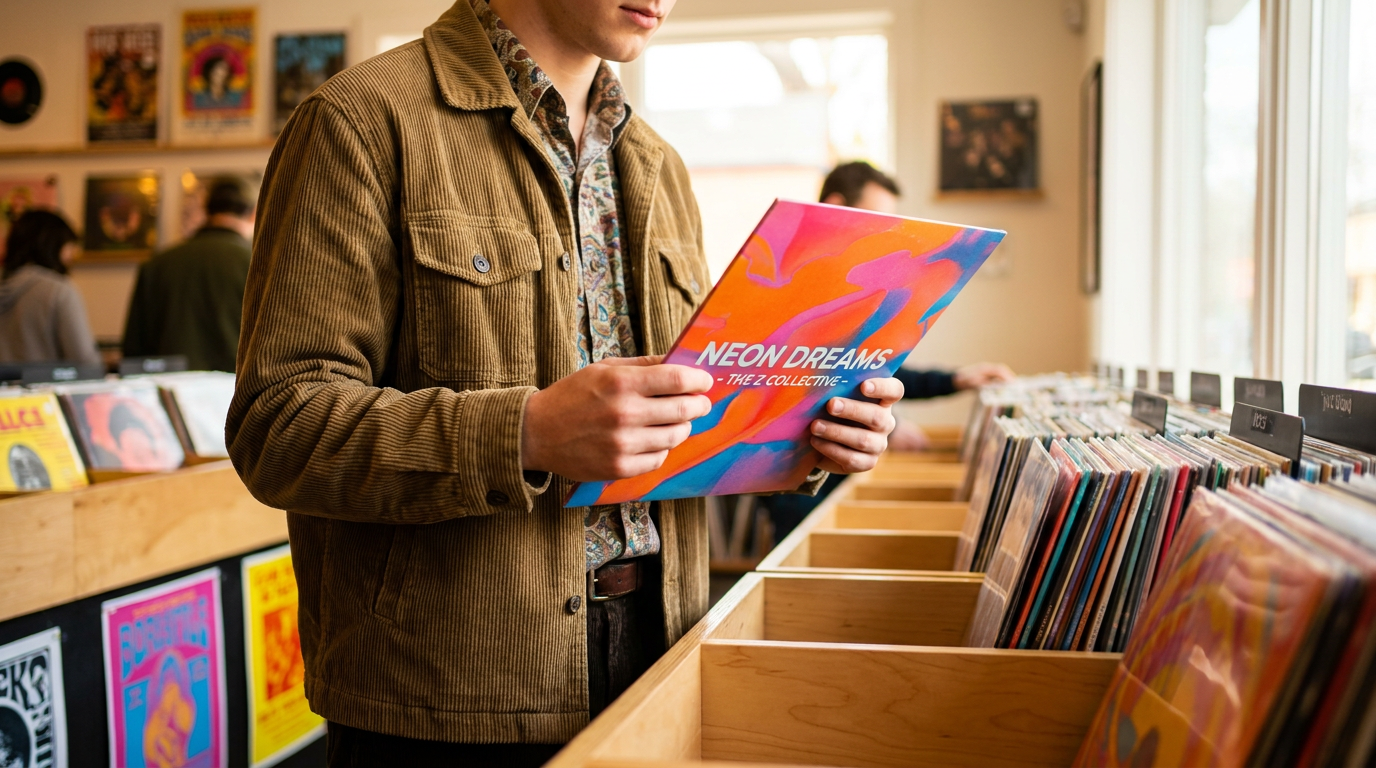
- Gen Z Collectors
- Values the tangible experience, conscious consumption, and aesthetic appeal of vinyl as a counter-movement to digital streaming.
- Industry Analysts
- Focuses on the revenue stabilization, supply chain improvements, and physical media's role in the broader music ecosystem.
- Independent Artists
- Views vinyl as a crucial, high-margin tool for building sustainable direct-to-consumer micro-economies.
What's not represented
- · Environmental advocates concerned about PVC plastic production
- · Older generation collectors priced out of the modern market
Why this matters
The sustained boom in physical media proves that even in an era of infinite digital convenience, consumers still crave tangible, high-quality experiences. For independent artists, this shift provides a vital, high-margin revenue stream that helps them build sustainable careers outside the algorithmic streaming ecosystem.
Key points
- Vinyl records are projected to cross $1.45 billion in US revenue in 2026, marking 19 consecutive years of global growth.
- Generation Z is driving the revival, with 42% of new buyers aged 18 to 34.
- Streaming serves as a discovery tool, with 36% of buyers finding music digitally before purchasing the physical record.
- Global pressing plant capacity has expanded to roughly 160 million units, easing historic supply chain bottlenecks.
- Independent artists are using limited vinyl runs to build sustainable direct-to-consumer micro-economies.
The music industry’s oldest format is officially its most resilient physical asset. As the global music market continues its transition into an ecosystem dominated by digital access, vinyl records are projected to cross $1.45 billion in United States revenue in 2026. This milestone cements a nearly two-decade revival that has defied every technological prediction and outlasted the rise and fall of the compact disc. Far from a fleeting nostalgic trend, the modern vinyl market has evolved into a structural pillar of how serious artists release music and how dedicated fans consume it. The format’s survival is no longer in question; instead, the industry is now optimizing for a landscape where high-definition streaming and premium physical media coexist and complement each other.[3]
The sheer scale of the format's resurgence is quantified in the International Federation of the Phonographic Industry's (IFPI) 2026 Global Music Report. According to the data, global vinyl revenue grew by 13.7% over the past year, marking an astonishing 19th consecutive year of expansion. This surge helped drive overall physical music revenues to $5.3 billion globally. In the United Kingdom alone, vinyl sales grew by nearly 12%, pushing past 6.1 million units and accounting for more than half of all physical album revenue. Across the board, the numbers tell a story of a format that was written off multiple times—first for CDs, then for digital downloads, and finally for streaming—only to emerge as the definitive premium music experience.[1][4][5]

While streaming platforms still generate the lion's share of the industry's $31.7 billion global revenue, the relationship between digital and physical consumption has fundamentally shifted. Rather than cannibalizing each other, the two formats now serve distinct purposes in the listener's journey. Industry analysts note that streaming has become the primary engine for music discovery, while vinyl serves as the ultimate vehicle for ownership and artist support. Approximately 36% of modern vinyl buyers report discovering an album on platforms like Spotify or Apple Music before committing to the physical purchase. This dynamic has transformed the record from a mere playback medium into a high-margin collectible that signifies a listener's transition from a casual streamer to a dedicated superfan.[2][4]
The demographic engine driving this billion-dollar market is not comprised of older generations looking to replace their worn-out classic rock albums. Instead, the boom is overwhelmingly fueled by Generation Z. Recent consumer data reveals that 42% of new vinyl buyers are aged 18 to 34, and a staggering 76% of Gen Z vinyl enthusiasts purchase at least one record every month. For a demographic raised entirely in an era where music flows like tap water—always accessible but rarely exceptional—the appeal of vinyl lies in its deliberate, tactile nature. It offers a conscious counter-movement to the algorithmic churn of endless digital playlists.[4][5]
The demographic engine driving this billion-dollar market is not comprised of older generations looking to replace their worn-out classic rock albums.
This younger cohort values the entire ritual of the vinyl experience. From the careful dropping of the needle to the appreciation of large-format album artwork and liner notes, the physical medium demands a level of attention that background streaming does not. Furthermore, social media platforms like TikTok and Instagram have amplified the aesthetic appeal of turntable setups and colored vinyl variants, turning record collections into curated expressions of personal identity. For many young fans, owning the physical record is a tangible way to support artists in an era where streaming payouts per play remain fractions of a cent.[4][5]

Major record labels have aggressively capitalized on this superfan strategy. The standard black LP has been largely supplanted by a dizzying array of premium editions. Limited-run colored variants, exclusive retail pressings, and elaborate box sets have become standard rollout tactics for major pop and rock releases. Consequently, the average price of a new LP has crept upward, with standard editions often retailing around $35 to $40, and special editions commanding significantly more. Despite these rising costs, consumer appetite remains robust, evidenced by the continued record-breaking success of events like Record Store Day, which routinely generates millions in sales over a single weekend.[2][5]
For independent artists and smaller labels, the vinyl boom presents both a lucrative opportunity and a strategic challenge. In the modern music ecosystem, artists are increasingly focused on building sustainable micro-economies rather than chasing viral fame. Vinyl has become a crucial component of this strategy, offering tight unit economics and a direct-to-consumer revenue stream. However, experts advise indie musicians to treat the format as a premium collectible rather than a primary distribution method. By utilizing pre-orders to gauge demand and funding limited runs of 300 to 500 units, independent acts can maximize their physical revenue without overextending their budgets on unsold inventory.[3][6]

Crucially, the manufacturing infrastructure has finally caught up to the surging demand. During the pandemic-era vinyl boom of 2021 and 2022, the industry faced severe bottlenecks, with pressing plant lead times stretching up to 18 months. Independent artists were frequently sidelined as major labels monopolized capacity for massive pop releases. Today, the supply chain story is meaningfully better. Global pressing capacity has expanded from roughly 100 million units in 2021 to an estimated 140 to 160 million units in 2026. Lead times for independent runs have stabilized to a much more manageable six to nine months, allowing artists to properly align their physical releases with their digital marketing campaigns.[3]
Looking ahead, some market analysts suggest that 2026 could represent the peak year for the broader physical music market, as digital streaming services continue to improve high-fidelity audio options and convenience features. However, even if the aggressive double-digit growth rates begin to cool, the baseline for vinyl has been permanently reset. The format has successfully transitioned from a niche nostalgia trade into a billion-dollar industry staple. As long as fans continue to seek out authentic, tangible connections with the music they love, the turntable will remain a vital centerpiece of the modern listening experience.[6]
How we got here
1987
The last time US vinyl sales crossed the $1 billion mark before the format's decades-long decline.
2007
Global vinyl sales begin their modern resurgence, marking the first of 19 consecutive years of growth.
2021-2022
A massive pandemic-era surge in demand creates severe supply chain bottlenecks, pushing pressing lead times to 18 months.
2025
US vinyl revenue officially crosses the $1 billion threshold for the first time in the 21st century.
2026
Pressing capacity stabilizes at 160 million units globally as the market projects $1.45 billion in US revenue.
Viewpoints in depth
Industry Analysts
Focuses on the revenue stabilization and physical media's role in the broader music ecosystem.
For market analysts and major label executives, vinyl is no longer viewed as a nostalgic novelty but as a high-margin structural pillar of the industry. With global recorded music revenues reaching $31.7 billion, the $5.3 billion physical market provides a crucial counterbalance to the volume-driven economics of streaming. Analysts point to the stabilization of the supply chain—with global pressing capacity now reaching 160 million units—as proof that the industry is investing in vinyl as a long-term premium product rather than a passing fad.
Gen Z Collectors
Values the tangible experience and aesthetic appeal of vinyl as a counter-movement to digital streaming.
Younger listeners view vinyl as a deliberate, conscious form of music consumption. Raised in an era where millions of songs are instantly accessible via smartphones, Gen Z collectors seek out the friction and intentionality of physical media. The appeal extends beyond audio quality to include the visual aesthetics of colored variants, the ritual of playing a record, and the desire to physically display their musical identity. For this demographic, buying a record is the ultimate expression of being a 'superfan.'
Independent Artists
Views vinyl as a crucial tool for building sustainable direct-to-consumer micro-economies.
For independent musicians, the economics of streaming—where a million plays might only generate a few thousand dollars—make physical merchandise essential for survival. Vinyl offers highly favorable unit economics when managed correctly. By utilizing pre-order models and pressing limited runs of 300 to 500 units, indie artists can generate significant revenue directly from their core fanbase. The reduction in pressing plant lead times to a manageable six to nine months has allowed these artists to once again synchronize their physical releases with their digital marketing campaigns.
What we don't know
- Whether the aggressive double-digit growth rates will plateau after 2026 as the market reaches saturation.
- How the rising cost of raw materials and premium packaging will affect the purchasing habits of younger, price-sensitive consumers.
- If the development of sustainable, eco-friendly vinyl alternatives will successfully scale to meet global demand.
Key terms
- Micro-economy
- A sustainable business model for independent artists focused on direct-to-consumer sales and dedicated superfans rather than mass viral reach.
- Pressing Plant
- A manufacturing facility where raw vinyl is heated, stamped with grooves from a master disc, and cooled to create playable records.
- Lead Time
- The amount of time it takes for a record to be manufactured and delivered after an artist submits their audio and artwork to a pressing plant.
- Superfan
- A highly dedicated listener who financially supports an artist through premium purchases like vinyl, merchandise, and concert tickets.
Frequently asked
How much money does the vinyl industry make?
In the United States alone, vinyl revenue crossed $1.04 billion in 2025 and is projected to reach $1.45 billion in 2026.
Who is buying all these vinyl records?
Generation Z is the primary driver of the market, with 42% of new vinyl buyers aged 18 to 34.
Are pressing plants still backed up?
No. Global pressing capacity has expanded significantly, reducing lead times from 18 months in 2021 to a standard 6-9 months today.
Do people actually listen to the records they buy?
While some buy them purely as collectibles, the majority of buyers value the physical ritual of playing the record, often discovering the music on streaming platforms first.
Sources
Source coverage
6 outlets
3 viewpoints surfaced






[1]IFPIIndustry Analysts
Global Music Report 2026: Global Recorded Music Revenues Grow 6.4%
Read on IFPI →[2]Music WeekIndustry Analysts
IFPI Global Music Report 2026: Streaming Growth and Physical Music's Superfan Strategy
Read on Music Week →[3]ChartlexIndustry Analysts
Vinyl sales 2026 industry report: RIAA revenue, pressing capacity, and indie artists
Read on Chartlex →[4]Inspired By BeatzGen Z Collectors
Vinyl Boom 2026: Why Gen Z Loves the Format
Read on Inspired By Beatz →[5]Neo OnlineGen Z Collectors
The Vinyl Comeback in 2026: Why LP Sales Are Still Rising
Read on Neo Online →[6]Funky Moose RecordsIndependent Artists
Is Pressing Vinyl Worth the Investment in 2026?
Read on Funky Moose Records →

Every angle. Every day.
Get entertainment stories with full source coverage and perspective breakdowns delivered to your inbox.