
The Evidence for Nutritional Psychiatry: How Diet Modifies Mental Health
As clinical guidelines increasingly incorporate dietary interventions for depression and anxiety, researchers are mapping exactly how the gut-brain axis influences mood. This evidence pack evaluates the strength of the science behind "nutritional psychiatry," separating proven dietary shifts from premature supplement claims.
By Factlen Editorial Team
- Medical Consensus
- Views dietary intervention as a powerful, evidence-backed adjunct therapy, but warns against abandoning traditional psychiatric medications for severe illness.
- Nutritional Researchers
- Focuses on the biological mechanisms of the gut-brain axis, emphasizing how systemic inflammation and microbiome diversity directly dictate neurotransmitter production.
- Patient Advocates
- Celebrates the empowerment of having a daily, actionable tool to improve mental health that does not involve the side effects of traditional pharmaceuticals.
What's not represented
- · Low-income communities facing food deserts
- · Agricultural policy makers
Why this matters
While food cannot replace standard psychiatric care for severe illness, optimizing diet offers a highly accessible, low-risk tool that patients can control daily. Understanding the proven links between the gut and the brain empowers individuals to build mental resilience and enhance the efficacy of traditional treatments.
Key points
- Nutritional psychiatry has moved from a fringe concept to a formally recognized clinical pillar for treating mood disorders.
- The gut-brain axis allows the digestive tract to directly influence the brain via the vagus nerve and systemic inflammation.
- Roughly 90% of the body's serotonin is manufactured in the gut, heavily dependent on the health of the microbiome.
- Clinical trials prove that adopting a Mediterranean-style diet significantly reduces symptoms of clinical depression within 12 weeks.
- Ultra-processed foods drive neuroinflammation, which is strongly correlated with treatment-resistant depression and anxiety.
- While whole foods and fermented products show strong evidence, claims regarding over-the-counter probiotic supplements remain weak.
For decades, Western medicine maintained a strict firewall between gastroenterology and psychiatry, treating the digestive tract and the brain as entirely separate systems. If a patient presented with clinical depression, the standard protocol involved psychotherapy and neurotransmitter-modifying medications, with little to no inquiry into their daily diet. However, a quiet revolution has steadily dismantled that firewall, culminating in the formal recognition of "nutritional psychiatry" as a core pillar of mental health treatment. Driven by a massive influx of data regarding the human microbiome, researchers and clinicians are now mapping the precise biological pathways through which the food we consume directly alters our mood, anxiety levels, and cognitive resilience.[1][2]
The shift from fringe wellness concept to mainstream clinical practice has been rapid and data-driven. Major medical organizations are now actively training psychiatrists to prescribe specific dietary interventions alongside, or sometimes prior to, traditional pharmacotherapy for mild to moderate mood disorders. This integration acknowledges that while psychiatric medications are life-saving for many, they do not address the underlying systemic inflammation or metabolic dysfunction that frequently co-occurs with, and exacerbates, mental illness. By treating the body's metabolic environment, doctors are finding that patients experience higher remission rates and fewer relapses.[3][7]
The foundational mechanism underlying this field is the gut-brain axis, a bidirectional communication network linking the enteric nervous system of the gastrointestinal tract to the central nervous system. This connection is not merely metaphorical; it is physical and biochemical. The vagus nerve serves as a biological superhighway, transmitting signals directly from the gut to the brain's mood centers. Simultaneously, the trillions of bacteria residing in the human digestive tract—collectively known as the gut microbiome—act as an endocrine organ, synthesizing a vast array of neuroactive compounds that cross the blood-brain barrier.[5][6]

Perhaps the most striking evidence of this connection lies in the production of serotonin, a neurotransmitter heavily implicated in the regulation of sleep, appetite, and mood. While serotonin is the primary target of standard SSRI antidepressants, an estimated ninety percent of the body's serotonin is actually manufactured in the digestive tract, not the brain. The gut microbiome directly regulates the availability of tryptophan, the amino acid precursor to serotonin. When the microbiome is starved of the diverse plant fibers it needs to thrive, this production line falters, leading to systemic deficits that manifest as psychiatric symptoms.[5]
The strongest clinical claim in nutritional psychiatry—supported by robust, peer-reviewed evidence—is that adopting a whole-food, Mediterranean-style diet can actively treat clinical depression. This is not merely a preventative measure; it is a therapeutic intervention. The evidence base is anchored by landmark randomized controlled trials, which demonstrated that patients with severe clinical depression who received dietary counseling to switch to a Mediterranean diet experienced significantly higher rates of remission compared to those who received only social support.[1][4]
Recent large-scale meta-analyses have confirmed these initial findings, quantifying the effect size of dietary intervention. Researchers have found that strict adherence to a diet rich in vegetables, fruits, whole grains, legumes, nuts, and lean proteins like fish correlates with a roughly thirty-two percent reduction in the risk of developing depression. Furthermore, for those already diagnosed, transitioning to this dietary pattern yields measurable improvements in standardized depression scores within just twelve weeks, an efficacy timeline comparable to many standard antidepressant medications.[4]

Recent large-scale meta-analyses have confirmed these initial findings, quantifying the effect size of dietary intervention.
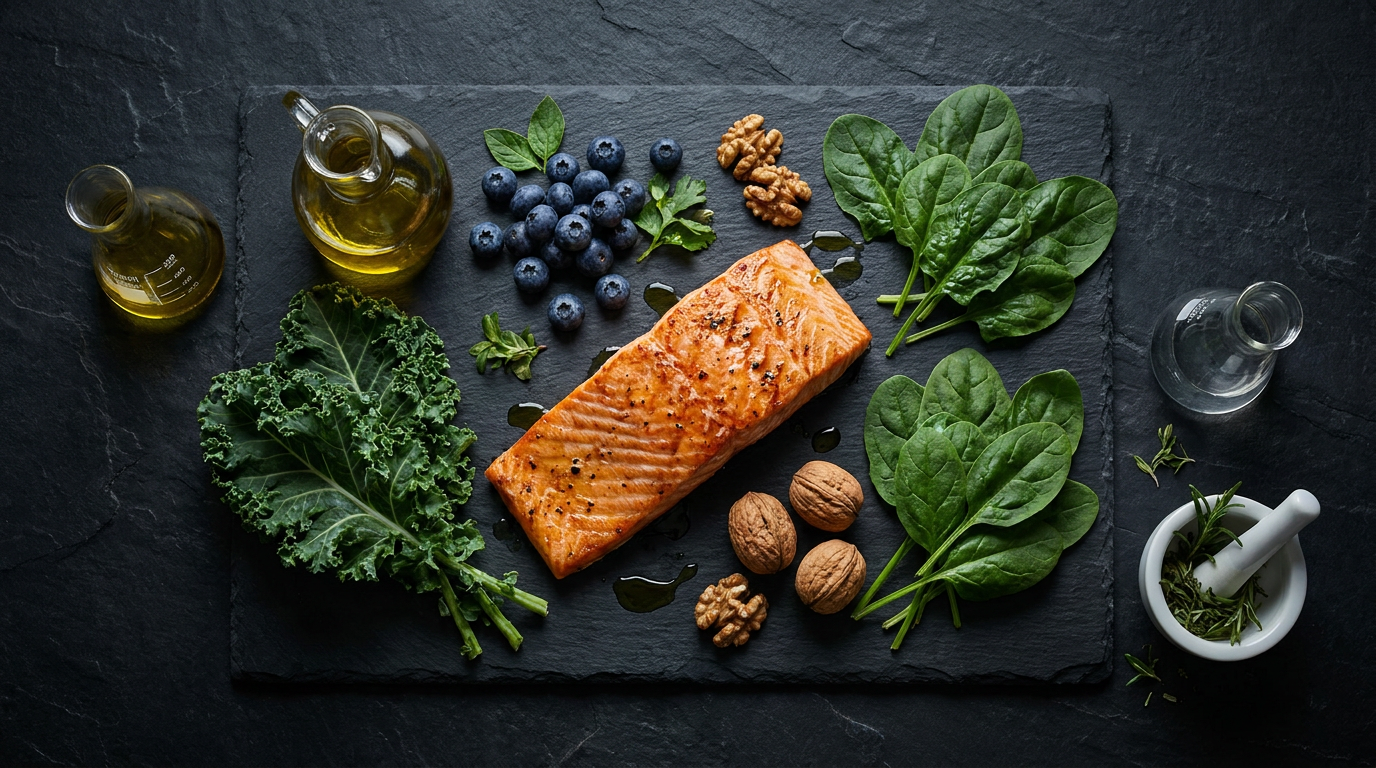
The efficacy of the Mediterranean diet is not magic; it is rooted in the dense concentration of specific neuro-supportive nutrients. The brain is a highly metabolically active organ, consuming twenty percent of the body's energy, and it requires a constant supply of premium fuel. Nutrients such as omega-3 fatty acids (found in salmon and walnuts), magnesium (in leafy greens), zinc (in pumpkin seeds), and B vitamins are critical co-factors in the synthesis of neurotransmitters and the maintenance of neuroplasticity—the brain's ability to adapt and form new neural connections.[5]
Conversely, the evidence is equally strong regarding the detrimental psychiatric effects of the standard Western diet. Ultra-processed foods, characterized by high levels of refined sugars, artificial emulsifiers, and industrial seed oils, are now recognized as potent drivers of neuroinflammation. When consumed regularly, these foods degrade the mucosal lining of the gut, leading to increased intestinal permeability, commonly referred to as "leaky gut." This allows endotoxins to enter the bloodstream, triggering a systemic immune response.[2][4]
This systemic inflammation does not remain confined to the body; inflammatory cytokines readily cross the blood-brain barrier. Once inside the brain, these molecules disrupt neurotransmitter metabolism, specifically shunting tryptophan away from serotonin production and toward the creation of neurotoxic byproducts. Clinical data consistently shows that patients with the highest markers of systemic inflammation are the most likely to suffer from treatment-resistant depression, highlighting why anti-inflammatory diets are proving so effective where traditional medications sometimes fail.[3][6]
A secondary, moderately supported claim within the field centers on the anxiety-reducing properties of fermented foods. Foods such as kefir, kimchi, sauerkraut, and kombucha introduce live, beneficial bacterial cultures directly into the digestive tract. Emerging research suggests that a diet high in these fermented products can actively lower perceived stress levels and reduce the biological markers of anxiety, such as elevated cortisol. The mechanism here relies on the production of short-chain fatty acids (SCFAs).[2][5]

When beneficial gut bacteria ferment dietary fiber, they produce SCFAs like butyrate, acetate, and propionate. These compounds possess profound anti-inflammatory properties and play a crucial role in maintaining the integrity of the blood-brain barrier. Furthermore, certain strains of bacteria, increasingly referred to as "psychobiotics," have been shown in preliminary trials to directly modulate the body's stress response by interacting with the vagus nerve, effectively signaling the brain to downregulate the sympathetic nervous system's "fight or flight" state.[6]
However, the evidence pack also reveals areas of significant uncertainty and weak claims, particularly regarding over-the-counter probiotic supplements. While the multi-billion-dollar supplement industry heavily markets encapsulated probiotics as cures for anxiety and depression, the clinical evidence remains highly mixed. Many commercial strains do not survive stomach acid, fail to colonize the gut, or are simply the wrong specific strains for psychiatric benefit. Experts caution that popping a generic probiotic pill cannot undo the inflammatory damage of a highly processed diet.[1][6]
The clinical implementation of nutritional psychiatry also faces systemic hurdles. While the science is clear, prescribing a Mediterranean diet is vastly more complex than prescribing a pill. It requires addressing socioeconomic barriers, including food deserts, the high cost of fresh produce, and the lack of culinary literacy among many patients. Furthermore, insurance models are only just beginning to adapt, with some progressive providers now covering the cost of registered dietitians for psychiatric patients, recognizing the long-term cost savings of preventing mental health relapses.[3][7]

Ultimately, the rise of nutritional psychiatry represents a deeply empowering paradigm shift. It moves mental health care away from a purely passive model—where patients simply receive medication—toward an active, holistic approach. While nobody is suggesting that severe psychiatric conditions like schizophrenia or bipolar disorder can be cured with broccoli alone, the evidence is undeniable: the food we eat is the fundamental building block of our mental architecture. By optimizing the gut microbiome, patients are being handed a powerful, daily tool to build resilience from the inside out.[1][7]
How we got here
2017
The landmark SMILES trial becomes the first randomized controlled trial to prove that dietary intervention can treat clinical depression.
2022
Large-scale meta-analyses confirm the link between ultra-processed food consumption and elevated risks of anxiety and cognitive decline.
2024
Research into 'psychobiotics' accelerates, identifying specific bacterial strains that actively downregulate the body's stress response.
Early 2026
Major psychiatric associations formally incorporate dietary screening and nutritional counseling into their standard clinical guidelines for mood disorders.
Viewpoints in depth
Clinical Psychiatrists
Emphasize the integration of diet as a powerful adjunct to, rather than a replacement for, traditional medical treatments.
For practicing psychiatrists, the data on the gut-brain axis has fundamentally changed the intake process. Clinicians are increasingly running metabolic panels and asking detailed questions about dietary habits before adjusting medication dosages. However, this camp is highly cautious about the messaging surrounding nutritional psychiatry. They frequently warn against the 'wellness washing' that suggests severe, biologically rooted mental illnesses like bipolar disorder or severe major depressive disorder can be cured entirely through diet. Their focus is on using nutrition to lower systemic inflammation, thereby making traditional pharmacotherapy more effective and reducing the required dosages.
Nutritional Researchers
Focus on the granular biological mechanisms, mapping exactly how specific nutrients and fibers alter neurotransmitter production.
The research community is primarily concerned with the 'how' and 'why' of the gut-brain connection. This camp is moving beyond broad dietary patterns to isolate the specific short-chain fatty acids and inflammatory cytokines that cross the blood-brain barrier. They argue that the standard Western diet is not just lacking in nutrients, but is actively neurotoxic due to the high concentration of emulsifiers and refined sugars that degrade the gut lining. Their current frontier is personalized nutrition—using microbiome sequencing to prescribe highly specific dietary fibers and fermented foods tailored to an individual's unique bacterial makeup.
Patient Advocates
Highlight the empowering nature of dietary interventions, offering patients a daily tool to regain control over their mental health.
For patient advocacy groups, nutritional psychiatry represents a democratization of mental health care. Traditional psychiatric treatment can often feel disempowering, relying entirely on a physician's prescription pad and medications that frequently carry heavy side effects like weight gain or emotional blunting. Dietary intervention, by contrast, is something patients can control three times a day. Advocates celebrate this shift but also heavily lobby for systemic changes, pointing out that prescribing a Mediterranean diet is useless if a patient lives in a food desert or cannot afford fresh produce. They argue that food access is now fundamentally a mental health issue.
What we don't know
- Whether specific, targeted probiotic strains can eventually be formulated to reliably survive digestion and treat specific psychiatric conditions.
- The exact timeline and threshold at which dietary improvements begin to reverse long-term neuroinflammation in chronic depression.
- How to effectively scale nutritional interventions in lower-income populations where access to fresh, whole foods is severely limited.
Key terms
- Gut-Brain Axis
- The bidirectional biochemical communication network that links the enteric nervous system of the digestive tract with the central nervous system of the brain.
- Microbiome
- The community of trillions of bacteria, fungi, and other microorganisms that live in the human digestive tract and regulate immune and metabolic functions.
- Vagus Nerve
- A primary cranial nerve that acts as a biological superhighway, transmitting signals directly between the gut and the brain's mood centers.
- Neuroinflammation
- Inflammation of the nervous tissue in the brain, often triggered by systemic immune responses to poor diet, which is strongly linked to treatment-resistant depression.
- Psychobiotics
- Specific strains of live bacteria (probiotics) that, when ingested in adequate amounts, produce a mental health benefit by interacting with the gut-brain axis.
- Short-Chain Fatty Acids (SCFAs)
- Anti-inflammatory compounds, such as butyrate, produced when beneficial gut bacteria ferment dietary fiber, crucial for maintaining the blood-brain barrier.
Frequently asked
Can changing my diet replace my antidepressants?
No. Medical consensus strongly advises against stopping prescribed psychiatric medications. Diet is viewed as a powerful adjunct therapy to enhance baseline resilience, not a standalone cure for severe mental illness.
What is the best diet for mental health?
The strongest clinical evidence supports a traditional Mediterranean-style diet, which is high in vegetables, fruits, whole grains, legumes, nuts, and lean proteins like fish, while strictly limiting ultra-processed foods.
Do over-the-counter probiotic pills work for anxiety?
The evidence is currently weak. While the gut microbiome heavily influences anxiety, many commercial probiotic supplements fail to survive digestion or lack the specific bacterial strains proven to offer psychiatric benefits.
How long does it take for diet to affect mood?
Clinical trials have shown that patients adhering strictly to a neuro-supportive diet can experience measurable improvements in standardized depression and anxiety scores within 12 weeks.
Sources
Source coverage
7 outlets
3 viewpoints surfaced







[1]Factlen Editorial TeamPatient Advocates
Synthesis by Factlen editorial team
Read on Factlen Editorial Team →[2]The New York TimesPatient Advocates
Can Changing Your Diet Cure Your Anxiety?
Read on The New York Times →[3]MedscapeMedical Consensus
Nutritional Psychiatry Moves From Fringe to Mainstream Clinical Practice
Read on Medscape →[4]The Lancet PsychiatryNutritional Researchers
Efficacy of dietary interventions in the management of clinical depression: a 2026 systematic review and meta-analysis
Read on The Lancet Psychiatry →[5]Harvard Medical SchoolNutritional Researchers
Nutritional psychiatry: Your brain on food
Read on Harvard Medical School →[6]National Institute of Mental HealthMedical Consensus
The Gut Microbiome and Mental Health: Current Evidence
Read on National Institute of Mental Health →[7]American Psychiatric AssociationMedical Consensus
What Is Nutritional Psychiatry?
Read on American Psychiatric Association →

More in health
See all 24 stories →Type 1 Diabetes
FDA Approves First Therapy to Preserve Insulin Production in Newly Diagnosed Type 1 Diabetes
0 sources

Nutrition Science
The Food Matrix: Why Nutrition Science is Moving Beyond Calories and Macros
0 sources
Food Policy
How Chile’s Black Octagon Warning Labels Are Reshaping Global Nutrition
0 sources

Pediatric Diabetes
FDA Approves First Disease-Modifying Therapy for Children Newly Diagnosed With Stage 3 Type 1 Diabetes
0 sources

Every angle. Every day.
Get health stories with full source coverage and perspective breakdowns delivered to your inbox.