
Renewable Groups Sue Pentagon Over 'Total Halt' of Wind Power Reviews
A coalition of clean energy groups has sued the Department of Defense, alleging the Pentagon has indefinitely frozen national security reviews for new wind farms, stalling 106 projects across 21 states.
By Factlen Editorial Team
- National Security Advocates
- Argue that towering wind turbines degrade early warning radar and airspace monitoring, requiring strict scrutiny to protect military readiness.
- Renewable Energy Industry
- Contend that radar mitigation is a solved technical problem and view the review freeze as a politically motivated attack on clean energy.
- Grid Reliability Planners
- Focus on the need for new generation capacity to meet rising electricity demand, warning that stalling projects threatens future power stability.
What's not represented
- · Local communities hosting the stalled wind projects
- · Military base commanders managing local airspace
Why this matters
The administrative freeze jeopardizes $47 billion in capital investments and threatens to slow the expansion of the U.S. power grid at a time when electricity demand is surging. If the courts do not intervene, the halt could effectively cripple new onshore wind development nationwide.
Key points
- Nine renewable energy groups are suing the Pentagon over a halt in national security reviews for wind farms.
- The freeze has stalled 106 projects across 21 states, jeopardizing $47 billion in investments.
- The DoD Siting Clearinghouse evaluates whether wind turbines interfere with military radar systems.
- The industry argues radar mitigation is a solved problem and views the freeze as politically motivated.
- National security advocates argue that massive turbines create dangerous blind spots for early warning radar.
A coalition of nine renewable energy groups has filed a federal lawsuit against the Department of Defense and Defense Secretary Pete Hegseth, seeking to end what they describe as an indefinite, undeclared freeze on national security reviews for new wind farms. The lawsuit, filed late Thursday in the U.S. District Court in Oregon, alleges that the Pentagon has effectively halted the permitting process for onshore wind energy development across the country.[1][2]
At the center of the dispute is the DoD Siting Clearinghouse, a specialized Pentagon office established to evaluate whether towering energy infrastructure interferes with military radar, training routes, and airspace. According to the plaintiffs, which include Renewable Northwest and the Advanced Power Alliance, the Clearinghouse stopped countersigning final mitigation agreements in August 2025 and progressively slowed all other reviews until the process ground to a complete halt in April 2026.[2]
The economic stakes of the administrative logjam are massive. An economic analysis submitted alongside the lawsuit by the consulting firm Charles River Associates estimates that at least 106 wind projects across 21 states are currently stalled. These delayed projects represent approximately $47 billion in capital investment and threaten thousands of construction and engineering jobs.[1][2]

Jason Grumet, CEO of the American Clean Power Association, stated that the wind industry relies on the government to execute routine permitting processes to maintain the nation's power supply. The first quarter of 2026 saw the slowest start for new land-based wind installations since 2018, a deceleration the industry attributes directly to the Pentagon's inaction.[2][6]
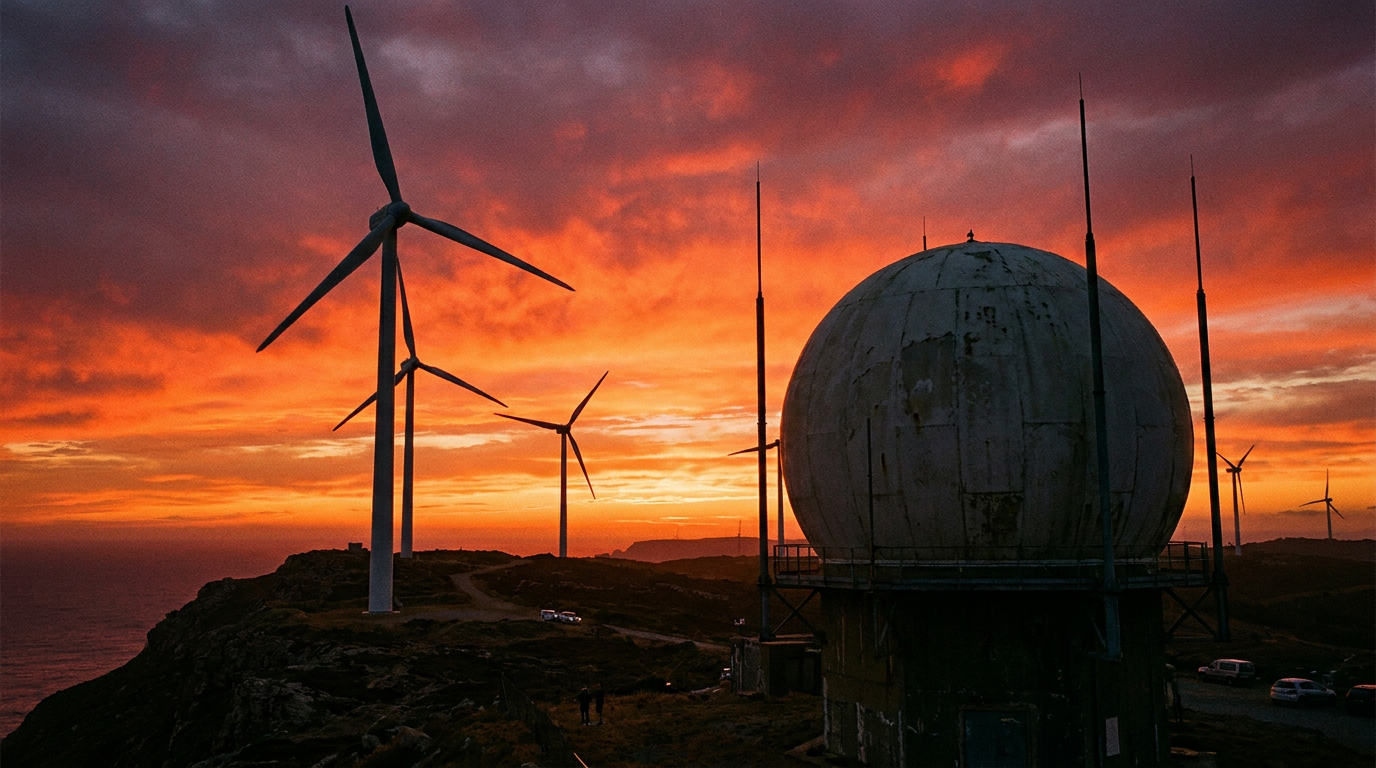
The core technical conflict underlying the policy dispute is the physical interaction between modern wind turbines and military radar systems. Wind turbines, which now frequently exceed 500 feet in height with massive rotating blades, can reflect radar signals in ways that create false readings and obscure aircraft detection.[3][4]
The physics of this interference are well-documented. The large radar cross-section of a turbine, combined with the Doppler frequency shift produced by its spinning blades, can severely degrade a radar system's ability to discriminate between a wind turbine and a low-flying aircraft or incoming missile. This creates "clutter" on radar screens and can produce shadowing effects that blind early warning systems to threats positioned behind a wind farm.[3]

National security advocates and defense officials argue that these disruptions are real, measurable, and increasingly dangerous as turbines grow larger. Early Warning Radar systems, such as the PAVE PAWS installation, serve as the backbone of America's missile defense. If a wind farm is constructed within the line of sight of these critical installations, it could delay response times and confound target detection during a national emergency.[5]
National security advocates and defense officials argue that these disruptions are real, measurable, and increasingly dangerous as turbines grow larger.
The Heritage Foundation recently published a report emphasizing that despite years of research, no single technological solution has fully mitigated this interference. The conservative think tank argues that the Department of Defense is entirely justified in pausing projects that could jeopardize aviation safety, weather forecasting, and ocean surveillance, prioritizing military readiness over renewable energy mandates.[5]
However, the renewable energy industry contends that radar interference is a known engineering challenge that has been successfully managed for over 15 years. Since 2010, the federal government has operated an interagency working group—including the DoD, the Department of Energy, and the Federal Aviation Administration—specifically dedicated to mitigating wind turbine radar interference.[4][6]
Mitigation strategies are highly localized and routinely negotiated between developers and local military bases. Solutions include redesigning the wind farm layout to minimize the impacted radar coverage area, increasing the spacing between turbines, or curtailing turbine operations during specific military training exercises.[4][6]
In cases where physical siting adjustments are insufficient, developers have historically funded technological upgrades to the affected military hardware. This includes deploying new radar software with advanced filtering techniques, modifying constant false alarm rates, or even purchasing infill radar systems to cover blind spots created by the turbines.[4]

The lawsuit argues that the Pentagon's sudden refusal to engage in this established mitigation process is arbitrary, capricious, and politically motivated. The plaintiffs point out that the Trump administration has been openly hostile to wind power, with the President frequently criticizing turbines and previously attempting to halt offshore wind leasing through executive orders.[1][2]
Industry advocates view the Clearinghouse freeze as a backdoor method to achieve the administration's anti-wind policy goals without passing new legislation or undergoing formal agency rulemaking. By simply refusing to process the paperwork, the executive branch can effectively starve the industry of the certainty required to secure project financing.[2][7]
The Department of Defense has declined to comment on the specific allegations, citing the ongoing litigation. However, the legal battle highlights a growing tension between the nation's ambitious clean energy targets and the expanding footprint required to achieve them. Currently, wind power generates roughly 10 percent of U.S. electricity, making it the largest single source of renewable energy on the grid.[2]

Grid reliability planners are watching the lawsuit closely. As electricity demand surges due to the electrification of transportation and the rapid expansion of data centers, grid operators are counting on the completion of these 106 stalled projects to maintain adequate generation capacity. A prolonged freeze could exacerbate regional power shortfalls in the coming years.[6][7]
The immediate question for the U.S. District Court in Oregon is whether to grant the plaintiffs' motion for an injunction, which would legally compel the Pentagon to resume its ordinary review process. Even if the court rules in favor of the renewable groups, clearing the accumulated backlog of 106 complex technical reviews could take months, leaving the $47 billion pipeline in a state of prolonged uncertainty.[2][7]
How we got here
2006
Congress requires the DoD to study wind turbine radar interference, confirming that rotating blades create clutter and false targets.
2010
The federal government establishes an interagency working group to develop mitigation strategies for wind and radar coexistence.
August 2025
The DoD Siting Clearinghouse begins slowing its review process and stops countersigning final mitigation agreements.
April 2026
The Pentagon's review process for new onshore wind projects comes to a complete halt.
June 11, 2026
Nine renewable energy groups file a federal lawsuit against the DoD to force the resumption of reviews.
Viewpoints in depth
National Security Advocates
Prioritizing military readiness and uncompromised airspace monitoring over renewable energy expansion.
This camp, heavily represented by defense officials and conservative think tanks, argues that the physical reality of 500-foot turbines cannot be ignored. They point to physics: massive rotating blades inevitably create radar clutter, Doppler shifts, and shadowing that can mask low-flying aircraft or incoming missiles. From this perspective, the Department of Defense is entirely justified in halting reviews to protect critical Early Warning Radar systems, as no software upgrade can fully replace an unobstructed line of sight.
Renewable Energy Industry
Viewing the review freeze as an arbitrary, politically motivated attack on a proven mitigation framework.
Industry advocates argue that radar interference is a known, manageable engineering challenge, not an insurmountable crisis. For 15 years, developers have successfully collaborated with the military to alter turbine layouts, upgrade radar software, and curtail operations during training exercises. They view the sudden halt by the DoD Siting Clearinghouse not as a genuine security measure, but as a backdoor administrative tactic by the executive branch to cripple wind energy development without passing new legislation.
What we don't know
- Whether the U.S. District Court in Oregon will grant an injunction forcing the Pentagon to resume reviews.
- How quickly the DoD Siting Clearinghouse could process the backlog of 106 projects if ordered to restart.
- Whether the administration will attempt to formalize the halt through official agency rulemaking if they lose in court.
Key terms
- DoD Siting Clearinghouse
- A Pentagon office that evaluates whether proposed energy projects will interfere with military operations, radar, or airspace.
- Doppler Shift
- A change in the frequency of a radar signal caused by the motion of an object, such as a spinning wind turbine blade, which can confuse radar software.
- Radar Clutter
- Unwanted echoes on a radar screen that can obscure real targets, often caused by the physical mass of large wind farms.
- Constant False Alarm Rate
- A radar software setting that can be adjusted to filter out background noise and clutter, often used as a mitigation tactic for wind farms.
Frequently asked
Why do wind turbines interfere with military radar?
The massive physical size of the turbines can block radar signals, while the spinning blades create a Doppler effect that radar software can mistake for moving aircraft or missiles.
How has this been handled in the past?
For 15 years, developers and the military have negotiated mitigations, such as changing the layout of the wind farm, upgrading radar software, or turning off turbines during military exercises.
What happens if the reviews aren't restarted?
Without DoD clearance, the Federal Aviation Administration will not approve the projects, meaning the 106 planned wind farms cannot be built.
Sources
Source coverage
7 outlets
3 viewpoints surfaced






[1]The New York TimesRenewable Energy Industry
Renewable Groups Ask Courts to End Pentagon’s ‘Total Halt’ of Wind Power
Read on The New York Times →[2]Associated PressRenewable Energy Industry
Pentagon reviews are blocking wind farms, putting jobs at risk, lawsuit says
Read on Associated Press →[3]Department of DefenseNational Security Advocates
The Effect of Windmill Farms On Military Readiness
Read on Department of Defense →[4]Department of EnergyGrid Reliability Planners
Federal Interagency Wind Turbine Radar Interference Mitigation Strategy
Read on Department of Energy →[5]The Heritage FoundationNational Security Advocates
Offshore Wind Is a Danger to National Security
Read on The Heritage Foundation →[6]American Clean Power AssociationRenewable Energy Industry
The Department of Defense and American Wind Power: Partners in Protecting National Security
Read on American Clean Power Association →[7]Factlen Editorial TeamGrid Reliability Planners
Synthesis by Factlen editorial team
Read on Factlen Editorial Team →

More in science
See all 19 stories →Structural Biology
A 75-Kilowatt Laser Just Unlocked the Invisible World of Human Proteins
0 sources

Wind Power
Renewable Energy Groups Sue Pentagon Over 'De Facto Moratorium' on Wind Farms
0 sources

Cryo-EM Tech
Laser Phase Plate Breakthrough Illuminates the Invisible 90% of the Human Proteome
0 sources

Wind Power Policy
Renewable Energy Groups Sue Pentagon Over 'Total Halt' of Wind Farm Reviews
0 sources

Every angle. Every day.
Get science stories with full source coverage and perspective breakdowns delivered to your inbox.