
Psychobiotics and the Gut-Brain Axis: How Diet Shapes Mood and Mental Health
Emerging research reveals that the trillions of bacteria in the human gut directly communicate with the brain, influencing mood, stress, and cognitive function. Scientists are now exploring 'psychobiotics'—dietary interventions designed to improve mental well-being by targeting the microbiome.
By Factlen Editorial Team
- Nutritional Psychiatrists
- Argue that modulating the microbiome is a viable, evidence-based clinical intervention for mental health disorders.
- Gut Health Advocates
- Emphasize whole-food dietary patterns and lifestyle changes over isolated supplements to build microbial diversity.
- Clinical Skeptics
- Caution that while the gut-brain link is real, commercial psychobiotic supplements often outpace the rigorous human trial data.
What's not represented
- · Traditional Psychiatrists relying solely on pharmacotherapy
- · Agricultural scientists studying soil microbiome impact on food
Why this matters
Understanding the gut-brain connection empowers individuals to take an active role in their mental health through accessible, everyday dietary choices, offering a scientifically backed complement to traditional therapies.
Key points
- The gut and brain communicate constantly via the vagus nerve, immune system, and chemical messengers.
- Up to 90% of the body's serotonin is produced in the digestive tract by gut bacteria.
- Psychobiotics are dietary interventions that target the microbiome to improve mental health.
- Whole-food diets rich in fiber and fermented foods outperform isolated probiotic supplements.
- Future mental healthcare may include personalized dietary prescriptions based on individual microbiome sequencing.
The human gut is lined with 200 to 600 million neurons, forming an elaborate mesh-like network often referred to as the 'second brain.' This enteric nervous system operates with remarkable autonomy, managing digestion while maintaining a constant, bidirectional dialogue with the brain in our skulls. For decades, mental health was viewed almost exclusively through the lens of brain chemistry. Today, a paradigm shift is underway as researchers uncover how the trillions of microorganisms residing in the digestive tract profoundly influence our emotional and cognitive well-being.[6][8]
This complex, two-way communication network is known as the gut-brain axis. It connects the central nervous system to the gastrointestinal tract via physical and biochemical pathways, most notably the vagus nerve, which acts as a high-speed biological telegraph line. But the conversation isn't just neural; it involves the immune system, hormonal pathways, and a vast array of chemical messengers. At the center of this dialogue is the gut microbiome—a diverse ecosystem of bacteria, fungi, and viruses that acts as a bustling chemical factory, processing what we eat and sending continuous signals throughout the body.[1][2][3]
One of the most striking discoveries in nutritional psychiatry is the microbiome's role in producing neurotransmitters. While serotonin is widely known as the brain's primary 'feel-good' chemical, an estimated 90 percent of the body's serotonin is actually produced in the digestive tract. Gut bacteria also help synthesize gamma-aminobutyric acid (GABA), a neurotransmitter crucial for regulating anxiety and promoting emotional calmness. When the microbiome is healthy and diverse, it supports the optimal production of these mood-regulating chemicals, ensuring the brain receives the signals it needs to maintain emotional equilibrium.[1][3][4]

As the mechanics of the gut-brain axis become clearer, scientists have coined a new term: 'psychobiotics.' Originally defined as live bacteria that confer mental health benefits when ingested, the definition has expanded to include prebiotics—the specialized plant fibers that feed these beneficial bacteria. Unlike traditional psychiatric medications that target the brain directly, psychobiotics work from the bottom up. They aim to modulate the gut environment, reduce systemic inflammation, and enhance the intestinal barrier to support mental resilience, offering a novel pathway for managing stress and mood disorders.[1][5][7]
The link between gut health and mood is heavily mediated by the immune system. A poor diet can lead to dysbiosis—an imbalance in the gut microbial community. This imbalance often compromises the intestinal lining, allowing toxins to leak into the bloodstream and trigger a low-grade, systemic inflammatory response. Chronic inflammation is increasingly recognized as a significant underlying factor in conditions like depression and anxiety. By restoring microbial balance, psychobiotics help quiet this inflammatory cascade, protecting the brain from stress-induced damage and preserving cognitive function.[1][4][8]
The link between gut health and mood is heavily mediated by the immune system.
Beyond neurotransmitters and immune regulation, beneficial gut bacteria produce critical metabolites known as short-chain fatty acids (SCFAs) when they ferment dietary fiber. SCFAs, such as butyrate, play a vital role in maintaining the integrity of the blood-brain barrier and regulating neuroplasticity—the brain's ability to adapt and form new neural connections. Higher levels of SCFAs are associated with improved cognitive function and a more robust response to psychological stress, highlighting the direct metabolic link between the digestion of plant fibers and the structural health of the brain.[2][4][8]

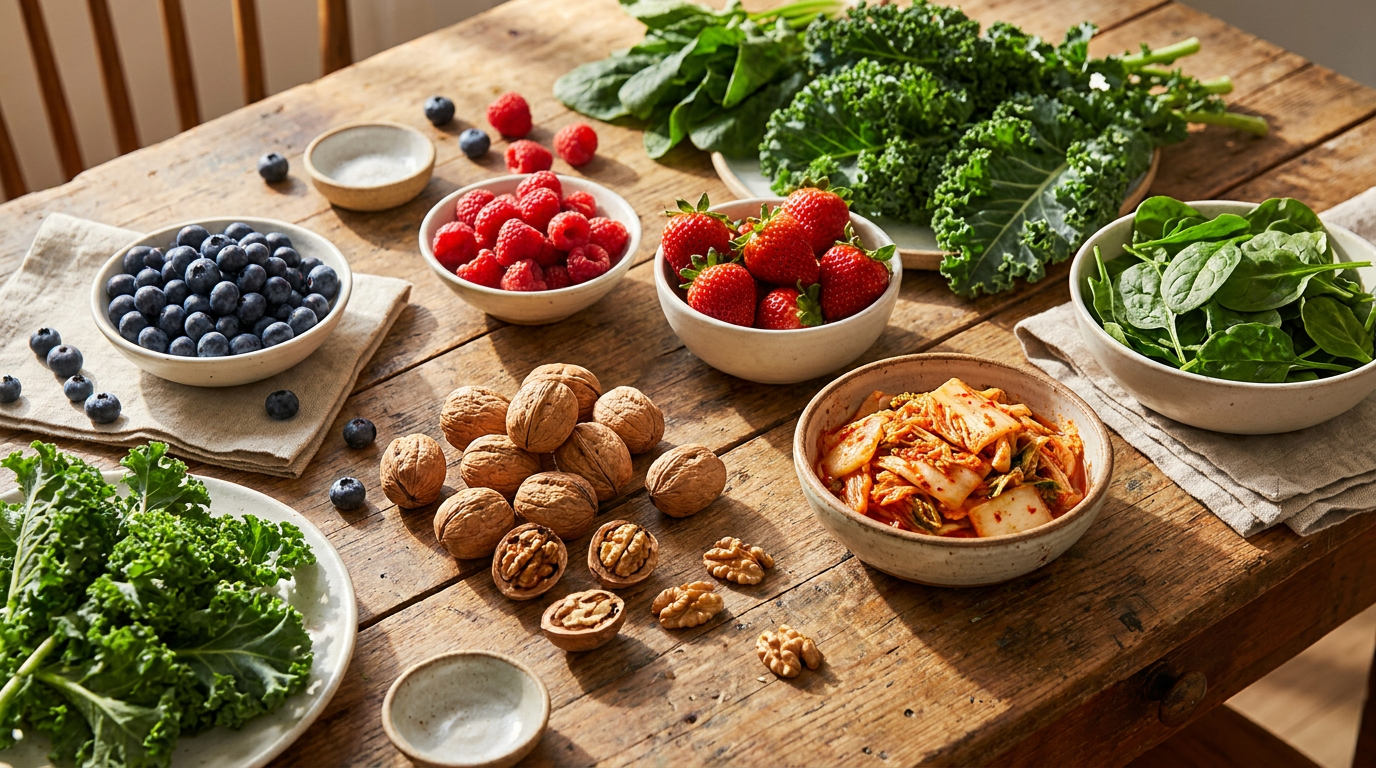
The composition of the microbiome is highly malleable and responds rapidly to dietary changes. Energy-dense, high-fat, and high-sugar Western diets have been consistently linked to reduced microbial diversity and poorer mental health outcomes. These ultra-processed foods effectively starve beneficial bacteria while feeding pro-inflammatory microbial strains. Conversely, diets rich in fiber, colorful vegetables, and fermented foods—such as the Mediterranean diet—foster a thriving, diverse microbiome. This diversity acts as a buffer against stress, providing the raw materials necessary for the gut to manufacture mood-stabilizing compounds.[1][2][6][7]
While the supplement industry has rushed to bottle psychobiotic strains, clinical evidence suggests that whole foods remain the most effective intervention. A recent review highlighted that isolated probiotic supplements often fail to yield the same mental health benefits as a sustained 'psychobiotic diet' rich in prebiotic fibers and fermented foods like kefir, kimchi, and yogurt. The complex synergy of nutrients found in whole foods appears essential for the bacteria to successfully colonize and thrive in the competitive gut environment, outperforming isolated pills.[6][7][8]
Despite the emphasis on whole foods, targeted clinical trials have identified specific bacterial strains with potent psychobiotic properties. Strains such as Lactobacillus rhamnosus and Bifidobacterium longum have demonstrated strain-specific effects in reducing cortisol levels and alleviating perceived stress in human trials. However, researchers note that these effects are highly context-dependent, influenced by the individual's baseline microbiome, dosage, and existing stress levels. This nuance explains why clinical results can sometimes appear mixed, as the efficacy of a specific strain depends heavily on the existing microbial ecosystem it enters.[5]
The personalized nature of the microbiome presents a significant hurdle for universal psychobiotic treatments. Because no two individuals share the exact same microbial makeup, a dietary intervention or probiotic that alleviates anxiety in one person may have no discernible effect on another. This variability underscores the limitations of a one-size-fits-all approach to nutritional psychiatry. It also highlights the necessity of rigorous, multidisciplinary research to untangle the complex web of diet, microbial genetics, and human metabolism before precision treatments can be widely prescribed.[1][2]

As metagenomic sequencing becomes more accessible, the future of nutritional psychiatry lies in personalized dietary prescriptions. Researchers envision a near future where individuals can map their unique microbiome and receive tailored dietary recommendations to cultivate specific psychobiotic strains that address their unique neurochemical deficits. This precision approach could transform mental healthcare, offering a non-invasive, accessible complement to traditional therapies. By addressing the root metabolic and inflammatory causes of mood disorders, rather than merely managing the neurological symptoms, personalized psychobiotics represent a frontier in holistic medicine.[4][8]
Ultimately, the science of the gut-brain axis empowers individuals to take an active role in their mental well-being through their daily meals. While diet is not a replacement for professional psychiatric care or targeted medication in treating severe mental illness, it represents a foundational pillar of emotional resilience. By choosing to nourish the trillions of microbes within, we are quite literally feeding our minds, proving that the path to a healthier brain is inextricably linked to a healthier, more diverse gut ecosystem.[7][8]
How we got here
Early 2000s
Initial discoveries link gut bacteria composition to behavioral changes in animal models.
2013
The term 'psychobiotics' is officially coined by researchers to describe bacteria with mental health benefits.
2017
Major clinical trials begin demonstrating that the Mediterranean diet significantly improves depression symptoms.
2025
Advanced metagenomic tools allow researchers to map specific bacterial strains directly to neurotransmitter production in humans.
Viewpoints in depth
Nutritional Psychiatrists
Focus on the clinical evidence and biological mechanisms of psychobiotics.
Nutritional psychiatrists view the microbiome as a highly active endocrine organ. They point to clinical data showing that specific strains of bacteria directly synthesize neurotransmitters like GABA and serotonin. For this camp, psychobiotics represent a critical, evidence-based adjunct to traditional psychiatric care, offering a way to treat the underlying metabolic and inflammatory drivers of mood disorders rather than just the neurological symptoms.
Gut Health Advocates
Emphasize whole-food dietary patterns and lifestyle changes over isolated supplements.
This perspective argues that the supplement industry's focus on probiotic pills misses the broader picture. Gut health advocates stress that a thriving microbiome requires a diverse array of prebiotic fibers found in whole plant foods. They argue that ultra-processed diets are the root cause of modern dysbiosis, and that true mental resilience is built in the kitchen through sustained, fiber-rich dietary habits rather than quick-fix supplements.
Clinical Skeptics
Caution against over-hyping commercial supplements before rigorous human trials are complete.
While acknowledging the reality of the gut-brain axis, clinical skeptics warn that the commercialization of psychobiotics has outpaced the science. They highlight the extreme variability of the human microbiome, noting that a bacterial strain that reduces anxiety in one patient might do nothing for another. This camp calls for more rigorous, large-scale human trials and standardized dosing before psychobiotics can be reliably prescribed as medical treatments.
What we don't know
- Exactly how individual baseline microbiomes dictate the success or failure of specific psychobiotic strains.
- The long-term psychological effects of sustained psychobiotic interventions over decades.
- How to perfectly standardize and dose live bacterial cultures for predictable psychiatric outcomes.
Key terms
- Gut-Brain Axis
- The bidirectional communication network connecting the central nervous system to the gastrointestinal tract.
- Psychobiotics
- Probiotics and prebiotics that, when ingested in adequate amounts, yield positive psychiatric effects and improve mental well-being.
- Enteric Nervous System
- A vast mesh-like system of neurons governing the function of the gastrointestinal tract, often called the 'second brain.'
- Dysbiosis
- An imbalance in the microbial communities of the gut, often linked to inflammation and various health disorders.
- Short-Chain Fatty Acids (SCFAs)
- Beneficial metabolites produced when gut bacteria ferment dietary fiber, crucial for brain health and reducing inflammation.
- Vagus Nerve
- The primary neural pathway connecting the brain to the gut, responsible for transmitting signals in both directions.
Frequently asked
What are psychobiotics?
Psychobiotics are live bacteria (probiotics) and specialized plant fibers (prebiotics) that confer mental health benefits by positively influencing the gut-brain axis.
Can diet really improve depression or anxiety?
Yes. Clinical studies show that diets rich in fiber and fermented foods can reduce systemic inflammation and support the production of mood-regulating neurotransmitters, alleviating symptoms of anxiety and depression.
Are probiotic supplements as good as fermented foods?
Current evidence suggests that whole, fermented foods are generally more effective than isolated supplements, as they provide a complex synergy of nutrients that help beneficial bacteria thrive.
How quickly does diet affect the gut microbiome?
The gut microbiome is highly responsive; significant shifts in microbial composition and diversity can be observed within just 24 to 48 hours of a major dietary change.
Sources
Source coverage
8 outlets
3 viewpoints surfaced






[1]PubMed CentralNutritional Psychiatrists
The Gut-Brain Axis and Mental Health: How Diet Shapes Our Cognitive and Emotional Well-Being
Read on PubMed Central →[2]Annual ReviewsNutritional Psychiatrists
From Fork to Feelings: How Foods Shape Mental Health via the Microbiota–Gut–Brain Axis
Read on Annual Reviews →[3]ZOEGut Health Advocates
Gut-Brain Connection: What It Is, Mental Health, and Diet
Read on ZOE →[4]MDPINutritional Psychiatrists
Nutritional Modulation of the Gut–Brain Axis: A Comprehensive Review
Read on MDPI →[5]InnerBuddiesClinical Skeptics
Psychobiotics Deep Dive: Best Probiotic Strains for Stress & Anxiety Relief
Read on InnerBuddies →[6]Stanford Lifestyle MedicineGut Health Advocates
Stress and the Microbiome
Read on Stanford Lifestyle Medicine →[7]Food & Mood CentreGut Health Advocates
Diet and the Gut Microbiome
Read on Food & Mood Centre →[8]Factlen Editorial TeamClinical Skeptics
Synthesis by Factlen editorial team
Read on Factlen Editorial Team →
More in food drink
See all 12 stories →Baking Science
The Chemistry of the Perfect Chocolate Chip Cookie
0 sources
Inclusive Design
The Rise of Sensory-Friendly Dining: How Restaurants Are Redesigning for Neurodiversity
0 sources

Baking Science
The Science of Tangzhong: How a Simple Flour Paste Creates the World's Softest Bread
0 sources

Packaging Tech
How the Fast-Food Industry Finally Eliminated 'Forever Chemicals' From Its Packaging
0 sources
Every angle. Every day.
Get food drink stories with full source coverage and perspective breakdowns delivered to your inbox.