
Office-to-Residential Conversions Hit Record High as Cities Push to Revitalize Downtowns
The national pipeline for converting obsolete office buildings into apartments has surged to over 90,000 units in 2026, driven by municipal tax incentives and a push for urban revitalization. While structural constraints limit the number of viable buildings, adaptive reuse is emerging as a critical tool for addressing the housing shortage and reducing carbon emissions.
By Factlen Editorial Team
- Commercial Real Estate Developers
- View conversions as a necessary but capital-intensive strategy to salvage value from stranded Class B and C office assets.
- Urban Planners & Policymakers
- Focus on revitalizing empty downtowns and increasing housing supply through zoning reform and tax incentives.
- Architects & Designers
- Emphasize the environmental benefits of preserving embodied carbon and the unique residential floorplans born from structural constraints.
- Housing Affordability Advocates
- Warn that without proper subsidies, expensive conversion costs will result exclusively in luxury housing, failing to help lower-income residents.
What's not represented
- · Local small business owners in downtown districts relying on foot traffic
- · Construction labor unions negotiating adaptive reuse contracts
Why this matters
As remote work permanently alters the commercial real estate landscape, adaptive reuse offers a tangible solution to the dual crises of empty downtowns and severe housing shortages. For residents, this trend is unlocking unique, centrally located housing options while preserving the environmental benefits of existing structures.
Key points
- The national pipeline for office-to-residential conversions reached a record 90,300 units in 2026, up 28% from the previous year.
- New York City leads the nation in conversion projects, fueled by high office vacancies and the new 467-m tax exemption program.
- Only about 30% of existing office buildings are physically viable for conversion, primarily due to constraints around floor plate depth and natural light.
- Converting commercial buildings requires massive capital expenditures to overhaul plumbing, electrical, and HVAC infrastructure.
- Adaptive reuse preserves embodied carbon and diverts demolition waste, making it a highly sustainable development strategy.
- Without municipal tax incentives, the high costs of conversion often force developers to build exclusively luxury apartments.
The post-pandemic landscape left major American downtowns grappling with two contrasting, simultaneous crises: millions of square feet of vacant commercial office space and a severe, escalating shortage of residential housing. As remote and hybrid work models became permanently entrenched, the traditional central business district faced an existential threat, with foot traffic plummeting and older office buildings bleeding tenants. In response, adaptive reuse—specifically the conversion of obsolete office towers into multifamily apartment buildings—has emerged as the most intuitive and widely discussed solution. What began as a niche architectural experiment in the immediate aftermath of the pandemic has rapidly scaled into a market-defining real estate trend, offering a rare opportunity to solve two generational urban challenges with a single structural intervention.[7]
The sheer scale of the current conversion pipeline illustrates how aggressively developers are pivoting toward this strategy. According to a comprehensive March 2026 report from real estate data firm RentCafe, the national pipeline for office-to-residential conversions has reached a record-breaking 90,300 units currently in progress. This figure represents a massive 28 percent year-over-year increase and is nearly four times higher than the pipeline volume recorded just four years ago in 2022. Office conversions have now become the dominant form of building repurposing, accounting for 47 percent of all planned adaptive reuse projects nationwide, significantly outpacing hotel, industrial, and retail conversions.[1]
The geography of this adaptive reuse boom is highly concentrated in the metropolitan areas experiencing the most acute office market distress combined with the highest demand for residential housing. New York City currently leads the nation by a wide margin, boasting over 16,300 future converted units in its pipeline. Data from Cushman & Wakefield reveals that office-to-residential conversion starts in Manhattan more than doubled from 1.6 million square feet in 2023 to 3.3 million square feet in 2024, and accelerated even further to hit 4.1 million square feet by August 2025.[1][2]

Following New York, cities like Washington, D.C., Chicago, and Los Angeles are also seeing massive influxes of conversion projects. In Washington, D.C., the return of government workers and the implementation of the Housing in Downtown program have spurred nearly 8,500 units in the pipeline. However, while the growth rate of these projects is staggering, industry experts caution that the overall impact on the broader commercial real estate market remains bounded. CBRE notes that the 71 million square feet of conversions currently planned or underway represent less than 2 percent of the total United States office inventory, indicating that conversions alone will not be a panacea for the commercial real estate sector's broader vacancy woes.[1][6]
A common public misconception is that any empty office tower can easily be transformed into an apartment building. In reality, the physical and structural constraints of commercial real estate dictate that only a fraction of the existing inventory is actually suitable for residential living. Architecture and design firm Gensler, which has analyzed over 1,300 buildings across 170 cities using a proprietary conversion algorithm, estimates that only about 30 percent of existing office buildings possess the necessary architectural characteristics to make a conversion physically and financially viable.[3]
The primary physical hurdles in these projects are floor plate depth and access to natural light and ventilation. Modern Class A office buildings, particularly those built in the late 20th century, often feature massive, deep floor plates designed to maximize interior cubicle space. When converting these spaces to residential use, it becomes nearly impossible to provide operable windows for every bedroom without carving out massive, prohibitively expensive interior light wells. Consequently, older, pre-1990 buildings with smaller, narrower floor plates—often categorized as Class B or Class C offices—are emerging as the most viable and highly sought-after candidates for developers.[3][6]

The primary physical hurdles in these projects are floor plate depth and access to natural light and ventilation.
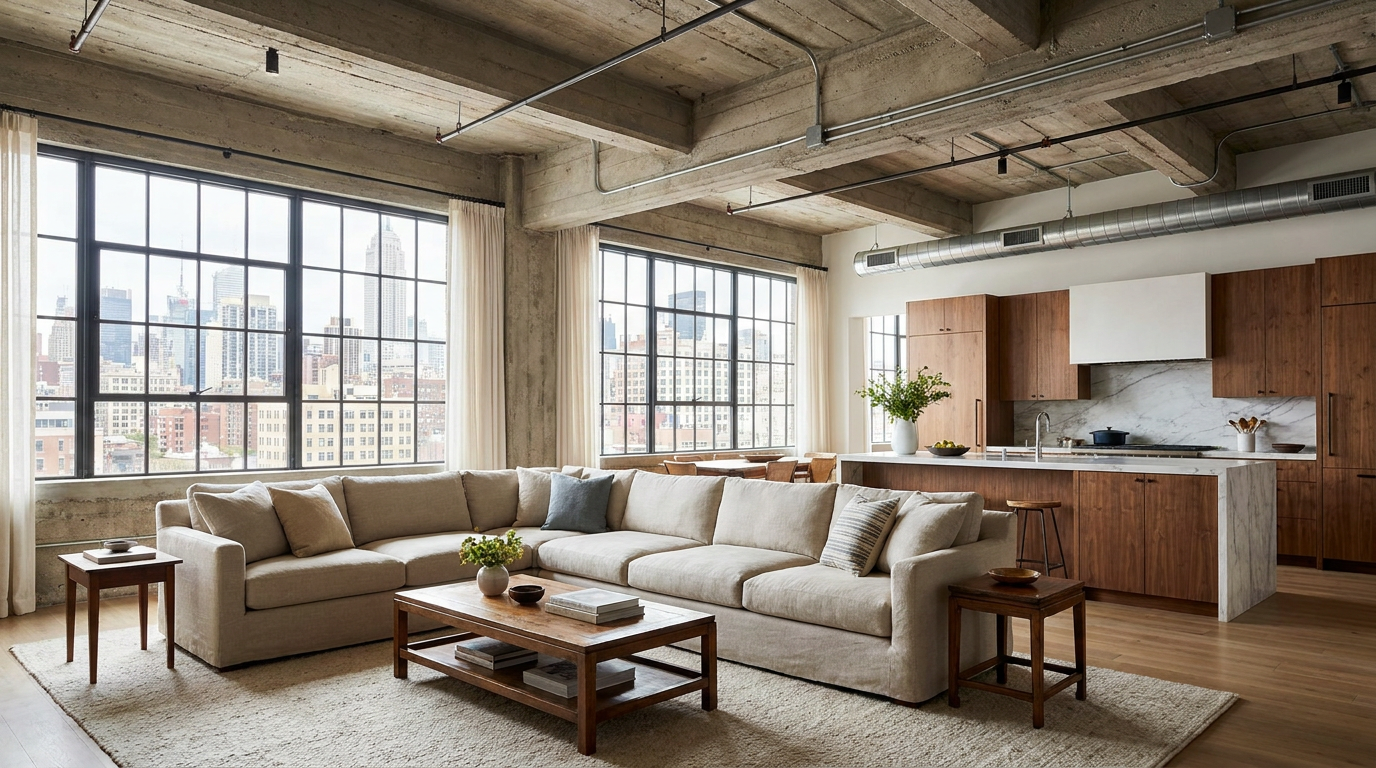
While the structural constraints of legacy office buildings present significant engineering challenges, they also force a level of architectural innovation that is yielding fascinating results for renters. Gensler's 2026 residential design research highlights how the irregular floor plates, varied ceiling heights, and unconventional layouts of older commercial buildings can be leveraged to create a diversity of unit types that purpose-built, ground-up apartment buildings rarely offer. Instead of the standard, uniform boxes found in modern multifamily developments, conversions often feature unique lofts, expansive living areas, and idiosyncratic floor plans.[3]
This architectural variety is proving highly attractive to a diverse array of renter demographics. Gensler's analysis categorizes these renters into distinct profiles, noting that the unique layouts of converted offices cater perfectly to residents who prioritize large, open entertaining spaces, as well as those who value the visual separation and quiet sanctuaries that irregular floor plans can provide. By embracing the quirks of the original commercial structures, developers are able to offer a differentiated housing product that stands out in crowded urban rental markets, driving higher tenant satisfaction and retention rates.[3]
Despite the clear demand for the finished product, the construction costs associated with adaptive reuse are astronomical, often rivaling the cost of ground-up construction. CBRE analysts note that converting an office to a multifamily building requires massive capital expenditures to completely overhaul the building's infrastructure. Developers must drill through concrete floors to add complex plumbing networks, install individualized HVAC systems, build out hundreds of kitchens and bathrooms, and navigate the costly, time-consuming process of securing zoning variances for a change of use.[6]

Because of these immense upfront costs, purely market-driven conversions often struggle to pencil out for investors. A comprehensive study by the RAND Corporation, which focused on the feasibility of adaptive reuse in Los Angeles County, found that while commercial conversions could theoretically produce up to 113,000 new housing units, the financial viability of these projects is highly sensitive to local regulations and economic conditions. Without public intervention, developers are forced to target the ultra-luxury market exclusively in order to recoup their massive capital investments, leaving middle- and lower-income renters behind.[4]
To bridge this financial gap and ensure that conversions contribute to broader housing affordability goals, municipalities are stepping in with aggressive tax incentives and policy accelerators. In New York City, the newly implemented 467-m tax exemption program is projected to support the creation of 14,500 apartments in Manhattan alone, including 3,600 income-restricted affordable units. The New York City Comptroller's office estimates the present value of these tax exemptions at a staggering $5.6 billion, illustrating the massive scale of public investment required to catalyze private conversion efforts and make affordable housing a reality within these projects.[5]
From a pure sustainability and climate perspective, the adaptive reuse of commercial buildings is a resounding victory. Repurposing existing structures preserves the massive amounts of embodied carbon locked within the building's concrete and steel foundation and frame. Furthermore, it diverts thousands of tons of demolition waste from local landfills, making it a cornerstone strategy for cities attempting to meet aggressive carbon reduction targets while simultaneously revitalizing their urban cores.[6][7]

However, the social equity component of these projects remains a subject of intense debate among urban planners and housing advocates. Because conversion costs are so high, and the resulting apartments are often located in prime downtown real estate, there are valid concerns that adaptive reuse could inadvertently accelerate gentrification if not carefully managed. The RAND Corporation study emphasizes that cities must use smart, targeted incentives—such as density bonuses or long-term tax abatements—rather than strict, punitive mandates, to encourage developers to include affordable units without stifling the overall pipeline of much-needed housing supply.[4][7]
How we got here
March 2020
The pandemic triggers a mass shift to remote work, emptying downtown office buildings.
April 2022
The RAND Corporation publishes a landmark study identifying the massive potential for adaptive reuse to address housing shortages.
Late 2023
Cities like New York and Washington D.C. introduce aggressive tax incentives and zoning accelerators to make conversions financially viable.
March 2026
The national office-to-residential pipeline hits a record 90,300 units, a nearly 400% increase from 2022.
Viewpoints in depth
Urban Planners & Policymakers
Focus on revitalizing empty downtowns and increasing housing supply through zoning reform and tax incentives.
For city officials, the hollowing out of central business districts represents an existential threat to municipal tax bases and urban vibrancy. Planners view adaptive reuse as a silver bullet that can simultaneously eliminate blighted, vacant commercial properties and alleviate severe housing shortages. To catalyze this transition, municipalities are aggressively rewriting zoning codes and offering massive tax abatements, arguing that the long-term economic benefits of a populated, 24/7 downtown far outweigh the short-term loss of commercial property tax revenue.
Commercial Real Estate Developers
View conversions as a necessary but capital-intensive strategy to salvage value from stranded Class B and C office assets.
Developers approach the conversion trend with cautious optimism tempered by financial reality. While they recognize the immense consumer demand for downtown housing, they are acutely aware of the astronomical costs associated with retrofitting commercial infrastructure for residential use. For many property owners, converting an aging Class B or C office building is not a passion project, but a necessary financial maneuver to salvage an asset that can no longer attract corporate tenants in a post-pandemic, hybrid-work economy.
Architects & Designers
Emphasize the environmental benefits of preserving embodied carbon and the unique residential floorplans born from structural constraints.
The architectural community champions adaptive reuse primarily for its profound sustainability benefits. By preserving the concrete and steel skeleton of an existing building, developers save massive amounts of embodied carbon and prevent thousands of tons of waste from entering landfills. Furthermore, designers embrace the structural quirks of older office buildings—such as irregular column spacing and varied ceiling heights—as opportunities to create diverse, highly individualized apartment layouts that appeal to modern renters seeking unique living spaces.
What we don't know
- Whether the current wave of municipal tax incentives will be sufficient to offset the high interest rate environment for developers.
- How the influx of new residential units will alter the retail and amenity landscape of traditionally 9-to-5 commercial districts.
- If the conversion trend will expand significantly into mid-sized cities, or remain concentrated in top-tier coastal metros with the highest housing costs.
Key terms
- Adaptive Reuse
- The process of repurposing an existing building for a new use, such as turning a commercial office into residential apartments.
- Floor Plate
- The total leasable square footage of a single floor in a commercial building, which dictates how easily the space can be subdivided into apartments.
- Embodied Carbon
- The greenhouse gas emissions associated with the manufacturing, transportation, and installation of building materials, which are preserved when a building is reused rather than demolished.
- Class B/C Office
- Older, less modernized commercial buildings that are currently experiencing the highest vacancy rates and are prime candidates for conversion.
Frequently asked
Why can't all empty office buildings become apartments?
Many modern office buildings have massive, deep floor plates. This makes it impossible to give every residential unit access to natural light and operable windows without undertaking prohibitively expensive structural changes, like carving out interior light wells.
Does converting offices actually lower rent prices?
In the short term, most conversions result in luxury or market-rate apartments due to the high costs of retrofitting plumbing and HVAC systems. However, adding any new supply helps ease overall housing pressure, and some cities are offering tax incentives to mandate affordable units.
Is it cheaper to convert an office or build from scratch?
While conversions save on the cost of the structural frame and foundation, the complex retrofitting required for residential plumbing, electrical, and HVAC often makes the total cost comparable to ground-up construction.
Sources
Source coverage
7 outlets
4 viewpoints surfaced







[1]RentCafe
Adaptive Reuse Pipeline Hits Record 90,300 Units in 2026
Read on RentCafe →[2]Cushman & WakefieldCommercial Real Estate Developers
New York City Office-to-Residential Conversions Reach Post-2008 High
Read on Cushman & Wakefield →[3]GenslerArchitects & Designers
Understanding Office-to-Residential Conversion: Lessons from Six U.S. Case Studies
Read on Gensler →[4]RAND CorporationUrban Planners & Policymakers
Can Adaptive Reuse of Commercial Real Estate Address the Housing Crisis?
Read on RAND Corporation →[5]New York City ComptrollerUrban Planners & Policymakers
Office-to-Residential Conversion Projects and Tax Exemptions
Read on New York City Comptroller →[6]CBRECommercial Real Estate Developers
Adaptive Reuse and Sustainable Development in Commercial Real Estate
Read on CBRE →[7]Factlen Editorial TeamHousing Affordability Advocates
Synthesis by Factlen editorial team
Read on Factlen Editorial Team →
More in real estate
See all 13 stories →Housing Supply
The Evidence Is In: 'Missing Middle' Zoning Reforms Successfully Lower Rent Growth
0 sources
Adaptive Reuse
How Empty Office Towers Are Being Engineered Into the Next Generation of Housing
0 sources
Commission Rules
Traditional Real Estate Agent vs. Flat-Fee Broker: Which is Right for You in 2026?
0 sources
Zoning Reform
The Evidence Behind Upzoning: How Auckland and Minneapolis Proved Building More Housing Lowers Rents
0 sources
Every angle. Every day.
Get real estate stories with full source coverage and perspective breakdowns delivered to your inbox.