
How SpaceX Executed the Largest IPO in History and Rewrote the Space Economy
SpaceX has officially entered the public markets with a record-breaking $75 billion IPO, achieving a $2 trillion valuation. The highly unconventional offering validates two decades of commercial spaceflight while introducing new pressures for the aerospace giant.
By Factlen Editorial Team
- Financial Analysts
- Focused on the unconventional mechanics, valuation, and capital structure of the IPO.
- Aerospace Veterans
- Focused on the engineering milestones and the validation of the commercial space model.
- Technology Strategists
- Focused on the company's AI potential and Starlink's global data infrastructure.
What's not represented
- · Retail Investors
- · Traditional Defense Contractors
Why this matters
SpaceX's transition to a public company opens the space economy to everyday investors and sets a massive benchmark for the aerospace industry. However, the shift means the company must now balance its long-term interplanetary ambitions with the immediate demands of quarterly shareholder returns.
Key points
- SpaceX executed a $75 billion IPO, reaching a $2 trillion valuation.
- The company used a highly unusual fixed $135 offer price.
- The pricing strategy left an estimated $20 billion in first-day profits on the table.
- SpaceX implemented a staggered lockup release to protect the stock while rewarding early employees.
- Analysts note the valuation is heavily driven by SpaceX's AI potential and Starlink data network.
- The IPO validates NASA's commercial spaceflight partnership model.
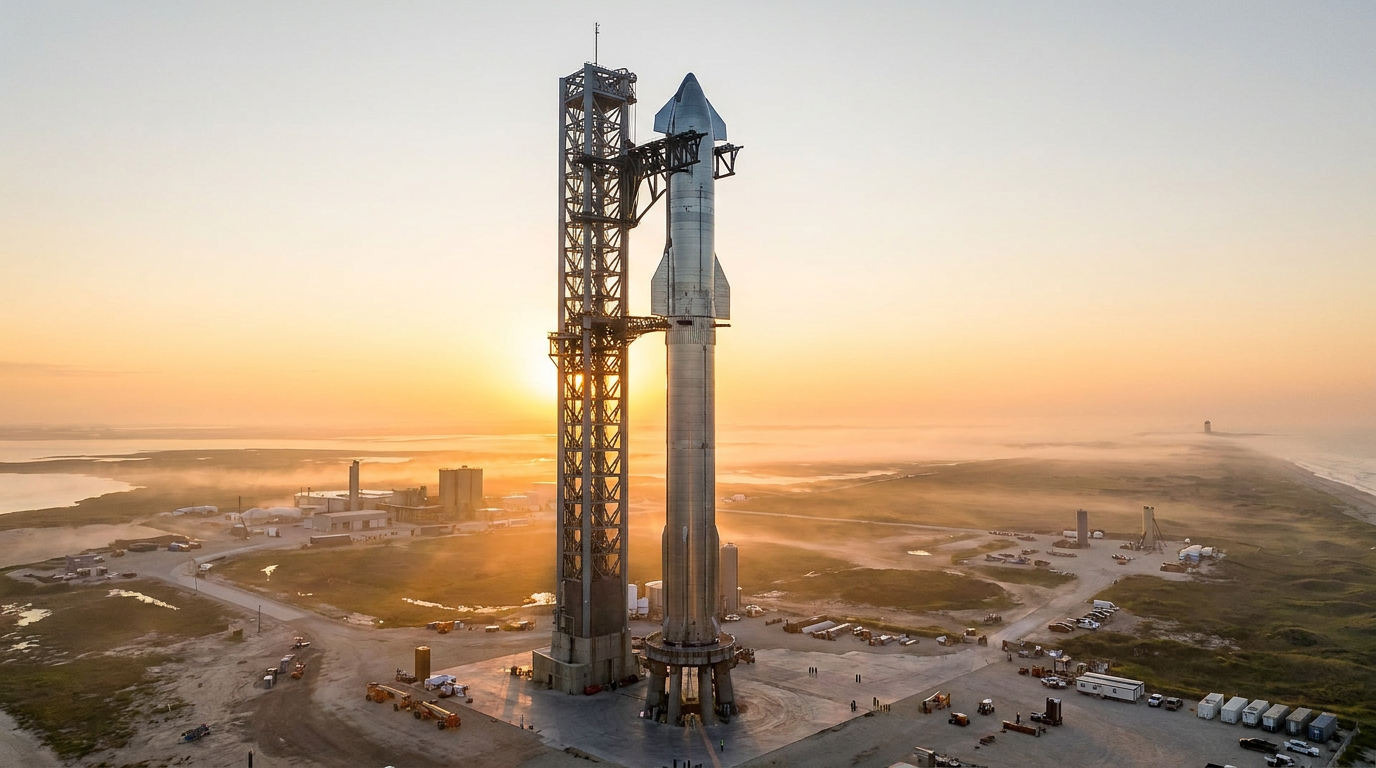
The largest public offering in the history of global finance did not come from a software giant or a state-owned oil monopoly, but from a company that builds rockets. On Friday, SpaceX officially entered the public markets, executing a record-shattering $75 billion Initial Public Offering (IPO) that catapulted the aerospace manufacturer to a staggering $2 trillion valuation.[1][4]
The sheer scale of the offering is difficult to overstate, but its origins are remarkably humble. Tom Mueller, SpaceX’s first employee and the propulsion engineer behind the Merlin engine, noted the stark contrast between today's $2 trillion behemoth and the risky startup founded in 2002. In its early days, the company faced intense industry skepticism and a string of near-fatal test failures that brought it to the brink of bankruptcy.[4][6]
Survival required a relentless cadence of engineering miracles. Over two decades, SpaceX systematically dismantled the traditional aerospace cost structure by achieving orbit, servicing the International Space Station, and mastering the art of landing and reusing orbital-class rocket boosters. Those technical milestones laid the foundation for Starlink, a global satellite internet constellation that transformed the company from a launch provider into a telecommunications juggernaut.[4][6][8]

But the mechanics of SpaceX’s IPO were as unconventional as its rocket designs. Rather than embarking on a traditional roadshow to let institutional investors bid up the price, the company set a fixed offer price of $135 per share. This highly unusual approach bypassed the standard Wall Street price-discovery process, essentially dictating terms to the market rather than asking for them.[3][5]
The fixed-price strategy resulted in a massive first-day pop, which, while thrilling for retail investors, meant the company deliberately left capital behind. According to Jay Ritter, director of The IPO Initiative, the pricing strategy left approximately $20 billion in first-day profits on the table. To put that in perspective, that figure is more than double the previous U.S. IPO record for money left on the table, which was held by Alibaba.[3]
The structural anomalies didn't stop at pricing. Lise Buyer, founder of Class V Group and an architect of Google’s historic IPO, highlighted SpaceX's unique staggered lockup release structure. Typically, insiders and early employees are barred from selling any shares for six months to prevent a sudden crash in the stock price. SpaceX, however, engineered a tiered release system that allows liquidity to trickle into the market gradually.[5][8]

This staggered approach serves a dual purpose: it protects the newly public stock from massive early dumps while immediately rewarding the engineers and early backers who spent decades building the company's value. It is a delicate balancing act designed to maintain market stability while acknowledging the immense paper wealth held by the company's veteran staff.[5][8]
It is a delicate balancing act designed to maintain market stability while acknowledging the immense paper wealth held by the company's veteran staff.
Beyond rockets and satellites, Wall Street is pricing in a completely different frontier: artificial intelligence. Market analysts note that SpaceX is increasingly viewed and valued for its AI potential. The company is no longer just a hardware manufacturer; it is a massive data enterprise operating the world's largest constellation of low-Earth orbit sensors and communications nodes.[2][8]
Starlink's global network, combined with the autonomous navigation systems powering its rockets and spacecraft, represents a treasure trove of proprietary data. Investors are betting heavily on the synergies between SpaceX's infrastructure and advanced AI models, anticipating that the company's orbital network could become the backbone for next-generation, globally distributed compute clusters.[2][8]
Yet, the transition to a public entity introduces profound new pressures. For twenty-four years, SpaceX has operated under the singular, private control of its founder, allowing it to absorb massive development costs and spectacular test-flight explosions without answering to quarterly shareholders. As of today, the company is owned by a broad base of public investors who will expect consistent financial returns.[2][6]

This creates a fascinating tension at the heart of the company's mission. SpaceX's stated, overarching goal is to make humanity multi-planetary, a vision that requires funneling unprecedented amounts of capital into the development of the Starship vehicle and future Mars infrastructure. Balancing those capital-intensive, multi-decade interplanetary ambitions with the immediate demands of Wall Street earnings calls will be the executive team's greatest test.[2][6][8]
The ripple effects of the $2 trillion valuation are already washing over the broader space economy. Founders of adjacent aerospace startups, such as Impulse Space, view the IPO as the ultimate validation of the commercial space model. It proves to venture capitalists that space hardware is not just a philanthropic endeavor or a defense contractor niche, but a sector capable of generating historic liquidity events.[4][8]
It also serves as a total vindication of NASA's Commercial Crew and Cargo programs. By shifting from cost-plus government contracts to fixed-price commercial partnerships, NASA helped incubate a private ecosystem that has now produced the most valuable aerospace company in human history. The public-private partnership model is now permanently cemented as the blueprint for future exploration.[7][8]

Looking ahead, the market's focus will immediately shift to the operational cadence of Starship. As the largest and most powerful rocket ever built, Starship is the linchpin for deploying the next generation of Starlink satellites and fulfilling NASA's Artemis lunar landing contracts. Its success or failure will dictate whether SpaceX can grow into its astronomical new valuation.[6][7][8]
For now, the aerospace industry is pausing to absorb the magnitude of the moment. A company that began with a small team of engineers trying to launch a single, scrappy rocket from a remote Pacific atoll has fundamentally rewritten the rules of both orbital mechanics and global finance. The space economy is officially open for public business.[4][8]
How we got here
2002
SpaceX is founded with the goal of reducing space transportation costs to enable the colonization of Mars.
2008
Falcon 1 becomes the first privately developed liquid-fueled launch vehicle to reach orbit.
2015
SpaceX successfully lands the first stage of a Falcon 9 rocket, proving the viability of reusable orbital boosters.
2020
The Crew Dragon spacecraft successfully transports NASA astronauts to the ISS, marking a new era of commercial human spaceflight.
June 2026
SpaceX executes a historic $75 billion IPO, reaching a $2 trillion valuation on the public markets.
Viewpoints in depth
Financial Analysts
Focused on the unconventional mechanics and massive scale of the offering.
Market analysts are fascinated by SpaceX's decision to bypass the traditional IPO roadshow in favor of a fixed $135 offer price. While this strategy left an estimated $20 billion on the table, it allowed the company to dictate its own terms and implement a staggered lockup release. Analysts view this as a flex of unprecedented market power, though some warn that maintaining a $2 trillion valuation will require flawless execution of the Starship program and continued dominance in the satellite internet sector.
Aerospace Veterans
Viewing the IPO as the ultimate validation of the commercial spaceflight model.
For early employees and industry veterans, the IPO is a vindication of a two-decade struggle against industry skepticism. Pioneers like Tom Mueller emphasize that the company's current financial success is built on a foundation of hard-won engineering milestones—from the early Falcon 1 failures to the routine reuse of orbital boosters. This camp sees the public offering not just as a liquidity event, but as proof that the public-private partnership model championed by NASA has permanently succeeded.
Technology & AI Strategists
Evaluating SpaceX not as a rocket company, but as a data and AI infrastructure giant.
Tech strategists argue that a $2 trillion valuation cannot be justified by launch contracts alone. Instead, they view SpaceX through the lens of artificial intelligence and global data infrastructure. The Starlink constellation provides an unparalleled, low-latency global network, while the autonomous systems guiding the rockets generate massive amounts of proprietary training data. This perspective suggests SpaceX's future growth will look more like a Silicon Valley tech giant than a traditional defense contractor.
What we don't know
- How the pressure of quarterly earnings reports will affect SpaceX's timeline for capital-intensive, long-term Mars missions.
- The exact timeline and structure for how the staggered lockup period will release shares into the broader market.
- How deeply SpaceX plans to integrate its proprietary spaceflight data with emerging artificial intelligence models.
Key terms
- Initial Public Offering (IPO)
- The process of offering shares of a private corporation to the public in a new stock issuance, allowing the company to raise capital from public investors.
- Lockup Period
- A predetermined window of time after an IPO during which company insiders and early investors are restricted from selling their shares.
- Starlink
- SpaceX's satellite internet constellation, designed to provide high-speed, low-latency broadband coverage globally.
- Commercial Crew Program
- A NASA initiative that partners with private aerospace companies to transport astronauts to and from the International Space Station.
Frequently asked
How much did SpaceX raise in its IPO?
SpaceX executed a record-breaking $75 billion Initial Public Offering, making it the largest in history.
What was the starting share price?
The company bypassed a traditional roadshow and set a fixed offer price of $135 per share.
Why did SpaceX leave money on the table?
By using a fixed price rather than letting institutional investors bid it up beforehand, the stock experienced a massive first-day pop, meaning the company missed out on an estimated $20 billion in initial capital.
What is SpaceX's total valuation?
Following the IPO, SpaceX reached a market valuation of $2 trillion.
Sources
Source coverage
8 outlets
3 viewpoints surfaced





[1]BloombergFinancial Analysts
SpaceX Jumps in First Day Following Record $75B IPO | The Close 6/12/2026
Read on Bloomberg →[2]Ars TechnicaTechnology Strategists
SpaceX is now a public company valued for its AI potential, so what comes next?
Read on Ars Technica →SpaceX IPO Leaves Billions on the Table Amid High Valuation Concerns
Read on Bloomberg →Tom Mueller on SpaceX’s Rise and Space Economy
Read on Bloomberg →Class V Group Founder Analyzes Unique Features of SpaceX's Record $75B IPO
Read on Bloomberg →[6]WikipediaAerospace Veterans
SpaceX - History and milestones
Read on Wikipedia →[7]NASAAerospace Veterans
Commercial Space Economy
Read on NASA →[8]Factlen Editorial TeamTechnology Strategists
Synthesis by Factlen editorial team
Read on Factlen Editorial Team →

More in technology
See all 27 stories →Vibecoding
How 'Vibecoding' is Turning Anyone with an Idea into a Software Developer
0 sources

Mobile Photography
Apple Brings Generative AI to the iPhone Camera: How iOS 27’s New Photo Tools Work
0 sources

Zero-Knowledge Proofs
How Zero-Knowledge Proofs Are Ending the Era of Data Sharing
0 sources
Digital Wellbeing
The End of the Screen Time Limit: How AI is Redefining 'Nutritional' Digital Media
0 sources

Every angle. Every day.
Get technology stories with full source coverage and perspective breakdowns delivered to your inbox.