
Apple Brings Generative AI to the iPhone Camera: How iOS 27’s New Photo Tools Work
Apple’s upcoming iOS 27 update introduces powerful generative AI editing tools to the Photos app, including spatial reframing and generative expansion.
By Factlen Editorial Team

- Everyday iPhone Photographers
- Value the seamless integration of powerful editing tools directly into the native Photos app.
- Industry Analysts
- View Apple's updates as a necessary, if slightly delayed, competitive move against Google and Adobe.
- Photography Purists
- Express concern over the ethical implications of generative AI altering the reality of a captured moment.
What's not represented
- · Digital forensics experts concerned about the difficulty of verifying authentic images.
- · Social media platforms that must moderate or label AI-altered content.
Why this matters
Billions of people use the iPhone as their primary camera. By integrating generative AI directly into the native Photos app, Apple is normalizing the ability to fundamentally alter reality in everyday snapshots, shifting the definition of photography for the general public.
Key points
- iOS 27 introduces three major generative AI editing tools to the native Photos app.
- The upgraded Clean Up tool can now remove objects from complex backgrounds with realistic infill.
- The new Extend feature allows users to digitally pull back and expand the borders of an image.
- Spatial Reframing lets users change the virtual camera angle of a photo after it is taken.
- Apple uses a hybrid architecture, processing simple edits on-device and complex generations in the cloud.
The most popular camera in the world is about to fundamentally change how it handles reality. With the upcoming release of iOS 27, Apple is injecting a suite of advanced generative artificial intelligence tools directly into the native iPhone Photos app. For over a decade, the iPhone camera has been defined by its ability to capture a moment exactly as it happened, relying on computational photography merely to balance lighting and color. Now, Apple is crossing the threshold into generative manipulation, allowing users to fundamentally alter the composition, framing, and content of their images long after the shutter has closed.[1][5]
Announced at the company's Worldwide Developers Conference (WWDC) in June 2026, the software update marks a significant leap from Apple's previous, more conservative approaches to photo manipulation. The new features are headlined by an upgraded Clean Up tool, a generative Extend function, and a novel Spatial Reframing capability. Together, these additions aim to give everyday users the power of a professional retouching studio without requiring them to download third-party applications or understand complex editing software. By baking these tools directly into the operating system, Apple is democratizing advanced image alteration for billions of users worldwide.[2][5][6]
For years, Apple's Photos app has been praised for its functional, user-friendly basic editing suite, which excelled at simple adjustments like cropping, exposure tweaking, and color grading. However, as competitors like Google and Adobe aggressively pushed the boundaries of computational photography and generative fill, Apple's native offerings began to feel rudimentary. The initial AI editing features introduced in earlier iOS versions were largely limited to basic object removal, which often struggled with complex backgrounds and left noticeable digital artifacts. Apple needed a robust response to maintain its reputation as the premier smartphone for mobile photography.[3]
The iOS 27 update is designed to decisively close that competitive gap. The most immediate and noticeable improvement comes to the existing Clean Up tool, which has been completely overhauled. While previous iterations could remove simple blemishes or isolated objects against plain backgrounds, the upgraded version utilizes significantly smarter AI models to handle highly complex scenes. It can now extract unwanted elements—like a photobomber in a crowded street or a stray power line across a textured building—and generate highly realistic infill to seamlessly patch the digital hole, leaving almost no trace of the alteration.[2][3][5]

But the true paradigm shift lies in the entirely new generative tools being introduced to the ecosystem. The first, dubbed 'Extend,' operates similarly to Adobe's popular Generative Expand feature found in desktop software like Photoshop. It allows users to digitally pull back from a photo that was framed too tightly at the moment of capture. By analyzing the existing image's context, lighting, and subject matter, the AI generates entirely new, plausible content beyond the original borders, effectively widening the field of view and rescuing photos that would otherwise be ruined by poor framing.[4][5]
When utilizing the Extend tool, the Photos app interface provides a highly transparent editing experience. It displays a blurred preview area around the original image to indicate exactly how much of the new canvas is being hallucinated by the artificial intelligence before the user commits to the edit. This intuitive design allows for quick aspect ratio adjustments—such as converting a horizontal landscape shot into a vertical portrait for social media—or the salvaging of a poorly cropped group photo, all without ever leaving the native camera roll or requiring specialized technical knowledge.[3][4]
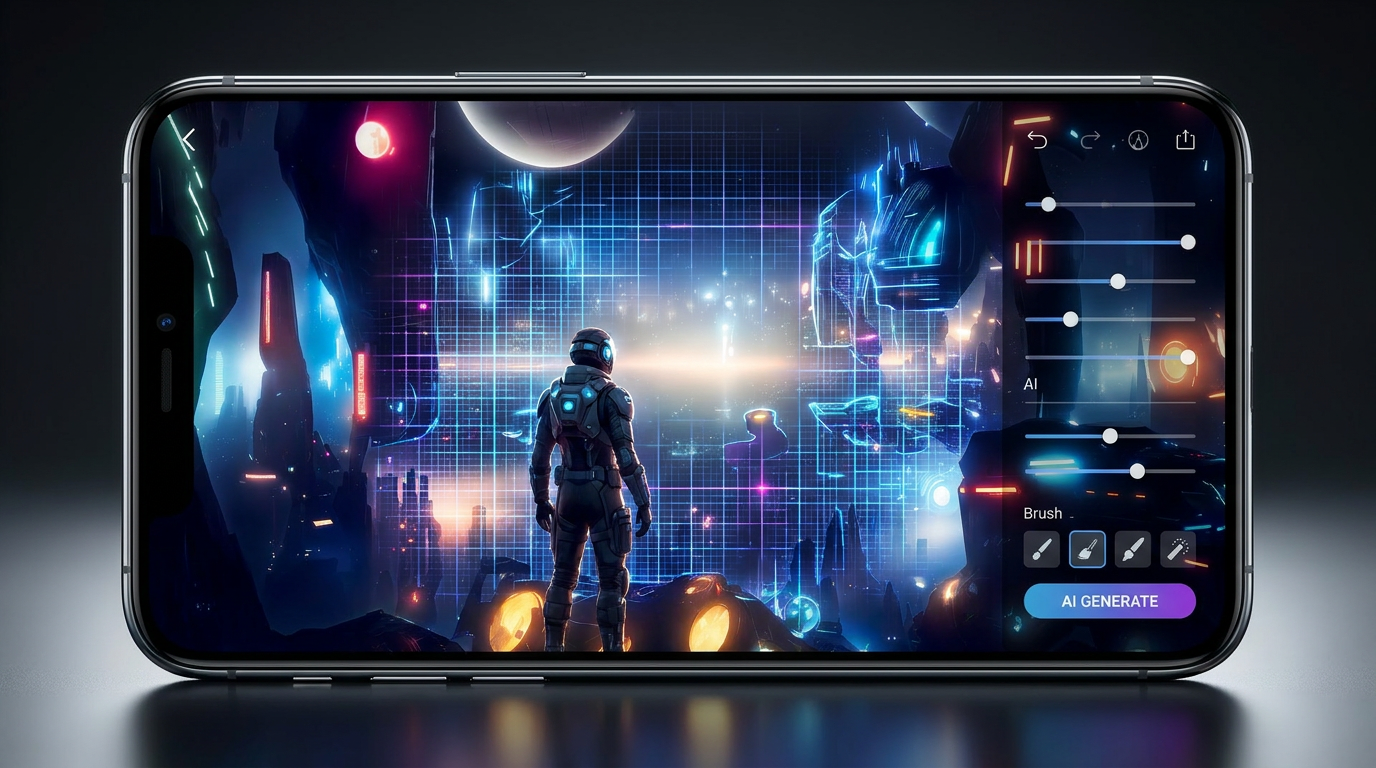
The most ambitious and technologically complex addition, however, is 'Spatial Reframing'—referred to simply as 'Reframe' within the app's user interface. This feature combines generative artificial intelligence with Apple's advanced spatial mapping technology to allow users to reposition the virtual camera angle of a two-dimensional photo after the fact. It represents a fundamental departure from traditional photography, treating a captured image not as a flat plane of pixels, but as a three-dimensional scene that can be navigated and re-shot from a different perspective entirely.[2][4][5]
The most ambitious and technologically complex addition, however, is 'Spatial Reframing'—referred to simply as 'Reframe' within the app's user interface.
Using intuitive multi-touch gestures, a user can isolate subjects and drag them around within this spatially generated digital environment. As the perspective shifts—perhaps moving the camera slightly to the left to center a subject—Apple Intelligence generates new background content to fill in the gaps created by the new angle. The final result is a completely new perspective of an existing scene that never actually existed in reality, seamlessly blending the original photographic data with AI-generated pixels to create a convincing, albeit synthetic, final image.[3][4]

Despite the 'Spatial' moniker, which Apple heavily associates with its Vision Pro mixed-reality headset, the company has clarified that the Reframe tool works on standard photographs, not just specialized 3D spatial photos. This crucial detail democratizes the feature, making it available for the billions of standard, flat images currently sitting in users' camera rolls. It means that anyone with a compatible iPhone running iOS 27 can apply these advanced spatial manipulations to their everyday snapshots, vastly expanding the utility and reach of the technology.[2]
Alongside these core editing tools, Apple is also significantly revamping its Image Playground feature, which debuted in an earlier software version. Originally criticized by early adopters for producing cartoonish, half-baked results that felt out of place on a premium device, the iOS 27 iteration has been upgraded to generate highly photorealistic images. It now allows users to create AI images featuring multiple people drawn directly from their photo library, and users can edit the generated outputs by simply circling objects and typing natural language prompts to refine the results.[2]
Powering this entirely new suite of capabilities is a complex, hybrid computational architecture. Apple has historically championed strict on-device processing for its machine learning tasks, arguing that keeping data local is the only way to guarantee user privacy. However, the sheer computational weight of generative expansion and spatial reframing requires significantly more horsepower than even the latest iPhone silicon can provide. To solve this, Apple has developed a system that dynamically routes tasks based on their complexity.[5][6]
When a user finalizes a complex edit, such as a Spatial Reframe or a massive Generative Extend, the iPhone securely sends the image data to Apple's Private Cloud Compute servers for processing. Once the heavy lifting is complete, the finished image is beamed back to the device. This blend of on-device models for simpler tasks—like basic Clean Up—and secure cloud compute for resource-intensive generation represents a pragmatic compromise in Apple's AI strategy, balancing the company's strict privacy mandates with the reality of modern AI hardware requirements.[5]

The introduction of these powerful tools has predictably sparked a familiar, heated debate within the broader photography community. While casual users and social media creators celebrate the unprecedented ability to easily fix ruined shots and perfect their feeds, purists argue that features like Extend and Reframe cross a dangerous line. They contend that by hallucinating pixels that were never there and allowing users to change the physical angle of a shot, these tools further blur the line between capturing a genuine photograph and generating a digital illustration.[1][4]
Industry analysts, meanwhile, view the update through a purely competitive lens. They note that while Apple's new tools still feel somewhat basic compared to the absolute bleeding edge of Google Photos' Magic Editor, the sheer scale of the iPhone ecosystem changes the calculus. By integrating these features natively, Apple is introducing generative manipulation to a massive, mainstream audience that may have never downloaded a dedicated AI editing app. This widespread deployment is expected to normalize AI photo editing faster than any competitor could achieve alone.[3]
Ultimately, the release of iOS 27 signals that Apple is fully and unapologetically embracing the generative era of personal computing. The smartphone camera is no longer just a passive tool for freezing a moment in time; it is rapidly becoming an active starting point for algorithmic imagination. As these tools roll out to millions of devices later this year, the very definition of what constitutes a 'real' photograph will continue to evolve, driven by the seamless integration of artificial intelligence into our most personal devices.[1][4]
How we got here
June 2024
Apple introduces its first iteration of Apple Intelligence in iOS 18, featuring basic object removal.
April 2026
Early reports leak Apple's plans for a dedicated 'Apple Intelligence Tools' section in the upcoming Photos app.
June 2026
Apple officially unveils iOS 27 at WWDC, showcasing advanced generative AI features like Extend and Spatial Reframing.
Fall 2026
iOS 27 is slated for public release, bringing the new editing suite to compatible iPhones.
Viewpoints in depth
Everyday iPhone Photographers
Value the seamless integration of powerful editing tools directly into the native Photos app.
For the average user, the appeal of iOS 27 lies in convenience. Instead of downloading third-party applications or paying for premium subscriptions to access generative fill, iPhone owners can now salvage poorly framed group shots or remove photobombers with a few taps. The integration of these tools into the default camera roll removes the friction of computational photography, making advanced manipulation as routine as applying a color filter.
Photography Purists
Express concern over the ethical implications of generative AI altering the reality of a captured moment.
Professional photographers and purists argue that features like Extend and Spatial Reframing fundamentally break the social contract of a photograph. By hallucinating pixels that were never there and allowing users to change the physical angle of a shot after the fact, the resulting image is no longer a record of reality, but a digital illustration. They worry that normalizing these tools will further erode public trust in digital media.
Industry Analysts
View Apple's updates as a necessary, if slightly delayed, competitive move against Google and Adobe.
Tech analysts point out that Apple is largely playing catch-up in the generative AI space. Google’s Magic Editor and Adobe’s Firefly have offered similar capabilities for months. However, analysts emphasize that Apple’s true advantage is distribution. By baking these features into an operating system used by over a billion people, and utilizing a hybrid architecture that balances on-device privacy with cloud power, Apple is positioned to define how the mainstream public interacts with AI photography.
What we don't know
- How strictly Apple will watermark or label images altered by generative AI in the final iOS 27 release.
- The exact performance difference and latency between on-device and cloud processing times for complex edits.
Key terms
- Generative AI
- Artificial intelligence capable of creating new text, images, or other media based on learned patterns.
- Spatial Reframing
- A new iOS 27 feature that uses depth data and AI to let users change the virtual camera angle of a photo after it is taken.
- Infill
- The AI-generated pixels used to seamlessly replace an object that has been removed from an image.
- On-Device Processing
- Running AI models directly on the smartphone's hardware rather than sending data to a cloud server, enhancing privacy and speed.
Frequently asked
When will these new photo editing tools be available?
The features are part of the iOS 27 update, which is expected to roll out to compatible iPhones later this year following its announcement at WWDC 2026.
Do I need a third-party app to use these features?
No, the new tools—including Clean Up, Extend, and Reframe—are built directly into the native Apple Photos app.
Are the AI edits processed on my phone or in the cloud?
Apple uses a hybrid approach. Simpler tasks are handled on-device, while more complex edits, like Spatial Reframing, are securely sent to Apple's Private Cloud Compute servers.
Sources
Source coverage
6 outlets
3 viewpoints surfaced






[1]The VergeEveryday iPhone Photographers
Apple’s new AI photo editing tools mostly work, for better and worse
Read on The Verge →[2]EngadgetEveryday iPhone Photographers
iOS 27 gets new AI photo editing tools
Read on Engadget →[3]Android HeadlinesIndustry Analysts
Apple Photos app gets new AI editing features
Read on Android Headlines →[4]PetaPixelPhotography Purists
Apple to Add More AI Photo Editing Tools to iOS 27
Read on PetaPixel →[5]9to5MacEveryday iPhone Photographers
AI photo editing in iOS 27: revamped Clean Up and two new AI tools for iPhone Photos app
Read on 9to5Mac →[6]Qatar News AgencyIndustry Analysts
Apple Plans to Enable iOS 27 AI Photo Editing
Read on Qatar News Agency →

More in technology
See all 26 stories →Vibecoding
How 'Vibecoding' is Turning Anyone with an Idea into a Software Developer
0 sources

Zero-Knowledge Proofs
How Zero-Knowledge Proofs Are Ending the Era of Data Sharing
0 sources

Digital Wellbeing
The End of the Screen Time Limit: How AI is Redefining 'Nutritional' Digital Media
0 sources
Mobile Photography
Apple Introduces 'Spatial Reframing' and Generative AI Photo Tools in iOS 27
0 sources
Every angle. Every day.
Get technology stories with full source coverage and perspective breakdowns delivered to your inbox.