
How Social Graph Portability Works: The Tech Letting Users Own Their Networks
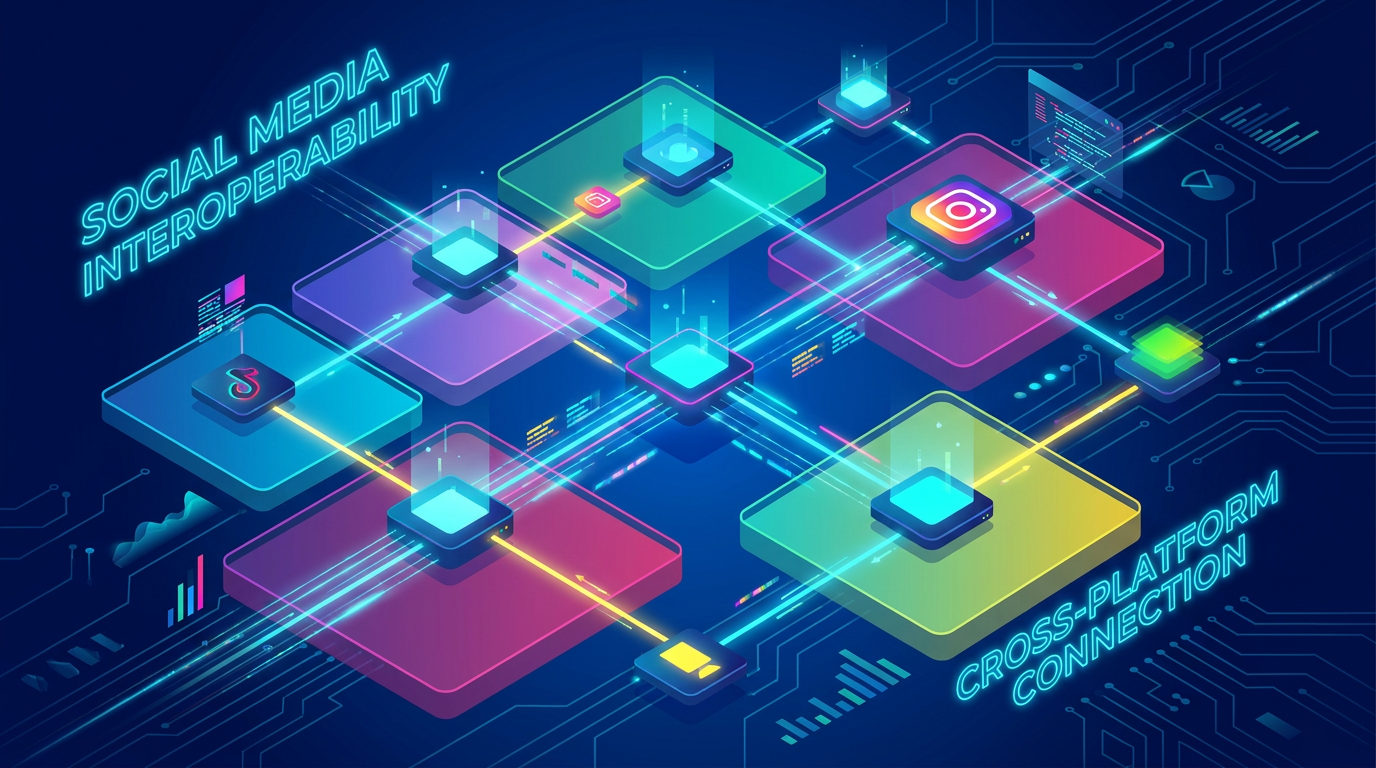
A new wave of interoperability standards allows users to seamlessly move their profiles, followers, and content between competing social media platforms without losing their audience.
By Factlen Editorial Team
- Open-Web Advocates
- Believe that user ownership of social data and the ability to leave a platform without penalty is a fundamental digital right.
- Protocol Developers
- Focus on the technical challenges of scaling decentralized systems, managing cryptographic identities, and ensuring low-latency routing.
- Commercial Aggregators
- View interoperability as a massive business opportunity to build specialized interfaces and algorithms on top of open data.
What's not represented
- · Traditional walled-garden executives
- · Advertisers navigating decentralized metrics
Why this matters
For the first time in the history of the modern internet, you are no longer locked into a single platform's ecosystem. If a social network changes its rules, algorithms, or ownership, you can pack up your entire digital identity and move it elsewhere without losing your audience.
Key points
- New interoperability standards allow users to move their profiles between social platforms without losing followers.
- ActivityPub and the AT Protocol are the two dominant frameworks powering this decentralized web.
- Translation 'bridges' now allow these previously incompatible networks to communicate seamlessly.
- Users migrate via a simple cryptographic token system that updates their address across the network.
- The shift has spawned a new industry of third-party apps that aggregate feeds from multiple networks.
- Moderation is handled through 'composable' third-party blocklists rather than central corporate authorities.
The era of the "walled garden" is quietly ending. For over a decade, building an audience on a social platform meant being trapped there. If the platform changed its algorithm, introduced intrusive ads, or was sold to a volatile billionaire, users faced a stark choice: endure the degradation or abandon their hard-won community and start from scratch. This lock-in wasn't a technical necessity; it was a highly lucrative business model. But in 2026, the architecture of the social internet is undergoing its most profound shift since the invention of the algorithmic news feed.[4][6]
The catalyst is "social graph portability"—a framework of interoperability standards that allows users to seamlessly move their profiles, followers, and content between competing social media platforms. Much like how you can keep your phone number when switching cellular carriers, or email a Gmail user from an Outlook account, the new social web treats your digital identity as yours to keep. This shift is being driven by a combination of European regulatory pressure, user fatigue with platform volatility, and the maturation of decentralized open-source protocols.[4]
At the heart of this transition are two dominant protocols: ActivityPub and the Authenticated Transfer (AT) Protocol. ActivityPub, maintained by the World Wide Web Consortium (W3C), is the older and more widely adopted standard. It functions essentially like an email routing system for social posts, powering the "Fediverse"—a network of thousands of independent servers, including Mastodon and Meta's Threads, that can all talk to each other. When a Threads user follows a Mastodon user, ActivityPub is the translation layer making that connection possible.[1]
The AT Protocol, originally incubated by Bluesky, takes a slightly different architectural approach. Rather than just federating servers, it focuses on a "composable" architecture. In the AT ecosystem, your identity, your data hosting, and the algorithm that sorts your feed can all be provided by completely different entities. You could host your data on a private server, use Bluesky's interface to read it, and apply a third-party chronological algorithm to sort it. This modularity is designed to prevent any single corporate entity from monopolizing the user experience.[5]

For years, these two protocols existed as parallel, incompatible universes. But 2026 has seen the deployment of robust "bridges"—translation layers that allow ActivityPub and AT Protocol networks to communicate seamlessly. Researchers have developed decentralized identity routing systems that map an AT Protocol handle to an ActivityPub address, allowing a user on Bluesky to seamlessly follow, like, and reply to a user on Threads, with the cryptographic signatures remaining intact across the divide.[3][4]
The actual user experience of migrating a profile has evolved from a highly technical ordeal into a frictionless, three-click process. Under the new portability standards, a user wishing to leave a platform simply requests a migration token. They input this token into their new platform of choice. Behind the scenes, the new platform broadcasts a cryptographic update to the wider network, essentially announcing a change of address to all connected servers.[2]
The actual user experience of migrating a profile has evolved from a highly technical ordeal into a frictionless, three-click process.
Crucially, this migration process retains the user's entire social graph. Because followers are tied to a decentralized cryptographic identity rather than a platform-specific database entry, a user's audience automatically routes to their new home. The Electronic Frontier Foundation notes that this zero-loss migration is the linchpin of the new ecosystem; without it, the threat of leaving a platform carries no weight. Now, platforms must compete on the quality of their interface and moderation, rather than holding audiences hostage.[2]

This newfound mobility has sparked a renaissance in third-party application development. Because the underlying data is now decoupled from the presentation layer, startups are building specialized interfaces that cater to niche needs. We are seeing the rise of unified social dashboards that aggregate feeds from across the Fediverse and the AT Protocol into a single, highly customizable stream. Venture capital funding for these "aggregator clients" has reached record highs, as developers realize they no longer need to bootstrap a user base from zero.[7]
However, the decentralized web introduces complex new challenges for content moderation. In a walled garden, a central authority can simply delete a violative post. In a federated network, a post is copied across thousands of independent servers. To address this, the ecosystem relies on "composable moderation." Users and server administrators can subscribe to independent moderation services—essentially curated blocklists and labeling systems—that automatically filter out spam, harassment, or illegal content based on the user's chosen threshold.[5]

Privacy in a portable social web also requires new mechanisms. When a user deletes a post, the protocol broadcasts a "tombstone" message to all connected servers, instructing them to remove the content. While compliant servers will honor this request, malicious or poorly maintained servers might not. Researchers are currently exploring zero-knowledge proofs and ephemeral data structures to give users more cryptographic guarantees over their right to be forgotten in a distributed environment.[1][3]
The economic implications for incumbent tech giants are staggering. Meta's decision to integrate Threads with ActivityPub was initially viewed as a defensive maneuver against regulatory scrutiny under the EU's Digital Markets Act. However, it has inadvertently accelerated the adoption of the open web. By exposing hundreds of millions of users to the concept of cross-platform following, Meta normalized interoperability, forcing smaller competitors to adopt open standards or risk total isolation.[7]
Looking ahead, the focus of protocol developers is shifting from text-based microblogging to more complex media formats. The W3C is currently drafting extensions for high-bandwidth video federation and real-time audio spaces, aiming to bring the same portability to platforms resembling YouTube and TikTok. As these standards solidify, the concept of a "social media platform" is fundamentally changing from a walled destination to a replaceable window into a unified digital commons.[1]

Ultimately, the shift toward social graph portability represents a return to the internet's original, open-source ethos, but packaged with the frictionless user experience demanded by modern consumers. By decoupling identity from corporate infrastructure, users are finally gaining property rights over their digital lives. The platforms of the future will no longer win by trapping users, but by building the best tools to navigate an open, interconnected world.[6]
How we got here
2018
The W3C officially publishes the ActivityPub protocol as a recommended standard.
2023
Bluesky launches in beta, introducing the AT Protocol as an alternative to ActivityPub.
2024
Meta's Threads begins federating with the Fediverse, bringing millions of users to the open web.
2026
Universal bridges are deployed, allowing seamless interaction and migration between ActivityPub and AT Protocol networks.
Viewpoints in depth
Open-Web Advocates
Digital rights groups argue that user ownership of data is essential for a healthy internet.
Organizations like the Electronic Frontier Foundation view social graph portability not just as a technical feature, but as a fundamental digital property right. They argue that the 'walled garden' model of the 2010s was an anomaly in internet history, artificially trapping users to extract advertising revenue. By enforcing interoperability, advocates believe the power dynamic shifts back to the user, forcing platforms to earn their audience every day through better features and moderation, rather than relying on the friction of leaving.
Protocol Developers
Engineers are focused on the immense technical hurdles of scaling a decentralized global network.
While the philosophy of the open web is popular, the engineers building it face significant architectural challenges. Routing millions of cryptographic identity updates across thousands of independent servers introduces latency and potential points of failure. Protocol developers are actively debating the trade-offs between the server-federated model of ActivityPub and the data-repository model of the AT Protocol. Their primary concern is ensuring that a decentralized network can match the millisecond response times and seamless user experience that consumers have come to expect from centralized tech giants.
Commercial Aggregators
Startups see the open social graph as a massive opportunity to build specialized interfaces.
For venture capitalists and startup founders, the decoupling of social data from the user interface is a gold rush. Without the need to convince millions of people to join a new network from scratch, developers can focus entirely on building better ways to consume existing content. This camp envisions a future where the 'feed' is highly commoditized, and companies compete by offering specialized algorithms—such as a sports-only filter, a chronological news aggregator, or an aggressively moderated safe space—all pulling from the same underlying global data layer.
What we don't know
- How decentralized networks will effectively monetize without centralized advertising models.
- Whether smaller, independent servers can survive the infrastructure costs of hosting high-bandwidth video federation.
- How international data privacy laws like GDPR will be enforced when user data is replicated across thousands of independent servers.
Key terms
- Fediverse
- A portmanteau of 'federation' and 'universe,' referring to the collection of independent social media servers that can communicate with each other.
- ActivityPub
- An open, decentralized social networking protocol maintained by the W3C, acting as the primary language of the Fediverse.
- AT Protocol
- The Authenticated Transfer Protocol, a decentralized networking framework that separates user identity, data hosting, and algorithmic feeds into modular components.
- Social Graph
- The map of interconnections between a user and their followers, friends, and the content they interact with.
- Composable Moderation
- A system where users can subscribe to independent, third-party moderation services and blocklists rather than relying on a platform's central authority.
Frequently asked
Can I really take my followers with me?
Yes. Because your identity is tied to a cryptographic key rather than a specific platform's database, your followers are automatically routed to your new profile when you migrate.
Do I have to pay to host my own server?
No. While you can host your own server for maximum control, most users rely on free or ad-supported hosting providers that plug into the decentralized network, much like using Gmail for email.
What happens to my old posts if I move?
During a migration, your new platform broadcasts a request to transfer your archive. You can also issue a 'tombstone' command to delete your data from the old server.
Is the Fediverse secure?
The underlying cryptography is highly secure, but because data is distributed across many servers, you must trust the administrators of the servers you interact with to honor privacy and deletion requests.
Sources
Source coverage
7 outlets
3 viewpoints surfaced






[1]W3COpen-Web Advocates
ActivityPub 2.0: Decentralized Social Networking Protocol
Read on W3C →[2]Electronic Frontier FoundationOpen-Web Advocates
The User's Guide to Social Portability and Digital Property Rights
Read on Electronic Frontier Foundation →[3]arXivProtocol Developers
Decentralized Identity Routing in Federated Networks
Read on arXiv →[4]The VergeCommercial Aggregators
Threads and Bluesky finally bridge the gap: What it means for your timeline
Read on The Verge →[5]MIT Technology ReviewProtocol Developers
The architecture of the post-platform internet
Read on MIT Technology Review →[6]Factlen Editorial Team
Synthesis by Factlen editorial team
Read on Factlen Editorial Team →[7]TechCrunchCommercial Aggregators
Startups building on the unified social graph see record funding
Read on TechCrunch →

More in technology
See all 27 stories →Vibecoding
How 'Vibecoding' is Turning Anyone with an Idea into a Software Developer
0 sources

Mobile Photography
Apple Brings Generative AI to the iPhone Camera: How iOS 27’s New Photo Tools Work
0 sources

Zero-Knowledge Proofs
How Zero-Knowledge Proofs Are Ending the Era of Data Sharing
0 sources

Digital Wellbeing
The End of the Screen Time Limit: How AI is Redefining 'Nutritional' Digital Media
0 sources

Every angle. Every day.
Get technology stories with full source coverage and perspective breakdowns delivered to your inbox.