
How Professional Women's Volleyball Finally Broke Through in the U.S.
After decades of failed attempts, a massive influx of capital and a dual-league ecosystem have established a sustainable, lucrative professional volleyball landscape in America.
By Factlen Editorial Team
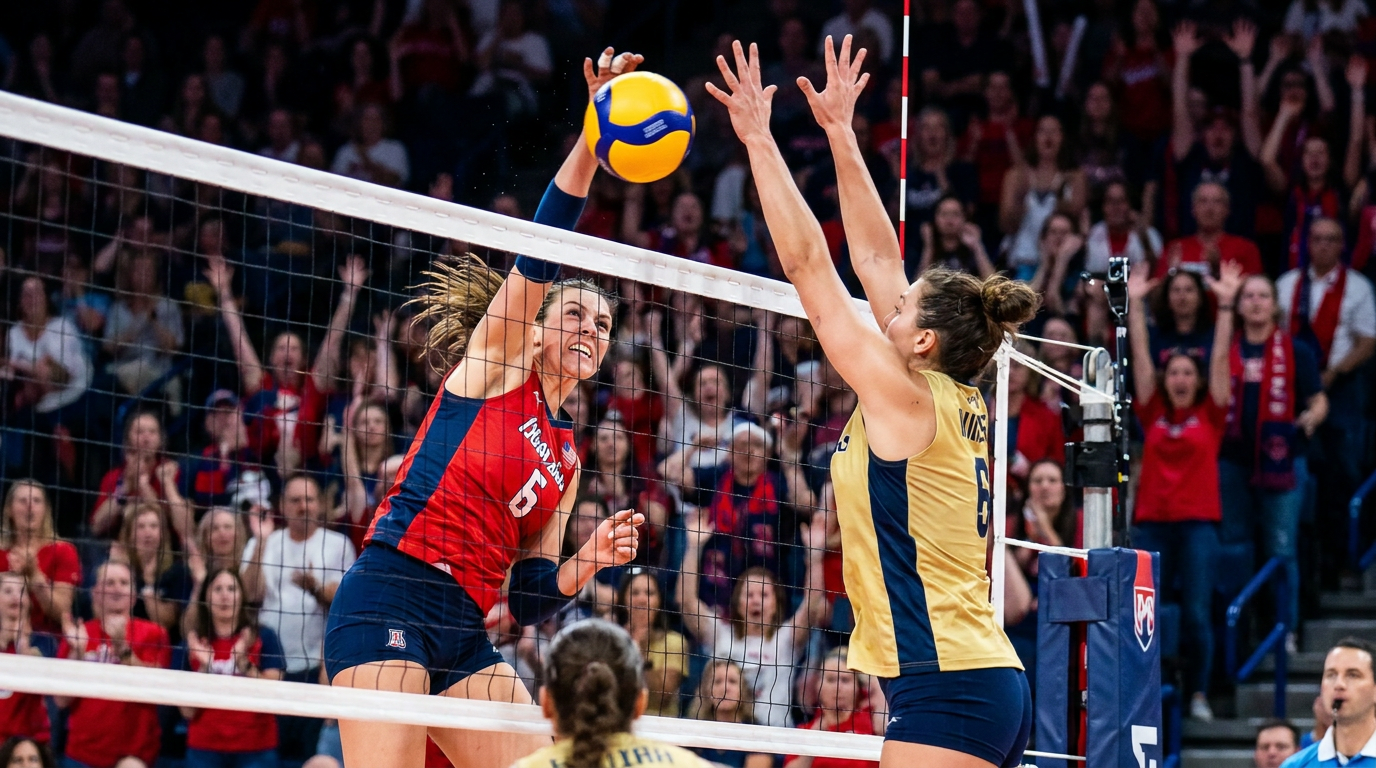
- Traditional Franchise Advocates
- Argues that city-based teams and large arenas are the proven path to sports legitimacy.
- Grassroots Ecosystem Builders
- Believes that integrating youth clubs with professional teams creates a more sustainable, recession-proof business model.
- International Market Observers
- Focuses on how the rise of American leagues disrupts the global talent pool.
What's not represented
- · Collegiate NCAA Coaches
- · European Club Owners
Why this matters
For the first time, elite American volleyball stars can earn six-figure salaries without moving overseas, while young athletes have a direct, visible pathway from grassroots clubs to primetime television.
Key points
- The US professional women's volleyball landscape has stabilized around two major leagues: MLV and LOVB.
- A $325 million merger in 2025 consolidated the traditional franchise market under the Major League Volleyball banner.
- League One Volleyball (LOVB) utilizes a unique grassroots model, funding its pro tier through youth club acquisitions.
- Top domestic salaries have reached $175,000, allowing American Olympians to earn a living wage without moving overseas.
- Linear television viewership is surging, with LOVB setting a record of 163,000 viewers for its 2026 championship on USA Network.
For decades, the pipeline for elite American women's volleyball players ended abruptly at the collegiate level. After playing in front of sold-out NCAA arenas and capturing national championships, Olympians and All-Americans faced a stark and difficult choice: retire from the sport entirely, or pack their bags and move to Turkey, Italy, or Asia to earn a living wage. The United States consistently produced the best volleyball talent in the world, yet it lacked the domestic infrastructure to keep those athletes at home. That historical paradigm has now fundamentally fractured. By 2026, an unprecedented influx of institutional capital, dueling business models, and massive fan turnout have finally established a sustainable, lucrative professional volleyball landscape on American soil.[7][9]
The breakthrough arrived via two distinct entities that have rapidly scaled over the past two years: Major League Volleyball (MLV) and League One Volleyball (LOVB). Both leagues are proving that the massive domestic appetite for the sport—previously only visible during the NCAA tournament or the Summer Olympics—translates directly into ticket sales, merchandise revenue, and linear broadcast viewership. Rather than cannibalizing each other in a race to the bottom, the two leagues have carved out distinct operational philosophies that are collectively elevating the entire sport's financial floor. They have attracted over $100 million in private equity and celebrity investments from figures like Kevin Durant and Lindsey Vonn, signaling that Wall Street views women's volleyball as the next massive growth asset in sports.[2][9]
The most dramatic structural shift in the landscape occurred in August 2025, when the Pro Volleyball Federation (PVF)—which had successfully launched its inaugural season in 2024—merged with a startup competitor to form the unified Major League Volleyball. The $325 million merger, overseen by Bank of America and heavily backed by the DeVos family, consolidated resources and eliminated direct competition for the traditional franchise market. By pooling their capital, the unified league stabilized its operational runway and presented a united front to national advertisers and broadcast networks. The merger ensured that top-tier talent wouldn't be fractured across too many competing leagues, allowing MLV to field eight highly competitive rosters for its 2026 campaign.[1][5][6]

MLV operates on a traditional, city-based franchise model, boasting eight teams for its 2026 season in markets ranging from Atlanta to San Diego. The league's crown jewel is undeniably the Omaha Supernovas, a franchise that has capitalized on Nebraska's deep-rooted, decades-long obsession with the sport. The Supernovas routinely shatter attendance records, drawing an astonishing 13,486 fans to the CHI Health Center for a single match in early 2025. That level of gate revenue proves that professional volleyball can anchor a large-scale arena business model when placed in the right geographic markets. The team's success has provided a blueprint for other franchises, demonstrating that professional volleyball can generate the kind of local fervor typically reserved for NBA or NHL teams.[1][5]
MLV operates on a traditional, city-based franchise model, boasting eight teams for its 2026 season in markets ranging from Atlanta to San Diego.
In stark contrast to MLV's traditional approach, League One Volleyball (LOVB) has engineered a radically different, vertically integrated business model. Rather than relying solely on wealthy owners to prop up standalone franchises in massive arenas, LOVB built its professional league from the grassroots up. Over several years, the organization acquired and partnered with dozens of elite youth volleyball clubs across the country, encompassing tens of thousands of junior athletes. By capturing the recurring revenue of youth club fees—and the built-in loyalty of those junior athletes and their families—LOVB created a captive audience and a direct talent pipeline that feeds its professional tier. This structure ensures that the league has a baseline of financial stability regardless of immediate ticket sales.[2][4]
This community-first approach has paid massive dividends in media rights and national visibility. Ahead of its 2026 sophomore season, LOVB secured a multi-year broadcast deal with USA Network, moving the sport out of niche streaming platforms and onto a major linear cable channel. The network's primetime Wednesday night windows delivered immediate results, with opening night viewership surging 85% year-over-year compared to the league's inaugural season. The built-in youth club audience provided a reliable baseline of viewers, while the high production value and accessibility attracted casual sports fans who were discovering the professional game for the first time.[3][8]

The media momentum culminated during the 2026 LOVB Championship match between Austin and Salt Lake, which averaged a record 163,000 viewers on USA Network. That figure represented the most-watched match in the league's history, proving that the sport can hold its own on linear television outside of the traditional Olympic cycle. Network executives have noted that the sport's fast pace, high athleticism, and lack of dead time make it an ideal television product for modern audiences. The broadcast success has also triggered a surge in sponsorship interest, with brands eager to align themselves with a rapidly growing, female-led sports property that commands a highly engaged demographic.[8]
The ultimate beneficiaries of this corporate arms race are the athletes themselves. While the highest-paid players in the world—such as Tijana Boskovic and Paola Egonu—still command multi-million dollar contracts in the Turkish Sultanlar Ligi and Italy's Serie A1, American leagues are rapidly closing the baseline gap. In 2026, MLV's salary cap allows top domestic players to earn base salaries up to $175,000, with league minimums resting at $60,000. When combined with housing stipends, medical benefits, and performance bonuses, it represents a viable, upper-middle-class living wage that keeps American talent at home. Players no longer have to endure grueling ten-month overseas seasons away from their families just to sustain their professional careers.[6][7]

The momentum shows no signs of slowing down as both leagues look toward the future. LOVB recently announced a Miami expansion franchise, bringing its league to 10 teams for the 2026-27 season and introducing an East-West conference structure to foster regional rivalries. MLV is similarly targeting expansion, with plans to launch franchises in Washington D.C. and Northern California by 2027. For the first time in the sport's history, the United States is not just an exporter of volleyball talent, but a premier, lucrative destination. The ecosystem is finally stable, ensuring that the next generation of American volleyball stars will have a stage to shine on right in their own backyard.[4][5][9]
How we got here
Jan 2024
The Pro Volleyball Federation (PVF) launches its inaugural season, proving the viability of the sport in markets like Omaha.
Jan 2025
League One Volleyball (LOVB) launches its first season, utilizing a unique grassroots-to-pro business model.
Aug 2025
The PVF merges with a startup competitor in a $325 million deal to form Major League Volleyball (MLV).
Jan 2026
The unified MLV begins its first season with eight franchises across the country.
Apr 2026
LOVB sets a linear television viewership record, drawing 163,000 viewers for its championship match on USA Network.
Viewpoints in depth
Traditional Franchise Advocates
Argues that city-based teams and large arenas are the proven path to sports legitimacy.
Supporters of the MLV model point to the Omaha Supernovas as proof of concept. By treating volleyball exactly like the NBA or NHL—securing wealthy local ownership, playing in 15,000-seat downtown arenas, and building civic pride—they argue the sport can generate the massive gate revenues required to pay competitive salaries. They believe that without the spectacle of a packed arena, a league cannot attract top-tier broadcast rights or major corporate sponsors.
Grassroots Ecosystem Builders
Believes that integrating youth clubs with professional teams creates a more sustainable, recession-proof business model.
Proponents of the LOVB model argue that traditional sports leagues burn through too much capital trying to manufacture a fanbase from scratch. By acquiring youth volleyball clubs, LOVB secures a guaranteed, recurring revenue stream from membership dues that subsidizes the professional tier. Furthermore, this model creates a built-in, fiercely loyal audience; junior players and their parents are highly motivated to buy tickets, merchandise, and tune into broadcasts to watch the Olympians who represent their local club network.
International Market Observers
Focuses on how the rise of American leagues disrupts the global talent pool.
For decades, European and Asian leagues held a monopoly on elite American talent. Analysts tracking global sports economics note that while the US leagues cannot yet match the $1 million-plus contracts offered by top Turkish or Italian clubs, they don't necessarily have to. By offering a respectable six-figure living wage, comprehensive benefits, and the comfort of staying stateside, MLV and LOVB are successfully convincing mid-tier and veteran Olympians to remain in the US. This brain drain is forcing overseas clubs to rethink their recruitment strategies and foreigner quotas.
What we don't know
- Whether the US market can sustain two competing professional leagues in the long term without a future merger.
- How European and Asian leagues will adjust their salary structures to prevent a mass exodus of American talent.
- If linear television ratings will continue to grow once the novelty of the inaugural seasons wears off.
Key terms
- Major League Volleyball (MLV)
- A professional women's volleyball league formed by the 2025 merger of the Pro Volleyball Federation and a startup competitor, utilizing a traditional city-based franchise model.
- League One Volleyball (LOVB)
- A professional league that operates on a vertically integrated model, linking a vast network of youth volleyball clubs directly to its professional teams.
- Sultanlar Ligi
- The premier women's professional volleyball league in Turkey, widely considered the highest-paying and most competitive domestic league in the world.
- Grassroots-to-Pro Model
- A business strategy where revenue and fan engagement from youth sports participation are used to fund and support a top-tier professional league.
Frequently asked
How much do professional volleyball players make in the US?
In 2026, top players in Major League Volleyball can earn base salaries up to $175,000, with league minimums set at $60,000. Players also receive housing stipends, medical benefits, and performance bonuses.
What is the difference between MLV and LOVB?
MLV uses a traditional franchise model with wealthy owners and large city arenas. LOVB uses a grassroots model, where the professional league is financially and structurally tied to a massive network of youth volleyball clubs.
Are US salaries competitive with European leagues?
Not at the very top end. The world's best players can make over $1.5 million in Turkey or Italy. However, the US leagues now offer a viable six-figure living wage, which is enough to keep many American players from going overseas.
Sources
Source coverage
9 outlets
3 viewpoints surfaced









[1]SportsProTraditional Franchise Advocates
Rival PVF and MLV volleyball leagues confirm '$325m' merger
Read on SportsPro →[2]Sports Business JournalGrassroots Ecosystem Builders
LOVB accelerates growth in Season 2
Read on Sports Business Journal →[3]Awful AnnouncingGrassroots Ecosystem Builders
USA Network inks media rights deal with League One Volleyball
Read on Awful Announcing →[4]Associated PressGrassroots Ecosystem Builders
League One Volleyball adds a Miami expansion team, growing to 10 clubs for its 3rd season
Read on Associated Press →[5]Volleyball StateTraditional Franchise Advocates
MLV, PVF merge into new league for 2026
Read on Volleyball State →[6]Logos PressTraditional Franchise Advocates
Merger deal in U.S. women's volleyball cost $325 million
Read on Logos Press →[7]XbotGoInternational Market Observers
15 Highest Paid Volleyball Players in 2026: The Complete List
Read on XbotGo →[8]TheFutonCriticGrassroots Ecosystem Builders
USA Sports Delivers Most-Watched Match in LOVB Volleyball History
Read on TheFutonCritic →[9]Factlen Editorial TeamInternational Market Observers
Synthesis by Factlen editorial team
Read on Factlen Editorial Team →

More in sports
See all 35 stories →Preview
England's 2026 World Cup Outlook: Inside Thomas Tuchel's High-Stakes Group L Campaign
0 sources

College Baseball
Troy Trojans Complete Historic Cinderella Run to Reach First Men's College World Series
0 sources

MLB Preview
San Diego Padres Look to Snap Road Skid Against Baltimore Orioles in Interleague Clash
0 sources

Grassroots Tech
How 'Drop-In' Sports Apps Are Rewiring Urban Communities and Fighting Loneliness
0 sources

Every angle. Every day.
Get sports stories with full source coverage and perspective breakdowns delivered to your inbox.