
How Fractional Real Estate is Dismantling the Housing Market's Capital Walls
By dividing physical properties into digital micro-shares, a new wave of financial platforms is allowing retail investors to build real estate portfolios for as little as $100.
By Factlen Editorial Team
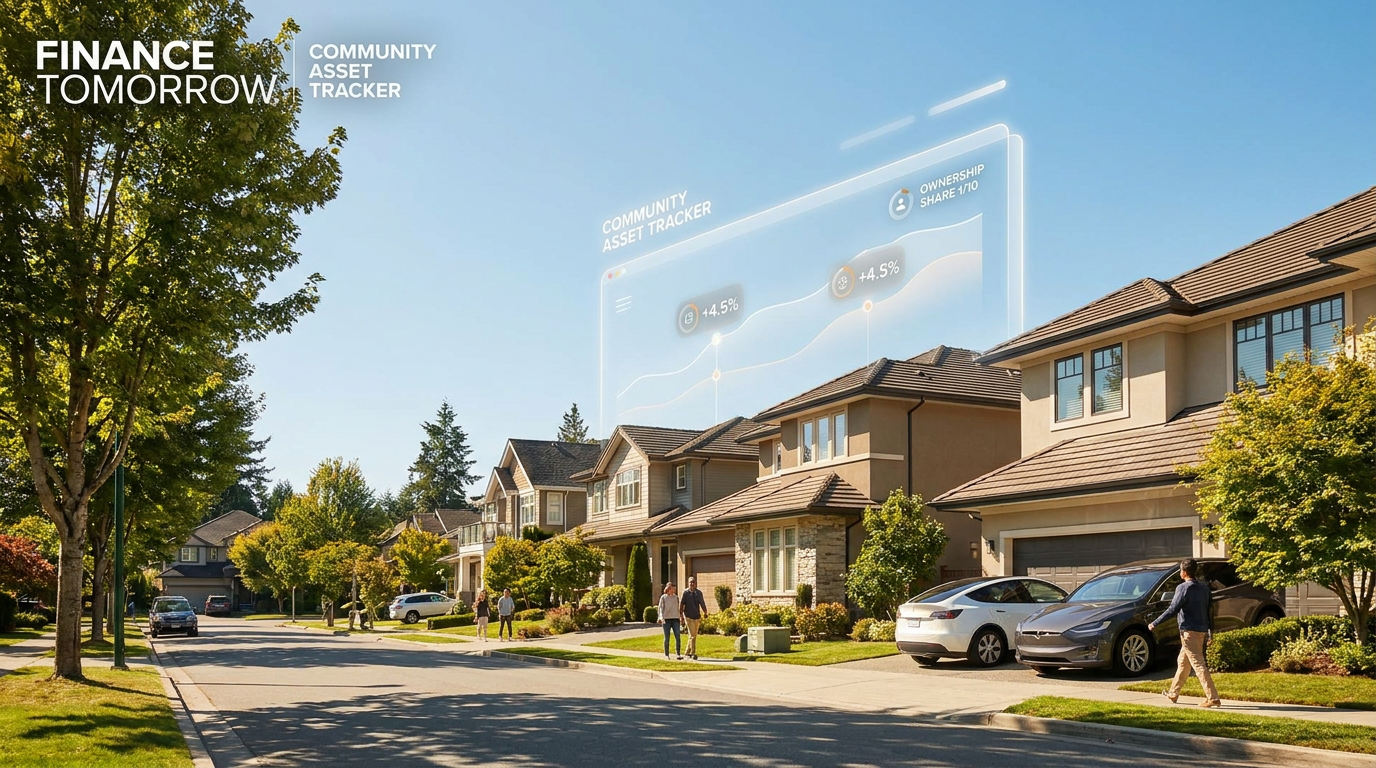
- Retail Access Advocates
- Focus on how fractional platforms democratize wealth building and generate passive income for everyday investors.
- Market Analysts
- Focus on the macroeconomic growth, demographic shifts, and market size of the fractional industry.
- Fintech & Blockchain Innovators
- Focus on how tokenization and smart contracts will create global liquidity for real estate assets.
- Private Credit Investors
- Focus on debt-based fractional investing as a fixed-income alternative with shorter lock-up periods.
What's not represented
- · Traditional Real Estate Agents
- · Local Housing Advocates
Why this matters
Real estate has historically been the most reliable engine for wealth creation, but it required massive upfront capital and hands-on management. Fractional platforms have removed these barriers, allowing anyone to earn passive property income and inflation-protected appreciation directly from their smartphone.
Key points
- Fractional investing allows individuals to buy shares of physical properties for as little as $10 to $100.
- Investors earn returns through a combination of rental income dividends and long-term property appreciation.
- The global fractional ownership market is projected to grow from $8.2 billion in 2025 to $21.6 billion by 2034.
- Blockchain tokenization is rapidly expanding the market, enabling cross-border real estate investments.
- While highly accessible, fractional real estate remains an illiquid asset typically requiring a multi-year holding period.
For generations, real estate has served as the bedrock of wealth creation, offering a reliable mix of passive income and long-term appreciation. Yet, the barrier to entry has historically been insurmountable for many, requiring massive down payments, pristine credit scores, and the willingness to take on the grueling responsibilities of a landlord. In 2026, that paradigm has fundamentally shifted. The physical property market has collided with financial technology, allowing everyday individuals to buy slices of homes, apartment buildings, and commercial spaces with the tap of a screen.[8]
This democratization of property is driving massive capital inflows. The global fractional ownership market reached $8.2 billion in 2025 and is projected to surge to $21.6 billion by 2034, expanding at a compound annual growth rate of 11.3%. This growth is not being driven by institutional titans, but by a retail revolution. Over three million investors globally now participate in property fractionalization, utilizing platforms that have collectively amassed more than $18 billion in assets under management.[1][2][6]
The underlying mechanism of fractional real estate is elegant in its simplicity. Instead of an individual purchasing a property outright, a specialized platform acquires the asset and places it into a Special Purpose Vehicle (SPV) or a Limited Liability Company (LLC). The platform then divides the ownership of that entity into thousands of micro-shares. When an investor buys a share, they are legally purchasing an economic interest in that specific entity, entitling them to a proportional cut of the property's financial performance.[3][5]

This structure obliterates traditional capital barriers. Platforms like Arrived and Realbricks allow users to browse individual rental homes across the United States and purchase equity stakes for as little as $100. Fundrise, one of the industry pioneers, permits entry with just $10. By lowering the threshold, these platforms enable retail investors to build diversified real estate portfolios—spreading $1,000 across ten different properties in ten different cities—rather than sinking their life savings into a single down payment.[3][5][6]
Returns in the fractional space mirror the dual engines of traditional real estate: yield and appreciation. Investors receive regular dividend distributions, typically paid monthly or quarterly, generated by the rental income of the underlying tenants. Simultaneously, the shares accrue value as the physical property appreciates over time. Across the industry, platforms generally target combined annualized returns of 5% to 12%, depending on the risk profile and location of the asset.[6]
While the concept is unified, the execution takes several distinct forms. The most common is the direct property share model, where investors hand-pick specific addresses—perhaps a single-family rental in Sunbelt suburbs or a vacation rental in Florida. This appeals to those who want a tangible connection to their investments. Conversely, the eREIT (electronic Real Estate Investment Trust) model pools investor capital to acquire massive, diversified portfolios of residential, commercial, and industrial properties, offering instant diversification without the need to analyze individual homes.[3][6]

While the concept is unified, the execution takes several distinct forms.
Beyond equity, the fractional ecosystem has expanded to include private credit. Platforms like Groundfloor allow users to act as the bank, funding short-term, real estate-backed loans for developers and flippers. Instead of owning the property, investors earn fixed-income returns through interest payments. This debt-focused approach provides a different risk-reward profile, often delivering shorter investment durations and shielding investors from the day-to-day volatility of property valuations.[4]
The most disruptive frontier in 2026 is the tokenization of real estate via blockchain technology. By representing property shares as digital tokens on a distributed ledger, platforms are streamlining transactions, reducing administrative overhead, and enabling global participation. The tokenized real estate market is expanding at a blistering 21% annual growth rate, projected to reach $19.4 billion by 2033. This technological leap allows an investor in Tokyo to seamlessly purchase a fraction of a commercial warehouse in Texas, with smart contracts automatically routing rental dividends to their digital wallet.[7]
This global accessibility is reshaping international property markets. Regulatory bodies worldwide have recognized the trend and established robust frameworks to protect retail participants. The Dubai Financial Services Authority (DFSA), for instance, has heavily regulated platforms like Stake, transforming the Gulf into a global hub for fractional investing. European regulators have similarly enforced the ECSP (European Crowdfunding Service Providers) framework, standardizing the rules across the continent and boosting investor confidence.[6]

The demographic driving this surge is notably young. Millennials and Gen Z investors, many of whom feel priced out of traditional homeownership due to elevated interest rates and soaring housing costs, are flocking to fractional platforms. For this cohort, fractional investing serves as a vital inflation hedge and a stepping stone to wealth building, allowing them to capture real estate yields without the anchor of a 30-year mortgage or the nightmare of midnight plumbing emergencies.[1][2]
Despite the frictionless onboarding, fractional real estate is not without its trade-offs—chief among them being liquidity. Unlike publicly traded stocks that can be sold in milliseconds, real estate is inherently illiquid. Most platforms require a recommended holding period of five to seven years. While secondary markets are rapidly maturing in 2026, allowing investors to sell their shares to other users, these markets can still experience friction during economic downturns when buyers are scarce.[4][6]

Investors must also navigate platform risk. While the underlying properties are typically shielded in bankruptcy-remote LLCs—meaning the real estate survives even if the tech company fails—a platform collapse would undoubtedly cause administrative chaos and delay distributions. Furthermore, fractional investors surrender all operational control; they cannot choose the tenants, dictate the renovation budget, or decide when to sell the property.[3][5]
Ultimately, the maturation of fractional real estate represents a structural evolution in personal finance. It bridges the chasm between the volatility of the stock market and the heavy capital requirements of physical property. As technology continues to strip away the friction of transactions and regulatory frameworks solidify globally, fractional ownership is cementing itself not as a novelty, but as a foundational pillar of the modern retail portfolio.[8]
How we got here
2012
The JOBS Act is signed into law in the US, opening the door for online crowdfunding and retail capital formation.
2015-2018
Pioneering platforms like Fundrise begin offering eREITs, lowering real estate minimums to everyday investors.
2023-2024
Regulatory frameworks mature globally, including SEBI's Small and Medium REITs in India and DFSA regulations in Dubai.
2025
The global fractional ownership market surpasses $8.2 billion as tokenization and blockchain integration accelerate.
2026
Secondary markets for fractional shares gain traction, offering unprecedented liquidity to private real estate investors.
Viewpoints in depth
The Retail Investor's View
Fractional platforms offer a vital stepping stone to wealth building without the burden of a mortgage.
For millennials and Gen Z, traditional homeownership has become increasingly elusive due to elevated interest rates and soaring median home prices. This demographic views fractional real estate not just as a novelty, but as a necessary inflation hedge and a pragmatic way to participate in property appreciation. By removing the need for a massive down payment and outsourcing the grueling work of property management, retail investors can build diversified, yield-generating portfolios that were previously reserved for high-net-worth individuals.
The Fintech Innovator's View
Blockchain and tokenization will eventually make real estate as liquid and borderless as public equities.
Technologists argue that the current iteration of fractional investing is only the beginning. By tokenizing property shares on a blockchain, innovators aim to strip away the remaining friction of real estate transactions—title transfers, escrow delays, and geographic borders. They envision a near future where a retail investor in Tokyo can instantly trade shares of a Texas commercial warehouse on a 24/7 global secondary market, utilizing smart contracts to automatically route rental dividends to digital wallets with zero administrative overhead.
The Traditionalist's View
Direct ownership offers superior control, tax advantages, and the power of leverage.
Traditional real estate purists maintain that fractional investing surrenders the most powerful tools of property wealth creation: leverage and control. When buying a whole home, an investor can use a 20% down payment to control a 100% asset, magnifying their returns. Fractional investors, conversely, typically buy equity in cash and have zero say in operational decisions—they cannot force a renovation to increase rent, choose the tenants, or time the market for a strategic sale. To traditionalists, fractional shares are closer to a high-yield bond than true real estate ownership.
What we don't know
- How secondary markets for fractional shares will hold up under the stress of a severe housing market downturn.
- Whether regulatory bodies will impose stricter accreditation requirements as tokenized real estate becomes more mainstream.
Key terms
- Special Purpose Vehicle (SPV)
- A distinct legal entity, often an LLC, created specifically to hold and manage a single real estate asset, protecting investors from outside liabilities.
- Tokenization
- The process of converting property ownership shares into digital tokens on a blockchain, enabling faster and borderless trading.
- eREIT
- An electronic Real Estate Investment Trust that pools money from online investors to buy and manage a diversified portfolio of properties.
- Secondary Market
- An exchange or platform feature where investors can buy and sell their existing fractional shares with other users before the underlying property is sold.
Frequently asked
Do I have to manage tenants or fix toilets?
No. The fractional platform or a hired property management company handles all operational duties, from tenant screening to maintenance.
How do I get my money back?
Investors typically realize returns through quarterly rental dividends and a lump sum when the property is sold (usually after 5-7 years). Some platforms also offer secondary markets to sell shares early.
Is fractional real estate the same as a REIT?
Not exactly. While both offer real estate exposure, fractional investing often allows you to pick specific individual properties, whereas traditional REITs are blind pooled funds managed by a company.
What happens if the platform goes bankrupt?
The underlying properties are typically held in bankruptcy-remote LLCs. If the tech platform fails, the physical asset and your ownership stake remain legally intact, though administration may be disrupted.
Sources
Source coverage
8 outlets
4 viewpoints surfaced








[1]MarketInteloMarket Analysts
Fractional Ownership Market Outlook 2025-2034
Read on MarketIntelo →[2]DataInteloMarket Analysts
Fractional Real Estate Platform Market Outlook 2025-2034
Read on DataIntelo →[3]ArrivedRetail Access Advocates
What is fractional real estate investing?
Read on Arrived →[4]GroundfloorPrivate Credit Investors
What Is Fractional Real Estate Investing? (And How It Fits Into Private Market Investing)
Read on Groundfloor →[5]RealbricksRetail Access Advocates
Fractional real estate investing explained
Read on Realbricks →[6]Fractional Property HubFintech & Blockchain Innovators
Best Platforms to Buy Fractional Real Estate in 2026
Read on Fractional Property Hub →[7]BinaryxFintech & Blockchain Innovators
Real Estate Meets Blockchain: Guide to Tokenized Property Investing
Read on Binaryx →[8]Factlen Editorial TeamMarket Analysts
Synthesis by Factlen editorial team
Read on Factlen Editorial Team →
More in real estate
See all 14 stories →Housing Supply
The Evidence Is In: 'Missing Middle' Zoning Reforms Successfully Lower Rent Growth
0 sources

Adaptive Reuse
How Empty Office Towers Are Being Engineered Into the Next Generation of Housing
0 sources

Commission Rules
Traditional Real Estate Agent vs. Flat-Fee Broker: Which is Right for You in 2026?
0 sources

Zoning Reform
The Evidence Behind Upzoning: How Auckland and Minneapolis Proved Building More Housing Lowers Rents
0 sources
Every angle. Every day.
Get real estate stories with full source coverage and perspective breakdowns delivered to your inbox.