
How Fractional Real Estate is Democratizing Property Investing in 2026
New investment platforms and blockchain tokenization are allowing everyday investors to buy equity in rental properties for as little as $10, breaking down the traditional barriers to real estate wealth.
By Factlen Editorial Team
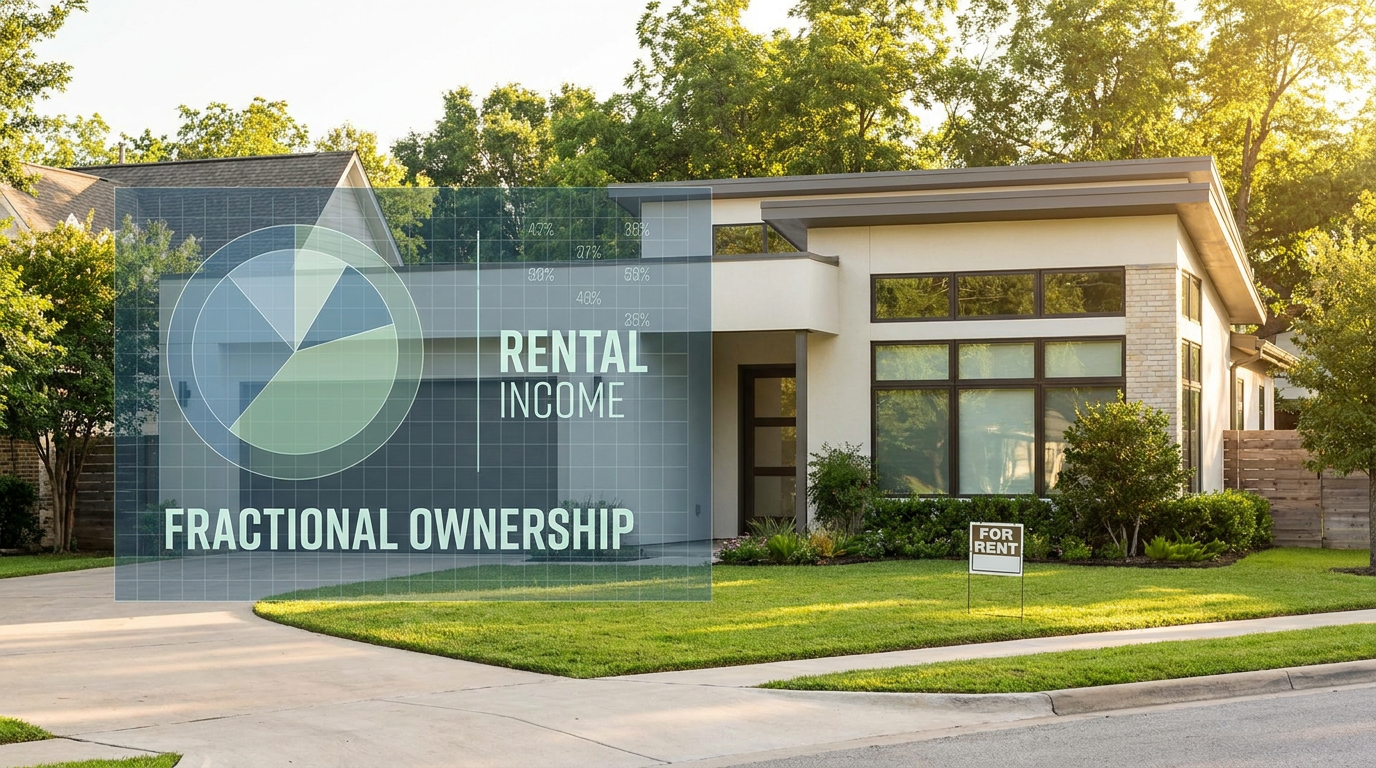
- Direct-Ownership Advocates
- Investors who prefer granular control over their portfolios by picking specific properties.
- Tokenization Pioneers
- Technologists focused on blockchain integration and secondary market liquidity.
- Fund & Portfolio Strategists
- Investors who prioritize instant diversification and passive management through eREITs.
What's not represented
- · Traditional real estate agents
- · First-time homebuyers competing for inventory
Why this matters
For decades, real estate investing required massive down payments and excellent credit, locking millions out of the market. Fractional ownership democratizes this wealth-building asset class, allowing anyone to earn passive rental income and property appreciation with just a few dollars.
Key points
- Fractional real estate platforms allow retail investors to buy equity in properties for as little as $10 to $100.
- Investors earn proportional rental income and benefit from property appreciation without managing tenants.
- Properties are held in LLCs or SPVs, ensuring investors own actual equity rather than just usage rights like a timeshare.
- The tokenized real estate market is projected to reach $19.4 billion by 2033, introducing secondary market liquidity.
- While platforms handle all maintenance, investors must account for upfront sourcing fees and annual management costs.
Real estate has long been the ultimate wealth-building cheat code, but the entry fee has historically been a massive down payment, excellent credit, and a willingness to fix broken pipes at midnight. For decades, this barrier kept everyday investors locked out of the asset class, forcing them to rely entirely on the stock market while institutional players bought up prime properties. The traditional path to property ownership required hundreds of thousands of dollars in upfront capital, effectively reserving the benefits of rental income and property appreciation for the already wealthy. This dynamic created a closed loop where only those with existing capital could access the most reliable vehicle for generational wealth.[1]
In 2026, the landscape has fundamentally shifted. Fractional real estate investing has moved from a niche crowdfunding experiment to a multi-billion-dollar financial standard. By dividing high-value properties into micro-shares, modern investment platforms are allowing retail investors to buy into the housing market for as little as $10 to $100. This democratization of access means that a young professional with a few hundred dollars in savings can now build a diversified real estate portfolio, earning passive income without ever having to qualify for a mortgage or deal with a tenant.[2][6]
The mechanics behind this shift rely on a clever, highly regulated legal structure. When a fractional platform identifies a lucrative rental property—such as a $400,000 single-family home in a growing sunbelt suburb—it does not simply sell informal IOUs to the public. Instead, the company creates a specific legal entity, typically a Limited Liability Company (LLC) or a Special Purpose Vehicle (SPV), to hold the official deed to that exact property. The physical house is entirely owned by this corporate entity, isolating it from the platform's broader financial liabilities and ensuring that the asset is legally protected.[4][5]
Once the LLC is established, the ownership of that specific entity is divided into thousands of equal fractions. When an investor buys a $100 share on a platform, they are purchasing a pro-rata equity stake in the company that owns the physical building. They are buying a hard asset that generates real-world yield. If the property generates rental income, the investor gets a proportional cut. If the property's value goes up over time, the investor's share becomes inherently more valuable.[2][5]

The distinction between this model and legacy vacation products is critical. A timeshare grants a consumer the right to use a property for a fixed week each year, often while paying exorbitant maintenance fees on an asset that depreciates in value. Fractional ownership, conversely, grants actual equity. Investors never visit the property or use it for personal vacations; instead, they act purely as silent partners, collecting proportional rental income and benefiting from capital appreciation when the asset is eventually sold on the open market to a traditional buyer.[4][5]
Within the fractional space, two distinct philosophies have emerged, starting with the direct-ownership model. Platforms like Arrived have popularized a direct-selection approach, where investors can browse a digital marketplace of individual single-family homes or vacation rentals. Users can review the exact address, neighborhood data, historical appreciation, and projected yields before deploying their capital. This allows retail buyers to build a highly customized portfolio, perhaps picking a long-term rental in Ohio for stability and a short-term vacation property in Tennessee for higher yield potential, giving them total control over their asset allocation.[2][3][6]
On the other side of the spectrum are portfolio-first platforms that prioritize instant diversification. Rather than forcing investors to analyze and pick individual houses, these platforms pool retail capital into electronic Real Estate Investment Trusts (eREITs) or diversified funds. A single $10 investment buys a microscopic slice of a massive fund containing dozens or even hundreds of residential, commercial, and industrial properties. The platform's in-house management team handles all the asset allocation, automatically spreading the investor's exposure across multiple geographic markets and property types to minimize localized risk.[3][7]
On the other side of the spectrum are portfolio-first platforms that prioritize instant diversification.
The choice between direct ownership and fund-based investing ultimately comes down to a trade-off between control and risk mitigation. Direct platforms offer granular transparency—investors know exactly which roof they own a piece of, and they can tailor their strategy to specific emerging markets. However, fund-based platforms offer hands-off security, ensuring that a single vacant property or an unexpected boiler replacement doesn't wipe out a user's quarterly dividend. For many passive investors, the automated diversification of a fund is worth the loss of individual property selection.[3]
While traditional fractional platforms rely on standard web interfaces and internal ledgers, a new wave of technological infrastructure is reshaping the model. Platforms are increasingly utilizing blockchain technology to issue property shares as digital tokens. This tokenized real estate market is projected to surge to $19.4 billion by 2033, representing a massive 21% compound annual growth rate. By moving real-world assets onto the blockchain, these platforms are reducing administrative overhead, increasing transparency, and opening up lucrative U.S. real estate markets to a global pool of retail investors.[4]

The primary advantage of this blockchain-based tokenization is the potential for secondary market liquidity. Historically, real estate is a highly illiquid asset; if you buy a house, your money is trapped until you endure a months-long sales process. Tokenization allows investors to trade their property shares on digital exchanges 24/7. While still in its early stages, this infrastructure theoretically enables an investor to cash out their equity in minutes rather than years, fundamentally altering the liquidity profile of property investing and making it function more like the stock market.[5][7]
Regardless of the technological backend, the underlying economics of how investors get paid remain the same across the industry. The first revenue stream is ongoing rental income. The platform's professional management team handles the notorious 'three Ts' of landlording—tenants, toilets, and trash—meaning the investor never receives a midnight phone call about a broken water heater. After deducting property management fees, routine maintenance costs, insurance premiums, and local property taxes, the net rental income is distributed to the fractional shareholders, typically arriving as quarterly or monthly dividends deposited directly into their accounts.[5]
The second, and often larger, revenue stream is property appreciation. Most fractional platforms operate on a predetermined five-to-seven-year holding period. Once that target date is reached, the platform evaluates the local housing market and sells the physical property to a traditional buyer. The profits from the sale, minus disposition fees, are then distributed to the fractional owners based on their initial stake. This mechanism allows retail investors to capture the long-term wealth generation that makes real estate so lucrative, without ever having to stage a home or hire a real estate agent.[6]
Understanding the fee structure is the most critical variable for anyone entering the fractional space. Platforms typically charge an upfront sourcing fee—often ranging from 2% to 3.5% of the investment—to cover the costs of identifying, acquiring, and closing on the property. Additionally, there is an annual assets-under-management (AUM) fee, usually hovering around 1%, which is deducted from the gross rental yield. While these fees eat into total returns, they are the necessary price paid for entirely passive, hands-off management and institutional-grade property sourcing.[7]

Despite the promises of secondary markets and blockchain tokenization, liquidity remains the primary uncertainty in fractional real estate. If the broader housing market cools, or if a specific platform's secondary marketplace lacks active buyers, investors may find themselves unable to offload their shares before the five-year holding period expires. Unlike publicly traded stocks, which can be liquidated instantly at market price, fractional real estate still requires a long-term mindset and a willingness to lock up capital for several years to realize the full benefits of the investment.[7]
A persistent question surrounds the macroeconomic impact of these platforms on local communities. Critics argue that corporate entities buying up single-family homes to sell as fractional shares exacerbates the national housing shortage, boxing out traditional first-time homebuyers who simply cannot compete with all-cash institutional offers. Proponents counter that these platforms actually fund new construction, provide essential rental inventory in high-demand areas, and allow lifelong renters to participate in the financial upside of the housing market without needing to secure a massive mortgage or drain their life savings.[6]
Regardless of the broader macroeconomic debate, the microeconomic benefit to the individual retail investor is undeniable. Fractional ownership allows a young professional with just $500 in savings to gain meaningful exposure to an asset class that has historically outpaced inflation and provided a reliable hedge against stock market volatility. It effectively transforms real estate from an exclusive country club into a public utility, ensuring that the wealth-generating power of property ownership is no longer restricted by geography, perfect credit scores, or inherited generational wealth.[1][5]
As 2026 progresses, the convergence of real estate, financial technology, and blockchain is creating a more inclusive financial ecosystem. The walls of the private real estate club have been permanently breached. For the first time in modern history, the ability to earn rental income and build equity in appreciating assets is available to anyone with an internet connection and a few spare dollars, marking a profound shift in how everyday people build long-term wealth and secure their financial futures.[1][4]
How we got here
Pre-2012
Private real estate syndications were legally restricted to wealthy, accredited investors.
2012
The JOBS Act passed in the US, paving the way for real estate crowdfunding and non-accredited investor participation.
2021
Platforms like Arrived launched, lowering the minimum investment for single-family homes to $100.
2024-2026
Blockchain tokenization of real-world assets (RWAs) surged, introducing secondary markets and global access to fractional property shares.
Viewpoints in depth
Direct-Ownership Advocates
Investors who prefer granular control over their portfolios.
This camp argues that the true value of real estate investing lies in transparency and selection. By picking specific properties in specific neighborhoods, investors can tailor their strategy—opting for high-yield short-term rentals in vacation hotspots or stable, long-term single-family homes in growing suburbs. They value knowing exactly which physical asset their money is tied to.
Fund & Portfolio Strategists
Investors who prioritize instant diversification and passive management.
This perspective contends that picking individual properties exposes retail investors to unnecessary localized risk—such as a bad tenant or a sudden roof repair wiping out a year's dividends. They advocate for eREITs and fund-based models, where a single small investment is automatically spread across dozens or hundreds of properties, smoothing out volatility and ensuring consistent returns.
Tokenization Pioneers
Technologists focused on blockchain integration and secondary liquidity.
For this group, traditional fractional platforms are just a stepping stone. They argue that the future of real estate lies in tokenization—representing property shares as digital assets on a blockchain. This approach aims to solve real estate's biggest flaw: illiquidity. By enabling 24/7 trading of property tokens on global digital exchanges, they believe real estate can eventually be traded as easily as tech stocks.
What we don't know
- How secondary tokenized markets will hold up during a severe housing crash.
- Whether regulatory bodies will impose stricter rules on retail real estate crowdfunding.
Key terms
- Fractional Ownership
- An investment model where multiple individuals buy shares of a single asset, splitting the costs and profits.
- SPV (Special Purpose Vehicle)
- A subsidiary company formed for a specific, narrow objective—in this case, holding the title to a single real estate property.
- eREIT
- An electronic Real Estate Investment Trust that pools investor money to buy a diversified portfolio of properties, typically accessed via online platforms.
- Tokenization
- The process of converting ownership rights of a physical asset into digital tokens on a blockchain, enabling easier trading and tracking.
- Liquidity
- How quickly and easily an investment can be converted into cash without affecting its market price.
Frequently asked
Is fractional real estate the same as a timeshare?
No. A timeshare gives you the right to use a property for a specific period, but you don't own the equity. Fractional real estate gives you an actual equity stake and a share of the rental profits.
Do I have to manage the tenants or fix the property?
No. The fractional investing platform handles all property management, maintenance, and tenant relations. Investors are entirely passive.
How do I get my money back?
Investors earn ongoing dividends from rental income. The principal is typically returned when the platform sells the property after a 5-to-7-year holding period, though some platforms offer secondary markets to sell shares earlier.
Sources
Source coverage
7 outlets
3 viewpoints surfaced







[1]Factlen Editorial TeamFund & Portfolio Strategists
Synthesis by Factlen editorial team
Read on Factlen Editorial Team →[2]ArrivedDirect-Ownership Advocates
How fractional real estate investing works
Read on Arrived →[3]CoOwnFund & Portfolio Strategists
Arrived Homes vs Fundrise: The Core Difference
Read on CoOwn →[4]BinaryxTokenization Pioneers
The Tokenized Fractional Real Estate Market in 2026
Read on Binaryx →[5]IndexpoTokenization Pioneers
Fractional Asset Ownership: From Physical to Digital
Read on Indexpo →[6]WealthtenderDirect-Ownership Advocates
Arrived Homes vs. Fundrise: A 2026 Comparison
Read on Wealthtender →[7]MogulTokenization Pioneers
Comparing Fractional Real Estate Platforms
Read on Mogul →
More in real estate
See all 14 stories →Housing Supply
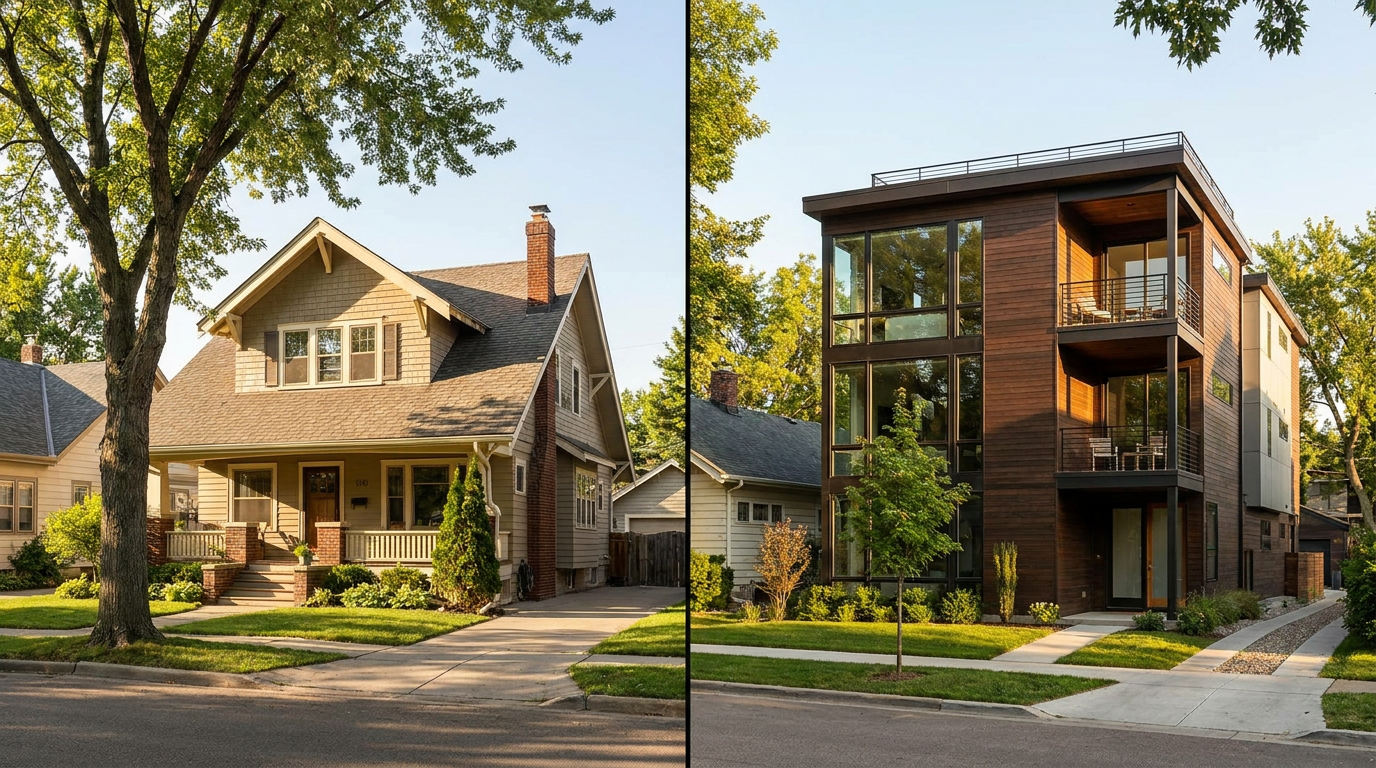
The Evidence Is In: 'Missing Middle' Zoning Reforms Successfully Lower Rent Growth
0 sources

Adaptive Reuse
How Empty Office Towers Are Being Engineered Into the Next Generation of Housing
0 sources

Commission Rules
Traditional Real Estate Agent vs. Flat-Fee Broker: Which is Right for You in 2026?
0 sources

Zoning Reform
The Evidence Behind Upzoning: How Auckland and Minneapolis Proved Building More Housing Lowers Rents
0 sources
Every angle. Every day.
Get real estate stories with full source coverage and perspective breakdowns delivered to your inbox.