
How Everyday Investors Are Using Specialized REITs to Access the AI and Healthcare Booms
As traditional property markets face structural headwinds, retail investors are increasingly turning to Data Center and Healthcare REITs to generate passive income from the digital economy and aging demographics.
By Factlen Editorial Team
- Income-Focused Investors
- Prioritizes stable, high-yield dividend payouts and recession-resistant assets like healthcare facilities.
- Growth & Tech Investors
- Views real estate as a backdoor play on the artificial intelligence boom, focusing on data center infrastructure.
- Macro Analysts
- Evaluates the sector based on interest rate cycles, capital costs, and valuation gaps between public and private markets.
What's not represented
- · Traditional Real Estate Developers
- · Utility Grid Operators
- · Healthcare Facility Tenants
Why this matters
Real estate has historically been the primary engine for middle-class wealth creation, but high home prices and mortgage rates have locked many out of physical ownership. Specialized REITs offer a liquid, low-cost alternative to build institutional-grade passive income while participating in the growth of artificial intelligence and healthcare.
Key points
- REITs allow everyday investors to own shares of commercial real estate portfolios without buying physical property.
- Federal law requires REITs to pay out 90% of their taxable income as dividends, making them strong passive income generators.
- Data center REITs are surging as the AI boom creates massive demand for specialized server facilities and power grid access.
- Healthcare REITs offer recession-resistant stability, driven by the aging baby boomer population and the shift to outpatient care.
The traditional American dream of building wealth through real estate usually conjures images of buying a rental house, fixing leaky faucets, and chasing down late rent checks. For decades, the high barrier to entry—requiring massive down payments and hands-on management—kept commercial real estate out of reach for the average person. But in 2026, a quiet revolution in retail investing is accelerating. Everyday investors are bypassing physical property entirely, opting instead to own the physical infrastructure of the digital economy and the demographic future.[8]
The vehicle driving this shift is the Real Estate Investment Trust, or REIT. Created by Congress in 1960, REITs were designed to give the public the same opportunity to invest in large-scale commercial properties that institutional investors have always enjoyed. By pooling capital from thousands of individuals, these publicly traded companies buy, develop, and manage portfolios of income-producing real estate.[1][2]
What makes the REIT structure uniquely powerful for retail investors is a strict federal mandate: to maintain their tax-advantaged status, these companies must distribute at least 90 percent of their taxable income back to shareholders in the form of dividends. In exchange, the corporation pays little to no federal income tax. This pass-through mechanism transforms brick-and-mortar buildings into highly efficient, passive income engines for retirees and wealth-builders alike.[1][2]

As 2026 unfolds, the broader macroeconomic landscape is creating a rare entry point for these assets. Analysts point to a "dual divergence" in the market. First, public REIT valuations have lagged behind the broader equity market, which was heavily skewed by the massive run-up in a handful of mega-cap technology stocks. Second, public REITs are currently trading at a discount compared to the appraised values of private real estate. Historically, when these valuation gaps close, publicly traded real estate tends to significantly outperform the broader stock market.[1][3]
Furthermore, the interest rate environment is shifting in favor of capital-intensive industries. Real estate relies heavily on borrowing to fund acquisitions and development. Historical data spanning the last five decades reveals that in the twelve months following a central bank rate cut during an economic expansion, U.S. REITs have delivered an annualized return of 9.48 percent, comfortably beating the 7.57 percent return of broader U.S. equities.[5]

However, the real story of 2026 is not about traditional shopping malls or downtown office buildings, which continue to face structural headwinds from e-commerce and remote work. Instead, the explosive growth is concentrated in specialized, alternative REITs. Investors are increasingly targeting two specific sectors that act as the physical landlords for the world's most unstoppable mega-trends: artificial intelligence and global aging.[7][8]
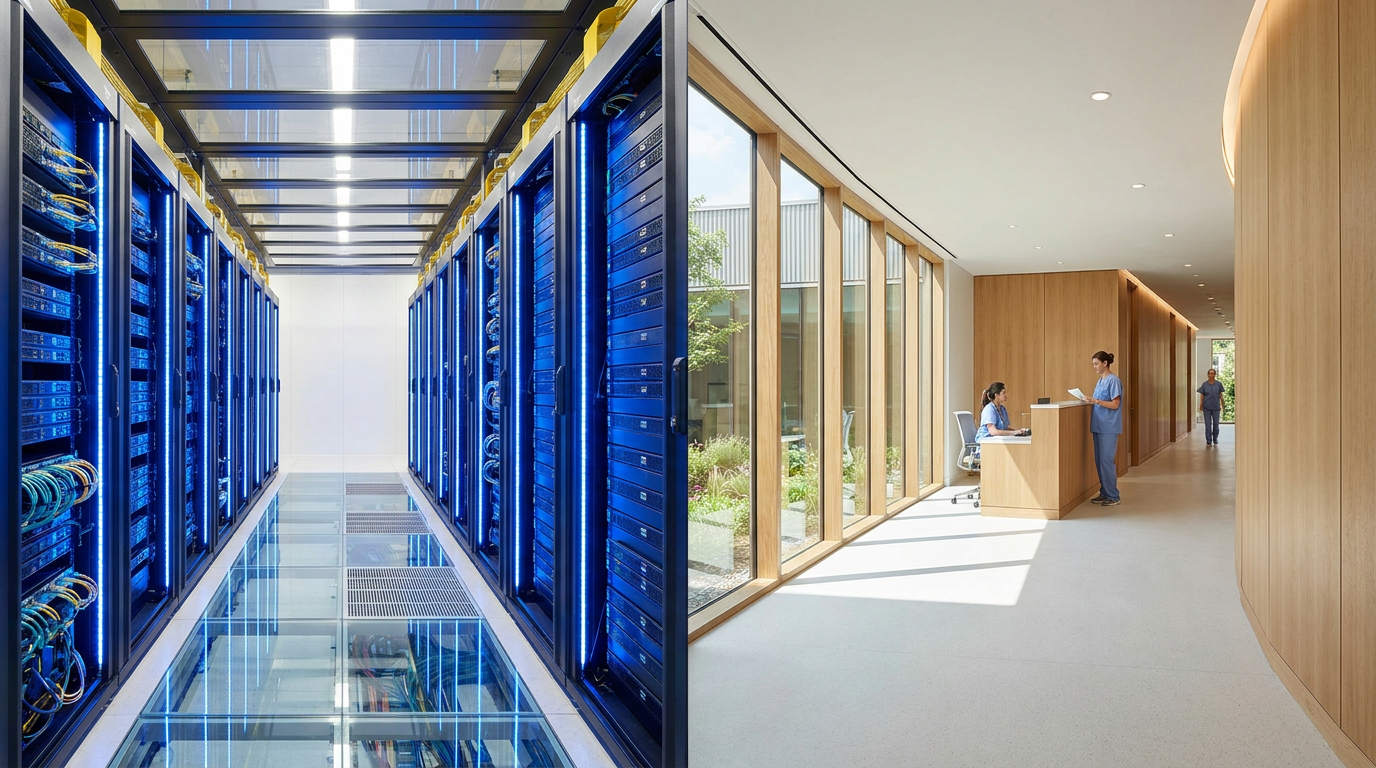
Data center REITs have emerged as the undisputed darlings of the modern real estate market. These companies own the highly secure, climate-controlled facilities that house the servers, networking equipment, and storage systems powering cloud computing and generative AI. Every time a user queries an AI chatbot, streams a movie, or accesses a cloud database, they are relying on the physical infrastructure owned by these specialized landlords.[4][8]
Data center REITs have emerged as the undisputed darlings of the modern real estate market.
The business model is remarkably stable. Data center operators sign long-term lease agreements—often spanning five to fifteen years—with "hyperscalers" like Amazon Web Services, Microsoft Azure, and Google Cloud. Because migrating server infrastructure is incredibly expensive and risky for these tech giants, tenant retention rates are exceptionally high, providing the REITs with highly predictable, recurring revenue streams that fund their dividend payouts.[4]
What has supercharged the valuation of data center REITs in 2026 is a severe supply-and-demand imbalance. The training of advanced AI models requires massive clusters of specialized processors, which consume extraordinary amounts of electricity. Utilities across major tech hubs are struggling to deliver new substation capacity fast enough to meet this demand. Consequently, existing data centers with secured grid access and locked-in power purchase agreements now possess an almost insurmountable economic moat.[4]
This power scarcity has translated into immense pricing power and stellar returns. Over the twelve months ending in April 2026, dominant players in the space delivered total returns hovering around 40 percent, vastly outperforming both traditional real estate sectors and many pure-play technology indices. For retail investors, these REITs offer a "picks and shovels" approach to the AI gold rush—profiting from the infrastructure buildout without having to guess which software company will ultimately win the AI race.[4][8]

On the other end of the spectrum, healthcare REITs are quietly capitalizing on an entirely different, yet equally inevitable, structural shift: the aging of the global population. As the baby boomer generation enters its later years, the demand for medical services, outpatient care, and senior housing is accelerating at an unprecedented rate.[3][6]
Healthcare real estate encompasses a wide variety of properties, including medical office buildings, life science laboratories, surgical centers, and skilled nursing facilities. Unlike retail or office spaces, healthcare properties are largely recession-resistant. Medical care is an essential service, meaning that tenant demand remains robust regardless of consumer sentiment or broader economic downturns.[6]
Operators in this space frequently utilize "triple-net leases," a structure where the tenant—such as a hospital network or a senior care operator—is responsible for paying not just the rent, but also the property taxes, building insurance, and maintenance costs. This arrangement insulates the REIT from the sting of inflation and rising operating expenses, resulting in highly stable cash flows. Consequently, healthcare REITs are currently offering some of the most attractive dividend yields in the market, often ranging between 4.5 and 6.0 percent.[6]

The migration of medical services away from sprawling, expensive hospital campuses and toward specialized outpatient clinics in suburban neighborhoods has further fueled acquisition pipelines for these trusts. Companies are aggressively expanding their footprints, acquiring state-of-the-art facilities to meet patients where they live, while rewarding shareholders with steady income.[6]
Despite the overwhelming optimism, the alternative real estate sector is not without its uncertainties. For data centers, the very power constraints that create their current moats also threaten their future growth. If operators cannot secure enough electricity to build new campuses, their ability to compound earnings will stall. Additionally, the rapid evolution of AI hardware carries the risk of technological obsolescence, potentially requiring landlords to undertake billion-dollar retrofits to accommodate next-generation liquid cooling systems.[4][8]
Healthcare REITs face their own distinct set of challenges. Because their tenants rely heavily on government funding, any legislative changes to Medicare or Medicaid reimbursement rates can severely impact the profitability of the underlying clinic or nursing home operators. Furthermore, persistent labor shortages in the nursing and medical fields can constrain the ability of these operators to run their facilities at full capacity, indirectly threatening their ability to absorb future rent increases.[6]
Nevertheless, the democratization of commercial real estate stands as one of the most empowering financial developments of the decade. By utilizing specialized REITs, an everyday investor with a brokerage account can now construct an institutional-grade portfolio. They can simultaneously collect rent from the world's largest technology conglomerates and the nation's premier healthcare providers, all while enjoying the liquidity of a publicly traded stock and the passive income of a traditional landlord.[1][8]
How we got here
1960
The U.S. Congress creates the REIT structure to democratize commercial real estate investing for the general public.
2022–2023
Aggressive interest rate hikes by the Federal Reserve cause a broad sell-off in public real estate markets.
2024
The generative AI boom triggers massive hyperscaler demand for data center capacity, straining local power grids.
Early 2026
Public REITs begin outperforming broader equities as rate cuts stabilize the macro environment and valuation gaps close.
Viewpoints in depth
Income-Focused Investors
Prioritizes stable, high-yield dividend payouts and recession-resistant assets like healthcare facilities.
For retirees and passive-income seekers, the appeal of REITs lies entirely in the 90 percent dividend distribution rule. This camp heavily favors healthcare REITs due to their defensive characteristics. Because medical care is an essential service, tenant demand remains robust even during economic downturns. Furthermore, the widespread use of triple-net leases in the healthcare sector ensures that rising property taxes and maintenance costs are borne by the tenant, protecting the landlord's cash flow and ensuring the dividend check arrives reliably every quarter.
Growth & Tech Investors
Views real estate as a backdoor play on the artificial intelligence boom, focusing on data center infrastructure.
Growth investors have largely abandoned traditional real estate in favor of digital infrastructure. They argue that data center REITs are the ultimate 'picks and shovels' play for the AI revolution. Rather than trying to pick which software company will dominate the next decade, these investors prefer to own the physical buildings and power contracts that every tech giant relies upon. They point to the severe constraints on the U.S. power grid as a massive competitive advantage, arguing that existing data centers with secured electricity access possess an economic moat that cannot be easily replicated by new competitors.
Macro Analysts
Evaluates the sector based on interest rate cycles, capital costs, and valuation gaps between public and private markets.
Macroeconomic analysts view the current real estate landscape through the lens of capital markets and historical cycles. They note that public REITs have been trading at a significant discount to the appraised values of private real estate, a dislocation that historically precedes strong public market outperformance. Additionally, this camp closely monitors central bank policy, emphasizing that capital-intensive sectors like real estate are the primary beneficiaries of falling interest rates, which lower borrowing costs for development and make the sector's dividend yields more attractive relative to bonds.
What we don't know
- Whether local utility grids will be able to upgrade substation capacity fast enough to support the next generation of AI data centers.
- How future changes to Medicare and Medicaid reimbursement rates might impact the profitability of healthcare REIT tenants.
- The extent to which next-generation AI hardware will require costly retrofits to existing data center cooling infrastructure.
Key terms
- Real Estate Investment Trust (REIT)
- A company that owns, operates, or finances income-producing real estate and allows individuals to invest in large-scale properties through publicly traded stock.
- Funds From Operations (FFO)
- The primary metric used to evaluate the operating performance of a REIT, calculated by adding depreciation and amortization back to net income.
- Hyperscaler
- Massive cloud service providers, such as Amazon Web Services or Google Cloud, that require enormous amounts of computing and storage infrastructure.
- Triple-Net Lease
- A commercial lease structure where the tenant assumes responsibility for all property-related expenses, including taxes, insurance, and maintenance.
- Colocation
- The practice of renting space for servers and other computing hardware at a third-party provider's data center facility.
Frequently asked
Do I have to pay corporate taxes on REITs?
No. Because REITs distribute at least 90% of their taxable income as dividends, they generally pay no corporate income tax. However, investors are responsible for paying ordinary income tax on the dividends they receive.
Why are data centers considered real estate?
Data centers are highly specialized physical buildings that lease space, power, and cooling infrastructure to tenants. Because they generate rental income from long-term leases on physical property, they qualify under IRS rules as real estate.
How do interest rates affect REIT prices?
Real estate is a capital-intensive business that relies on borrowing. When interest rates fall, borrowing costs decrease, which typically boosts property valuations and makes the high dividend yields of REITs more attractive to investors.
What is a triple-net lease?
A lease agreement where the tenant is responsible for paying the property taxes, building insurance, and maintenance costs in addition to the base rent, insulating the landlord from rising operating expenses.
Sources
Source coverage
8 outlets
3 viewpoints surfaced








[1]NareitIncome-Focused Investors
What's a REIT? The Investor's Guide to Real Estate Investment Trusts
Read on Nareit →[2]U.S. Securities and Exchange CommissionMacro Analysts
Real Estate Investment Trusts (REITs)
Read on U.S. Securities and Exchange Commission →[3]Cohen & SteersMacro Analysts
REIT fundamentals are accelerating and earnings are strong
Read on Cohen & Steers →[4]The Motley FoolGrowth & Tech Investors
Best Data Center REITs for 2026 and How to Invest
Read on The Motley Fool →[5]Simply Wall StMacro Analysts
Three forces that could reshape REIT performance next year and beyond
Read on Simply Wall St →[6]GlobeNewswireIncome-Focused Investors
Healthcare REITs, Skilled Nursing Real Estate Gain Momentum amid Aging Demographics
Read on GlobeNewswire →[7]BrookfieldMacro Analysts
Supportive Environment for Private Real Estate Debt
Read on Brookfield →[8]Factlen Editorial TeamGrowth & Tech Investors
Synthesis by Factlen editorial team
Read on Factlen Editorial Team →

More in real estate
See all 13 stories →Housing Supply
The Evidence Is In: 'Missing Middle' Zoning Reforms Successfully Lower Rent Growth
0 sources

Adaptive Reuse
How Empty Office Towers Are Being Engineered Into the Next Generation of Housing
0 sources

Commission Rules
Traditional Real Estate Agent vs. Flat-Fee Broker: Which is Right for You in 2026?
0 sources

Zoning Reform
The Evidence Behind Upzoning: How Auckland and Minneapolis Proved Building More Housing Lowers Rents
0 sources

Every angle. Every day.
Get real estate stories with full source coverage and perspective breakdowns delivered to your inbox.