
CAR-T Cell Therapy Puts Severe Lupus Into Remission in UK Trial
An experimental treatment that genetically modifies a patient's own immune cells has successfully put severe lupus into drug-free remission. Researchers believe the therapy effectively 'resets' the immune system, offering a potential cure for chronic autoimmune diseases.
By Factlen Editorial Team
- Clinical Researchers
- Medical investigators focused on the cellular mechanism and the unprecedented efficacy of the treatment.
- Patient Advocates & Mainstream Press
- Organizations and patients emphasizing the dramatic improvement in quality of life and the end of chronic medication.
- Evidence Analysts
- Experts urging patience to evaluate long-term durability and the safety profile of engineered cell therapies.
What's not represented
- · Health Economists
- · Healthcare Payers and Insurers
Why this matters
For decades, severe autoimmune diseases like lupus have been considered incurable, requiring patients to endure a lifetime of heavy immunosuppressive drugs and progressive organ damage. This breakthrough provides the strongest evidence yet that a one-time cellular therapy can fundamentally 'reset' the immune system, offering a definitive cure and paving the way for similar treatments for multiple sclerosis and rheumatoid arthritis.
Key points
- A UK clinical trial successfully used CAR-T cell therapy to put five out of six severe lupus patients into remission.
- The therapy genetically modifies a patient's own T-cells to hunt down and destroy the rogue B-cells causing the disease.
- When the patient's B-cells naturally regenerate months later, they are healthy and no longer attack the body's own tissues.
- The results replicate a landmark 2024 German study, strengthening the evidence for a permanent 'immune reset'.
- Long-term durability remains uncertain, as the longest patient follow-ups are currently under three years.
A groundbreaking clinical trial in the United Kingdom has successfully used genetically modified immune cells to put severe lupus into drug-free remission, offering the strongest evidence yet that a one-time treatment could effectively cure chronic autoimmune diseases. In a Phase 1 trial led by University College London (UCL) and University College London Hospitals NHS Foundation Trust (UCLH), five out of six patients who received a low dose of chimeric antigen receptor (CAR) T-cell therapy achieved complete remission within months [1, 2]. These patients, who had previously exhausted all standard treatment options, have been able to discontinue their lifelong immunosuppressive medications [3]. The results represent a paradigm shift in rheumatology, moving the medical consensus away from merely managing autoimmune symptoms toward the possibility of a permanent immune reset [7].[1][2][3][7]
Systemic lupus erythematosus (SLE) is a severe, chronic autoimmune disease in which the body's immune system mistakenly identifies its own healthy tissues as foreign threats. The primary culprits in SLE are malfunctioning B-cells, which produce destructive autoantibodies that attack the patient's joints, skin, and major organs, frequently leading to life-threatening complications like lupus nephritis, or kidney inflammation [2, 6]. Standard treatments rely on broad immunosuppressants or targeted monoclonal antibodies that dampen the entire immune response, leaving patients vulnerable to infections and often failing to halt the disease's progression [4, 6]. For decades, researchers have sought a way to selectively eliminate these rogue B-cells without permanently crippling the patient's immune defenses [5].[2][4][5][6]
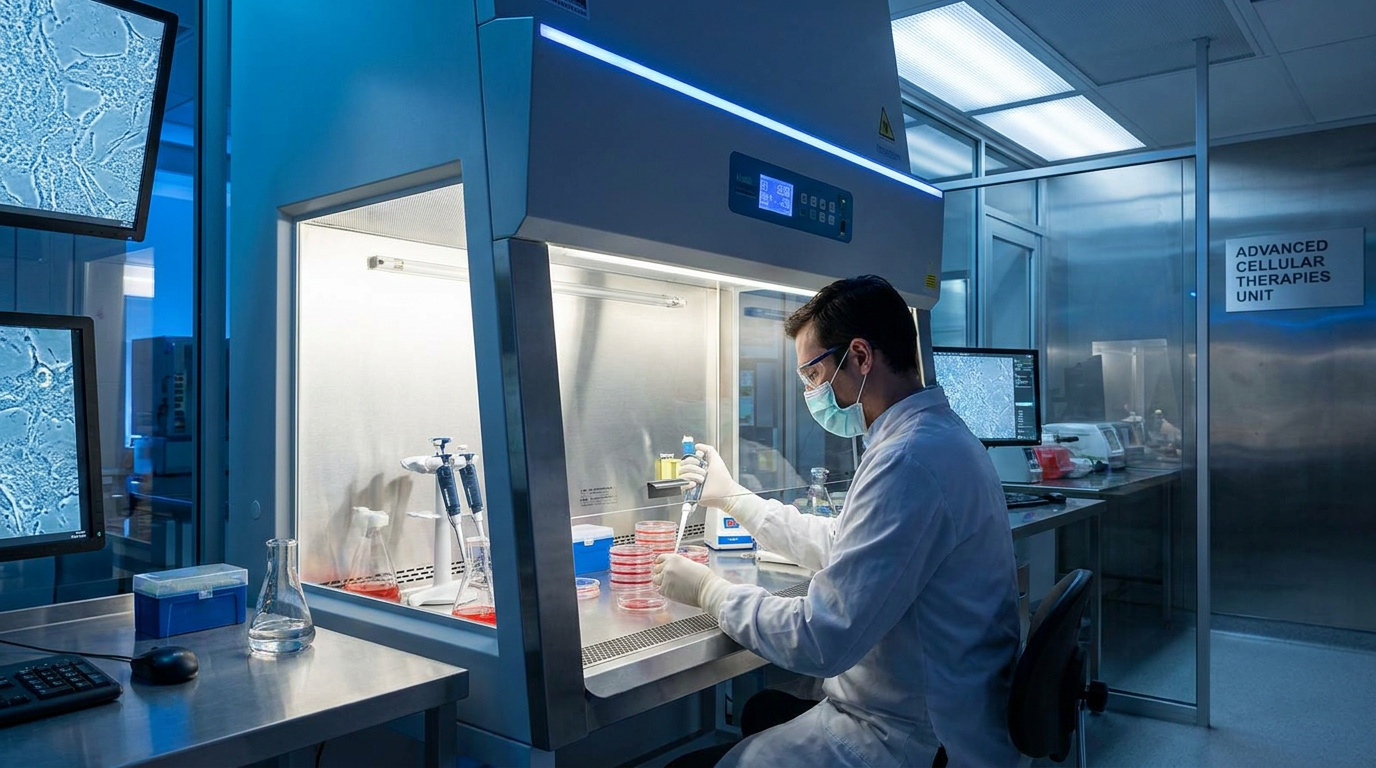
The mechanism behind the new treatment, CAR-T cell therapy, was originally developed to fight blood cancers like leukemia and lymphoma [1, 4]. The process begins by extracting a patient's own T-cells—the hunter cells of the immune system. In a laboratory, these cells are genetically engineered to express a chimeric antigen receptor (CAR) that specifically recognizes CD19, a protein found on the surface of B-cells [4, 6]. Once multiplied and infused back into the patient's bloodstream, these modified T-cells act as a guided missile system, systematically hunting down and destroying the entire B-cell population, including the malfunctioning cells responsible for lupus [3, 7].[1][3][4][6][7]

The most profound claim emerging from these trials is the concept of an immune reset. Evidence shows that the CAR-T cells successfully wipe out the patient's B-cells, halting the autoimmune attack immediately [1, 4]. However, the CAR-T cells eventually naturally die off, allowing the patient's bone marrow to begin producing new B-cells months later [5]. Crucially, clinical data indicates that these newly generated B-cells are healthy and naive—they do not resume the production of the destructive autoantibodies [2, 4]. This suggests that the therapy does not just suppress the disease, but fundamentally deletes the immunological memory that caused the body to attack itself [5, 7].[1][2][4][5][7]
The most profound claim emerging from these trials is the concept of an immune reset.
The evidence base supporting this mechanism is rapidly strengthening. The UCLH trial builds upon landmark findings from a German research team at Friedrich-Alexander-Universität Erlangen-Nürnberg, published in The New England Journal of Medicine in early 2024 [4]. In that cohort, 15 patients with severe, refractory autoimmune diseases—including lupus, systemic sclerosis, and inflammatory myositis—received CD19-targeted CAR-T therapy [4]. All 15 patients experienced deep remission and were able to stop all targeted autoimmune medications [4, 7]. The UK trial successfully replicated these dramatic results in an NHS setting, with patients showing rapid stabilization and improvement in kidney function over an average follow-up of 11 months [2, 3].[2][3][4][7]

Despite the overwhelming clinical success in early trials, transparent uncertainty remains regarding the long-term durability of the immune reset. Because the application of CAR-T therapy for autoimmune diseases is entirely new, the longest patient follow-ups currently extend only to roughly two or three years [4, 5]. Immunologists caution that it is not yet known whether the newly generated B-cells might eventually re-learn their autoimmune behavior over a decade, or if a latent trigger could cause the disease to relapse [5, 7]. The Lupus Research Alliance and other institutions are currently funding extensive cellular research to understand exactly why this remission occurs and how to ensure it lasts a lifetime [5].[4][5][7]
Furthermore, the safety profile of CAR-T cell therapy requires careful ongoing evaluation. In oncology, the treatment is known to carry severe risks, including cytokine release syndrome—a dangerous systemic inflammatory response—and neurotoxicity [4, 6]. Fortunately, the evidence thus far suggests that autoimmune patients tolerate the therapy much better than cancer patients. Because lupus patients have a significantly lower total burden of target B-cells compared to leukemia patients, the resulting inflammatory response during the CAR-T cell expansion is much milder [4, 7]. In the German cohort, all treatment-related side effects were classified as mild or moderate [4].[4][6][7]

If these results hold in larger, multi-center Phase 2 and Phase 3 clinical trials, the implications for modern medicine are staggering. The ability to reboot a malfunctioning immune system could theoretically be applied to dozens of other autoimmune conditions driven by rogue B-cells [1, 2]. Clinical trials are already expanding to test CAR-T cell therapy in patients with multiple sclerosis, rheumatoid arthritis, and myasthenia gravis [1, 4]. While the high cost and complex manufacturing process of personalized cell therapies remain significant hurdles for widespread accessibility, the prospect of offering a definitive cure rather than a lifetime of symptom management marks one of the most significant medical breakthroughs of the decade [3, 7].[1][2][3][4][7]
How we got here
2017
CAR-T cell therapies are first approved by the FDA for the treatment of specific blood cancers.
March 2021
The world's first severe lupus patient is treated with CAR-T cell therapy at Universitätsklinikum Erlangen in Germany.
February 2024
German researchers publish landmark data in the New England Journal of Medicine showing 15 patients achieved drug-free remission.
June 2026
A UK NHS trial announces 5 out of 6 severe lupus patients achieved remission, confirming the therapy's efficacy in a new cohort.
Viewpoints in depth
Clinical Researchers
Medical investigators focused on the cellular mechanism and the unprecedented efficacy of the treatment.
For researchers, the most exciting aspect of CAR-T therapy in autoimmune disease is the proof of concept for an 'immune reset.' By demonstrating that B-cells can be entirely depleted and then allowed to regenerate without their previous self-destructive programming, scientists have validated a new paradigm. They argue that this mechanism could theoretically be applied to any autoantibody-driven disease, shifting the goalposts of rheumatology from lifelong disease management to definitive, one-time cures.
Patient Advocates
Organizations and patients emphasizing the dramatic improvement in quality of life and the end of chronic medication.
Patient advocacy groups highlight the human toll of severe lupus, which often strikes young women and leads to decades of debilitating fatigue, organ damage, and reliance on heavy immunosuppressants. For this camp, the breakthrough is not just cellular—it is biographical. The ability of trial participants to return to work, exercise, and live without the constant threat of kidney failure or the side effects of daily steroids represents a miraculous restoration of normal life.
Cautious Immunologists
Experts urging patience to evaluate long-term durability and the safety profile of engineered cell therapies.
While acknowledging the striking early results, cautious voices in the immunological community warn against declaring a premature victory. They point out that the longest patient follow-ups are currently under three years, leaving it entirely unknown whether the newly generated B-cells will eventually 'remember' their autoimmune behavior. Furthermore, they stress that CAR-T therapy is a highly complex, expensive procedure that carries inherent risks of systemic inflammation, meaning it must be rigorously tested before being offered outside of severe, refractory cases.
What we don't know
- Whether the newly generated B-cells will eventually 're-learn' their autoimmune behavior over a period of 5 to 10 years.
- If the therapy will be equally effective for patients in earlier, less severe stages of lupus.
- How healthcare systems will manage the exorbitant cost and complex manufacturing logistics of personalized cell therapies if approved for widespread use.
Key terms
- Systemic Lupus Erythematosus (SLE)
- A chronic autoimmune disease where the immune system attacks the body's own healthy tissues and organs.
- CAR-T Cell Therapy
- A treatment that genetically engineers a patient's own T-cells to hunt down and destroy specific target cells.
- B-cells
- A type of white blood cell responsible for producing antibodies; in lupus, they malfunction and produce autoantibodies.
- Autoantibodies
- Harmful immune proteins that mistakenly target and damage the patient's own healthy cells.
- CD19
- A specific protein found on the surface of B-cells, which the engineered CAR-T cells are programmed to lock onto and attack.
Frequently asked
What is CAR-T cell therapy?
It is a treatment that extracts a patient's immune cells, genetically modifies them in a lab to attack specific targets, and infuses them back into the body.
How does this therapy cure lupus?
The modified cells wipe out the malfunctioning B-cells causing the disease. When new B-cells naturally grow back months later, they are healthy and no longer attack the body.
Is this treatment available to the public yet?
Not yet. It is currently only available through highly restricted clinical trials for patients with severe lupus who have not responded to other treatments.
What are the risks of the treatment?
While autoimmune patients have tolerated it well so far, CAR-T therapy can cause severe inflammatory responses and neurological side effects, requiring close hospital monitoring.
Sources
Source coverage
7 outlets
3 viewpoints surfaced







[1]BBCPatient Advocates & Mainstream Press
'I've never been this good' – revolutionary immune reset puts lupus in remission
Read on BBC →[2]The GuardianPatient Advocates & Mainstream Press
Five lupus patients in England are in remission after being treated with a revolutionary therapy
Read on The Guardian →[3]UCLH NHS Foundation TrustClinical Researchers
CAR T-cell therapy offers new hope for severe lupus as a UCLH trial helps patient achieve remission
Read on UCLH NHS Foundation Trust →[4]The New England Journal of MedicineClinical Researchers
CD19-Targeted CAR T Cells in Refractory Systemic Autoimmune Diseases
Read on The New England Journal of Medicine →[5]Lupus Research AlliancePatient Advocates & Mainstream Press
Collaborative research explores how breakthrough engineered therapy works
Read on Lupus Research Alliance →[6]National Institutes of HealthClinical Researchers
CAR-T cell therapy: A new era of severe SLE treatment
Read on National Institutes of Health →[7]Factlen Editorial TeamEvidence Analysts
Synthesis by Factlen editorial team
Read on Factlen Editorial Team →

More in health
See all 24 stories →Type 1 Diabetes
FDA Approves First Therapy to Preserve Insulin Production in Newly Diagnosed Type 1 Diabetes
0 sources

Nutrition Science
The Food Matrix: Why Nutrition Science is Moving Beyond Calories and Macros
0 sources

Food Policy
How Chile’s Black Octagon Warning Labels Are Reshaping Global Nutrition
0 sources

Pediatric Diabetes
FDA Approves First Disease-Modifying Therapy for Children Newly Diagnosed With Stage 3 Type 1 Diabetes
0 sources

Every angle. Every day.
Get health stories with full source coverage and perspective breakdowns delivered to your inbox.