
US and Iran Explore Diplomatic Framework to Avert Regional Conflict
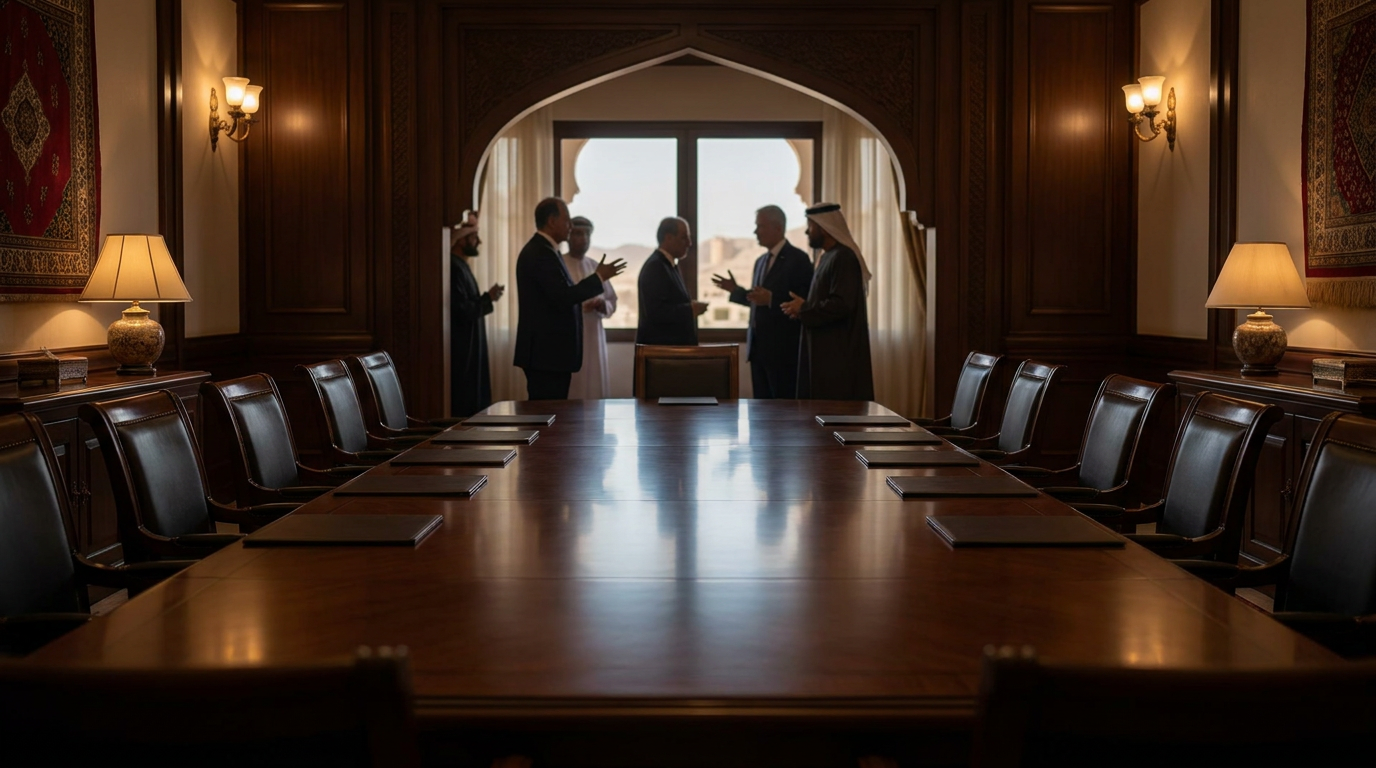
Amid escalating military posturing in the Middle East, the US and Iran are reportedly engaging in backchannel negotiations to establish a diplomatic "off-ramp." The proposed framework centers on capping Iranian nuclear enrichment in exchange for targeted sanctions relief and a reduction in regional proxy attacks.
By Factlen Editorial Team
- US Administration
- Prioritizes averting a costly regional war and stabilizing energy markets through targeted, verifiable de-escalation.
- Iranian Leadership
- Seeks urgent relief from crippling economic sanctions while maintaining enough nuclear leverage to deter future attacks.
- Regional Security Partners
- Views any interim deal with deep skepticism, arguing it enriches Tehran without permanently dismantling its nuclear infrastructure.
- Non-Proliferation Analysts
- Focuses on the technical mechanics of the deal, emphasizing that restoring IAEA monitoring is the most critical immediate goal.
What's not represented
- · Iraqi and Syrian civilians affected by proxy conflicts
- · European Union diplomatic negotiators
Why this matters
A direct military confrontation between the US and Iran would severely disrupt global energy markets, potentially sending oil prices soaring and drawing neighboring states into a devastating regional war. A diplomatic off-ramp could stabilize the Middle East, lower global inflation pressures, and shift US foreign policy focus back to domestic and Indo-Pacific priorities.
Key points
- The US and Iran are exploring an informal diplomatic framework to prevent a direct regional war.
- The core mechanism involves Iran capping uranium enrichment at 60% and restoring some IAEA monitoring.
- In exchange, the US would issue waivers to unfreeze Iranian assets for strictly humanitarian use.
- The US is also demanding that Tehran rein in allied militias in Iraq, Syria, and Yemen.
- Regional allies, particularly Israel, remain highly skeptical of any deal that leaves Iran's nuclear infrastructure intact.
- The agreement would likely be an informal understanding, bypassing the need for US Senate ratification.
After months of escalating brinkmanship in the Middle East, the geopolitical calculus appears to be shifting from military confrontation toward a fragile diplomatic engagement. Reports indicate that the US administration is actively seeking an "off-ramp" to avert a direct war with Iran, exploring the contours of a new agreement that would freeze Tehran's nuclear advancements in exchange for economic relief.[1][4]
The pivot represents a significant recalibration in Washington. While recent rhetoric has heavily emphasized deterrence and military readiness, policymakers are increasingly acknowledging the catastrophic economic and strategic costs of a full-scale regional conflict. The pursuit of a diplomatic solution is being framed not as a concession, but as a necessary maneuver to stabilize the region and prevent a multi-front war that could entangle US forces for years.[3][4]
The mechanics of the proposed framework—often referred to in diplomatic circles as a "freeze-for-freeze" or an interim understanding—do not resemble a comprehensive treaty. Instead, the focus is on immediate de-escalation. The core mechanism involves Iran halting its most provocative nuclear activities while the US unfreezes specific Iranian assets held abroad, strictly earmarking them for humanitarian and non-sanctionable trade.[6]

At the center of the nuclear component is the issue of uranium enrichment. Under the discussed terms, Iran would agree to cap its enrichment of uranium at 60% purity—a level highly enriched but still short of the 90% required for weapons-grade material. Furthermore, Tehran would be required to dilute a portion of its existing 60% stockpile, effectively lengthening the "breakout time" required to produce a nuclear weapon.[2][7]
Evidence of this potential nuclear compromise has surfaced through the International Atomic Energy Agency (IAEA). Recent backchannel communications suggest that Iran is open to restoring a degree of the monitoring access that was previously revoked, allowing international inspectors to verify the enrichment caps. Non-proliferation experts argue that this verification mechanism is the linchpin of any viable off-ramp.[6][7]

In exchange for these nuclear concessions, the US is reportedly preparing a targeted sanctions relief package. Rather than lifting the sweeping embargoes on Iran's energy and banking sectors, the relief would likely involve issuing waivers that allow third-party nations—such as South Korea or Iraq—to release billions in frozen Iranian funds. These funds would be transferred to restricted accounts in neutral countries like Oman or Qatar.[1][2]
In exchange for these nuclear concessions, the US is reportedly preparing a targeted sanctions relief package.
The logistics of this financial mechanism are already being tested. Oman, a traditional mediator between Washington and Tehran, has hosted multiple rounds of indirect talks in recent weeks. These discussions have heavily focused on establishing the banking channels necessary to ensure that any released funds are used exclusively for food, medicine, and agricultural products, preventing their diversion to military programs.[4][8]
Beyond the nuclear portfolio, the diplomatic framework heavily addresses regional proxy warfare. The US is demanding that Iran exert its influence to rein in allied militias across Iraq, Syria, and Yemen. A reduction in attacks on US personnel and international shipping lanes is considered a non-negotiable prerequisite for any sustained sanctions relief.[3][7]
However, a major point of uncertainty remains regarding Tehran's actual command and control over its "Axis of Resistance." While Iran provides funding and weaponry to these groups, analysts question whether Iranian leadership can unilaterally dictate a complete cessation of hostilities, particularly among factions that have developed significant operational autonomy in recent years.[6]

The prospect of a US-Iran accommodation has been met with deep skepticism by regional security partners, most notably Israel. Israeli officials have consistently argued that any agreement leaving Iran with a domestic enrichment capability is fundamentally flawed. They warn that an interim deal merely provides Tehran with an economic lifeline while allowing it to retain the infrastructure necessary for a future nuclear breakout.[5]
Inside Iran, the domestic political landscape complicates the negotiations. The Iranian leadership is balancing severe economic distress—exacerbated by years of sanctions and inflation—against the ideological resistance of hardline factions. Pragmatists within the government argue that economic survival requires a tactical compromise with Washington, while hardliners view any concession as a capitulation that undermines the regime's revolutionary identity.[8]
In Washington, the durability of the proposed off-ramp faces its own domestic hurdles. Because the framework is being structured as an informal understanding rather than a formal treaty, it bypasses the need for US Senate ratification. While this allows for rapid implementation, it also means the agreement remains highly vulnerable to political shifts and could be dismantled by future administrations or derailed by congressional opposition.[4][6]

The global economic stakes of these talks are immense. Energy markets have been highly volatile, pricing in a significant "war premium" due to the threat of disruptions in the Strait of Hormuz, through which a fifth of the world's oil supply passes. News of a potential diplomatic off-ramp has already begun to temper oil futures, reflecting market hopes for a stabilized Gulf region.[2]
As indirect negotiations continue, the coming weeks will be critical. Upcoming IAEA reports on Iran's nuclear stockpile and the frequency of regional militia attacks will serve as real-time indicators of whether the diplomatic framework is taking hold. For now, both Washington and Tehran appear to be testing the waters, seeking a path that avoids the catastrophic costs of war without appearing to surrender their core strategic interests.[1][7]
How we got here
2018
The US unilaterally withdraws from the 2015 Joint Comprehensive Plan of Action (JCPOA) and reimposes sweeping sanctions.
2020-2023
Iran responds to sanctions by steadily increasing its uranium enrichment levels, eventually reaching 60% purity.
2024-2025
Regional proxy conflicts escalate, resulting in direct military exchanges and heightened threats to global shipping.
June 2026
Reports emerge of Oman-brokered backchannel talks aimed at establishing a 'freeze-for-freeze' diplomatic off-ramp.
Viewpoints in depth
US Administration
Prioritizes averting a costly regional war and stabilizing energy markets through targeted, verifiable de-escalation.
For Washington, the primary objective is crisis management. Policymakers argue that a direct war with Iran would be economically devastating and strategically distracting, pulling resources away from domestic priorities and the Indo-Pacific theater. The administration views an interim 'freeze-for-freeze' agreement as the most pragmatic way to halt Iran's nuclear momentum and reduce attacks on US personnel, accepting that a comprehensive grand bargain is currently politically impossible.
Iranian Leadership
Seeks urgent relief from crippling economic sanctions while maintaining enough nuclear leverage to deter future attacks.
Tehran is navigating a severe domestic economic crisis driven by years of heavy sanctions and inflation. Pragmatic elements within the government argue that securing access to frozen funds is essential for regime stability. However, they must balance this against hardline factions who view the nuclear program as Iran's ultimate deterrent against foreign intervention. Consequently, Iran is willing to cap enrichment but refuses to dismantle its advanced centrifuges, ensuring it retains leverage for future negotiations.
Regional Security Partners
Views any interim deal with deep skepticism, arguing it enriches Tehran without permanently dismantling its nuclear infrastructure.
Nations like Israel and certain Gulf states view the proposed off-ramp as a dangerous concession. They argue that unfreezing billions of dollars, even if earmarked for humanitarian use, is fungible and ultimately frees up domestic Iranian capital to fund regional proxy militias. Furthermore, they assert that allowing Iran to maintain enrichment capabilities at 60% normalizes its status as a threshold nuclear state, fundamentally altering the balance of power in the Middle East.
Non-Proliferation Analysts
Focuses on the technical mechanics of the deal, emphasizing that restoring IAEA monitoring is the most critical immediate goal.
Arms control experts evaluate the framework strictly on its ability to lengthen Iran's 'breakout time.' They argue that the most alarming aspect of the current standoff is the lack of visibility into Iran's nuclear facilities following the expulsion of international inspectors. For these analysts, the success of the off-ramp hinges entirely on the robust reinstatement of IAEA cameras and unannounced inspections, which provide the international community with the early warning necessary to prevent weaponization.
What we don't know
- Whether Iranian leadership has the ability or willingness to completely halt attacks by its autonomous regional proxy groups.
- How strictly the US and international banks can enforce the 'humanitarian use only' restrictions on unfrozen Iranian assets.
- Whether an informal executive understanding can survive domestic political opposition in Washington without formal treaty ratification.
Key terms
- Breakout Time
- The estimated amount of time it would take a country to produce enough weapons-grade uranium for one nuclear weapon, if it chose to do so.
- IAEA
- The International Atomic Energy Agency, the UN watchdog responsible for monitoring and verifying a country's nuclear activities.
- Uranium Enrichment
- The process of increasing the concentration of the U-235 isotope in uranium; 3-5% is used for civilian power, while 90% is required for nuclear weapons.
- Sanctions Waiver
- A temporary exemption granted by a government that allows specific countries or entities to conduct otherwise prohibited trade without facing penalties.
Frequently asked
What is a diplomatic 'off-ramp'?
An 'off-ramp' is a negotiated de-escalation that allows rival nations to step back from the brink of military conflict without either side appearing to surrender their core interests.
How does this differ from the 2015 nuclear deal?
Unlike the comprehensive 2015 JCPOA, this proposed framework is an informal, interim understanding focused on freezing current nuclear activity in exchange for limited, targeted financial relief, rather than a permanent lifting of all sanctions.
Will the US Senate need to approve this agreement?
Because it is being structured as an informal executive understanding rather than a formal international treaty, it bypasses the requirement for a two-thirds ratification vote in the US Senate.
Sources
Source coverage
8 outlets
4 viewpoints surfaced








[1]Al JazeeraIranian Leadership
Trump seeks ‘off-ramp’ from war in ‘Iran deal’
Read on Al Jazeera →[2]ReutersNon-Proliferation Analysts
White House signals openness to renewed Iran talks to avert regional conflict
Read on Reuters →[3]Fox NewsUS Administration
Trump administration eyes historic Iran deal to prevent Middle East war
Read on Fox News →[4]The New York TimesUS Administration
Inside the Unexpected Push for a Diplomatic Off-Ramp With Iran
Read on The New York Times →[5]The Jerusalem PostRegional Security Partners
Israel expresses cautious skepticism over reported US-Iran backchannel talks
Read on The Jerusalem Post →[6]Foreign AffairsNon-Proliferation Analysts
The Mechanics of a New US-Iran Agreement: What an Off-Ramp Looks Like
Read on Foreign Affairs →[7]BBCNon-Proliferation Analysts
US and Iran explore diplomatic off-ramp as regional war fears mount
Read on BBC →[8]Tehran TimesIranian Leadership
Tehran evaluates Washington's diplomatic signals amid regional tensions
Read on Tehran Times →

More in news politics
See all 40 stories →Middle East Diplomacy
US and Iran Near Interim Agreement to Halt Hostilities: What the Deal Contains
0 sources
Union Contracts
House Passes Sweeping Labor Bill Mandating Strict Timelines for First Union Contracts
0 sources
US-Iran Deal
US and Iran on the Brink of Historic Interim Peace Agreement to End War
0 sources

US-Iran Deal
US and Iran Near Interim Peace Deal to Reopen Strait of Hormuz
0 sources

Every angle. Every day.
Get news politics stories with full source coverage and perspective breakdowns delivered to your inbox.