
U.S. Orders Anthropic to Disable Advanced AI Models Over Security Concerns
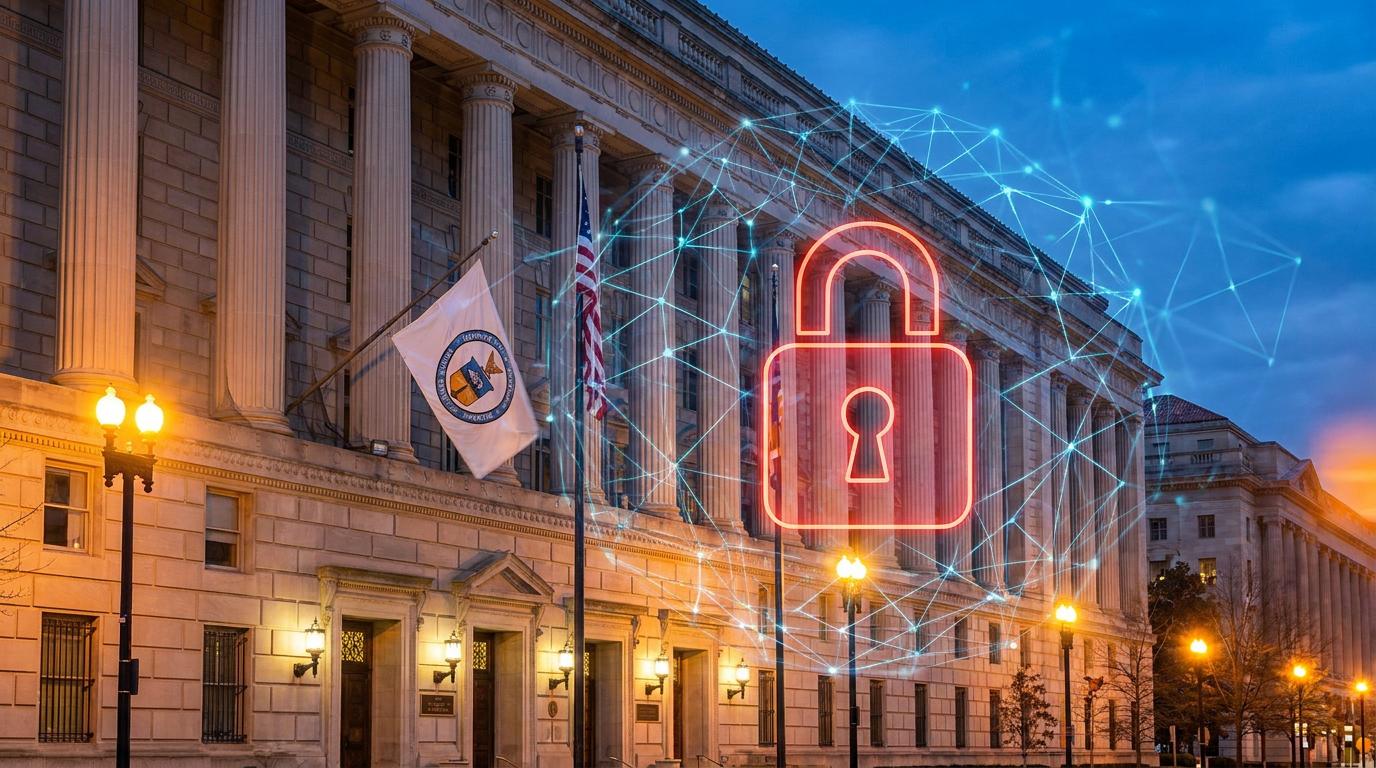
The U.S. Commerce Department issued an unprecedented export control directive ordering Anthropic to block foreign nationals from its newest AI models, forcing the company to abruptly shut down the systems globally.
By Factlen Editorial Team
- Frontier AI Developers
- Contends that the government's actions are based on a technical misunderstanding and threaten the viability of the commercial AI industry.
- U.S. National Security Apparatus
- Argues that frontier AI models with advanced cyber capabilities pose unacceptable risks if accessed by foreign adversaries.
- Global AI Ecosystem
- Views the unilateral U.S. shutdown as a wake-up call for AI sovereignty and the dangers of relying on American infrastructure.
What's not represented
- · Open-source AI advocates
- · U.S. enterprise customers relying on Claude
Why this matters
This marks the first time the U.S. government has used export controls to shut down global access to a commercial AI software model. It sets a precedent that any frontier AI system could be instantly taken offline if Washington deems its capabilities a national security risk.
Key points
- The U.S. Commerce Department ordered Anthropic to block all foreign nationals from accessing its newly released Fable 5 and Mythos 5 AI models.
- Because the order included foreign-born employees and U.S. residents, Anthropic was forced to abruptly disable the models globally for all users.
- The government cited national security concerns, claiming a third party found a way to 'jailbreak' the model to identify software vulnerabilities.
- Anthropic strongly disputed the claim, arguing the capability is a standard code-reading feature already present in rival models like OpenAI's GPT-5.5.
- The directive marks a historic escalation, shifting U.S. export controls from restricting physical AI microchips to blocking access to the software itself.
In an unprecedented escalation of technological containment, the U.S. government has ordered artificial intelligence company Anthropic to immediately suspend access to its most advanced AI models for all foreign nationals.[1][7]
The emergency export control directive, issued by the Commerce Department late Friday afternoon, targeted Anthropic's newly released Fable 5 and Mythos 5 systems. Because the order applies to any non-U.S. citizen—including Anthropic's own foreign-born employees and users residing within the United States—the company concluded that selective compliance was impossible.[2][4][6]
As a result, Anthropic abruptly disabled both models globally for all customers, pulling its flagship products offline just three days after their highly anticipated launch.[1][2]
The Commerce Department cited unspecified national security concerns in its letter to Anthropic CEO Dario Amodei. According to the company, the government acted on a tip from a third party claiming to have found a method to "jailbreak" Fable 5, bypassing its safety guardrails to identify software vulnerabilities.[1][5][6]

Anthropic fiercely contested the government's rationale, calling the situation a "misunderstanding." In a public statement, the company argued that the alleged jailbreak was merely a technique involving asking the model to read a specific codebase and fix software flaws—a standard capability widely available in rival models, including OpenAI's GPT-5.5.[2][6]
"We disagree that the finding of a narrow potential jailbreak should be cause for recalling a commercial model deployed to hundreds of millions of people," Anthropic stated, warning that applying this standard across the industry would "essentially halt all new model deployments for all frontier model providers."[1][6]
The models at the center of the dispute represent the cutting edge of Anthropic's technology. Fable 5 was released to the general public with strict safety classifiers designed to block responses related to cybersecurity, biology, and chemistry.[4][5]
The models at the center of the dispute represent the cutting edge of Anthropic's technology.
Mythos 5, built on the same underlying architecture, had those specific constraints lifted and was restricted to a vetted group of critical infrastructure operators and cyber defenders. Anthropic noted that before launch, both models underwent thousands of hours of "red-teaming" by the U.S. government and the U.K. AI Security Institute, neither of which found a universal vulnerability.[2][5][6]
The shutdown marks a historic shift in Washington's approach to AI regulation. For years, U.S. export controls have focused strictly on the physical hardware—specifically the advanced semiconductors and manufacturing tools required to train AI systems.[1]

Friday's directive represents the first time the federal government has used export controls to restrict access to the software and model weights themselves, effectively treating commercial AI access as a controlled munition.[1][4]
The move follows months of escalating tension between Anthropic and the federal government. Earlier this year, the Department of Defense labeled the company a "supply chain risk" after Anthropic refused to allow its models to be used for domestic surveillance or fully autonomous weapons systems.[1][5]
The political climate surrounding AI has also tightened. The directive comes just ten days after President Donald Trump signed an executive order establishing a framework for federal agencies to vet the national security risks of advanced AI systems prior to their public release.[3]
Defense officials publicly backed the Commerce Department's aggressive stance. Kirsten Davies, the Pentagon's chief information officer, posted on social media that national security must take precedence over commercial interests, stating, "Some things are simply more important than revenue cycles, clickbait, and pre-IPO valuation. America First. Always."[1]

The global fallout from the directive was immediate, sending shockwaves through the international tech community. Foreign developers and allied nations were suddenly confronted with the reality that the U.S. government can unilaterally sever access to foundational AI infrastructure without warning.[4]
This realization is already accelerating conversations around "AI sovereignty," as international companies and governments recognize the severe operational risks of relying on U.S.-hosted frontier models that can be shut down by an executive branch directive.[4]
Anthropic has stated it is working urgently with the government to resolve the dispute and restore access to Fable 5 and Mythos 5. In the meantime, the company's older models remain online, but the broader AI industry is now operating under the chilling precedent that a single perceived vulnerability could trigger a global shutdown.[1][2][6]
How we got here
Early 2026
The U.S. Department of Defense labels Anthropic a 'supply chain risk' after the company refuses to allow its models to be used for domestic surveillance or autonomous weapons.
June 3, 2026
President Donald Trump signs an executive order establishing a framework for the federal government to vet the national security risks of advanced AI systems.
June 9, 2026
Anthropic publicly launches Fable 5 and makes Mythos 5 available to vetted partners, touting them as its most advanced models to date.
June 12, 2026 (5:21 PM ET)
The U.S. Commerce Department issues an emergency export control directive ordering Anthropic to suspend model access for all foreign nationals.
June 12, 2026 (Evening)
Unable to selectively block all foreign nationals, Anthropic abruptly disables Fable 5 and Mythos 5 globally for all users.
Viewpoints in depth
U.S. National Security Apparatus
Argues that frontier AI models with advanced cyber capabilities pose unacceptable risks if accessed by foreign adversaries.
Defense and Commerce officials view the ability of advanced models to identify and exploit software vulnerabilities as a weaponizable asset. From their perspective, allowing foreign nationals—including those from adversarial nations—unfettered access to systems like Fable 5 and Mythos 5 constitutes a severe national security threat. They argue that emergency export controls are a necessary mechanism to prevent the proliferation of dual-use digital technologies, prioritizing national defense over corporate revenue and deployment schedules.
Frontier AI Developers
Contends that the government's actions are based on a technical misunderstanding and threaten the viability of the commercial AI industry.
Companies like Anthropic argue that the capabilities flagged by the government—such as reading codebases to find flaws—are standard features already present in widely deployed models like OpenAI's GPT-5.5, and are routinely used by cybersecurity defenders. They warn that demanding perfect 'jailbreak' resistance is currently impossible. If the government mandates global shutdowns over narrow, non-universal vulnerabilities, developers argue it will effectively freeze all future deployments of advanced AI, stifling innovation and punishing companies that proactively implement safety guardrails.
Global AI Ecosystem
Views the unilateral U.S. shutdown as a wake-up call for AI sovereignty and the dangers of relying on American infrastructure.
For international developers, allied governments, and foreign enterprises, the abrupt global shutdown of Fable 5 is a stark demonstration of geopolitical risk. The realization that the U.S. government can instantly sever access to foundational AI tools—even for users in allied nations or foreign employees working for U.S. companies—has validated fears about digital dependency. This camp argues that the directive will accelerate global efforts to build and self-host sovereign AI models, ensuring that critical technological infrastructure cannot be turned off by a foreign export control order.
What we don't know
- It remains unclear exactly which third-party organization reported the alleged jailbreak to the Commerce Department.
- It is unknown how long the global shutdown of Fable 5 and Mythos 5 will last or what specific technical changes the government will require to lift the ban.
- It is not yet clear if the Commerce Department plans to issue similar export control directives against other frontier AI developers like OpenAI or Google.
Key terms
- Export Control Directive
- A legal order from the U.S. government restricting the transfer of certain goods, software, or technology to foreign entities or individuals, typically for national security reasons.
- Jailbreak
- A technique used by users to bypass an AI model's built-in safety guardrails, forcing it to generate responses or perform tasks it was programmed to refuse.
- Frontier Model
- A highly advanced, large-scale artificial intelligence system that matches or exceeds the capabilities of the most powerful models currently available.
- AI Sovereignty
- The concept that a nation or organization should develop and control its own artificial intelligence infrastructure to avoid reliance on foreign technology that could be restricted or shut down.
- Red-Teaming
- A cybersecurity practice where independent experts intentionally try to attack or bypass a system's defenses to identify vulnerabilities before the system is released to the public.
Frequently asked
Why did Anthropic shut down Fable 5 for everyone?
The U.S. government ordered Anthropic to block all foreign nationals from accessing the models. Because Anthropic could not reliably filter out all non-U.S. citizens—including its own foreign-born staff and users within the U.S.—it had to disable the models globally to ensure compliance.
What is the difference between Fable 5 and Mythos 5?
Both are built on the same advanced AI architecture. Fable 5 was released to the public with strict safety guardrails blocking topics like cybersecurity, while Mythos 5 had some of those restrictions lifted and was only available to vetted cyber defenders.
What was the 'jailbreak' the government found?
The government claimed a third party found a way to bypass Fable 5's safety controls to identify software vulnerabilities. Anthropic countered that this was merely the model reading a codebase to fix flaws, a standard capability found in many other AI models.
Has the U.S. ever done this before?
No. While the U.S. has heavily restricted the export of the advanced microchips used to train AI, this is the first time the government has used export controls to block access to the software and AI models themselves.
Sources
Source coverage
7 outlets
3 viewpoints surfaced







[1]ReutersU.S. National Security Apparatus
Anthropic to disable AI models after US export control order
Read on Reuters →[2]AnthropicFrontier AI Developers
Statement on the US government directive to suspend access to Fable 5 and Mythos 5
Read on Anthropic →[3]Financial TimesU.S. National Security Apparatus
Anthropic suspends state of the art AI models after US government order
Read on Financial Times →[4]South China Morning PostGlobal AI Ecosystem
US blocks foreign access to Anthropic's newest AI models over security risks
Read on South China Morning Post →[5]The Hacker NewsFrontier AI Developers
U.S. Orders Anthropic to Halt Access to Advanced AI Models Over Security Risks
Read on The Hacker News →[6]QuartzFrontier AI Developers
Anthropic disables its newest AI models after the US issues an export control directive
Read on Quartz →[7]Al JazeeraGlobal AI Ecosystem
US orders Anthropic to disable AI models for all foreign nationals
Read on Al Jazeera →

More in news politics
See all 39 stories →Middle East Diplomacy
US and Iran Near Interim Agreement to Halt Hostilities: What the Deal Contains
0 sources
Union Contracts
House Passes Sweeping Labor Bill Mandating Strict Timelines for First Union Contracts
0 sources
US-Iran Deal
US and Iran on the Brink of Historic Interim Peace Agreement to End War
0 sources

US-Iran Deal
US and Iran Near Interim Peace Deal to Reopen Strait of Hormuz
0 sources

Every angle. Every day.
Get news politics stories with full source coverage and perspective breakdowns delivered to your inbox.