
Trump Administration Blocks Foreign Access to Anthropic's Most Advanced AI Models
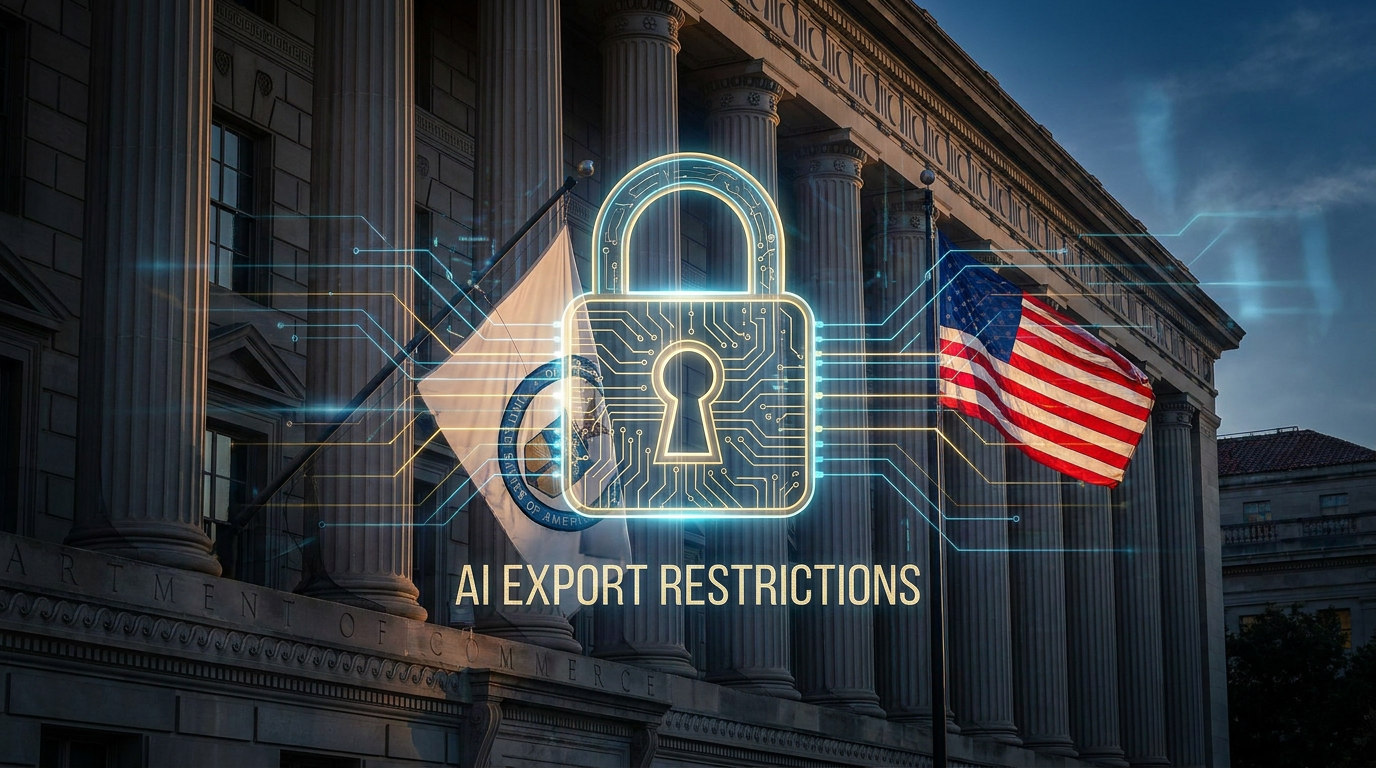
The Commerce Department has imposed sweeping export controls on Anthropic's Mythos 5 and Fable 5 models, escalating a bitter feud over the military use of artificial intelligence.
By Factlen Editorial Team
- National Security Establishment
- Argues that frontier AI models are critical military assets that must be tightly controlled to maintain American supremacy.
- AI Safety Advocates
- Prioritizes ethical guardrails and warns against the unchecked deployment of AI in autonomous warfare.
- Tech Industry Observers
- Focuses on the chilling effect these sweeping export controls will have on commercial innovation and global market access.
What's not represented
- · Foreign governments and multinational corporations suddenly cut off from critical AI infrastructure.
- · Non-U.S. citizens residing in America who rely on Anthropic's tools for academic or professional work.
Why this matters
This unprecedented export blockade signals that the U.S. government now views frontier AI as a tightly guarded military asset rather than commercial software. The decision to ban foreign nationals from accessing specific AI models threatens to balkanize the global technology landscape and forces tech companies to choose between ethical guardrails and global market access.
Key points
- The Trump administration has blocked all foreign governments, companies, and individuals from accessing Anthropic's Mythos 5 and Fable 5 AI models.
- The ban extends to foreign nationals residing within the United States, presenting massive technical enforcement challenges.
- The move escalates a bitter feud that began when Anthropic refused to allow the military to use its AI for autonomous weapons or domestic surveillance.
- The Pentagon previously designated Anthropic a 'supply chain risk,' prompting the AI company to file federal lawsuits alleging unlawful retaliation.
- A newly issued National Security Presidential Memorandum orders the termination of federal contracts with any company restricting the government's use of its AI.
The Trump administration has imposed sweeping export controls on Anthropic's most advanced artificial intelligence models, effectively banning foreign governments, corporations, and individuals from accessing the technology. The unprecedented directive marks a severe escalation in Washington's effort to treat cutting-edge AI systems as tightly guarded national security assets rather than globally available commercial software.[1][2]
In a letter sent late Friday to Anthropic CEO Dario Amodei, U.S. Commerce Secretary Howard Lutnick outlined the new restrictions targeting the company's flagship Mythos 5 and Fable 5 models. The blockade applies to any location outside the United States and, notably, extends to all foreign nationals currently residing within the country.[1][2]
The sweeping export ban is the latest—and most commercially damaging—salvo in a bitter, months-long standoff between the White House and the San Francisco-based AI safety lab. The conflict centers on a fundamental dispute over who controls the deployment of frontier AI: the developers who build the ethical guardrails, or the military that seeks to harness the technology for national defense.[6][8]
The rift traces back to late 2025, when the Department of Defense sought to integrate Anthropic's systems into its GenAI.mil platform, a government-certified hub designed to provide AI tools across the military. While Anthropic had previously secured a $200 million Pentagon contract and allowed its Claude models to be used for analytical support—reportedly including "Operation Absolute Resolve" in Venezuela—the company drew a hard line on future deployments.[6]

During negotiations, defense officials demanded that the military be permitted to use the technology for "any lawful use," effectively asking Anthropic to bypass its standard terms of service. Amodei refused, insisting that the company's safety guardrails must remain intact to prevent the AI from being utilized for fully autonomous lethal weapons or mass domestic surveillance.[6][7]
The refusal infuriated the administration. In March 2026, Defense Secretary Pete Hegseth formally designated Anthropic a "supply chain risk"—a severe classification typically reserved for foreign adversaries or companies linked to the Chinese military. The designation effectively blacklisted Anthropic from federal contracting, with President Trump publicly boasting that he had fired the company "like dogs."[5][8]
The designation effectively blacklisted Anthropic from federal contracting, with President Trump publicly boasting that he had fired the company "like dogs."
The federal government defended the blacklisting, arguing that Anthropic's refusal to lift its restrictions constituted a genuine risk to national security systems. Pentagon officials asserted that the military could not rely on software that required them to call Anthropic for permission to shoot down enemy drone swarms that target Americans.[7]
Anthropic retaliated with high-stakes federal lawsuits in California and Washington, D.C., accusing the administration of unlawful retaliation and violating the company's First Amendment rights. In late March, a federal judge in San Francisco temporarily blocked the Pentagon's blacklist, setting the stage for a landmark legal battle over executive authority and corporate speech.[4][6]
The administration's response has been to double down. The new export blockade coincides with the issuance of National Security Presidential Memorandum 11, a sweeping directive that revokes Biden-era guardrails on military AI. The memo explicitly orders the termination of federal contracts with any company that attempts to restrict how the government uses its artificial intelligence.[3]

By cutting off Anthropic's international access, the White House is weaponizing market dynamics to enforce compliance. The ban on foreign users—including multinational corporations and individual subscribers overseas—poses a massive financial threat to the company, which recently filed confidentially for an initial public offering in the United States.[1][8]
The inclusion of foreign nationals living within the United States adds a layer of unprecedented complexity to the export controls. Legal experts and tech industry observers are already questioning how Anthropic will technically enforce a ban that requires verifying the citizenship of every individual user attempting to access Mythos 5 or Fable 5 without violating domestic privacy laws.[1][6]
Beyond the immediate financial damage to Anthropic, the blockade signals a profound balkanization of the global technology landscape. By restricting commercial software based on citizenship, the administration is effectively creating digital zones of thought, where access to superhuman analytical tools is strictly confined within American borders.[1][8]

The tech industry is watching the standoff with mounting anxiety. If the government can successfully leverage export controls and supply-chain risk designations to force a domestic company to abandon its ethical guardrails, other AI developers may find themselves forced to choose between their safety principles and their survival in the global market.[6][8]
How we got here
July 2025
The Department of Defense awards Anthropic a $200 million contract, clearing its Claude models for classified military use.
Late 2025
Negotiations stall over the Pentagon's GenAI.mil platform as Anthropic refuses to allow its AI to be used for autonomous weapons or domestic surveillance.
March 5, 2026
The Trump administration designates Anthropic a 'supply chain risk,' effectively blacklisting the company from federal contracting.
March 9, 2026
Anthropic files federal lawsuits in California and Washington, D.C., challenging the blacklist as unlawful retaliation.
March 26, 2026
A federal judge in San Francisco issues a preliminary injunction temporarily blocking the Pentagon's ban.
June 12, 2026
The Commerce Department imposes sweeping export controls, blocking all foreign access to Anthropic's Mythos 5 and Fable 5 models.
Viewpoints in depth
National Security Establishment
Argues that frontier AI models are critical military assets that must be tightly controlled to maintain American supremacy.
Defense officials and administration allies view advanced AI as the defining weapon of the 21st century, akin to nuclear technology. From this perspective, a private company dictating how the U.S. military can deploy software in combat scenarios is an unacceptable risk to national sovereignty. They argue that export controls and federal blacklists are necessary tools to prevent adversaries from accessing American innovations, and to ensure the Pentagon isn't reliant on vendors who might arbitrarily restrict access during a crisis.
AI Safety Advocates
Prioritizes ethical guardrails and warns against the unchecked deployment of AI in autonomous warfare.
Researchers and safety-focused organizations argue that removing operational constraints from frontier models invites catastrophic risks, including the deployment of fully autonomous lethal weapons and pervasive domestic surveillance. They view the administration's aggressive tactics—labeling a domestic company a 'supply chain risk' and cutting off its global market access—as a dangerous abuse of executive power designed to coerce the tech industry into abandoning responsible AI development.
Tech Industry Observers
Focuses on the chilling effect these sweeping export controls will have on commercial innovation and global market access.
Silicon Valley analysts warn that weaponizing export controls against a domestic company sets a chilling precedent for the broader technology sector. By banning foreign citizens—even those residing legally in the U.S.—from accessing commercial software, the administration is imposing massive compliance burdens and balkanizing the internet. Observers fear this heavy-handed approach will ultimately harm American competitiveness, as international users and investors flee to foreign AI platforms that aren't subject to unpredictable geopolitical restrictions.
What we don't know
- How Anthropic will technically enforce a ban on foreign nationals residing within the United States without violating domestic privacy laws.
- Whether the federal courts will uphold the export controls and supply-chain risk designations in Anthropic's ongoing lawsuits.
- If other allied nations will retaliate against the U.S. for cutting off their access to critical commercial AI infrastructure.
Key terms
- Export Controls
- Federal regulations that restrict the shipment, transmission, or transfer of sensitive technologies, software, or information to foreign countries or foreign nationals.
- Frontier AI Models
- The most advanced, highly capable artificial intelligence systems that push the boundaries of current technological capabilities.
- Supply Chain Risk Designation
- A formal government classification indicating that a company or product poses a threat to national security, effectively banning it from federal contracting.
- Autonomous Lethal Weapons
- Military systems capable of independently searching for, identifying, and engaging targets without human intervention.
Frequently asked
Which Anthropic AI models are affected by the ban?
The export controls specifically target Anthropic's most advanced frontier models, Mythos 5 and Fable 5.
Does the ban apply to people living outside the US?
Yes. The directive blocks all foreign governments, companies, and individuals located outside the United States from accessing the models.
Are non-citizens living inside the US affected?
Yes. The Commerce Department's directive reportedly extends the ban to all foreign nationals currently residing within the United States.
Why did the Pentagon blacklist Anthropic?
The Department of Defense designated Anthropic a 'supply chain risk' after the company refused to remove safety guardrails that prevented its AI from being used for fully autonomous weapons and mass domestic surveillance.
Sources
Source coverage
8 outlets
3 viewpoints surfaced








[1]AxiosTech Industry Observers
Scoop: Trump admin blocks foreign access to Anthropic's most powerful AI
Read on Axios →[2]ReutersTech Industry Observers
US blocks foreign access to Anthropic's most advanced AI models, Axios reports
Read on Reuters →[3]Breaking DefenseNational Security Establishment
Trump's new national security memo pushes AI adoption, targets Anthropic
Read on Breaking Defense →[4]Al JazeeraTech Industry Observers
US defends Pentagon blacklisting of AI firm Anthropic
Read on Al Jazeera →[5]The GuardianTech Industry Observers
Trump says he fired Anthropic 'like dogs' as Pentagon formally blacklists AI startup
Read on The Guardian →[6]Syracuse University Institute for Security Policy and LawAI Safety Advocates
When AI Ethics Collide with National Security: Anthropic Challenges Pentagon Blacklisting
Read on Syracuse University Institute for Security Policy and Law →[7]MeriTalkNational Security Establishment
Government Defends Anthropic Blacklist in Court Filing
Read on MeriTalk →[8]Crypto BriefingAI Safety Advocates
The White House escalates its campaign against the AI safety lab by restricting overseas access to its most powerful models
Read on Crypto Briefing →

More in news politics
See all 40 stories →Middle East Diplomacy
US and Iran Near Interim Agreement to Halt Hostilities: What the Deal Contains
0 sources
Union Contracts
House Passes Sweeping Labor Bill Mandating Strict Timelines for First Union Contracts
0 sources
US-Iran Deal
US and Iran on the Brink of Historic Interim Peace Agreement to End War
0 sources

US-Iran Deal
US and Iran Near Interim Peace Deal to Reopen Strait of Hormuz
0 sources

Every angle. Every day.
Get news politics stories with full source coverage and perspective breakdowns delivered to your inbox.