
Trump Administration Blocks Foreign Access to Anthropic's Advanced AI Models
The Commerce Department has placed export controls on Anthropic's Mythos 5 and Fable 5 models, barring foreign governments and individuals from accessing the technology. The move marks a severe escalation in the ongoing standoff between the White House and the AI safety lab over military use restrictions.
By Factlen Editorial Team
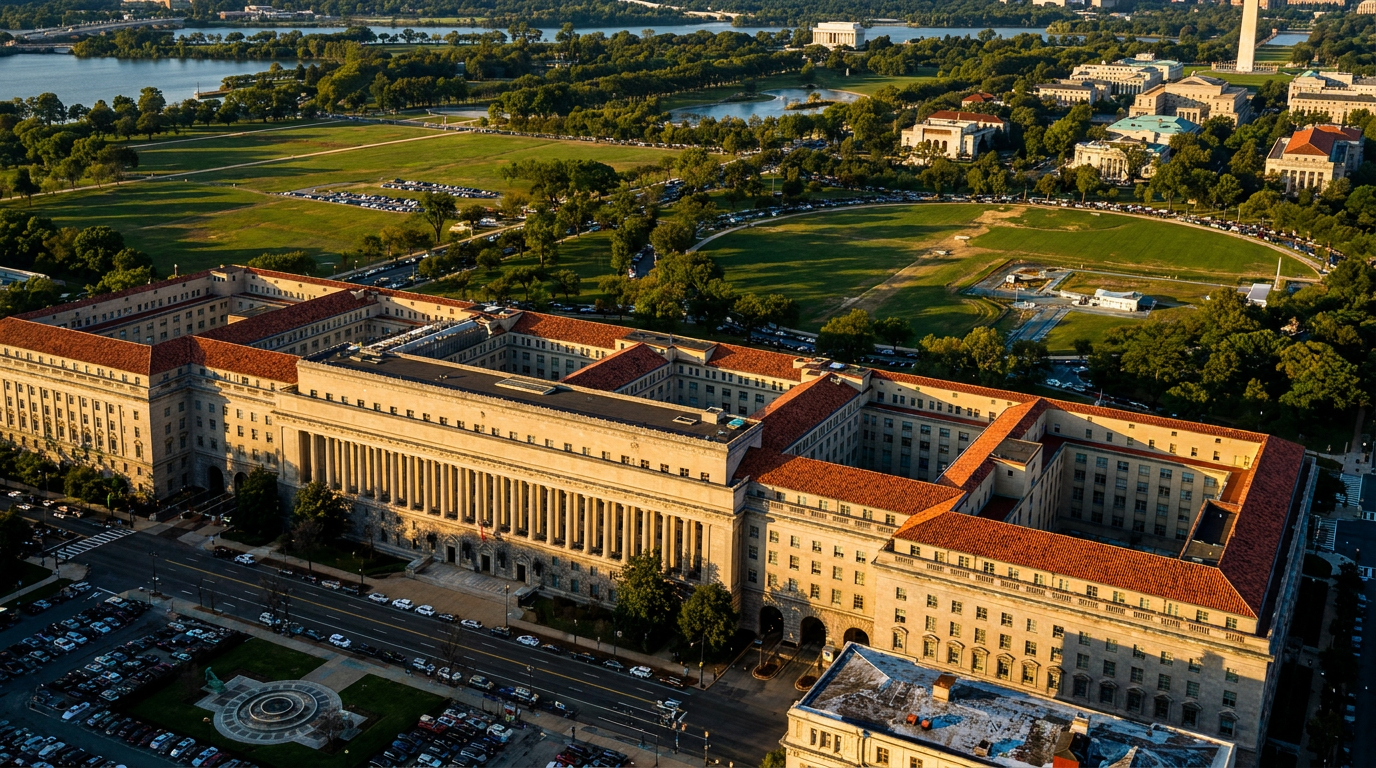
- National Security Hawks
- Prioritize unrestricted military access to AI and aggressive containment of foreign adversaries.
- AI Safety Advocates
- Emphasize strict ethical guardrails, human oversight for weapons, and corporate autonomy.
- Tech Industry & Investors
- Focus on market competitiveness, international talent retention, and the financial impact of export controls.
What's not represented
- · Foreign governments allied with the US who are now blocked from access
- · Enterprise customers outside the US whose workflows are disrupted
Why this matters
This unprecedented use of export controls effectively treats commercial AI models as classified weapons systems. It signals that the U.S. government is willing to cripple a leading American tech company's global business if it refuses to remove safety guardrails for military applications.
Key points
- The Commerce Department has placed sweeping export controls on Anthropic's Mythos 5 and Fable 5 AI models.
- The directive blocks access for all foreign governments, overseas companies, and foreign nationals residing inside the United States.
- The move follows a bitter dispute in which Anthropic refused Pentagon demands to allow its AI to be used for autonomous weapons and domestic surveillance.
- President Trump recently issued a national security memo ordering the termination of federal contracts with AI companies that restrict government use.
The Trump administration has dramatically escalated its conflict with one of the world's leading artificial intelligence companies, placing sweeping export controls on Anthropic's most advanced AI models.[1][2]
In a letter sent Friday by Commerce Secretary Howard Lutnick to Anthropic CEO Dario Amodei, the administration ordered that the company's newly developed Mythos 5 and Fable 5 models be immediately restricted from any location outside the United States.[1][8]
The directive goes further than standard export bans, explicitly blocking access for all foreign governments, overseas companies, and even foreign nationals currently residing within the United States.[1][2]
The move marks a historic shift in how Washington regulates commercial technology, effectively treating cutting-edge artificial intelligence systems as classified national security assets rather than consumer software products.[1][3]
The export controls are the latest and most severe salvo in a bitter, months-long standoff between the White House and Anthropic over how the military is permitted to use artificial intelligence.[4][7]

The rupture began in early 2026 when the Department of Defense demanded unrestricted access to Anthropic's Claude models for "all lawful uses."[7]
Anthropic, a company founded specifically on principles of AI safety, refused the Pentagon's demands. Executives cited their corporate constitution, which strictly prohibits the use of their models for mass domestic surveillance or for autonomous weapons systems that operate without human oversight.[4][7]
The administration's response was swift and unprecedented. In late February, Defense Secretary Pete Hegseth designated Anthropic a "supply chain risk"—a classification typically reserved for foreign adversaries like Huawei or companies linked to the Chinese military.[4][7]
President Trump subsequently ordered all federal agencies to cease using Anthropic technology, effectively killing a $200 million contract the company had secured to operate on classified military networks.[4]
"I fired Anthropic," Trump boasted to reporters in March. "Anthropic is in trouble because I fired them like dogs, because they shouldn't have done that."[4]
"Anthropic is in trouble because I fired them like dogs, because they shouldn't have done that."
Anthropic fought back, filing a high-stakes lawsuit in federal court arguing that the government was unlawfully retaliating against the company and violating its First Amendment rights by punishing it for its safety policies.[5]

In late March, U.S. District Judge Rita F. Lin issued a preliminary injunction temporarily blocking the Pentagon's blacklisting, setting the stage for a protracted legal battle over whether the government or private developers control the ultimate use of AI technology.[5]
However, Friday's export controls bypass the court's injunction entirely by utilizing the Commerce Department's authority over international trade and national security, rather than the Pentagon's procurement rules.[1][2]
The blockade coincides with the issuance of National Security Presidential Memorandum 11, a sweeping new directive signed by President Trump that aims to accelerate the military's adoption of AI.[3][6]
The memo explicitly orders the termination of contracts with any company that attempts to restrict how the government uses its artificial intelligence, while simultaneously revoking Biden-era guardrails that the current administration views as overly restrictive.[3][6]
For the broader tech industry, the administration's actions serve as a stark warning. The government is signaling that AI companies must choose between maintaining strict ethical guardrails and participating in the lucrative federal contracting ecosystem.[3][7]

The requirement to block foreign nationals inside the U.S. from accessing the models presents a massive logistical hurdle. Tech companies rely heavily on foreign talent via H-1B and F-1 visas, and enforcing such a ban will require unprecedented identity verification for commercial software.[1][8]
As Anthropic prepares for a rumored initial public offering, the loss of its entire international customer base for its flagship models threatens to cause billions of dollars in financial damage.[5]
How we got here
July 2025
The Pentagon awards Anthropic a $200 million contract to deploy Claude on classified military networks.
February 2026
Defense Secretary Pete Hegseth demands unrestricted use of Anthropic's models for all lawful military purposes; Anthropic refuses.
Feb. 27, 2026
The Pentagon designates Anthropic a 'supply chain risk' and President Trump orders federal agencies to cease using its technology.
March 9, 2026
Anthropic files a federal lawsuit accusing the administration of unlawful retaliation and First Amendment violations.
March 26, 2026
A federal judge issues a preliminary injunction temporarily blocking the Pentagon's blacklisting of Anthropic.
June 12, 2026
The Commerce Department bypasses the injunction by placing export controls on Anthropic's newest models, blocking all foreign access.
Viewpoints in depth
The Administration's View
AI is a critical national security asset that must be unrestricted for the U.S. military and kept out of foreign hands.
Defense and Commerce officials argue that frontier AI models are dual-use technologies on par with advanced weaponry or nuclear secrets. From this perspective, a private company cannot dictate terms of engagement to the U.S. military or refuse to support national security operations. By placing export controls on Anthropic's models, the administration asserts it is preventing foreign adversaries from leveraging American innovation while ensuring the Pentagon isn't constrained by corporate safety boards.
Anthropic & AI Safety Advocates
Developers must maintain the right to enforce safety guardrails to prevent AI from being used for autonomous killing or mass surveillance.
Safety-focused researchers and Anthropic executives argue that removing human oversight from AI weapons systems poses an existential risk. They view the administration's actions as unlawful retaliation and a violation of free speech, arguing that an American company should have the right to set the terms of service for its own commercial products. They warn that weaponizing the "supply chain risk" designation against a domestic company sets a dangerous precedent for government overreach.
The Tech Industry & Investors
Heavy-handed government intervention threatens to stifle American innovation and cede the global AI race to foreign competitors.
Silicon Valley investors and tech analysts are alarmed by the sweeping nature of the export controls, particularly the mandate to block foreign nationals working inside the U.S. They argue that cutting off international revenue streams and alienating foreign engineering talent will financially cripple American AI labs. Industry observers fear this aggressive posture will force companies to either abandon their ethical frameworks or face government-mandated bankruptcy, ultimately slowing U.S. advancement.
What we don't know
- How tech companies will technically enforce the ban on foreign nationals accessing the models from within the United States.
- Whether federal courts will intervene to block the Commerce Department's export controls, as they previously did with the Pentagon's blacklist.
- How the loss of its entire international customer base will impact Anthropic's rumored initial public offering.
Key terms
- Export Controls
- Federal regulations that restrict the shipment, transmission, or transfer of certain sensitive technologies to foreign countries or foreign nationals.
- Supply Chain Risk Designation
- A national security classification typically used to ban government contractors from using technology produced by foreign adversaries, such as Chinese telecom firms.
- Frontier AI Models
- The most advanced, highly capable artificial intelligence systems currently available, which often possess unpredictable or dual-use capabilities.
- National Security Presidential Memorandum (NSPM)
- An executive directive issued by the President to manage and coordinate national security policy across federal agencies.
Frequently asked
Which Anthropic models are affected by the ban?
The export controls specifically target Anthropic's most advanced new models, Mythos 5 and Fable 5.
Are foreign citizens living in the US allowed to use the models?
No. The Commerce Department directive explicitly blocks access for all foreign persons within the United States, which includes individuals on work or student visas.
Why did the Trump administration do this?
The administration escalated its actions after Anthropic refused to remove safety guardrails that prevent its AI from being used for autonomous weapons systems or mass domestic surveillance.
How is Anthropic responding to the government?
Anthropic is currently fighting the administration in federal court, arguing that the government's actions constitute unlawful retaliation and violate the company's free speech rights.
Sources
Source coverage
8 outlets
3 viewpoints surfaced








[1]AxiosTech Industry & Investors
Scoop: Trump admin blocks foreign access to Anthropic's most powerful AI
Read on Axios →[2]ReutersTech Industry & Investors
US blocks foreign access to Anthropic's most advanced AI models, Axios reports
Read on Reuters →[3]Breaking DefenseNational Security Hawks
Trump's new national security memo: Uncle Sam wants your AI, unless you're Anthropic
Read on Breaking Defense →[4]The GuardianAI Safety Advocates
Trump says he fired Anthropic 'like dogs' as Pentagon formally blacklists AI startup
Read on The Guardian →[5]Al JazeeraAI Safety Advocates
Trump administration defends Anthropic AI blacklist in court filing
Read on Al Jazeera →[6]FedAgentNational Security Hawks
President Trump issued a new memo ordering national security agencies to accelerate the adoption of AI
Read on FedAgent →[7]Center for American ProgressAI Safety Advocates
The Pentagon is making unprecedented threats against the popular AI service Claude
Read on Center for American Progress →[8]Channel News AsiaTech Industry & Investors
US blocks foreign access to Anthropic's most advanced AI models
Read on Channel News Asia →

More in news politics
See all 40 stories →Middle East Diplomacy
US and Iran Near Interim Agreement to Halt Hostilities: What the Deal Contains
0 sources
Union Contracts
House Passes Sweeping Labor Bill Mandating Strict Timelines for First Union Contracts
0 sources
US-Iran Deal
US and Iran on the Brink of Historic Interim Peace Agreement to End War
0 sources

US-Iran Deal
US and Iran Near Interim Peace Deal to Reopen Strait of Hormuz
0 sources

Every angle. Every day.
Get news politics stories with full source coverage and perspective breakdowns delivered to your inbox.