
The Evidence on Office-to-Residential Conversions: How Empty Cubicles Are Becoming Homes
A record 90,300 apartment units are currently being converted from vacant office spaces in 2026. The data shows adaptive reuse is moving from a niche architectural concept to a mainstream solution for urban housing shortages.
By Factlen Editorial Team
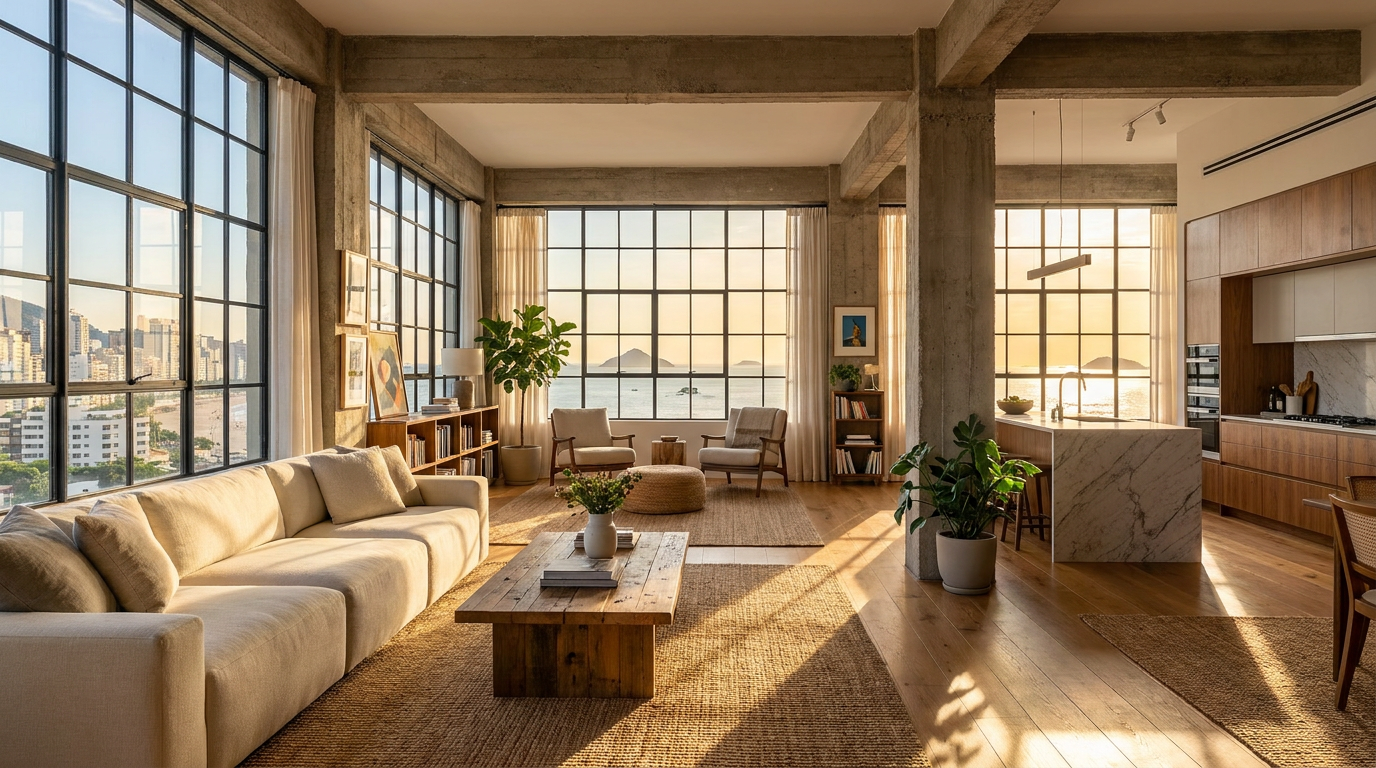
- Commercial Developers
- Focuses on the financial feasibility, architectural constraints, and necessity of tax incentives.
- Urban Planners & Environmentalists
- Advocates for using conversions to decarbonize real estate and create 24/7 neighborhoods.
- Affordable Housing Advocates
- Cautions that high conversion costs naturally skew projects toward luxury rents without government mandates.
What's not represented
- · Small business owners in downtown districts relying on foot traffic
- · Suburban municipalities losing residents to revitalized urban cores
Why this matters
As remote work permanently alters the commercial real estate landscape, converting empty offices into apartments offers a rare dual-solution: revitalizing hollowed-out downtowns while adding desperately needed housing supply to lower overall costs.
Key points
- A record 90,300 apartment units are in the 2026 office-to-residential conversion pipeline, a fourfold increase since 2022.
- Office conversions now account for 47% of all future adaptive reuse projects in the United States.
- Converting an existing building generates roughly one-quarter of the carbon emissions compared to new construction.
- High construction costs require municipal tax incentives to ensure the resulting apartments remain affordable for middle-income renters.
The American downtown is undergoing a structural rewiring. With national office vacancy rates hovering near 19 percent at the end of 2025, millions of square feet of commercial space sit idle in central business districts across the country. Simultaneously, a severe housing shortage continues to price out middle-income renters and constrain economic mobility. For years, the proposed solution—converting empty cubicles into residential apartments—has been dismissed by many in the real estate industry as a niche, prohibitively expensive architectural parlor trick. However, the latest market data indicates a profound shift in feasibility and scale.[1]
The evidence from the first quarter of 2026 suggests a definitive market transition. According to comprehensive pipeline data, adaptive reuse has scaled rapidly, transitioning from a pandemic-era novelty to a primary development strategy for institutional investors and urban planners alike. The numbers reveal a staggering acceleration in capital deployment toward these projects, driven by a confluence of plummeting commercial property values, sustained residential rental demand, and aggressive new public subsidies designed to bridge the financial gap. What was once considered a last-resort option for obsolete buildings is now a cornerstone of urban revitalization.[1][2]
The core data point anchoring this trend comes from RentCafe's March 2026 analysis, which tracks 90,300 apartment units currently in the office-to-residential conversion pipeline nationwide. This represents a 28 percent year-over-year increase and a nearly fourfold jump from the 23,000 units tracked in 2022. Office conversions now account for 47 percent of all future adaptive reuse projects in the United States, significantly outpacing the repurposing of hotels, industrial warehouses, and healthcare facilities. This volume of construction represents a material addition to the national housing stock.[1][2]

Geographically, the evidence shows this is no longer just a coastal phenomenon, though New York City remains the undisputed epicenter of the movement. Driven by favorable zoning adjustments and a massive inventory of aging commercial stock, the New York metro area leads the nation with over 16,300 units currently in development. Washington, D.C., follows closely with roughly 8,400 units, while Chicago, Los Angeles, and Dallas round out the top five markets. The inclusion of Midwestern and Sunbelt cities highlights the broad applicability of the conversion model across different regulatory environments.[1][2]
The financial mechanism forcing this rapid transition is the impending maturity wall of commercial real estate debt. Roughly $213 billion in United States office loans—representing about a third of all outstanding office debt—are scheduled to come due by the end of 2026. With refinancing options severely constrained by lower asset valuations, reduced tenant demand, and structurally higher interest rates, property owners are increasingly viewing residential conversion not just as an opportunistic real estate play, but as a necessary exit strategy to avoid default and foreclosure on underperforming assets.[1]
Beyond the financial imperatives, environmental researchers present a compelling carbon-mitigation argument for adaptive reuse. The architectural adage that 'the most sustainable building is the one that is already built' is heavily supported by lifecycle emissions data. Demolishing a high-rise and building a new residential tower generates massive upfront carbon costs, primarily from the energy-intensive production and transportation of new concrete and steel. By preserving the existing structural frame and foundation, developers can drastically reduce the embodied carbon footprint of new housing, aligning real estate development with aggressive municipal climate targets.[6]
A benchmark study by the European Commission quantified this environmental disparity by modeling four distinct urban redevelopment scenarios. The researchers found that converting an existing office structure to residential use carried a carbon footprint of approximately one million kilograms of carbon dioxide equivalent. In stark contrast, demolishing the exact same structure to build new residential units generated four million kilograms of carbon dioxide equivalent—a massive fourfold increase in total emissions. This data has prompted several cities to prioritize adaptive reuse in their sustainability protocols.[6]

A benchmark study by the European Commission quantified this environmental disparity by modeling four distinct urban redevelopment scenarios.
Despite the environmental and urbanist enthusiasm, the engineering and economic evidence highlights severe physical constraints. The primary friction point is the physical floorplate of modern office buildings. Structures built in the 1980s and 1990s often feature massive, deep floorplates designed for sprawling cubicle farms. This geometry makes it incredibly difficult to provide natural light and exterior windows to every residential unit—a strict requirement of modern residential building codes—without expensively coring out the center of the building to create an atrium.[7]
Furthermore, the plumbing, electrical, and HVAC requirements for residential use are vastly different from commercial setups. Transitioning from centralized commercial bathrooms to individual apartment plumbing requires extensive core drilling through thick concrete floors and significant structural reinforcement. These hard construction costs mean that, absent government intervention or a near-zero acquisition cost for the building, conversions are often only financially viable for high-end luxury apartments. Developers must command premium market rents to offset the immense initial capital expenditure required to completely rewire and replumb a commercial high-rise.[7]
To bridge this feasibility gap and encourage the creation of workforce housing, the evidence points to a surge in municipal and state-level subsidies designed to make the math work. J.P. Morgan's tracking of local incentives highlights aggressive public interventions across the country. Boston, for example, is offering up to a 75 percent property tax abatement for conversions that include a set percentage of affordable units. Meanwhile, Chicago has approved $260 million in tax increment financing for five downtown projects, mandating that 30 percent of the units remain affordable.[4]
At the federal level, commercial real estate groups are heavily lobbying for national legislation to standardize these incentives. The Revitalizing Downtowns and Main Streets Act, currently gaining bipartisan traction, would create a 20 percent tax credit for eligible conversion costs. Proponents argue this would mirror the highly successful Historic Tax Credit program, which spurred thousands of building rehabilitations in previous decades, providing developers with the necessary capital stack to take on complex, risky adaptive reuse projects in struggling urban cores.[5]
Interestingly, the profile of the buildings being targeted for conversion is actively shifting as the market matures. While early adaptive reuse projects focused almost exclusively on pre-war, Class B and C buildings with narrower, more residential-friendly footprints, recent data from Cushman & Wakefield shows a distinct pivot. In Manhattan, 51.6 percent of proposed conversions are now Class A buildings. This represents a massive leap from the 5.5 percent share that Class A buildings held in the conversion pipeline prior to the pandemic, indicating a broader structural shift in commercial real estate.[3]

This shift toward Class A conversions suggests that even relatively modern, well-located office buildings are struggling to maintain commercial tenants if they lack the ultra-premium amenities demanded by today's hybrid workforce. It also indicates that developers and architects are finding innovative ways to adapt newer architectural styles to residential layouts. By successfully converting these flagship properties, the industry is unlocking millions of additional square feet of potential housing inventory that was previously considered completely unviable for anything other than corporate headquarters and large-scale enterprise leasing.[3]
The primary area of uncertainty in the current evidence base is the long-term impact on housing affordability. While adding 90,000 units to the national supply undeniably helps ease aggregate demand, affordable housing advocates note that the high cost of conversion naturally skews these projects toward the luxury market. Without strict inclusionary zoning requirements tied to the tax incentives, there is a risk that adaptive reuse will simply create high-end enclaves in former business districts, doing little to alleviate the housing pressure on middle- and lower-income residents.[4][7]
The data on the exact income mix of the 2026 pipeline remains opaque, and the success of municipal affordability mandates is still being tested in real-time across various markets. If cities fail to strike the right balance between demanding affordable units and providing enough subsidy to make the projects profitable, developers may simply walk away, leaving the buildings empty and blighted. The next 24 months of project completions will provide critical empirical evidence on whether these public-private partnerships can genuinely deliver mixed-income neighborhoods or if they will exclusively serve the upper-middle class.[7]
Ultimately, the evidence confirms that office-to-residential conversion has crossed the threshold from a theoretical architectural concept to a major pillar of urban redevelopment. As cities navigate the permanent realities of hybrid work and decentralized commuting, repurposing stranded commercial assets offers a rare, synergistic solution to multiple civic crises. By transforming empty cubicles into vibrant, occupied homes, municipalities have the opportunity to simultaneously decarbonize their built environment, revive hollowed-out downtowns with 24/7 foot traffic, and make a meaningful dent in the generational housing shortage that plagues modern American cities.[7]
How we got here
2020–2021
The shift to remote work empties central business districts, causing office vacancy rates to spike.
2022
Early conversion projects begin to gain traction, with roughly 23,000 units entering the national pipeline.
2024
Major cities like New York and Boston introduce aggressive tax incentives and zoning reforms to spur adaptive reuse.
Early 2026
The conversion pipeline hits a record 90,300 units, accounting for nearly half of all adaptive reuse projects nationwide.
Viewpoints in depth
Urban Planners and Environmentalists
This group views adaptive reuse as a critical tool for decarbonizing the real estate sector and reviving 24/7 downtown neighborhoods.
Planners argue that single-use central business districts are a relic of the 20th century. By injecting permanent residents into these areas, cities can support local retail and transit outside of traditional commuting hours. Environmentalists heavily emphasize the lifecycle emissions data, noting that avoiding demolition preserves the 'embodied carbon' of the existing concrete and steel, making conversions a cornerstone of municipal climate action plans.
Commercial Real Estate Developers
Developers focus on the financial and architectural feasibility of conversions, emphasizing the need for public subsidies to offset high construction costs.
While developers recognize the market demand for housing, they point to the severe architectural constraints of modern office buildings. Deep floorplates, centralized plumbing, and complex HVAC systems make residential retrofits incredibly expensive. This camp argues that without aggressive tax abatements, zoning variances, and streamlined permitting, the math simply does not work for the vast majority of stranded commercial assets.
Affordable Housing Advocates
Housing advocates caution that without strict mandates, the high cost of conversion will exclusively produce luxury apartments.
This perspective highlights a structural tension in the conversion boom: because the hard costs of coring out an office building are so high, developers must charge premium rents to achieve a return on investment. Advocates argue that public subsidies and tax credits should be strictly tied to inclusionary zoning, ensuring that a significant percentage of the new units are reserved for middle- and lower-income residents, rather than just creating high-end enclaves.
What we don't know
- Whether the current wave of municipal tax incentives will be enough to spur conversions in smaller, secondary markets outside the top 10 cities.
- The exact percentage of the 90,300 pipeline units that will ultimately be priced as affordable versus luxury housing.
Key terms
- Adaptive Reuse
- The process of repurposing an existing building for a use other than its original intended purpose, such as turning an office into apartments.
- Floorplate
- The total leasable square footage of a single floor in a commercial building, which dictates how easily the space can be divided into apartments.
- Embodied Carbon
- The total greenhouse gas emissions generated during the manufacturing, transportation, and construction of building materials.
- Tax Increment Financing (TIF)
- A public financing method that subsidizes redevelopment by borrowing against the future increase in property tax revenues expected from the project.
Frequently asked
Why can't all empty office buildings become apartments?
Many modern office buildings have deep floorplates, meaning the center of the building is too far from the windows. Residential building codes require bedrooms to have natural light and ventilation, making these deep spaces difficult and expensive to convert.
Are these new apartments affordable?
Because the construction costs for plumbing and structural changes are very high, most conversions target the luxury market to recoup costs. However, some cities require a percentage of affordable units in exchange for tax breaks.
Is it better for the environment to convert or rebuild?
Converting an existing building is significantly better for the environment. Studies show that adaptive reuse generates about one-quarter of the carbon emissions compared to demolishing a structure and building a new one from scratch.
Which cities are doing this the most?
New York City leads the nation by a wide margin, followed by Washington, D.C., Chicago, Los Angeles, and Dallas.
Sources
Source coverage
7 outlets
3 viewpoints surfaced







[1]BisnowCommercial Developers
Office-To-Resi Conversions Up 28% From Last Year's Record Levels
Read on Bisnow →[2]Multifamily ExecutiveCommercial Developers
Office-to-Apartment Conversions Hit Record High in 2026
Read on Multifamily Executive →[3]Cushman & WakefieldCommercial Developers
Manhattan Office-to-Residential Conversions: February 2026
Read on Cushman & Wakefield →[4]J.P. MorganAffordable Housing Advocates
Office-to-residential conversions: A guide to revitalizing downtowns
Read on J.P. Morgan →[5]NAIOPCommercial Developers
Adaptive Reuse and Housing Affordability
Read on NAIOP →[6]European CommissionUrban Planners & Environmentalists
The conversion of vacant office spaces into housing
Read on European Commission →[7]Factlen Editorial TeamUrban Planners & Environmentalists
Synthesis by Factlen editorial team
Read on Factlen Editorial Team →
More in real estate
See all 13 stories →Housing Supply
The Evidence Is In: 'Missing Middle' Zoning Reforms Successfully Lower Rent Growth
0 sources
Adaptive Reuse
How Empty Office Towers Are Being Engineered Into the Next Generation of Housing
0 sources
Commission Rules
Traditional Real Estate Agent vs. Flat-Fee Broker: Which is Right for You in 2026?
0 sources
Zoning Reform
The Evidence Behind Upzoning: How Auckland and Minneapolis Proved Building More Housing Lowers Rents
0 sources
Every angle. Every day.
Get real estate stories with full source coverage and perspective breakdowns delivered to your inbox.